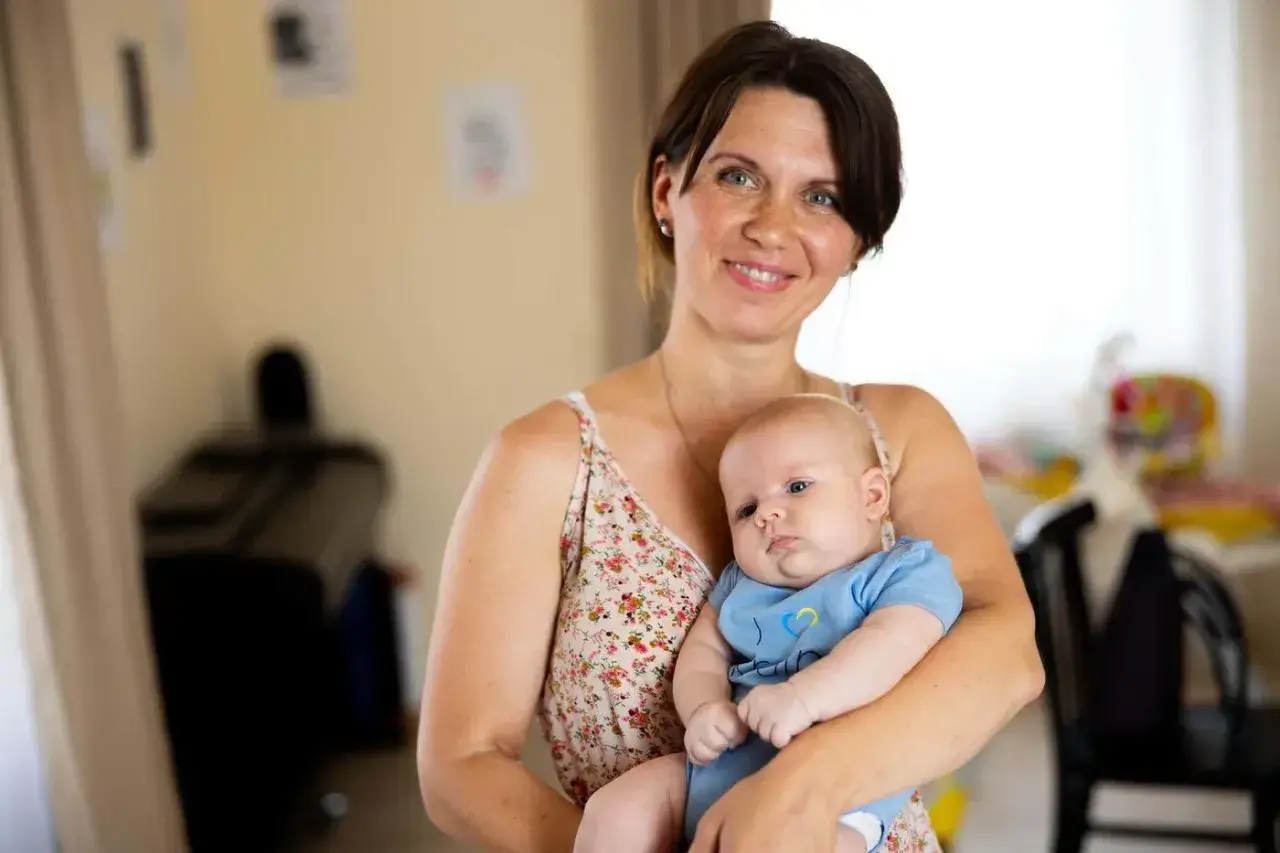
At two months, the changes are still small enough to miss if you are expecting something dramatic, but they are real and useful to notice. Understanding 2 month old milestones helps you separate ordinary growth from the small signals worth encouraging through simple play, and from the signs that deserve a call to the pediatrician. I look for the first social responses, the earliest coos, a little more head control, and the way a baby begins to follow faces and voices with real interest.
What matters most at two months
- Social connection starts to show clearly through eye contact, calming when held, and early smiles.
- Communication is still simple, but sounds other than crying and reactions to loud noise are important.
- Movement is basic yet meaningful, especially lifting the head during tummy time and opening the hands briefly.
- Short, responsive play does more than busy toys, because babies learn most from faces, voices, and repetition.
- If your baby was born more than three weeks early, corrected age gives a more accurate picture.
- Loss of skills, lack of response, or a very floppy or very stiff body should be discussed early.
What usually shows up by two months
When I map out the typical two-month pattern, I separate it into four areas because that makes the stage easier to read. Babies do not develop in neat blocks, but the general shape is familiar: they start to connect with people, react to sound, watch movement, and show more control over their head and hands.
| Area | What you may notice | Why it matters |
|---|---|---|
| Social and emotional | Calms when spoken to or picked up, looks at your face, smiles when you smile | Shows that comfort and connection are starting to register |
| Language and communication | Makes sounds besides crying, reacts to loud sounds | Signals early back-and-forth communication and sound awareness |
| Cognitive | Watches you move, looks at a toy for several seconds | Shows attention, tracking, and early problem-solving |
| Movement | Holds head up on the tummy, moves both arms and legs, opens hands briefly | Shows growing body control and less reliance on newborn reflexes |
I do not treat this as a pass-or-fail list. It is a pattern, and the pattern is what matters. If your baby was born more than three weeks early, corrected age is the fairer way to judge progress, and that one detail can make the difference between normal timing and a misleading comparison. Once you know what the baseline looks like, the next step is using play to make those skills easier to see.
Play that builds these early skills
At this age, play is really interaction. I would rather have a baby spend a few calm moments looking at a face, hearing a voice, and practicing tiny movements than be surrounded by flashy gadgets that do the work for them. The best activities are short, repetitive, and responsive.
- Talk back when your baby makes a sound. This starts a simple turn-taking rhythm that later becomes conversation.
- Read and sing out loud. The words matter less than the steady sound of your voice and the repetition.
- Use tummy time when the baby is awake. A small amount, done often, helps with head lifting and shoulder strength.
- Place a toy at eye level during tummy time. A lightweight rattle or a bold black-and-white card gives the eyes something useful to follow.
- Copy your baby's coos. Babies often respond to the sound of their own voice coming back at them.
- Talk while feeding, dressing, and bathing. These everyday routines are some of the best learning moments in the day.
I also keep screen use out of the picture here, except for video calls with family. At two months, babies learn most from people, not from passive entertainment. That is why the simplest toys and nursery tools often do the most work.
Toys and nursery pieces that actually help
This is where a lot of parents spend too much money too early. You do not need a huge toy basket for a two-month-old. You need a few safe, purposeful items that help with looking, listening, reaching, and settling.
| Item | Why it helps now | What I look for |
|---|---|---|
| Soft play mat | Creates a safe place for tummy time and short floor sessions | Easy to clean, firm enough for support, not overly padded |
| Baby-safe mirror | Encourages visual focus and face tracking | Unbreakable surface, securely attached, large enough to see clearly |
| High-contrast cards or books | Gives the eyes something simple to lock onto | Bold shapes, clear patterns, no small detachable parts |
| Lightweight rattle | Supports sound tracking and cause-and-effect awareness | Easy to grip, low noise level, no loose pieces |
| Rolled towel for tummy time | Can help if the baby needs a little support under the chest | Used only while awake and supervised |
What I like about this list is how unglamorous it is. The best nursery essentials at two months are usually the simplest ones, because they let the baby practice without getting overstimulated. That also makes it easier to understand what is normal, because not every baby responds at the same speed or in the same order.
What can vary without being a problem
I spend a lot of time reminding parents that two-month development is not a neat checklist on a single day. One baby smiles first and then gets stronger with head control. Another seems very alert to sound but still spends most of the day with clenched little fists. Another is slow to warm up and only shows the best social responses when calm and fed.
- Some babies are more visually focused, while others are more tuned to voices and touch.
- Some open their hands often, while others keep them fisted more of the time at first.
- Some lift their head strongly during tummy time, while others need more practice and more patience.
- Some smile frequently in response to faces, while others do it less often but still show clear interest.
- Some days are better than others, especially when the baby is tired, hungry, or overstimulated.
The key is the overall direction. I care more about whether the baby is gradually showing more engagement over days and weeks than whether one afternoon looked perfect. That said, there is a line between normal variation and a reason to call, and that line deserves its own section.
When I would call the pediatrician
If something feels off, I would not wait for the next milestone window to close. Most concerns at this age are not emergencies, but they are worth raising early because a short conversation can save weeks of worry. This is especially true if your baby was born early, has a medical condition, or seems to be losing skills instead of gaining them.
- Your baby does not calm when held or spoken to.
- Your baby rarely looks at faces or seems uninterested in people.
- Your baby does not smile back at caregivers over time.
- Your baby does not react to loud sounds.
- Your baby is very floppy, very stiff, or noticeably hard to move.
- Your baby does not move both arms and both legs much.
- Your baby keeps one side clearly preferred every time.
- Your baby loses a skill that was already present.
If you are unsure whether what you are seeing is significant, bring the question anyway. I would rather hear a parent say, "This seems small, but I want to check," than have them sit on a concern because they are afraid it sounds minor. Bring a few notes or short videos to the visit if you can, because specifics beat memory when you are tired and worried.
The easiest home check I would use before the next visit
Between well-child appointments, I like a simple seven-day observation window instead of a one-time test. You are not grading your baby. You are looking for small, repeatable signs of growth.
- Watch whether your baby calms when you pick them up or speak softly.
- Notice whether they look at your face for a few seconds during quiet moments.
- Listen for sounds other than crying, even if they are tiny and uneven.
- Try a few short tummy-time sessions and see whether head lifting is getting easier.
- Check whether your baby tracks a face, a rattle, or a high-contrast toy across a small distance.
If most of those signs are appearing, even in small ways, the picture is usually reassuring. If the pattern is thin, inconsistent, or getting weaker, share that information at the next visit or sooner. Early observations are most useful when they are simple, honest, and tied to real everyday moments.
