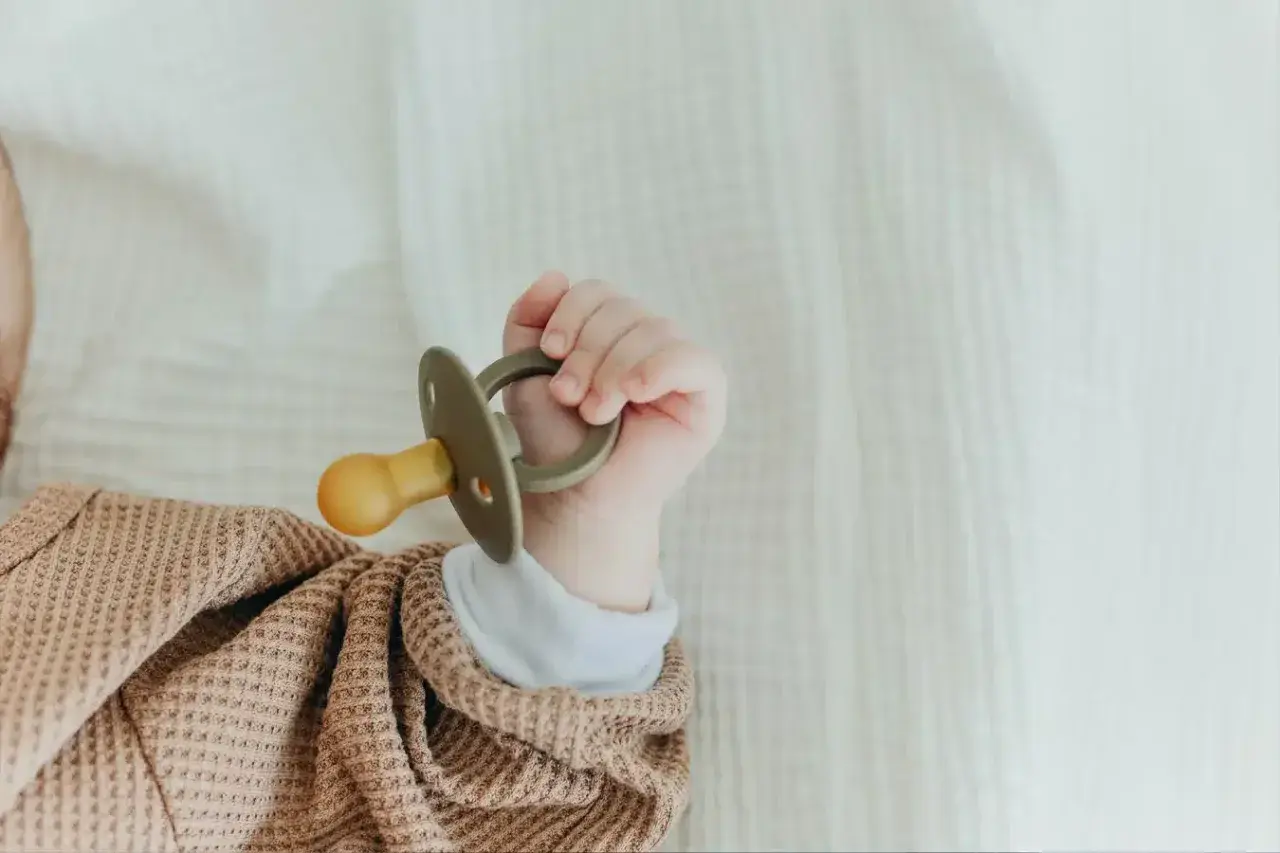
A pacifier that is too big for a newborn can feel awkward, trigger gagging, and make feeding breaks harder instead of easier. The real issue is not the brand on the package, but whether the shape and shield fit a tiny mouth safely. Here I break down the signs of poor fit, the most common mistakes, and the simple checks that usually solve the problem fast.
The safest choice is the one that fits lightly and stays out of the mouth
- Gagging, coughing, or repeated pushing away usually means the nipple is too long, too firm, or being offered too deeply.
- Shield fit matters because it should stay outside the lips and not slip into the mouth.
- Newborn labels are only a starting point; mouth shape, tone, and feeding style matter too.
- One-piece construction, firm plastic, and air holes are the safety features I look for first.
- Breastfed babies may need timing to be handled carefully, especially before latch and weight gain are established.
How to spot an oversized pacifier in a newborn
When a pacifier does not fit, the signs are usually immediate. A newborn may gag the second the nipple reaches the tongue, clamp down, spit it out over and over, or look irritated instead of soothed. I pay the most attention to the difference between a baby who simply does not want a pacifier and a baby who seems physically overwhelmed by it.
| What you notice | What it often means | What I would do |
|---|---|---|
| Gagging as soon as the nipple touches the tongue | The nipple may be too long, too firm, or being placed too deep | Stop and try a smaller newborn option or a shorter shape |
| The shield slides toward the lips or seems to disappear inward | The shield may be too small for the mouth or face | Replace it, do not push it in farther |
| Repeated coughing or sputtering | The baby is not comfortable with the fit, or there may be another feeding issue | Remove it and watch whether the same thing happens with bottle or breast feeds |
| Instant rejection, but the baby stays calm | The baby may simply not like pacifiers yet | Do not force it and do not assume size is the only problem |
| Red marks around the mouth after a few minutes | Pressure is too high or the shape is rubbing in the wrong place | Try a different size or shape |
The small but important detail here is that not every rejection means the pacifier is unsafe. Some babies never take one, and that is normal. What I do not ignore is gagging, choking, or any sign that the nipple is reaching too far back into the mouth. Once that distinction is clear, the next question is why fit affects feeding so much in the first place.
Why size matters for sucking, feeding, and sleep
A newborn’s mouth is tiny, the gag reflex is strong, and suction is still a developing skill. A pacifier works best when the baby can close around it without strain. If the nipple is too long, it can hit the soft palate, which is the flexible back part of the roof of the mouth, and trigger gagging before comfort ever starts.
I also think about feeding timing. The AAP advises waiting until breastfeeding is going well and your baby is gaining weight before making pacifiers part of the daily routine. That does not mean pacifiers are off-limits forever. It means the first weeks are not the time to let a poorly fitting pacifier complicate latch practice or mask hunger cues.
A useful rule is this: if the baby is rooting, turning toward the breast or bottle, or sucking on hands, hunger may be the real issue. A pacifier is for calming between feeds, not replacing them. That is why size, timing, and the baby’s feeding pattern all belong in the same conversation. From there, the practical question becomes what to do in the moment without making the problem worse.
What to do if your baby gags or refuses it
If the pacifier seems wrong, I would not keep testing it over and over in the same feed. That usually turns a small fit issue into a bigger fight. Start with the simplest response and work outward.
- Take the pacifier out immediately if your baby gags, coughs, or stiffens.
- Do not force it back in. Forcing usually creates more resistance and can make the baby dislike pacifiers altogether.
- Check whether you are offering a true newborn size, not just a smaller-looking shape from another brand.
- Try a shorter nipple or a differently shaped newborn model, because shape can matter as much as size.
- Offer it when the baby is calm, not already crying hard or showing clear hunger cues.
- If the baby still gags, skip the pacifier for now and revisit it later rather than pushing through.
That last step matters more than many parents expect. A pacifier should feel easy to hold, not like a mouth exercise. If every attempt turns into gagging, the issue may be fit, but it may also be a feeding or oral-motor concern that deserves a closer look. Once the immediate reaction is handled, I move to the pacifier itself and check whether the product is actually newborn-safe.
How I choose a safer newborn pacifier
In practice, I care less about cute colors and more about construction. The safest pacifiers for newborns are simple, sturdy, and easy to inspect. HealthyChildren notes that the shield should be at least 1.5 inches across, made of firm plastic, and fitted with air holes so the whole pacifier cannot slip into the mouth.
| Feature | What I look for | Why it matters |
|---|---|---|
| Construction | One-piece design | Reduces the chance of breakage into choking hazards |
| Shield | Firm, at least 1.5 inches across, with ventilation holes | Helps keep the entire pacifier out of the mouth and improves airflow against the skin |
| Nipple shape | Newborn-friendly, not overly long or rigid | A smoother fit is easier on a small mouth and stronger gag reflex |
| Age label | Newborn or 0 to 2 months, depending on the brand | Useful as a starting point, but not a guarantee of fit |
| Cleaning and durability | Dishwasher-safe and easy to inspect | Cracks, tears, and soft spots can become safety problems quickly |
I also avoid anything tied to a crib, clipped to clothing with a long strap, or improvised from bottle parts. The AAP is very direct about not using strings or straps that can catch around a baby’s neck, and I agree with that caution. When a pacifier is truly the right size, it should make life easier. If it keeps creating friction, the product is probably the wrong one. That leads to the mistakes I see most often when parents are trying to solve the problem quickly.
Common mistakes that make a pacifier feel too big
- Choosing by age label alone instead of checking the actual shape and shield size.
- Assuming an orthodontic shape is automatically better for every newborn. Orthodontic means the nipple is flatter and shaped to support tongue position, but not every small mouth prefers it.
- Forcing the pacifier into a baby who is already crying hard or clearly hungry.
- Using a pacifier that is cracked, tacky, softened, or worn down from repeated use.
- Confusing a feeding issue with a comfort issue. A baby who needs milk will usually not settle just because the pacifier is prettier or newer.
- Using long clips, cords, or homemade attachments that add pull and make the pacifier sit awkwardly.
- Trying to keep the pacifier in by hand until the baby “gets used to it.” That rarely solves a fit problem.
These mistakes are easy to miss because they look minor from the outside. In reality, they change how the nipple sits in the mouth and how hard the baby has to work to keep suction. A pacifier can be the wrong fit even when the package says newborn. If the problem keeps showing up, I stop treating it as a product preference and start treating it as a baby-specific issue.
When a pacifier issue deserves a pediatrician's input
Sometimes the pacifier is not the main problem. If a newborn gags with pacifiers, bottles, and breastfeeding, I start thinking about oral anatomy, reflux, tone, or latch mechanics rather than only size. A high palate, tongue-tie, or other feeding challenge can make a normal pacifier feel wrong.- Gagging happens with both pacifiers and feeds, not just one brand.
- Your baby coughs, sputters, or seems to struggle with breathing during feeds.
- Weight gain is slow or feeding sessions are consistently stressful.
- The baby turns blue, goes limp, or has any pause in breathing.
- There are repeated mouth sores, bleeding, or signs of persistent irritation.
- Your instincts say the baby is not just fussy but uncomfortable in a more serious way.
If any of those show up, I would stop experimenting at home and bring in the pediatrician. That is especially true if the baby was born early or has already needed feeding support. A pacifier should never become a workaround for a broader feeding problem. Once the medical side is clear, the last step is a simple fit check you can use every time.
The fit check I use before every use
My own check is short because newborns do not give long explanations. I want to see a pacifier that sits lightly, stays outside the mouth, and does not force the baby to work for it.
- The shield stays outside the lips and does not disappear inward.
- The nipple does not trigger gagging the moment it touches the tongue.
- The baby can keep a relaxed seal without obvious strain.
- There are no cracks, sticky spots, tears, or softening from wear.
- The pacifier is being offered between feeds, not as a substitute for hunger cues.
If any one of those checks fails, I swap the pacifier out or stop using it. That keeps the tool in its proper place, which is comfort, not pressure. For newborns, a small fit adjustment can make the difference between a calm feeding routine and a daily battle.
