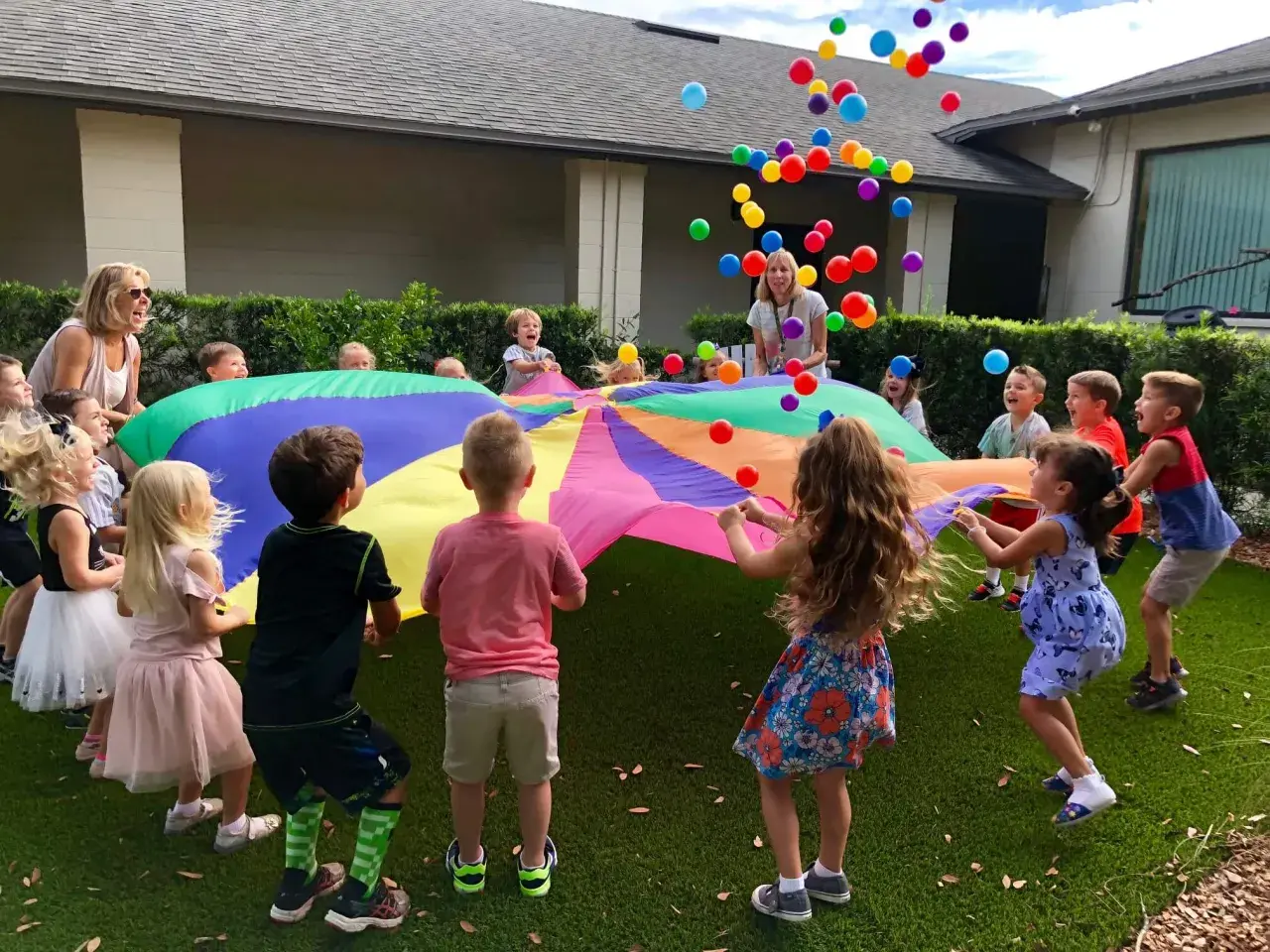
What matters most when you plan big-body play
- Short sessions win. Five to 10 minutes is enough for most toddlers if the activity stays engaging.
- Repeatable beats complicated. A ball, pillows, tape, and a little floor space often do more than expensive gear.
- Balance, coordination, and confidence grow fastest when a child can move, rest, and try again.
- Age fit matters. A newly walking child and a nearly three-year-old need very different levels of challenge.
- Safety is part of the activity. Slippery floors, hard edges, and clutter turn movement into stress.
- Progress can be messy. Wobbly first attempts are normal; losing skills is not.
What counts as gross motor play in toddlerhood
In toddler years, gross motor play is simply any movement that asks the large muscles to do real work: legs, arms, trunk, and the whole body working together. That includes crawling through a tunnel, squatting to pick up toys, climbing onto a low surface, carrying a light basket, or stopping and starting during a chase game. The activity does not have to look like exercise to count; if the child is using the body to move, stabilize, balance, or propel, the lesson is happening.
I also think this kind of play matters because it reaches beyond the body. Movement helps children learn timing, cause and effect, turn-taking, and how to recover when something does not go as planned. ZERO TO THREE makes a useful point here: movement and exploration support confidence, problem-solving, and social learning, not just physical strength. Once you see that, the goal shifts from “burn energy” to “build competence,” and that changes the way you choose activities.The next question is not whether a game involves movement. It is whether the challenge fits the child who is doing it.
Match the activity to your toddler's stage
Toddlers change fast, but they do not all move at the same pace. I get better results when I think in broad stages instead of exact birthdays, because the right activity is the one that is just hard enough to be interesting. CDC milestone guidance for 18 to 30 months keeps returning to balls, climbing, running, tiptoe walks, and follow-the-leader, which is a good clue about the kind of movement that belongs in this age range.
| Age band | What usually feels right | Good choices | What to keep in mind |
|---|---|---|---|
| 12 to 18 months | Pulling up, cruising, walking, squatting, and basic push-pull movement | Ball rolling, push toys, bubble chase, low tunnels, cushion steps | Keep the route short and the surfaces soft. The goal is confidence, not distance. |
| 18 to 24 months | More stable walking, carrying, kicking, throwing, and stepping over low obstacles | Mini obstacle courses, beanbag toss, animal walks, sidewalk chalk lines, simple kicking games | Use one instruction at a time. Too many rules can turn movement into frustration. |
| 24 to 36 months | Running, stopping, jumping with both feet, turning, and basic balance games | Follow the leader, toddler bowling, hop-and-stop games, tricycle or ride-on practice, climbing on safe equipment | Add a little more structure only if the child still looks relaxed and eager to repeat the game. |
The pattern is simple: offer one step of challenge, not five. If a child is ready for a harder version, you will usually see it in the way they repeat the game, not just in one lucky attempt. That brings us to the activities that earn their place first in my playbook.
The movement games I reach for first
If I had to build a toddler movement routine with only a few games, I would start with the ones below. They are easy to scale up or down, they do not require specialized equipment, and they quietly teach more than one skill at a time.
- Mini obstacle course. Use pillows, painter’s tape, a laundry basket, a tunnel, or a low stool. A child can crawl under, step over, climb on, and walk around. This is one of the best all-around choices because it mixes problem-solving with balance and body control.
- Ball games. Roll, kick, toss, or chase a soft ball. A ball gives instant feedback, which is why it works so well: the child sees the result of the movement right away.
- Follow the leader. Walk in a line, tiptoe, stomp, turn, freeze, and take two big steps. This is not just cute; it trains attention, rhythm, and simple imitation.
- Animal walks. Try bear walks, crab walks, frog jumps, or snake crawls. These are strong choices for kids who like pretending, because imagination helps them tolerate repetition.
- Bubble chase. Blow bubbles and let the toddler run, reach, jump, and pop. It looks simple, but it naturally creates sprinting, stopping, and reaching without a lecture from an adult.
- Dance and freeze. Turn on music, dance for 20 to 30 seconds, then pause. This helps with body awareness and impulse control, which is a bigger win than it first appears.
- Toddler bowling. Set up 3 to 6 soft pins or empty plastic bottles and let the child roll a ball into them. It teaches aim, force control, and the satisfaction of doing the same movement more than once.
- Push-and-pull parade. Use a wagon, push toy, or small basket with light objects. Carrying and pushing build strength in a practical way, and the child feels useful rather than “put to work.”
- Step-up practice. A low step, cushion, or folded blanket gives a safe place to practice stepping up and down. I like this because it looks boring and does real developmental work.
These games hold attention best when they are short, varied, and easy to repeat. If a child asks for the same game four times in a row, that is usually a good sign, not a problem. The space around the game matters just as much as the game itself, though, so the next step is setup.
How to set up a safer play space without buying much
A toddler movement space does not need to look polished. It needs to be obvious, safe, and forgiving. I prefer to clear a simple route that is about 6 to 10 feet long, then build around that with one or two soft obstacles rather than filling the entire room with gear. A child should be able to see where to go, move without dodging furniture, and fail without getting hurt.
- Start with the floor. Use a rug, mat, or carpet where possible. For jumping or climbing, softer landing matters more than fancy equipment.
- Remove sharp edges and breakables. If a toddler can reach it while turning, reaching, or falling sideways, move it out of the path.
- Use 2 to 4 simple props. That might mean a pillow, a tunnel, painter’s tape, a ball, and a basket. More pieces are not automatically better.
- Keep the outfit practical. Grippy shoes or bare feet indoors usually work better than slippery socks. Loose clothing can get in the way of climbing and stepping.
- Make the route visible. Toddlers do better when they can understand the game at a glance. A line of tape, a row of cushions, or a single target is enough.
- Stay nearby, not in the way. Hovering can make a child cautious. Quiet supervision is usually enough unless the setup truly needs a hand.
I also watch for fatigue. If a child’s movements get sloppy, the face turns frustrated, or the body starts crashing into everything, the session is done. Five to 10 minutes of focused movement is often better than a long session that ends in tears. Once the space feels easy to use, the right toys can add variety without adding clutter.
Which toys earn their space in the nursery
When I look at active-play toys, I ask one question: does the toy make the child move more, or does it mostly entertain from a sitting position? ZERO TO THREE’s short list is useful here because it keeps the focus on balls, push/pull toys, toddler bowling sets, and ride-ons that actually invite motion. That is the standard I would use in a nursery, playroom, or living-room corner.
| Toy type | What it builds | Best use | What to watch |
|---|---|---|---|
| Soft balls | Kicking, throwing, chasing, and hand-eye coordination | Indoor rolling, outdoor kicking, simple catch-and-return games | Choose sizes that are easy to grasp and not hard enough to hurt on impact. |
| Push and pull toys | Walking balance, pacing, and leg strength | New walkers who need something steady to move with | Make sure the toy rolls smoothly and does not tip too easily. |
| Toddler bowling sets | Accuracy, force control, and turn-taking | Short indoor games when you want a calm but active option | Soft pins are safer and usually less frustrating than rigid ones. |
| Ride-ons or push vehicles | Coordination, leg drive, steering, and body awareness | Children who can already manage forward movement with decent control | Match the size carefully; a too-big ride-on can become a floor obstacle. |
| Tunnels and play arches | Crawling, body control, and spatial awareness | Obstacle courses or hide-and-seek style games | Keep the tunnel low stress. If a child hates enclosed spaces, do not force it. |
I would skip toys that do the work for the child. If a toy only flashes, talks, or spins while the toddler stays parked in one spot, it may be entertaining but it is not doing much for movement development. A good active toy should invite the child to push, reach, throw, balance, or climb. That distinction matters more than brand or price, and it leads naturally to the bigger question of when a movement pattern is simply immature versus worth checking.
When clumsiness is normal and when to ask for help
Most toddlers are uneven movers. One week they seem fearless; the next week they hesitate on the smallest step. That kind of inconsistency is normal. What I pay attention to instead is the overall direction: is the child gradually getting steadier, or do the same problems keep showing up with no real improvement?
- Usually normal. Frequent wobbling during a new skill, stopping to watch others before trying, or preferring one kind of movement over another for a while.
- Worth watching closely. A clear lack of progress over time, repeated falls that do not improve, avoiding weight-bearing, or movement that looks much harder on one side of the body.
- Worth discussing sooner. Losing a skill the child had already mastered, very stiff or very floppy movement, or a pattern that makes everyday play look unusually hard.
If something feels off, I would not wait for the child to “grow out of it” without checking. A developmental screening or a conversation with the pediatrician is a low-cost step compared with months of uncertainty. The point is not to label every awkward phase as a problem; it is to notice when the pattern stops looking like ordinary toddler clumsiness and starts looking like stagnation. From there, the best move is usually simple repetition with the right kind of challenge.
The simplest weekly routine I would actually use
If you want a routine that is realistic in a busy home, keep it small and predictable. I like a rotation built around three movement ideas: one thing to kick or throw, one thing to climb or step over, and one thing to balance or chase. That gives the child enough variety to stay interested without turning every afternoon into a project.
- Day 1: ball rolling and kicking for 5 to 10 minutes.
- Day 2: a tiny obstacle course with pillows and tape.
- Day 3: dance and freeze with music.
- Day 4: follow the leader around the house or yard.
- Day 5: toddler bowling or beanbag toss.
- Weekend: a park walk, climb, or push-toy session outdoors.
The best part is that you do not need to make it feel special every time. Toddlers learn through repetition, not novelty alone, and they usually love doing the same movement game again if the adult keeps it upbeat and simple. If you keep the setup light, the movements varied, and the expectations age-appropriate, big-body play becomes one of the easiest ways to support development every single week.