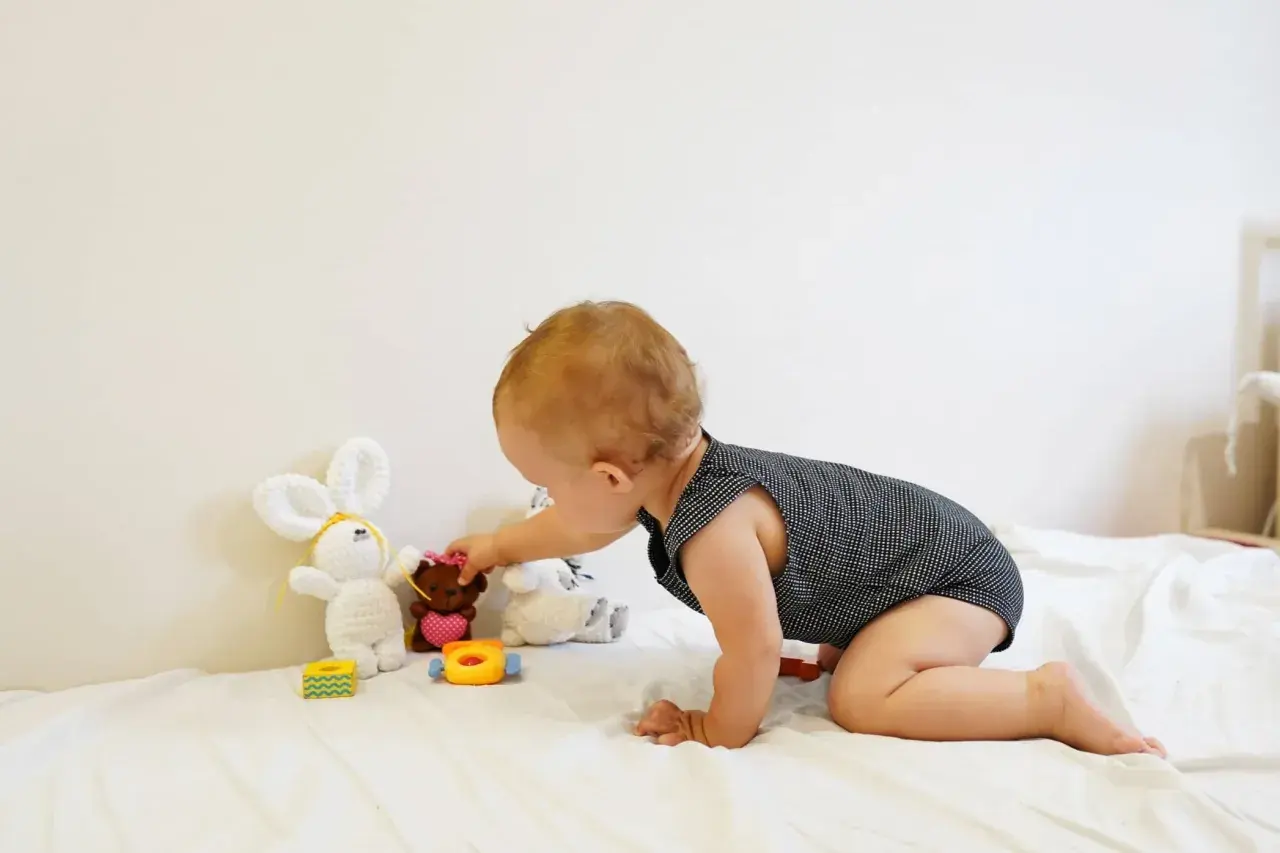
At a glance, Montessori baby play is about simple spaces and purposeful repetition
- Start with the environment. A safe floor space, a low mirror, and room to move matter more than a full toy collection.
- Match the activity to the stage. Newborns need visual contrast and calm movement; older babies need reaching, grasping, transferring, and crawling support.
- Keep the setup quiet and uncluttered. Fewer visible items usually means better focus and less overstimulation.
- Use real life where possible. Simple household objects, songs, and everyday routines fit Montessori better than flashy gadgets.
- Follow the baby’s cues. If interest fades, stop. Montessori works best when repetition is voluntary, not forced.
What Montessori baby play is really trying to build
I think the biggest misunderstanding is that Montessori is about special toys. It is not. The American Montessori Society describes the infant years as a period when language, concentration, problem solving, visual discrimination, and physical coordination are taking shape. That is the lens I use: if an activity does not support one of those areas, I usually leave it out.
For babies, that translates into a few clear priorities.
- Free movement. Babies need time on the floor to stretch, roll, reach, pivot, crawl, and eventually pull up.
- Order and repetition. They learn by doing the same simple action many times, not by jumping from one noisy toy to another.
- Real sensory input. Texture, weight, sound, and contrast matter more than flashing lights.
- Respectful adult support. The adult prepares, observes, and names what is happening instead of running the show.
That is why Montessori for babies feels so different from standard baby entertainment. The point is not to keep the child busy; it is to give the child a chance to work. Once that goal is clear, the home setup becomes much easier to design.
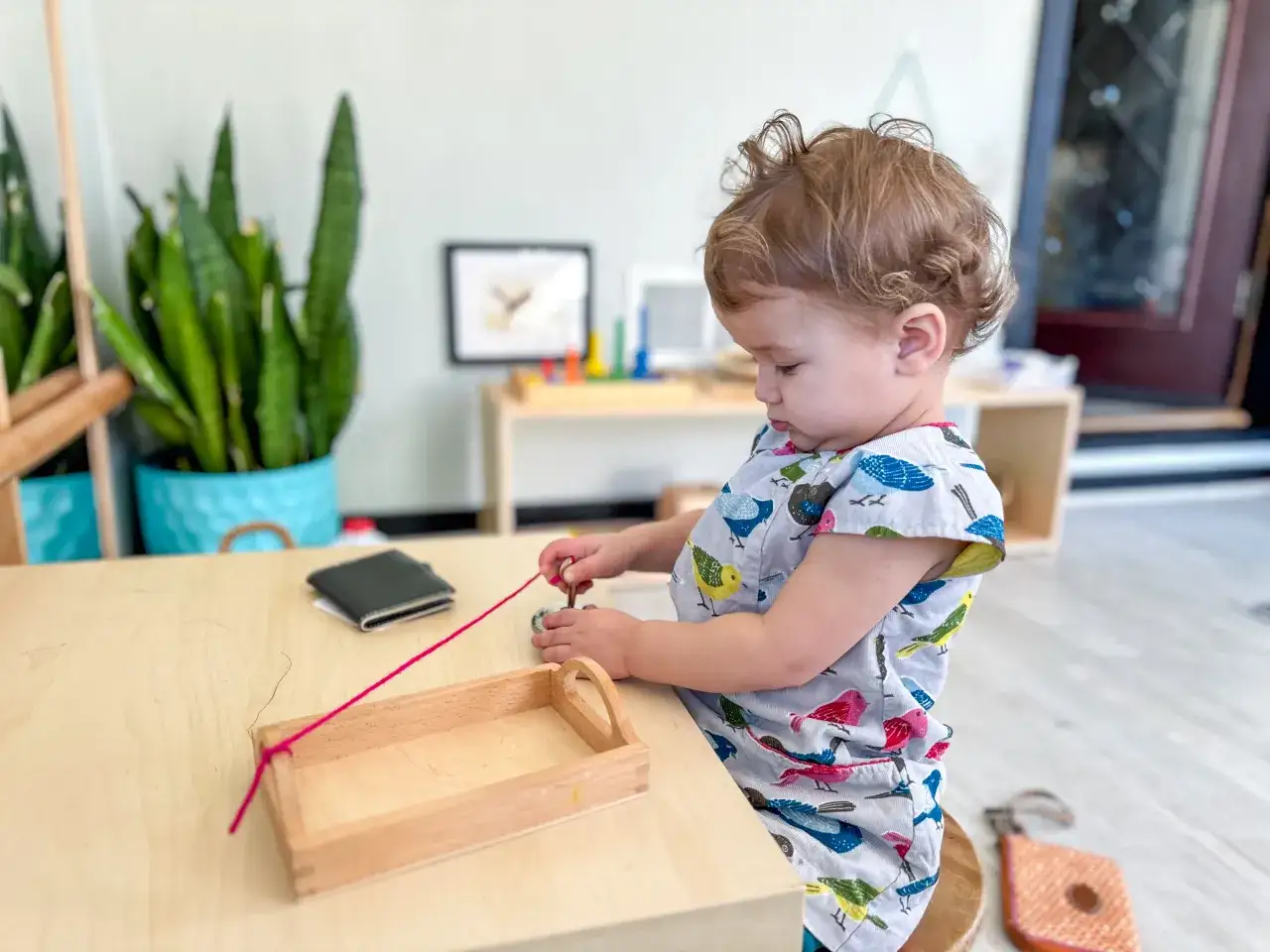
How to set up a yes-space without turning your home into a showroom
The phrase I come back to is yes-space. The Montessori Baby describes it as a place where a baby can explore safely with hands and mouth, while the adult steps back and prepares the environment rather than entertaining the child. That idea is practical, not aesthetic. You do not need a picture-perfect nursery; you need a room that says “yes” to safe movement.
My basic setup is usually this:
- A firm floor mat or rug with enough room for rolling and reaching.
- A floor-level mirror so the baby can watch body movement and facial expressions.
- One low shelf or basket with a small number of items, not a pile of toys.
- Open floor space without baby gear that traps the child in one position.
- Natural light, calm colors, and very little visual clutter.
There is also a subtle but important rule here: a baby should be able to move freely, not be placed into positions they cannot get into on their own. That is why I treat jumpers, walkers, and overused containment gear with caution. They can be convenient for adults, but they often reduce the exact floor practice babies need most. Once the space supports motion, the next question is which activities fit each stage of development.
Age-by-age activities that match what your baby is ready for
Montessori-inspired baby activities work best when they track readiness, not a marketing label on a toy box. A newborn does not need the same setup as a 10-month-old, and a 12-month-old is usually ready for a different kind of challenge again. I like to think in stages, because it keeps expectations realistic.
| Age range | Main developmental focus | Activities that fit well | What I would avoid |
|---|---|---|---|
| Birth to 3 months | Visual focus, calm tracking, early bonding, tummy time tolerance | Black-and-white mobile, floor mirror, gentle songs, short periods of tummy time, slow face-to-face talk | Overstimulating toys, bright flashing gadgets, long stretches in seats or swings |
| 3 to 6 months | Reaching, grasping, mouthing, rolling, cause and effect | Simple grasping toy, ribbon and bell, soft cloth book, texture basket, kickable mobile | Too many toys at once, toys that do all the work, devices that keep the baby upright too early |
| 6 to 9 months | Object permanence, sitting, crawling, transfer work | Object permanence box, peekaboo with a cloth, soft balls, nesting cups, basket of safe household objects | Busy panels, noisy electronics, activities that require more fine motor control than the baby has yet |
| 9 to 12 months | Pulling up, cruising, posting, simple problem solving | Posting box, ball tracker, opening and closing containers, pushing a small wagon, spoon-and-bowl play | Walkers, complicated sorting toys with too many parts, constant adult direction |
| 12 to 18 months | Practical life, language growth, refined movement, more independence | Wiping a spill, carrying small objects, simple pouring with supervision, board books, simple puzzles, helping with feeding | Overloaded activity centers, toys that require constant correction, tasks that are too fragile or too complex |
I do not treat those ranges as rigid rules. Babies develop at different speeds, and readiness matters more than the calendar. If your child still wants to mouth everything at 10 months, that is normal; if they are already cruising at 8 months, that is normal too. The activity should fit the baby, not the other way around. That difference matters when you start buying toys and materials.
The toys and materials I would buy first
If I were setting up a home from scratch, I would keep the first purchases very lean. You do not need a room full of branded Montessori products. You need a few items that invite one clear kind of work at a time.
- A floor mirror. This helps with visual tracking, body awareness, and early movement practice. It is one of the most useful nursery essentials I know.
- A sturdy floor mat. This gives the baby a defined work space and makes free movement easier to repeat every day.
- One or two grasping toys. A simple rattle, wooden ring, or textured object is enough. I want an item that is easy to hold, easy to mouth, and not overloaded with features.
- A basket of safe household objects. Wooden spoons, soft cloths, silicone spoons, and similar everyday items are often more interesting than baby gadgets.
- A black-and-white mobile or high-contrast card. These work best in the earliest months, when visual focus is still developing.
- A soft ball and a posting or nesting toy. These become more useful later, when the baby is ready for chasing, transferring, and simple problem solving.
Material matters less than function. Wood is common, but it is not mandatory. I care more about whether the object is simple, safe, durable, and sized for small hands. If a toy does too much by itself, it usually does too much for the baby. That rule saves money and reduces clutter fast.
For a practical starter shelf, I would begin with three items only: a mat, a mirror, and one grasping toy. Then I would add more only when the baby clearly outgrows the current choices. That restraint is where Montessori often becomes more effective, not less. It also keeps the nursery from turning into a storage problem.
Common mistakes that make Montessori feel harder than it is
Most frustration comes from expecting Montessori to solve problems it was never meant to solve. It is a method for supporting development, not a magic shield against tiredness, teething, or a crowded house. When something feels off, these are the first mistakes I check.
- Too many choices. A shelf loaded with toys looks generous, but it usually scatters attention.
- Skipping floor time. Babies need time on the floor more than they need fancy gear.
- Rushing the stage. I see this a lot with sitting, walking, and fine motor activities. If the baby is not ready, the toy becomes frustration.
- Confusing Montessori with silence. Songs, naming objects, and conversation matter. A Montessori home is calm, not silent.
- Overusing “help.” If an adult constantly moves the toy, fixes the setup, or finishes the work, the baby loses the chance to repeat and learn.
- Buying for the aesthetic instead of the function. Nice-looking materials are fine, but the baby cares about grip, contrast, movement, and repeatability.
There is also a realistic limitation worth saying out loud: Montessori works best when the environment is already safe and predictable. If the room is chaotic, the baby is overtired, or the household rhythm is rushed, no activity list will compensate for that. The method is strong, but it is not a substitute for good timing and observation. That is why I think the daily rhythm matters just as much as the toy shelf.
A simple daily rhythm that keeps it realistic
I prefer a rhythm that is easy to repeat rather than one that looks impressive on paper. Babies benefit from consistency, not from a perfect schedule. In practice, that means short activity windows, plenty of observation, and a lot of ordinary life woven into the day.
- Start with a calm wake-up. A diaper change, eye contact, and a little language go a long way.
- Offer one activity. That might be a mobile, a mirror, a grasping toy, or simple floor play.
- Keep the session short. For many infants, 5 to 15 minutes is enough before they want to move, eat, or rest.
- Repeat instead of rotating constantly. If the baby is still interested, let them return to the same work.
- Use everyday moments as practice. Feeding, wiping hands, singing, naming objects, and putting toys back on the shelf are all part of the learning environment.
I also like to keep the language rich and plain. Name the spoon, the cup, the blanket, the ball. Sing. Pause. Let the baby answer in their own way. Montessori is not just about physical materials; it is also about the quality of attention around them. Once that rhythm is in place, the nursery can stay simple while the child keeps growing.
What I would keep in the nursery before adding anything else
If I had to strip the room down to what matters most, I would keep the setup almost boring in the best possible way: one safe floor space, one mirror, a few simple toys, and room to move. That gives the baby the repetition they need without burying them under choices.
The smartest Montessori-inspired nursery is not the one with the most gear. It is the one that lets a baby reach, roll, grasp, crawl, and explore without being managed every second. If you build around that idea, the activities become easier to choose, the clutter drops fast, and the baby gets more of the work that actually matters.
From there, I would add only what the baby clearly needs next, not what looks impressive on a shelf.