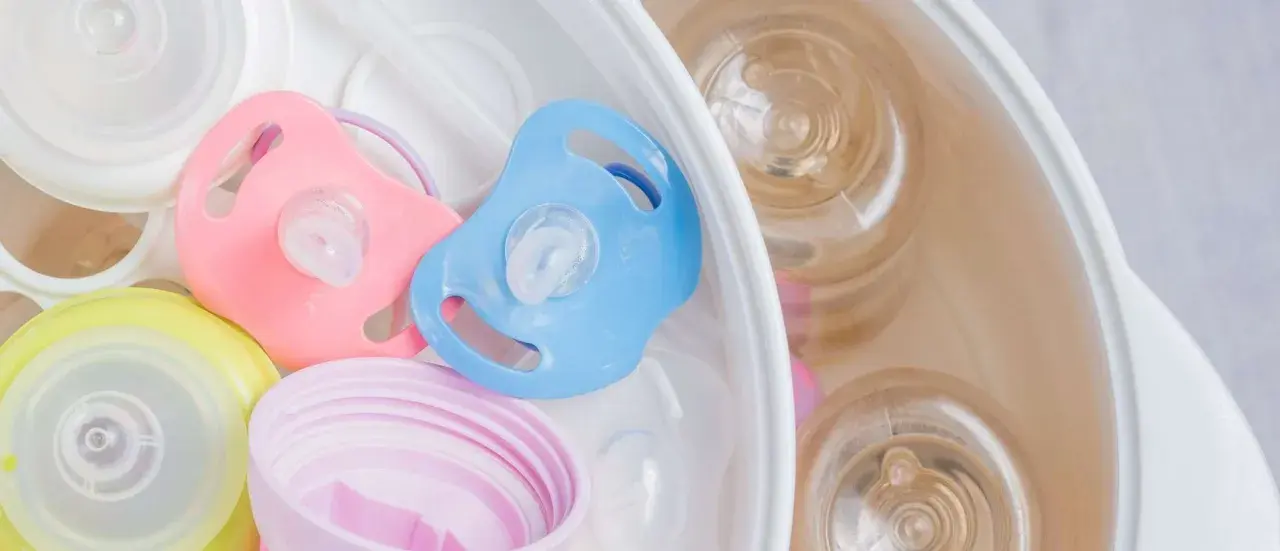
Keeping a pacifier truly clean is simpler than most parents expect, but the details matter. The right method depends on your baby’s age, the pacifier material, and whether you need a full sterilizing step or just a solid daily wash. In this guide, I cover the safest home methods, when boiling makes sense, what to avoid, and how to build a realistic routine that fits a normal nursery day.
The safest routine is the one that matches your baby’s age and the pacifier material
- Before first use, most pacifiers should be sterilized if the manufacturer says they are heat-safe.
- Boiling for 5 minutes is the most reliable home method for many pacifiers, as long as the item allows it.
- HealthyChildren advises frequent sterilizing until about 6 months, then soap and water are usually enough for routine care.
- Dishwasher sanitizing or steam sterilizers can work well, but only for pacifiers labeled for that method.
- Replace damaged pacifiers instead of trying to clean them back into safe condition.
I usually separate pacifier care into two jobs: removing everyday grime and handling the higher-hygiene moments that call for sterilizing. That distinction matters because a newborn’s pacifier, a pacifier used after illness, and a pacifier that just fell on the kitchen floor do not always need the exact same treatment. HealthyChildren’s pacifier guidance is straightforward here: sterilize frequently until about 6 months, then switch to soap-and-water cleaning with a clear rinse.
When a pacifier needs sterilizing rather than a quick wash
I treat sterilizing as the stronger option, not the everyday default. It is most useful before first use, during the early months, after a recent illness, or any time the pacifier has been exposed to a mess you would not call “normal household clean.”
- Before first use if the pacifier comes from packaging and the label allows heat treatment.
- During the first 6 months, when babies are more vulnerable to germs and surfaces are not exactly hygienic.
- After illness, especially if the pacifier was used during a cold, stomach bug, or oral irritation.
- After a questionable drop, such as a public floor, sidewalk, daycare play area, or car seat buckle zone.
- After visible contamination, when spit-up, food residue, or dirt has clearly gotten into the nipple or shield.
Once a baby is older and generally healthy, I stop sterilizing reflexively and focus on thorough washing, drying, and regular inspection. That shift keeps the routine practical without lowering the hygiene standard where it actually matters.
The safest ways to sterilize a pacifier at home
Not every method fits every pacifier, so I always start with the manufacturer’s instructions. The CDC’s infant-feeding guidance uses boiling for 5 minutes as a standard home sanitizing method after cleaning, and that is still the simplest reference point for many families.
| Method | Best for | Typical time | What I watch for |
|---|---|---|---|
| Boiling | Heat-safe pacifiers and parents who want the most reliable low-cost method | About 5 minutes in boiling water | Use clean tongs, keep the pacifier fully submerged, and check that the material does not warp |
| Steam sterilizer | Families who already own a countertop sterilizer | Usually one cycle | Only use it if the pacifier is labeled for steam heat |
| Dishwasher sanitizing cycle | Pacifiers that are clearly dishwasher-safe | One cycle | Place it where it will not get lost or overheated, and let it dry fully afterward |
| Soap and water | Routine daily cleaning after the early months | 1 to 2 minutes | This cleans well, but it is not the same as full sterilizing |
For most homes, boiling is still my default recommendation when sterilizing is needed and the pacifier can handle heat. Dishwasher sanitizing is convenient, but it only works when the product is built for it. Soap and water are excellent for everyday maintenance, just not a substitute for a true sterilizing step in the early months.
A boiling method that works without damaging the nipple
If I am boiling a pacifier, I keep the process simple and controlled. The goal is to sanitize the item without deforming it, trapping dirty water inside the nipple, or recontaminating it on the way out.
- Wash the pacifier first with warm water and mild soap if it has visible residue.
- Check the label to confirm that boiling is allowed.
- Place the pacifier in a clean pot and cover it completely with water.
- Bring the water to a full boil and keep it there for 5 minutes.
- Remove the pacifier with clean tongs, not your fingers.
- Set it on a clean, unused paper towel or dish towel in a dust-free spot.
- Let it air-dry completely before use.
- If there is water trapped inside the nipple, squeeze it out with clean hands after it cools enough to handle.
The last part matters more than people think. A hot pocket of water inside the nipple can be uncomfortable or even burn a baby’s mouth, so I do not rush that step. If the pacifier still feels warm or damp, I wait.
Common mistakes that undo a clean pacifier
The cleanup itself is usually not the weak point. Contamination tends to creep back in after the sterilizing step, especially when the pacifier is handled carelessly or dried in the wrong place.
- Skipping the wash first and trying to sterilize a visibly dirty pacifier.
- Handling the nipple with bare hands right after sanitizing.
- Drying it on a used kitchen towel or wiping it dry with a cloth that already has germs on it.
- Leaving it damp in a diaper bag, where moisture and warmth work against you.
- Using microwave heat unless the pacifier and the sterilizing system are specifically made for that use.
- Ignoring cracks, tackiness, discoloration, or tears, which are replacement signals, not cleaning problems.
Silicone usually tolerates repeated heat better than natural rubber latex, but the package instructions still matter more than the material name. If a pacifier starts to feel sticky, thin, or oddly shaped, I replace it instead of trying to rescue it with another cleaning cycle. That is a more honest fix than over-sterilizing something that is already wearing out.
How I’d handle routine cleaning after 6 months
Once a baby is past the early months, I look for a routine that is strong enough to be safe and simple enough to repeat every day. HealthyChildren says you can move to washing with soap and rinsing in clear water after about 6 months, and that is the point where most families can stop overthinking sterilizing.
- Wash daily with mild soap and warm water.
- Rinse thoroughly so no soap film stays behind.
- Air-dry fully before putting the pacifier away or back into use.
- Store it clean in a closed container or clean pacifier case, not loose at the bottom of a bag.
- Keep more than one pacifier in rotation so a lost or dirty one does not force a bad shortcut.
- Sterilize again when needed after illness, a major drop, or any other high-exposure moment.
I also wash my hands before touching the pacifier after cleaning it. That sounds basic, but it is the step parents skip when they are in a hurry. Once the routine is predictable, it becomes much easier to keep things clean without turning the nursery into a science lab.
The nursery routine I’d actually use
For a newborn or a pacifier that is new, dropped somewhere questionable, or used during illness, I would sterilize first and then let it air-dry completely. For a healthy older baby, I would switch to a steady wash-and-rinse routine and reserve full sterilizing for specific moments instead of doing it on autopilot. That approach keeps the hygiene standard high without making pacifier care unnecessarily complicated.
If I had to reduce the whole process to one practical rule, it would be this: sterilize when the risk is higher, wash when the routine is normal, and replace the pacifier the moment it shows wear. That is the balance that works best in a real home, and it is usually enough to keep pacifier care safe, simple, and manageable.
