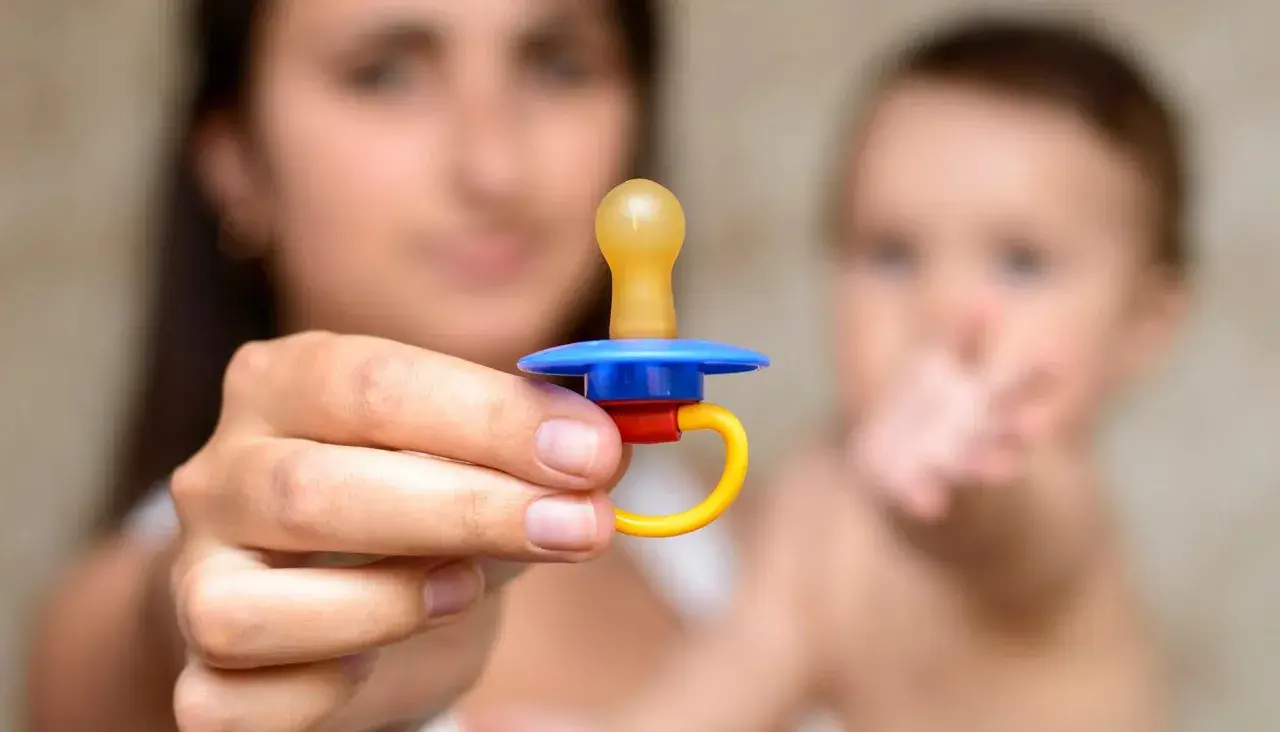
Extended pacifier use is one of those parenting topics where the answer depends on age, feeding stage, and how often the pacifier is actually in the mouth. In infancy, it can be a useful soothing tool and, for sleep, part of a safer sleep routine; later on, it can start to shape teeth, jaw position, ear infection risk, and everyday dependence. This article breaks down what matters most, when to start limiting use, and how to phase it out without turning bedtime into a battle.
What matters most about pacifier use over time
- Pacifiers are most useful in early infancy, especially for soothing and sleep.
- If breastfeeding, it usually makes sense to wait until feeding is established before introducing one.
- The main long-term concerns are dental changes, a higher chance of ear infections, and a habit that becomes harder to stop.
- Pacifiers should never replace meals or be used to calm hunger.
- A one-piece pacifier without cords or clips is the safer choice.
- If the habit is still strong after age 2, I would start paying close attention to the bite and talk with a pediatric dentist if anything looks off.
Where pacifiers help and where they start to overstay their welcome
I usually think about pacifier use in two very different ways: as a short-term soothing aid, and as a habit. In the first months of life, a pacifier can satisfy a real sucking need, calm fussiness, and support sleep. Once it turns into something a child needs for most naps, car rides, and stretches of boredom, the balance starts to shift.
The reason this matters is simple: the longer a sucking habit lasts, the more likely it is to affect how the mouth develops and how hard it is to break later. The effect is not the same for every child, and short, predictable use is very different from carrying the pacifier all day. That timing question is what most parents need clarified first, so I like to start there.
A realistic timeline for reducing use
There is no single switch-flip moment, but there is a practical progression that works for most families. The goal is to keep the benefits early on, then narrow the habit before it turns into a long-term crutch.
| Age range | What usually makes sense | What I would watch for |
|---|---|---|
| Birth to about 3 to 4 weeks | If breastfeeding, wait until feeding is established before introducing a pacifier. | Make sure hunger cues are not being masked. |
| About 1 to 6 months | Pacifiers are most useful here for sleep and brief soothing. | Use it for calming, not as a substitute for feeds. |
| 6 to 12 months | Begin limiting use to naps and bedtime if the baby wants it constantly. | Daytime dependence can start to become a habit rather than a tool. |
| 12 to 18 months | This is a good window to start more active weaning. | Longer use is more likely to be linked with ear infections and early bite changes. |
| 18 to 36 months | Work toward stopping altogether if you can. | Dental effects become more likely as the habit continues. |
| After 3 years | If the habit is still strong, I would treat it as a dental issue worth checking. | Visible bite changes should not be ignored. |
That timeline is more useful than a rigid deadline because it lets you act before the habit gets sticky. It also leads straight into the real question many parents ask next: what actually changes when the pacifier stays in play too long?
What long-term use can change
Teeth and jaw position
This is the part people usually worry about first, and for good reason. A long sucking habit can affect how the front teeth meet, how the back teeth fit together, and how the upper and lower arches develop. The biggest pattern is not just frequency, but duration. A child who uses a pacifier briefly at sleep time is in a different situation from one who keeps it in for hours every day.
Common changes include an open bite, where the front teeth do not meet normally, and a posterior crossbite, where the upper and lower teeth do not line up cleanly. If the habit stops before the permanent front teeth come in, the bite often improves on its own. If it runs on much longer, orthodontic help becomes more likely.
Ear infections
Pacifier use has a real association with acute middle ear infections, especially once babies move past the first year. I would not claim every ear infection comes from a pacifier, because it does not work that neatly. But if a child is still using one heavily after 12 months, and ear infections keep showing up, the pacifier is worth taking seriously as part of the picture.
Speech and feeding
The speech evidence is more mixed than many parents expect. A short-term soothing habit is not the same thing as a speech disorder, and not every child with a pacifier develops articulation problems. Still, prolonged daily use for several hours can interfere with tongue placement and make some speech patterns less clean. For feeding, the bigger rule is even more direct: a pacifier should not be used to delay meals or quiet hunger.
If a baby is hungry, feed the baby. If the pacifier is doing the job of a meal cue, the habit has already crossed a line.
Read Also: Formula Feeding Benefits - Why It Works for Many Families
Hygiene and safety
Pacifiers can collect microbes, and that matters more as children mouth them constantly, drop them often, or reuse them without much cleaning. Worn or damaged pacifiers also become a safety issue. The habit itself is not just about teeth, it is also about how clean, intact, and age-appropriate the product is.
Once you understand the tradeoffs, it becomes easier to see why pacifiers are still useful in some situations and not in others.
When a pacifier still earns its place
I do not treat pacifiers as a bad habit by default. In the right window, they are useful, low-cost, and often genuinely helpful. For sleep in infancy, they can support soothing and are associated with a lower risk of sleep-related infant death. If a baby is breastfed, the usual advice is to wait until feeding is going well before introducing one, which often takes about 3 to 4 weeks.
Pacifiers can also help during brief painful or stressful moments, and they can be especially useful for babies who need extra non-nutritive sucking. The key is that the pacifier should have a clear job. It should calm, not replace feeding, and it should not become the only way a child settles down.That is why I often prefer a pacifier to an early thumb habit. If a child becomes dependent on a thumb, you cannot take it away or leave it at home. With a pacifier, you at least have a lever to pull when it is time to move on.
Pacifier or thumb sucking, which habit is easier to manage
| Habit | What I like about it | What makes it harder later |
|---|---|---|
| Pacifier use | It is easier to remove, limit, and replace with other soothing cues. | Long daily use can still affect teeth and jaw alignment. |
| Thumb or finger sucking | It is always available and can feel deeply comforting to the child. | It is much harder to control, and some bite problems can be more pronounced. |
When parents ask me which one is better, my answer is usually: the habit you can actually shape. A pacifier is not harmless forever, but it is often easier to wean than a thumb. That control is what makes a gentle exit possible instead of a drawn-out struggle.
How I would phase it out without a bedtime war
The best weaning plans are boring on purpose. They work because they are simple, predictable, and consistent enough that the child is not constantly negotiating for an exception.
- Start by limiting daytime use first. Keep the pacifier for naps and bedtime before you try to remove it completely.
- Pick a calm week. Do not begin during travel, illness, teething flare-ups, or a major schedule change.
- Replace the function, not just the object. Rocking, singing, cuddling, a short routine, or a comfort item that is age-appropriate can take over part of the job.
- Praise the non-pacifier moments. Small rewards and specific praise work better than criticism or power struggles.
- Be consistent once you set the rule. If the pacifier comes back every time there is protest, the protest becomes the strategy.
- Stay calm when the child pushes back. A little frustration is normal; a big emotional battle usually makes the habit last longer.
If a child is over 2 and still using a pacifier heavily, I would narrow the window even more aggressively, usually to sleep only, then move toward full removal. At that age, the child is old enough to understand simple expectations, which helps more than people think.
Safer pacifier habits that really matter
Some of the biggest problems around pacifiers have nothing to do with the habit itself and everything to do with how the pacifier is used. The wrong product or the wrong routine can turn a helpful tool into an avoidable risk.
- Choose a one-piece pacifier when possible.
- Use a firm shield with ventilation holes that cannot pass fully into the mouth.
- Never tie it to a crib, neck, hand, or clothing during sleep.
- Do not dip it in honey or any sweet substance.
- Replace it if it cracks, tears, or looks worn.
- Do not use a bottle nipple as a pacifier.
- Keep it clean, especially in the first year when babies put everything in their mouths.
These rules sound basic, but basic is the point. Most of the bad pacifier outcomes I see are less about the pacifier itself and more about overuse, poor hygiene, or unsafe accessories.
The signals I would act on sooner rather than later
If I were watching a child who still loved a pacifier, these are the signs that would move the issue from “we should probably wean” to “we need to address this now.”
- The child is past age 2 and still needs the pacifier for most of the day.
- The front teeth are starting to stick out or no longer meet properly.
- The bite looks uneven, especially if the back teeth do not line up.
- Ear infections keep coming back after the first year.
- The pacifier is being used to delay meals or replace normal feeding cues.
- Weaning attempts are getting stuck because the pacifier has become the only sleep strategy.
When any of that shows up, I would talk with a pediatrician or pediatric dentist instead of waiting for the habit to fade on its own. Pacifiers are useful in the right window, but they work best when they still have a purpose. Once that purpose is gone, the smartest move is usually to help the child outgrow the habit before it starts making smaller problems into bigger ones.
