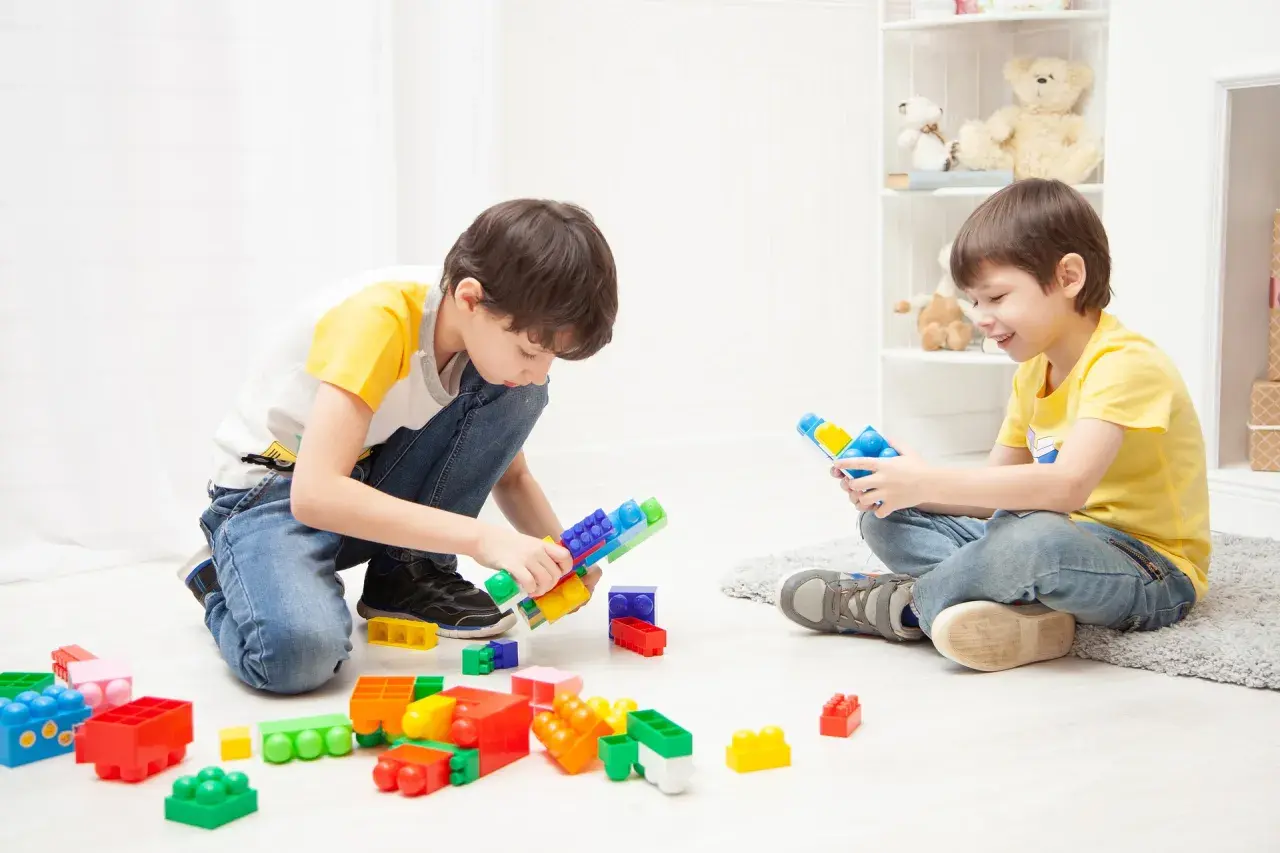
Choosing what to play indoors is easier when you think in three layers: movement, imagination, and calm focus. The best choices fit the room, the child’s age, and how much energy you need to burn off without turning the living room into a disaster zone. In this guide, I focus on indoor games and activities that are genuinely useful on rainy days, sick days, and those long afternoons when everyone is starting to climb the walls.
The strongest indoor choices mix movement, open-ended play, and a low-cleanup setup
- High-energy games are best when kids need to move first and think second.
- Quiet play like puzzles, building sets, and cards works better when attention is already stretched.
- Age matters more than most people expect, especially for toddlers and mixed-age siblings.
- Indoor play is not just filler time, it can support language, self-control, and problem-solving.
- The easiest wins are activities you can set up in under 5 minutes and reset just as fast.
Start with the kind of play the room can handle
I usually sort indoor choices by energy first. A child who needs to move will not care that you found a clever puzzle, and a child who is already overstimulated will not enjoy a noisy relay race. Matching the activity to the space saves more time than hunting for the “perfect” toy ever will.
| Situation | Best indoor play | Typical setup | Why it works |
|---|---|---|---|
| High energy, small room | Freeze dance, balloon volleyball, tape obstacle course | Pillow, tape, balloon, soft objects | Uses movement without needing much floor space |
| Quiet focus, longer attention span | Puzzles, magnetic tiles, card games, coloring | Table or play mat | Gives kids a clear start and finish |
| Mixed ages | Scavenger hunt, treasure map, cooperative build | Paper clues, household objects, blocks | Lets each child play at a different level |
| Need independent play | Sticker scenes, play dough, figure play, story prompts | Small basket of materials | Easy to start, easy to pause, easy to return to |
I like activities that begin in under 5 minutes and end without a battle over cleanup. If the game needs a full production setup, it is rarely the right choice for a random Tuesday. Once that match is right, the actual game choices get much simpler.

Indoor games that burn energy without wrecking the room
When the energy level is high, I reach for games that channel movement instead of fighting it. The goal is not to make children sit still, it is to give the motion a shape. That is usually what turns chaos into something fun enough to repeat.
- Indoor obstacle course - Use couch cushions, painter’s tape, a blanket tunnel, and a soft toy to carry from one station to the next. It scales easily, which makes it one of the best mixed-age games in the house.
- Freeze dance or stop-and-go - One song can buy you 10 minutes of movement and a little self-control practice. I like it because the rule is simple, but the repetition still feels exciting.
- Balloon volleyball - A balloon moves slowly enough to stay safe in tighter rooms, and that makes it ideal when you want active play without hard throws.
- Floor is lava - This works best when you add a purpose, such as finding colors, numbers, or objects along the way. Otherwise it turns into random jumping.
- Pillow bowling - Six plastic bottles and a soft ball are enough. It is quiet, fast to reset, and good for hand-eye coordination.
- Treasure hunt - Hide clues, toy pieces, or small figures around the room. This is the best choice when a child needs both movement and a clear goal.
Keep hard objects off the floor, skip any version that involves jumping off furniture, and use soft balls whenever you can. Those limits are not boring, they are what make the game sustainable. When the energy drops, the next best move is something quieter and more open-ended.
Quiet options for focused play and creativity
Not every indoor moment needs motion. Sometimes the room needs less noise, less jumping, and a clearer finish line. That is where building sets, puzzles, and simple rule games earn their keep, because they hold attention without requiring constant adult invention.
- Building toys - Blocks, magnetic tiles, wooden planks, and similar open-ended toys are strong indoor staples because there is no single correct outcome. Kids can make a tower, a city, or a pretend zoo from the same pieces.
- Puzzles - For preschoolers, 24 to 48 pieces is often enough. Older children may enjoy 100 to 300 pieces, especially if you turn it into a timed challenge or a group project.
- Board games and card games - Memory, dominoes, Uno-style games, checkers, and simple strategy games help children practice turn-taking without a long setup.
- Play dough or modeling clay - Good for fine motor strength, sensory play, and calm focus. It is one of the few activities that can fill 20 minutes without feeling forced.
- Pretend play kits - A play kitchen, doctor set, dollhouse, or mini store helps children rehearse social language and everyday roles.
- Figure-based play - Cars, dolls, action figures, and collectible figures become more interesting when they have a mission. Sorting them is fine, but story-based play usually lasts longer.
If you are buying one small set for indoor use, I would choose one open-ended construction toy, one rules-based game, and one sensory material before I bought anything else. A decent card game often costs about $5 to $15, a sturdy puzzle may land around $10 to $25, and magnetic tiles usually run higher, often about $25 to $80 depending on set size. That mix covers more kinds of afternoons than another single-purpose gadget ever will.
What different ages need from indoor play
Age changes the answer more than most adults expect. A toddler usually wants repetition and short feedback loops, a preschooler wants make-believe, and a school-age child wants challenge or status. If you give all three the same game, the youngest may get frustrated and the oldest may get bored.
| Age group | What usually works | Good examples | Main developmental win | Watch-outs |
|---|---|---|---|---|
| 0 to 3 years | Sensory play, repetition, very simple cause-and-effect | Stacking cups, hide-and-find, picture books, sound games | Language, motor planning, object permanence | Too many rules or tiny parts |
| 3 to 5 years | Pretend play, short turn-taking games, movement with direction | Dress-up, Simon Says, pretend store, doctor kit | Self-control, social language, imagination | Too much correction or too much explanation |
| 6 to 9 years | Challenge, building, scavenger hunts, games with light strategy | Lego challenges, card games, craft builds, puzzle races | Planning, patience, problem-solving | Making the activity feel babyish |
| 10 to 12+ years | Autonomy, social play, creative projects, strategy | Trivia, party games, model building, baking challenges | Decision-making, collaboration, independence | Not giving them enough choice |
With mixed-age siblings, I usually keep the same game but change the difficulty. A toddler can find all the red objects, while an older child can sort them by pattern or keep score. That small adjustment keeps everybody included without forcing the whole room into one narrow version of play. The next question is not just what works, but what works for development, which is where the value of play gets clearer.
Indoor play works harder for development than most people notice
Indoor games are not just a way to kill time. The American Academy of Pediatrics points out that play helps children plan, organize, get along with others, and regulate emotions. I see that every time a child has to wait a turn, negotiate a role, or stick with a building challenge long enough to solve it.
- Language grows when children narrate what they are doing, retell a story, or act out a pretend scene.
- Self-regulation grows when a game includes stop-and-go moments, turn-taking, or delayed rewards.
- Fine motor skills improve with stickers, scissors, dough, small blocks, and cards.
- Gross motor control improves with crawling, balancing, hopping, and throwing soft objects.
- Social skills improve when children share materials, assign roles, and recover from losing.
One term I use often is joint attention, which simply means two people are focused on the same thing and talking about it. Another useful idea is scaffolding, which means giving just enough help to keep the game moving, then stepping back. That balance matters, because over-directing a child usually kills the curiosity that makes play so useful in the first place.
A three-basket rotation keeps indoor play ready before boredom starts
If you want indoor play to feel easy on hard days, build a rotation instead of improvising every time. I like a three-basket system: one active bin, one build-and-make bin, and one quiet bin. When each basket is ready, the answer is never “nothing to do”; it is just a choice between movement, creation, and calm.
- Active bin - Painter’s tape, balloons, soft balls, cones, or cups.
- Build bin - Blocks, magnetic tiles, animals, cars, or figures.
- Quiet bin - Crayons, paper, stickers, puzzles, and one card game.
Rotate one item every 1 to 2 weeks and keep the rest out of sight. That small habit makes the next rainy afternoon much easier, because the toys still feel fresh and you do not have to invent fun from scratch. When the setup is simple, the play usually gets better, not worse.
