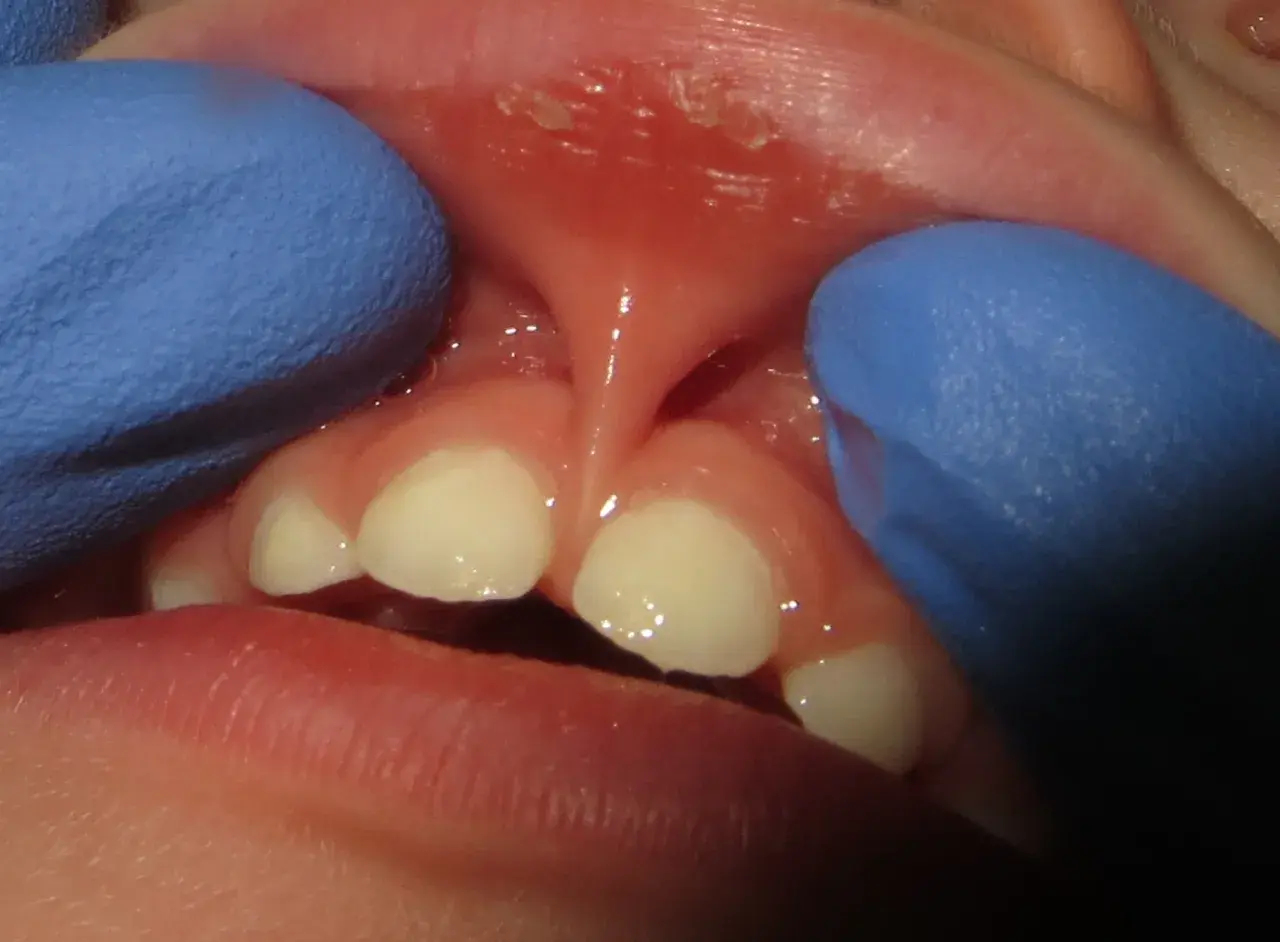
An upper lip frenulum can look dramatic in photos, but the real question is whether it is changing how a baby feeds, soothes, and gains weight. The relationship between a lip tie and pacifier use is mostly about function, not appearance: some babies handle a pacifier normally, while others show broader latch or suction problems that deserve a closer look. In this article, I focus on the signs that matter, how pacifiers fit into the picture, and when a simple adjustment is enough versus when you should ask for feeding help.
The short version on lip ties and pacifiers
- A visible upper lip frenulum is common and does not, by itself, prove a feeding problem.
- A pacifier can soothe a baby, but it does not correct poor latch or weak milk transfer.
- If feeding is painful, messy, or slow, I look at the baby’s function before I blame the tissue.
- Breastfeeding families usually do best waiting to introduce a pacifier until latch and weight gain are going well.
- A release procedure is usually considered only after a full feeding assessment and conservative support have not solved the problem.
What a lip tie really means for feeding
When I look at a suspected lip tie, I care less about how high the tissue inserts and more about whether the baby can flange the upper lip, seal the mouth, and transfer milk without strain. That is the part parents actually feel during feeding: a baby who clicks, leaks milk, tires quickly, or leaves a parent in pain is giving you a functional clue, not just an anatomical one.
The upper lip frenulum is a normal structure, and a prominent one is not automatically a problem. The difficulty is that appearance alone does not predict feeding success very well, so a baby can have a noticeable frenulum and feed just fine. On the other hand, some babies with restrictive oral tissue do struggle, which is why I focus on the whole feeding pattern instead of a single mouth photo.
This is also why lip-tie talk often overlaps with tongue-tie conversations. In practice, the tongue usually plays a bigger role in milk transfer, while the upper lip is more about comfort, seal, and stability. Once that distinction is clear, the pacifier question becomes much easier to interpret.

How pacifier use and a lip tie interact
A pacifier asks for non-nutritive sucking: the baby is sucking for comfort, not for milk. That means a pacifier can be a useful soothing tool, but it is not a test or treatment for a lip tie. A baby may take a pacifier easily and still struggle at the breast or bottle, because the skill needed for comfort sucking is not the same as the skill needed for efficient feeding.What I watch for is the contrast between the two. If a baby can calm with a pacifier but still feeds poorly, I do not assume the problem is solved. If the baby cannot maintain suction on a pacifier, clicks repeatedly, or gulps air during both pacifier use and feeding, I look more closely at oral function, latch, and coordination.
| What you see | What it may mean | What I would do next |
|---|---|---|
| Baby uses a pacifier well, but feeds are painful or slow | The issue may be feeding mechanics rather than simple soothing needs | Watch a full feed, check latch, and ask for lactation help |
| Baby cannot keep the pacifier in, clicks, or swallows a lot of air | There may be a seal problem, oral-motor immaturity, or another feeding issue | Get a feeding evaluation instead of guessing from appearance |
| Baby feeds well, gains weight, and only wants the pacifier for calming | That usually points to normal soothing behavior | Continue safe use and monitor growth |
| Baby refuses the pacifier but feeds comfortably | That can simply be preference | Do not force it if feeding is otherwise going well |
The main point is simple: a pacifier can reveal useful patterns, but it does not diagnose anything on its own. Once you know how to read those patterns, the next step is spotting the signs that actually tell you feeding is being affected.
Signs the real issue is feeding mechanics
If a lip tie is causing trouble, the symptoms usually show up in the feed, not just in the mirror. The most useful clues are the ones that repeat across feeds and across days.
- Shallow latch or frequent slipping on and off the breast or bottle
- Clicking or smacking sounds while sucking
- Milk leaking from the corners of the mouth
- Long feeds with a baby who seems tired before finishing
- Nipple pain, pinching, or compressed nipples after breastfeeding
- Slow weight gain or fewer wet diapers than expected
- Swallowing a lot of air, which can look like gassiness, fussiness, or reflux-like discomfort
- Difficulty switching between breast and bottle without frustration
There is one more thing I would not overread: a newborn sucking blister or a little lip mark from sucking can be normal and is not automatically a sign of pathology. What matters is the overall pattern, especially if the baby is not feeding efficiently or the parent is hurting. If those signs are there, the next move is to work the feeding setup, not just the anatomy.
What I would try before considering a procedure
I usually start with the feeding environment, not the frenulum. That means watching one full feed, checking whether the baby is hungry or frantic before the latch, and asking whether the problem shows up only at the breast, only at the bottle, or in both places. A baby who is clearly transferring milk well does not need intervention just because the upper lip looks tight.
- Watch a complete feed and note latch depth, seal, comfort, and time to finish.
- If breastfeeding is involved, work with a lactation consultant or pediatric clinician who can actually observe the latch.
- If bottle feeding is part of the picture, check nipple flow and pacing before changing anything else.
- Track wet diapers, stool output, and weight trend for a few days instead of relying on one difficult feed.
- Do not use a pacifier to stretch the time between feeds if the baby may still be hungry.
- If feeding is painful or ineffective, protect milk supply and get help quickly rather than forcing repeated, stressful attempts.
When a pacifier is appropriate and how to choose one
A pacifier can be a useful tool when it is used for the right reason. It can calm a fussy baby, support sleep routines, and in the first year of life it is commonly recommended at naps and bedtime to help reduce the risk of sleep-related infant death. That does not mean it should replace feeding, and it does not mean every baby should get one immediately.
When I help parents choose a pacifier, I focus on safety and simplicity. The best option is usually one that is designed as a single piece, has a firm shield with ventilation holes, and is large enough that the whole pacifier cannot disappear into the mouth. I also avoid anything attached to clothing, blankets, stuffed toys, or cords, because those add choking and strangulation risk.
- Wait until breastfeeding is going well before offering one, if breastfeeding is part of the plan.
- Choose a one-piece design whenever possible.
- Make sure the shield is firm and wide enough to stay outside the mouth.
- Never tape bottle parts together to make a homemade pacifier.
- Do not attach the pacifier to the crib, the baby, or a toy.
- If it falls out after the baby is asleep, you do not need to put it back in.
That safety piece matters because a pacifier can be supportive without becoming a crutch or a hazard. From there, the real question is whether a suspected lip tie deserves a closer professional look.
When a lip tie deserves closer evaluation
I would not rush to a procedure just because the upper frenulum looks prominent. A visible lip tie is common, and treatment based on appearance alone is a weak decision. What justifies a closer evaluation is persistent functional trouble: ongoing pain, poor transfer of milk, poor growth, or repeated feeding stress that does not improve with support.
That evaluation should be broader than a quick look in the mouth. The strongest approach is a full feeding assessment that includes the baby’s latch, suck pattern, weight gain, and, when needed, input from a pediatrician, lactation consultant, feeding therapist, or pediatric dentist/ENT. I would also be cautious about any plan that promises a dramatic fix from lip release alone, because current guidance is much stronger for careful functional assessment than for treating the lip tissue by appearance.
Here is the standard I use: if the baby is feeding comfortably, gaining weight, and the pacifier is just a comfort tool, I would usually watch and support rather than intervene. If the baby is still struggling despite good feeding help, then it is reasonable to discuss whether the tissue is part of the problem or whether something else is driving the issue. That functional lens keeps the conversation grounded and prevents unnecessary procedures.
What matters most before you blame the tie
The safest way to think about this topic is to watch the baby, not the label. A tight-looking upper frenulum is only part of the story; the real story is whether feeds are efficient, comfortable, and followed by steady growth. If those things are in place, a pacifier can remain just a pacifier.
If they are not in place, I would keep a short 3-day log before the appointment: feed duration, clicking, pain level, wet diapers, and any moments when the baby seems to lose suction. That gives your pediatrician or lactation consultant something concrete to work with, which is far more useful than a single photo or a single difficult feed.
In other words, the goal is not to decide whether the lip looks tied. The goal is to decide whether the baby is thriving, and if not, what practical change will actually help.
