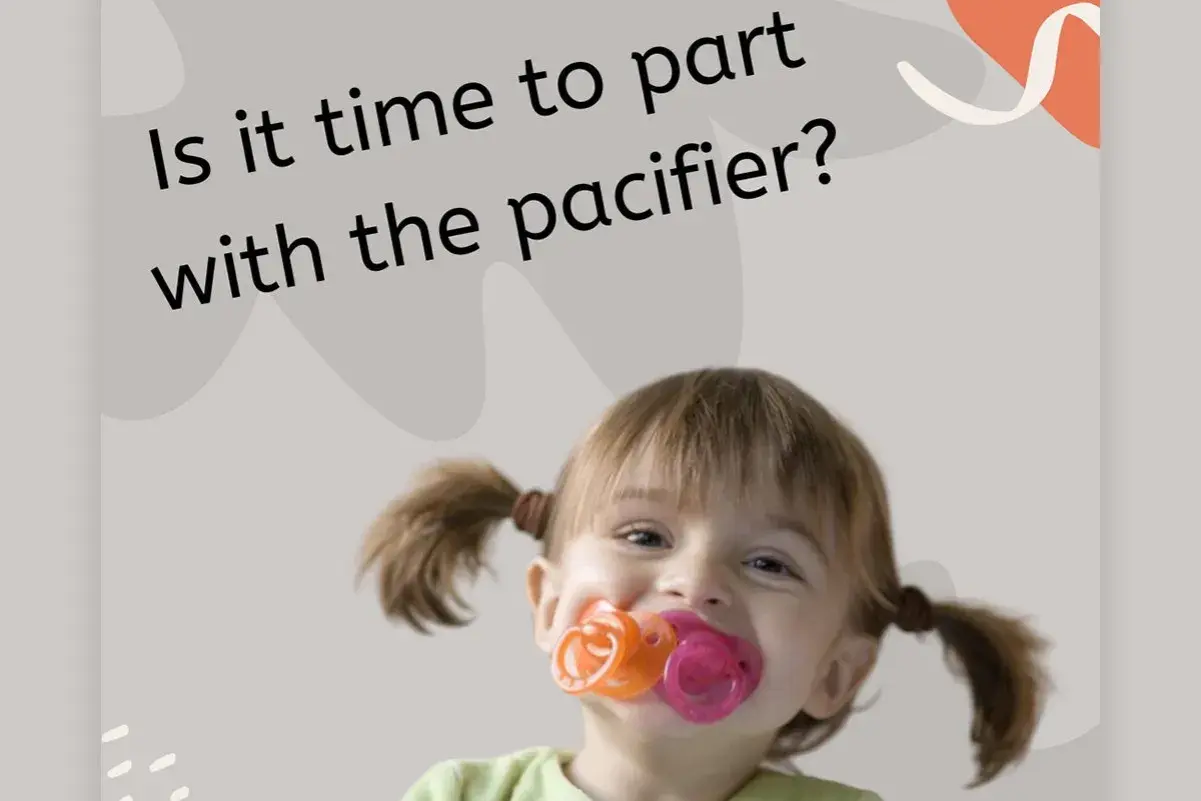
Chewing on a pacifier can look harmless at first, but it sits at the intersection of soothing, teething, and safety. In this article, I break down why toddlers do it, when it is still normal, when it becomes a problem, and how to choose a safer replacement before a worn pacifier turns into a choking risk. I also cover how the habit connects to feeding, sleep, and the bigger question of when it is time to move on.
What matters most when a toddler keeps chewing on a pacifier
- Chewing is often normal during teething or self-soothing, but visible wear means the pacifier needs to be replaced.
- One-piece silicone designs are usually safer than anything with seams, caps, cords, or decorative parts.
- A pacifier that is sticky, cracked, thinned out, or misshapen should come out of rotation immediately.
- If chewing is constant, a teether often fits the need better than a pacifier does.
- Dental experts generally recommend ending nonnutritive sucking habits by age 3.
- Persistent chewing, pain, feeding changes, or sleep disruption are reasons to check in with a pediatrician or pediatric dentist.
Why toddlers chew on pacifiers
Chewing on a pacifier usually comes from one of four places: teething pressure, oral curiosity, self-soothing, or habit. I usually assume it is a signal before I assume it is a problem. Toddlers are exploring the world with their mouths, and a pacifier becomes an easy target because it is always available, soft enough to bite, and already associated with comfort.Teething pressure
When molars start pushing through, a child often wants firm counterpressure on the gums. That is why the chewing is sometimes strongest in the late afternoon or right before sleep, when tiredness makes the discomfort feel bigger. In that case, the pacifier is not really being used as intended; it is being used like a teether.
Self-soothing and sensory seeking
Some toddlers chew because the mouth input feels calming. The pressure, rhythm, and repetitive motion can settle them the same way rocking or thumb-sucking does. I see this most often in children who reach for the pacifier during transitions, car rides, or moments of overstimulation.
Habit after infancy
Once a pacifier has become part of the bedtime or nap routine, a child may bite it even when there is no real need to suck. That is less about teeth and more about association. The pacifier has become a cue for comfort, so the child mouths it automatically. That habit matters, because it is the point where a soothing tool starts turning into a wear-and-tear risk.
That leads to the more important question: when is this still normal toddler behavior, and when is it a sign that the pacifier itself has become unsafe?
When the habit is harmless and when it is not
A little nibbling is not the same as repeated gnawing. What I look for is not just the behavior, but the condition of the pacifier after the behavior. If the nipple shows stress marks, the shield is loose, or the surface starts to feel tacky, the item has moved from comfort object to weak link.
| What you see | What it usually means | What to do |
|---|---|---|
| Occasional chewing, but the pacifier stays intact | Common teething or self-soothing behavior | Monitor daily and keep an eye on wear |
| Teeth marks, but no cracks or thinning | The child may be using it more like a teether | Consider a better teething option and shorten pacifier time |
| Sticky surface, thin nipple, white stress lines, or split seams | The material is wearing out | Replace it immediately |
| A missing piece, loose decoration, or any part that could detach | Choking hazard | Discard it right away and check the mouth for fragments |
| Child bites instead of sucking almost every time | The pacifier no longer matches the child’s need | Switch to a teether and start reducing dependence |
HealthyChildren, the American Academy of Pediatrics’ parent resource, recommends one-piece pacifiers with a firm shield that cannot slip fully into the mouth. That guidance matters even more once a toddler starts chewing, because pressure and twisting expose weak points much faster than simple sucking does. The next step is choosing gear that matches the child’s actual behavior instead of the behavior you wish they had.
How to choose a safer pacifier or teether
If the child is biting, I stop thinking in “pacifier” terms and start thinking in “mouth tool” terms. A pacifier is made for soothing through suction. A teether is made for pressure. Those are not interchangeable, and toddlers often make that distinction for us by how they use the item.
What to look for in a pacifier
- One-piece construction so nothing can separate into a choking hazard.
- Firm shield that is wide enough to stay outside the mouth.
- Vent holes in the shield for added safety.
- Age-appropriate size so the nipple and shield fit a toddler, not just an infant.
- No cords, ribbon, or improvised clips attached to the pacifier itself.
Read Also: Binkie Mouth - What It Means & When to Worry
What to look for in a teether
- Textured surfaces that give firm gum pressure without breaking apart.
- Large enough shape that it cannot fit completely into the mouth.
- Simple construction with no tiny add-ons or decorative pieces.
- Material that can be chilled safely in the fridge, not frozen solid.
| Option | Best for | Main limitation |
|---|---|---|
| One-piece pacifier | Brief soothing, bedtime routines, familiar comfort | Not ideal for repeated chewing pressure |
| Textured teether | Teething discomfort and strong biting urges | Does not replace the emotional cue of a pacifier |
| Chilled washcloth | Short teething relief for toddlers over 12 months | Needs supervision and frequent cleaning |
| Comfort object outside the mouth | Sleep transitions and emotional soothing | Works best when the pacifier habit is already weakening |
The American Academy of Pediatric Dentistry advises regular inspection for structural wear and recommends ending nonnutritive sucking habits by 36 months. I read that as practical guidance, not as a hard deadline for every child on earth, but it is a very useful line in the sand. Once the pacifier is being chewed more than sucked, the safer move is usually to shift the job to something built for chewing.
What to do right away when the pacifier starts getting chewed up
When a toddler has turned the pacifier into a bite toy, I would not wait for a dramatic break. I would treat wear as the early warning and act while the item is still intact.
- Inspect it under good light before every use if chewing is frequent.
- Throw it away if you see cracking, thinning, stickiness, or any distortion.
- Check for missing fragments if the child has been biting hard enough to break the surface.
- Offer a teether when the urge is clearly about pressure, not sucking.
- Keep one or two clean backups so an old pacifier does not stay in circulation because it is “still mostly fine.”
- Do not repair it with tape, glue, or heat; that only creates a bigger risk.
If the child is over 12 months old, a chilled teether or chilled washcloth can work well during teething flare-ups. I prefer the fridge to the freezer, because frozen items can be too hard on sensitive gums. If the child is younger than that, or if the mouth looks irritated, keep the solution simple and ask the pediatrician if you are unsure.
How pacifiers fit into feeding, sleep, and oral development
This is the part many parents feel in real life before they can explain it. A pacifier can be helpful between feeds or during sleep, but it should not blur into every waking moment. If it stays in the mouth during meals, the child gets less practice with chewing, swallowing, and talking, and it can also hide hunger cues that matter for a healthy feeding routine.
I like to keep the boundaries clean: food comes first, comfort object second. That means the pacifier stays out of the mouth during meals and snacks, then comes back only if the child really needs it for a short, defined comfort window. That small rule prevents a lot of accidental overuse.
There is also the oral development angle. Prolonged pacifier use can affect bite alignment, especially when the habit continues past toddlerhood. It can also be part of a bigger pattern of mouth dependence, where the child leans on the pacifier for every transition instead of building other calming skills. The evidence for speech delay is limited, but I still watch for a child who spends hours a day with something in the mouth, because it leaves less room for clear practice with speech sounds and normal chewing patterns.
Another practical point: frequent pacifier use has been linked with a higher risk of ear infections in young children. That does not mean every pacifier causes trouble, but it does reinforce the same rule I use everywhere else. The more often the pacifier is in play, the more carefully I want to manage the habit.
Once the pacifier starts affecting meals, naps, or tooth position, it is no longer just a soothing aid. It has become a routine that needs a plan, which is exactly where the last part comes in.
A calm weaning plan that works better than constant negotiation
I do not like power struggles around pacifier habits. They tend to make the object more valuable, not less. A slower, consistent plan usually works better, especially for toddlers who chew because they are attached to the routine as much as the pacifier itself.
- Pick one rule, such as “pacifier only for naps and nighttime.”
- Hold the line consistently across caregivers, car rides, and weekends.
- Add a replacement cue like a book, song, stuffed animal, or brief cuddle routine.
- Use positive reinforcement for pacifier-free periods instead of criticism.
- Move to a teether during teething waves so the child is still getting oral input.
- Set a clear exit point if the child is 3 or older and still reaching for it daily.
If a toddler is highly attached, I usually expect a short adjustment period rather than immediate success. That is normal. The goal is not to remove comfort from the child’s life; it is to make sure the comfort tool fits the stage and does not keep getting chewed into a safety problem. If you keep the replacement close, the rules simple, and the responses calm, the habit usually becomes much easier to manage.
