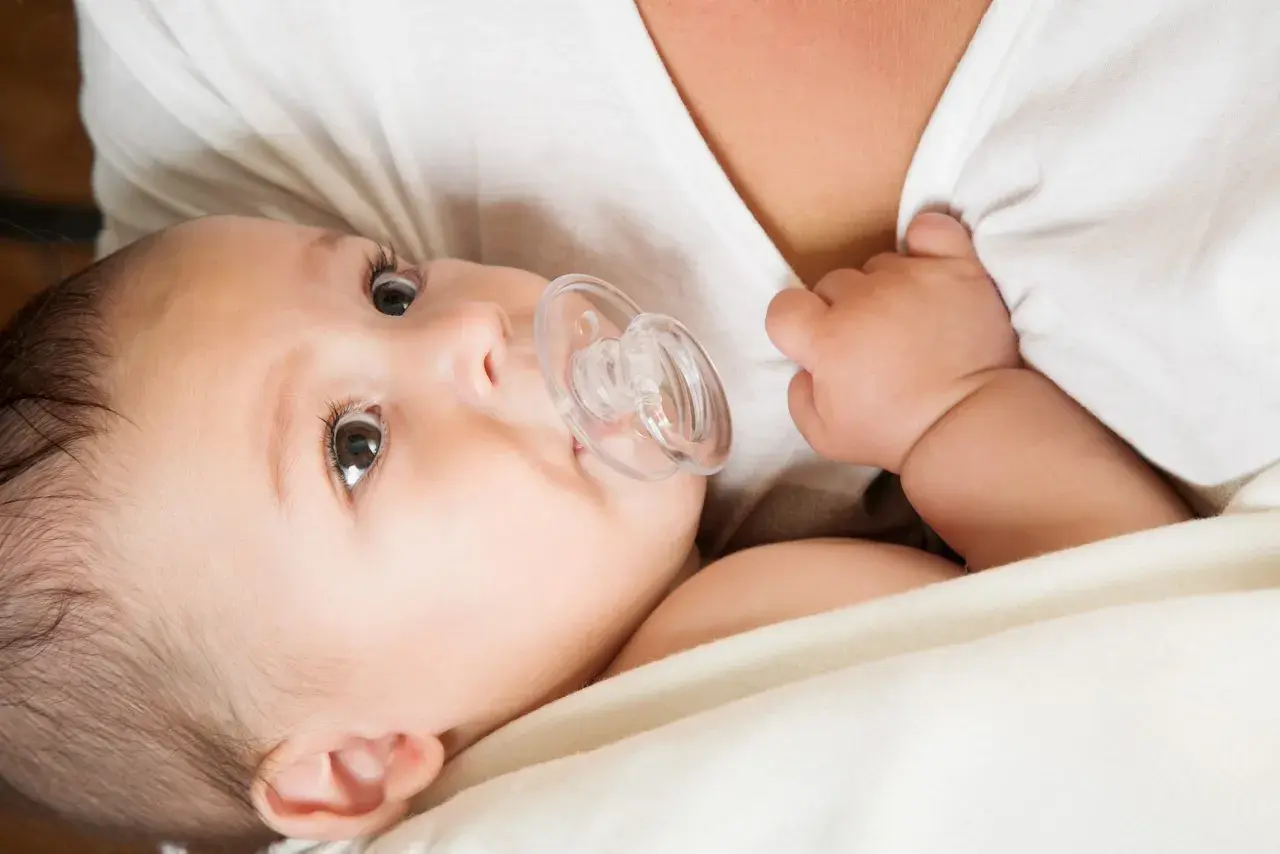
The practical takeaways for breastfeeding families
- For a healthy term newborn, I usually wait until breastfeeding is clearly established, often around 3 to 4 weeks.
- Offer a pacifier after a full feeding or between feeds, not as a substitute for hunger cues.
- Use it as a calming tool, not a way to stretch time between nursing sessions in the early weeks.
- Watch diapers, weight gain, latch comfort, and how settled your baby is after feeds.
- Choose a one-piece, age-appropriate pacifier and keep it clean and intact.
- If feeding suddenly gets harder, pause pacifier use and look at the feeding pattern first.
When a pacifier fits well and when it does not
I like to think of pacifier use as a timing question, not a moral one. If breastfeeding is going well, a pacifier can meet a real sucking need without causing trouble. If feeding is shaky, early pacifier use can blur the picture and make it harder to tell whether your baby is hungry, tired, overstimulated, or struggling at the breast.
| Situation | My read | Best move |
|---|---|---|
| Baby latches well, feeds often, and gains weight appropriately | Pacifier use is usually fine | Offer it after feeds or at nap time if it genuinely helps soothe |
| Baby is rooting, sucking hands, or crying before a feed | Hunger is still on the table | Offer the breast first |
| Baby is fussy after a full feed but not showing hunger cues | Comfort sucking may be the issue | A pacifier can make sense here |
| Baby has poor weight gain, long sleepy feeds, or persistent nipple pain for the parent | Feeding needs a closer look | Pause the pacifier and assess latch, milk transfer, and feeding frequency |
| Baby was born early, has jaundice, or has tongue-tie concerns | Higher-risk feeding situation | Be conservative and get breastfeeding support before leaning on a pacifier |
For healthy term babies in the U.S., a common guideline is to wait until nursing is going well before introducing a pacifier. HealthyChildren.org suggests waiting about 3 to 4 weeks, and the CDC still recommends exclusive breastfeeding for about the first 6 months. That does not mean pacifiers are forbidden during that time; it means the breast should stay the priority while feeding is being established.
Once that line is clear, the next question is simple: how do you introduce a pacifier without creating a feeding shortcut?
How to introduce one without disrupting nursing
The safest approach is boring in the best possible way. I would not introduce a pacifier when the baby is frantic, and I would not use it to push feeds farther apart. The goal is to keep breastfeeding responsive while giving yourself one more soothing tool.
- Wait until breastfeeding is established enough that your baby is clearly transferring milk, usually around 3 to 4 weeks for a healthy term infant.
- Offer the pacifier after a full feeding, not before one.
- Use it mostly when the baby is calm, drowsy, or already settled enough to want sucking for comfort.
- Try it at naps or bedtime if sleep settling is the main issue.
- Do not force it. If your baby rejects it, that is not a problem to solve.
- If your baby is cluster feeding, going through a growth spurt, or seems unusually unsettled, skip the pacifier and feed more often.
One mistake I see often is parents using a pacifier to answer every cry in the early weeks. That works only if crying is truly about comfort. If the baby is actually hungry, it buys a few quiet minutes and then makes the next feed harder. The better habit is to ask one question first: has a real feeding already happened?
When that habit is in place, the choice of pacifier matters more than most people think. The wrong design, a worn-out nipple, or a poor cleaning routine can create avoidable problems.

How to choose and clean a safe pacifier
I do not get fussy about branding here. I care about construction, fit, and hygiene. A pacifier should be simple, sturdy, and easy to clean, especially in the first months when babies are still building immune resilience.
| Feature | Why it matters | What I would look for |
|---|---|---|
| One-piece construction | Fewer break points mean less choking risk | A single molded piece rather than separate parts |
| Firm shield with ventilation holes | Helps keep the pacifier from going too far into the mouth | A shield large enough to stay outside the baby’s mouth |
| Age-appropriate size | Newborn mouths and older infant mouths are not the same | Newborn or 0-6 month sizing for a young baby |
| Dishwasher-safe or boil-safe material | Cleaning is more reliable when it is easy | Materials that can be sanitized without warping |
| No long strings or unsafe clips | Loose attachments can become a strangulation hazard | Short, supervised clips only, never anything that can wrap around the neck |
Cleaning is not glamorous, but it matters. In the first 6 months, I would clean the pacifier often and replace it as soon as it shows cracks, stickiness, discoloration, or a weakened nipple. If you are tempted to “rinse it in your own mouth,” skip that shortcut. It spreads your germs back to the baby and defeats the point of keeping the item clean.
Even a well-chosen pacifier can hide a deeper problem if the feeding pattern is off. That is where I start paying attention to the baby, not the gear.
Signs the pacifier may be masking a feeding problem
This is the part that matters most when parents are unsure whether the pacifier is helping or getting in the way. I would step back and reassess if any of these show up:
- Your baby has fewer wet diapers than expected for age.
- Feeds are very short, very long, or strangely sleepy without satisfaction.
- Weight gain is slow, stalled, or being actively watched by the pediatrician.
- You have ongoing nipple pain, cracking, pinching, or clicking at the breast.
- Your baby seems to want to suck constantly but also frustrates quickly at the breast.
- Your baby was premature, jaundiced, or discharged recently and feeding still feels fragile.
When those signs are present, I stop treating the pacifier as the main question and start looking at latch, feeding frequency, milk transfer, and whether the baby is actually getting enough. Sometimes the fix is small, like improving positioning or nursing more often. Sometimes it means getting a lactation consultant involved. The pacifier itself is usually not the root issue, but it can hide the root issue long enough to make it harder to spot.
There is also a practical middle ground that many families miss: you do not have to choose between “never” and “all the time.” The right approach changes as the baby gets older and feeding gets more predictable.
How I’d use pacifiers as breastfeeding settles in
In the first month, I would keep pacifier use limited and watchful. Breastfeeding is still being built, and every feed matters for supply, rhythm, and confidence. After that, if weight gain, latch, and diaper counts are all solid, I would be more relaxed about using a pacifier for naps, bedtime, car rides, or short soothing stretches.
That is also the stage when the long view starts to matter. Pacifiers can be useful for sleep, and they may offer a small safety benefit at nap time and bedtime once feeding is on track. But they are still a tool, not a requirement. If your baby does fine without one, that is perfectly normal too.
As your child gets older, the balance changes again. Prolonged pacifier use can become a dental habit, so I like to think ahead early rather than wait for it to become hard to unwind. The cleanest transition is usually the one that starts before the habit is deeply entrenched.
A calm feeding plan beats a rigid rule
My practical rule is simple: if breastfeeding is going well, a pacifier can be part of the routine; if feeding is uncertain, breastfeeding comes first. That keeps comfort sucking in the right place without letting it replace hunger cues, milk transfer, or supply-building time at the breast.
If you want the safest version of this routine, keep it basic. Feed responsively, introduce the pacifier only after nursing is established, choose a one-piece model, clean it carefully, and step back anytime feeding changes. That is usually enough to make the pacifier helpful instead of confusing.
