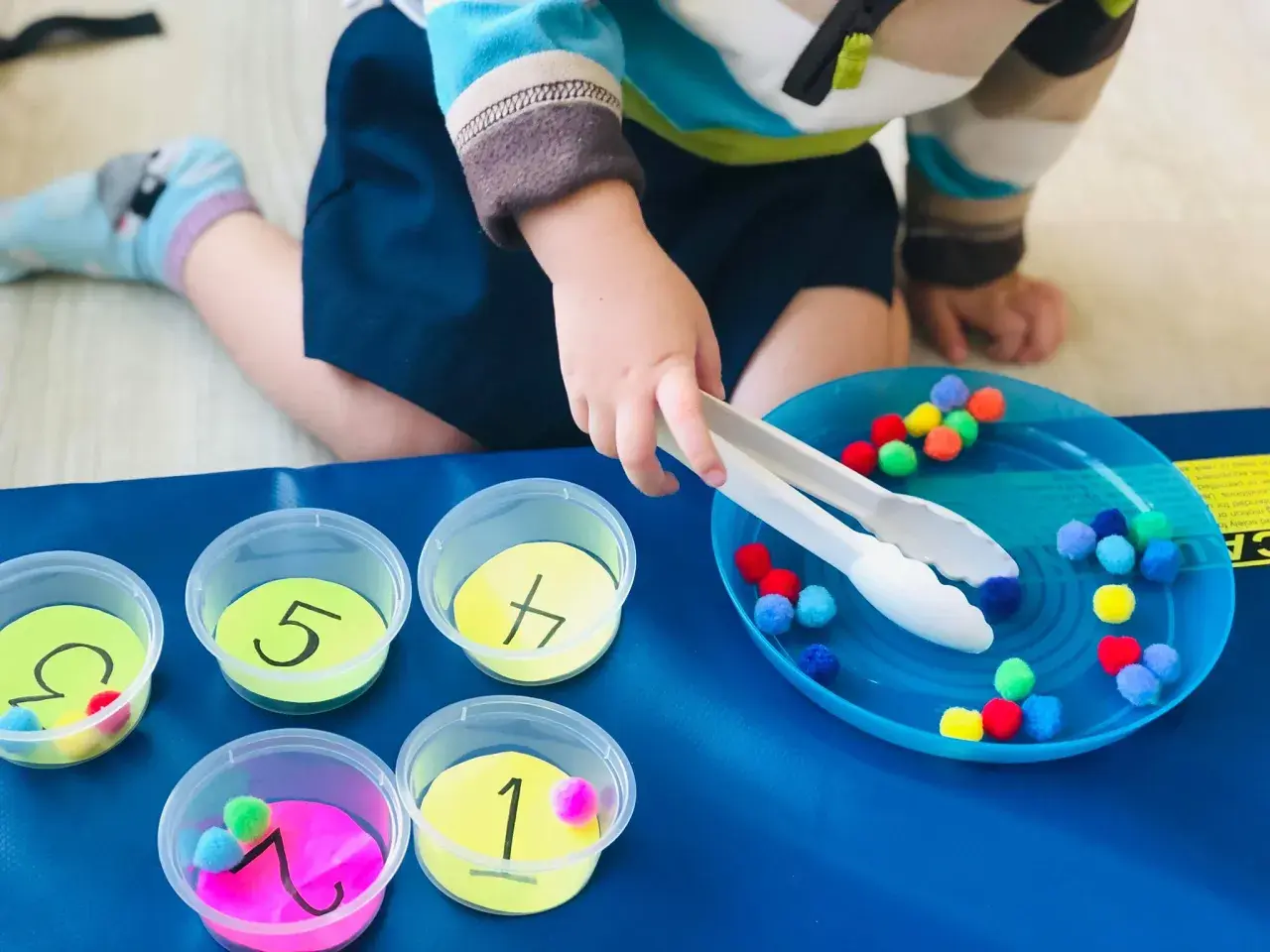
Busy toddler time at home works best when the day has a rhythm: something for the body, something for the hands, something for language, and a quiet reset when attention starts to wobble. When I think about what to do with toddlers at home, I look for play that is easy to set up, supports development, and does not fall apart after five minutes. The goal is not to fill every second; it is to make the hours feel manageable while your child keeps learning through movement, repetition, and pretend play.
The easiest activities are the ones that match energy, attention, and your available setup
- Use short play loops. Toddlers usually do better when you switch activities before boredom turns into chaos.
- Lead with movement. Big-body play often resets moods faster than another toy swap.
- Mix in hands-on work. Blocks, crayons, puzzles, and dough build fine-motor control and concentration.
- Keep language in the room. Books, songs, naming games, and pretend play grow vocabulary naturally.
- Make a small independent-play basket. A few well-chosen items are usually more useful than a room full of novelty toys.
Start with the kind of play your toddler actually needs
I usually decide by mood first, not by toy. A child who is bouncing off the couch needs a different answer from a child who is clingy after nap, and both need something simpler than a long activity plan.
| Toddler mood | Best play type | Why it works | Easy example |
|---|---|---|---|
| Full of energy | Gross motor play | Gives the body a clear job and reduces bouncing between random behaviors | Tape-line walks, pillow jumps, freeze dance |
| Cranky or restless | Sensory and quiet play | Softens the transition without adding too much stimulation | Water play, stickers, a read-aloud |
| Clingy or seeking you | Pretend and shared play | Builds connection while keeping the interaction active | Kitchen play, doctor kit, tea party |
| You need a few minutes to reset | Independent play basket | Creates a short stretch of self-directed focus | Blocks, chunky puzzle, books, crayons |
Once I know the target, I can pick the right kind of play instead of just grabbing the nearest distraction. That usually leads straight to movement, because movement is the fastest way to change the tone of the room.

Movement games that reset the mood fast
Big-muscle play gives toddlers a safe place to use energy. By gross motor play, I mean climbing, balancing, jumping, crawling, and pushing activities that use the large muscles of the body. Indoors, I keep it simple and repeatable: one path, one rule, and one obvious finish line.
- Tape-line walks. Make a zigzag path with painter’s tape and let your toddler step, hop, or drive a toy car along it.
- Cushion islands. Place two or three couch cushions on the floor and ask for jumps, crawls, or careful balance steps.
- Freeze dance. Put on 2 or 3 songs, then pause the music and freeze together. It is simple, but it teaches impulse control without feeling like a lesson.
- Carry and deliver. Ask your child to move soft toys, socks, or empty plastic cups from one basket to another.
- Animal walks. Pretend to be a bear, crab, or bunny for a short lap around the room.
I skip balloons for free play with toddlers and clear away anything sharp or breakable before we start. If the room is set up well, movement play usually buys you a calmer transition into table play, which is where fine-motor work shines.
Hands-on activities build the skills toddlers use later for dressing, drawing, and eating
Fine motor control means small-hand skills: grasping, pinching, placing, stacking, and scribbling. These are the quiet little workouts that later show up when a child zips a jacket, turns pages cleanly, or starts using crayons with more control. The best part is that most of them can be done with ordinary household items.
- Blocks and stacking cups. Build a tower, knock it down, rebuild it. That repetition is not wasted time; it is how toddlers learn cause and effect.
- Chunky crayons and paper. Short crayons are easier for small hands to control than long, slippery ones.
- Sticker transfer. Stick one or two large stickers on paper and let your child peel and place them again. Large stickers work better than tiny ones.
- Play dough. Rolling, squishing, and pressing dough builds hand strength. Add a spoon, a cup, or a plastic cookie cutter if you want to keep it interesting.
- Pouring and scooping. A small bowl, a mug, and a tray at the sink can keep a toddler busy longer than many store-bought toys.
The trick is to keep the materials large enough to be safe and the setup small enough that your child can succeed without constant help. That leads naturally to the play that uses the most language of all: pretend scenarios and shared stories.
Language and pretend play keep toddlers busy longer than most gadgets
This is where I think many parents underestimate the power of ordinary conversation. Toddlers do not need a perfect lesson; they need back-and-forth. Books, songs, and pretend play give them a chance to hear words, repeat them, and use them in a meaningful context.
Use books as a launch pad
I like picture books that invite pointing, naming, and simple predictions. Ask things like “Where is the dog?” or “What do you think happens next?” If your toddler wants the same book every day, that is a feature, not a flaw. Repetition helps language stick.
Turn daily routines into pretend scenes
A toy kitchen, a basket of scarves, or a few plastic cups can become a restaurant, a doctor office, a grocery store, or a tea party. The point is not the prop; it is the script. Pretend play builds sequencing, self-regulation, and social language because your toddler has to hold an idea in mind and act it out.
I also use simple matching games, body-part games, and “find the thing” challenges when I want something between active play and quiet time. Once language is in the mix, you can usually stretch attention longer without making the activity feel heavier.
Set up quiet play that gives you 10 minutes without turning on a screen
There are moments when you do need a real reset. In those moments, I build a small independent-play basket instead of waiting for a child to invent it alone. Start with a few reliable items, introduce them while you are nearby, and then let your toddler practice staying with the activity for short stretches.
- Keep the basket small. Four to six items is usually enough. Too many choices often create more chaos, not less.
- Choose open-ended materials. Books, blocks, chunky puzzles, scarves, crayons, and simple pretend pieces do more work than flashy one-use toys.
- Rotate instead of replacing. Put some items away for 1 or 2 weeks and bring them back later. To a toddler, that feels fresh.
- Stay reachable. Independent play is easier when your child can still see or hear you nearby.
- Use screens sparingly. Passive viewing is not the same as hands-on play, so I treat it as a backup, not the default plan.
If you want the most predictable result, pair the basket with a routine cue, like “I’m making lunch, and you can play with the puzzle while I’m here.” The clearer the boundary, the easier it is for a toddler to settle.
The toys and materials that earn their space at home
For me, the best toddler setup is not a mountain of toys. It is a tight, useful mix of materials that can be used in multiple ways and survive repeated play. If I had to choose where to spend first, I would usually choose basics that support blocks, books, art, movement, and pretend play. Open-ended means your child can use the same item in many ways, which is exactly why simple toys often last longer than novelty ones.
| Item | Best for | Why it earns space | Watch-outs |
|---|---|---|---|
| Blocks | Building, knocking down, pretend worlds | Flexible enough to grow with the child | Choose toddler-safe sizes and avoid pieces that are easy to swallow |
| Books | Language, calm time, shared reading | Low cost per use and easy to repeat every day | Board books hold up better than thin pages |
| Chunky crayons and paper | Scribbling and early drawing | Portable, cheap, and useful almost anywhere | Thin markers and tiny art pieces can be frustrating or messy fast |
| Chunky puzzles | Problem-solving and quiet focus | Great for independent stretches and fine-motor practice | Start with fewer pieces so success comes quickly |
| Pretend props | Kitchen, doctor, store, and family play | Strong for language and social development | Keep accessories large and simple |
| Soft balls or scarves | Indoor movement and toss games | Useful when you need a quick gross-motor reset | Skip balloons and other fragile items that can become hazards |
I usually favor toys that can do at least 3 jobs. A set of blocks can be a tower, a road, a pretend cake, or a sorting game, which is why it often outlasts the shiny toy that only does one thing.
A repeatable home rhythm makes hard days easier to survive
When the house feels too small, I fall back on the same pattern: 10 to 15 minutes of movement, 10 to 15 minutes of hands-on play, a short book or pretend scene, and then a small independent basket while I reset the room or start dinner. I do not aim for perfection. I aim for a sequence that is easy to repeat, because repetition is what toddlers trust.
- Start with the biggest energy first.
- Drop to table play before boredom turns into disruption.
- Use language-heavy play when your child needs connection more than excitement.
- Save the independent basket for the moment you need a breather.
That rhythm gives you a practical answer to the real question behind toddler boredom at home: not how to entertain a child for hours, but how to move through the day with fewer battles and more useful play.
