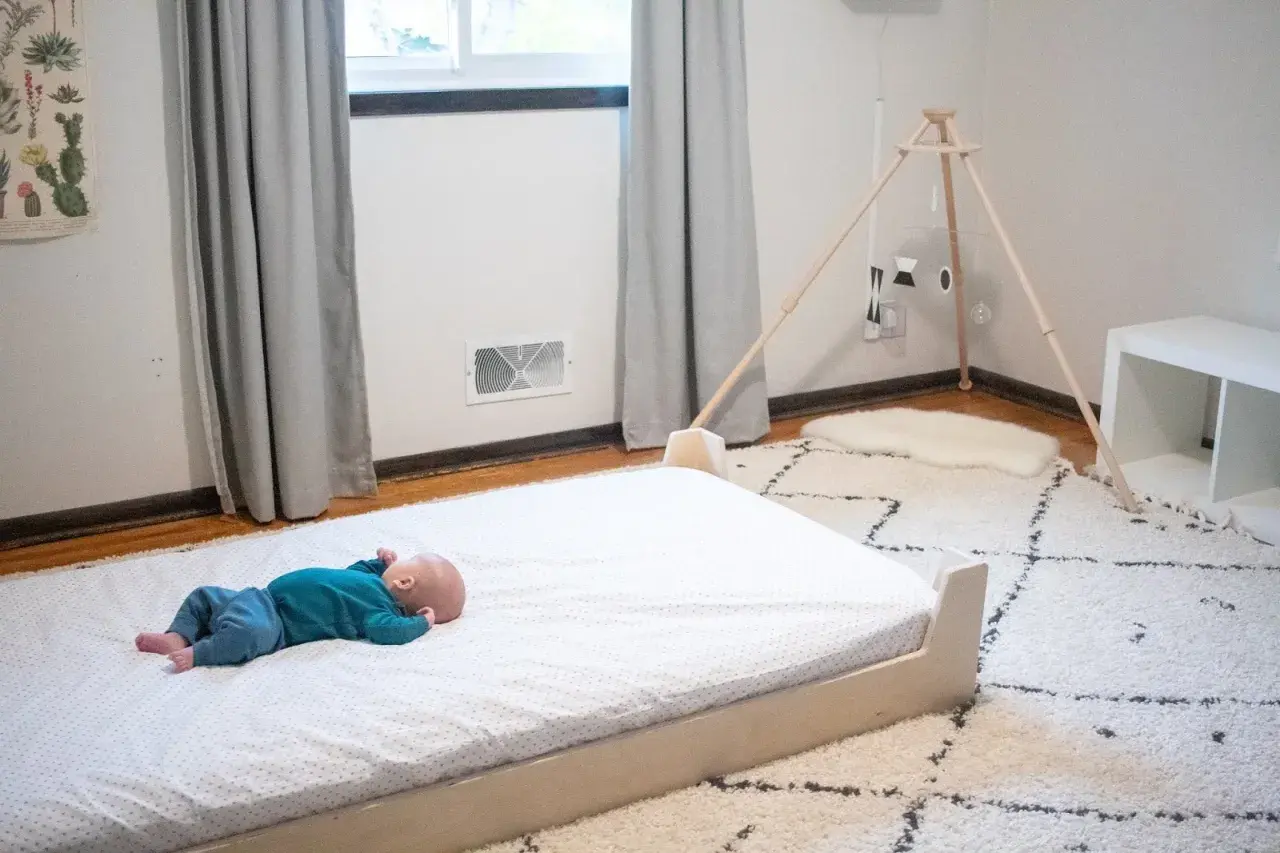
Newborn sleep is one place where I prefer boring over clever. A floor bed for newborn sleep may look simple, but newborns need a space that follows safe-sleep rules, not just a low mattress on the ground. In this article I break down why that matters, what the real risks are, and what I would choose instead in a U.S. nursery.
The safest newborn sleep plan is simpler than it sounds
- Newborns should sleep on their backs on a firm, flat, noninclined surface.
- The safest choices are a crib, bassinet, portable crib, or play yard that meets U.S. safety standards.
- Room-sharing is recommended for at least the first 6 months, but bed-sharing is not.
- Keep the sleep space bare: fitted sheet only, no pillows, blankets, bumpers, nests, or loungers.
- A low floor mattress makes more sense later, after the baby is older and the room is fully childproofed.
Why a floor bed for newborn sleep usually isn't the right first choice
When I hear floor bed, I think of an older child who can get in and out independently. That is a very different situation from a newborn, who cannot reposition well, cannot protect their airway the way an older child can, and cannot be expected to navigate a room safely.
The problem is not only falling. With newborns, the bigger concerns are entrapment, suffocation, and the gradual creep of soft items into the sleep space. A mattress on the floor does not automatically create the kind of controlled environment a newborn needs, especially if there are blankets nearby, pets in the room, or adult routines that make the setup hard to keep completely bare.
My practical rule is simple: if the baby cannot manage the space, the space has to do all the safety work. That is why I would not start with a floor mattress as the main sleep plan for a newborn. Once that baseline is clear, the safe-sleep guidance becomes much easier to apply.
What safe sleep looks like in the newborn stage
Current U.S. guidance says newborns should be placed on their backs for every sleep and should sleep on a firm, flat, noninclined surface. In plain terms, that means no soft padding, no wedges, and no surface that tilts more than 10 degrees. The baby should also sleep in a crib, bassinet, portable crib, or play yard that meets current safety standards.
- Use a fitted sheet only.
- Keep pillows, blankets, quilts, bumpers, stuffed toys, and sleep props out of the sleep area.
- Room-share, but do not bed-share. Keeping the baby in the same room for at least the first 6 months can reduce SIDS risk by as much as 50%.
- If warmth is the concern, use sleep clothing or a wearable blanket instead of loose bedding.
- If the baby falls asleep in a car seat, stroller, swing, carrier, or on an adult surface, move them to a safe sleep space as soon as you reasonably can.
That standard narrows the options quickly, which is why I compare the practical choices next. Once you see the differences, it becomes obvious why some setups feel convenient but do not actually fit newborn needs.
The newborn sleep setups I would choose instead
If I were setting up a nursery today, I would choose based on room layout, not on aesthetics. A bassinet works well when you want the baby very close for night feeds. A crib gives you a longer runway. A play yard can be a solid backup, especially in smaller homes or for travel, as long as it is intended for infant sleep and set up correctly.
| Sleep setup | Best use | Why it works for a newborn | Watch-outs |
|---|---|---|---|
| Bassinet | First weeks and months in the parents' room | Small, close to the bed, and easy for frequent overnight care | Short weight and height window |
| Crib | Long-term sleep space from day one | Stable, regulated, and built for a firm mattress fit | Takes more room |
| Play yard | Portable home setup or travel backup | Useful when you need flexibility without improvising with adult furniture | Must be used exactly as intended for sleep |
| Floor mattress | Older child or later transition | Low fall risk once mobility and room safety are in place | Not my first pick for a newborn |
The biggest reason I favor these options is control. A regulated infant sleep surface is built to do one job well, while a floor mattress can drift into a mix of sleep space, play space, and storage space if you are not strict about the room. If you want the low-floor look later, you can build toward it without using it as the starting point.
How to prepare a room for a later floor-bed transition
If you eventually move to a low mattress setup, the room matters almost as much as the bed itself. I would treat this as a room-proofing project, not a decor choice. A floor bed only works well when the surrounding space is just as safe as the sleep surface.
- Anchor dressers, bookshelves, and other furniture that could tip.
- Keep cords, monitor cables, and blind strings well out of reach.
- Use gates where stairs or unsafe rooms are accessible.
- Remove large toys, climbable furniture, and anything heavy that could injure a child if they tumble against it.
- Keep the mattress snug against the room layout so there are no gaps that could trap a child.
- Use a fitted sheet only, and keep the rest of the bed bare.
For a later transition, I would rather see a crib mattress on the floor than cushions or a soft adult pad, because the mattress stays predictable and firm. That is a much cleaner bridge between infant sleep and an independent toddler setup.
When I would wait before trying a floor mattress
There are a few situations where I would not even consider a floor setup yet. The first is the obvious one: the baby is still in the newborn stage. The second is any home where the room cannot be kept consistently bare and hazard-free. If pets, siblings, loose bedding, or clutter are part of the normal environment, the risk goes up fast.
Swaddling does not make a floor setup safer, and it does not change the underlying room risks. It may help with settling, but it is not a substitute for a proper infant sleep surface.
- The baby is under 12 months and still needs a fully regulated sleep surface.
- The room is not fully childproofed.
- Adults are likely to doze off during feeding or comforting.
- The mattress is soft, oversized, or leaves gaps near the wall.
- There are too many soft items in the room to keep the sleep area genuinely bare.
I also stay cautious when parents think a floor bed will solve sleep issues by itself. It may reduce fall risk later, but it does not fix unsafe bedding, poor room setup, or inconsistent nighttime routines. Those limits matter more than the aesthetic, and they explain why I stay conservative with newborns.
The practical choice I would make for a newborn nursery
If I had to give one straight answer, it would be this: I would not use a floor bed as the primary sleep solution for a newborn. I would start with a bassinet, crib, or play yard that meets U.S. safety standards, keep the sleep space in the parents' room for the early months, and keep the setup as bare as possible.
If the Montessori look appeals to you, I would treat that as a later-stage idea, not a newborn strategy. The style can come from the room, the colors, and the organization. The sleep surface should stay focused on safety, because newborns need a place that does not depend on their own mobility or judgment. If you want the floor-based freedom later, use it for awake play and tummy time first, then move into sleep independence when the room and the child are truly ready.
