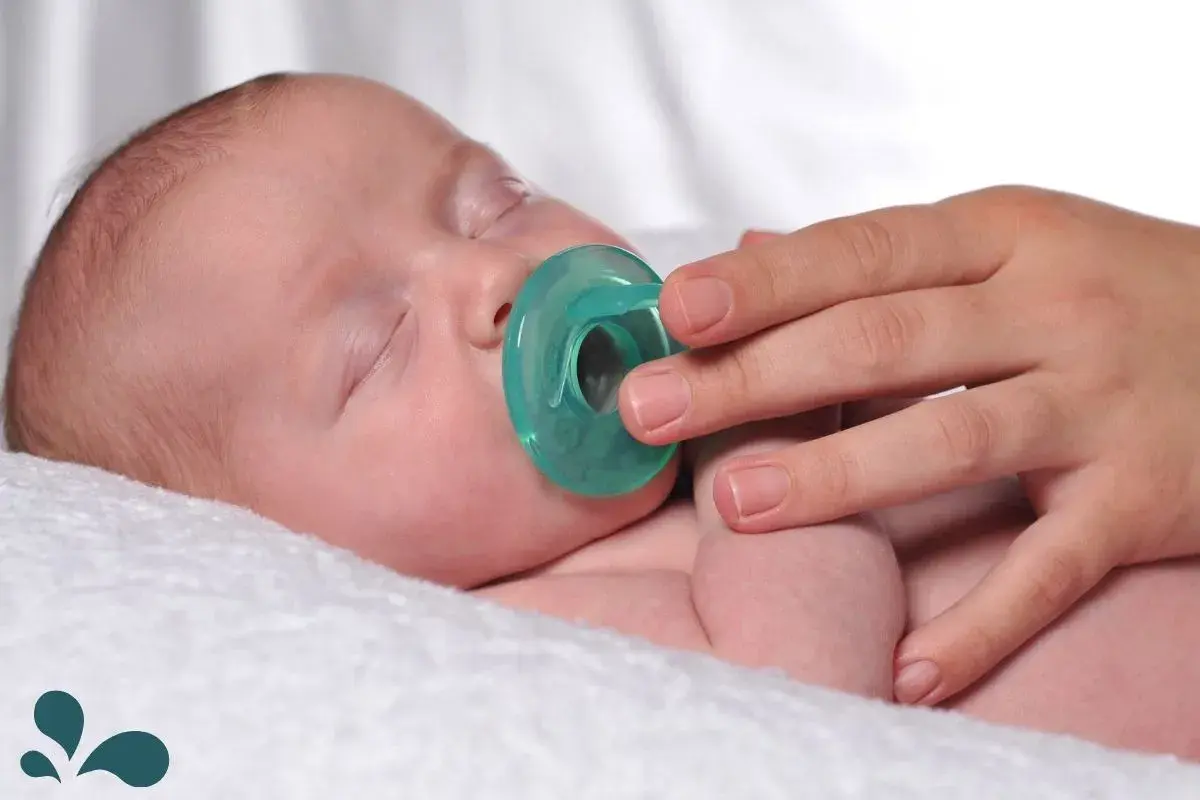
Introducing a pacifier to a breastfed baby is mostly a timing question, and the timing matters because the first weeks are when latch, milk supply, and weight gain are still settling. I’m going to walk through the safest window, the signs that nursing is ready for a pacifier, how to offer one without confusing feeds, and the safety details that actually matter in day-to-day use.
The safest timing is after breastfeeding is clearly established
- Most babies do best when the pacifier waits about 3 to 4 weeks, or until nursing is going smoothly and weight gain is on track.
- Offer it after a full feed, not while the baby is still showing hunger cues.
- Use it mainly for naps and bedtime if you want the sleep-safety benefit without replacing meals.
- Wait longer if latch, supply, jaundice, or growth is still being watched closely.
- Choose a safe pacifier: one-piece, age-appropriate, and never attached to strings, clips, or toys.
What the right timing usually looks like
The practical answer is not a magic day on the calendar. I usually look for a period when breastfeeding feels predictable: the baby latches well, feeds efficiently, and is gaining weight without extra drama. In the U.S., the AAP and CDC both point parents toward the same basic window: wait until breastfeeding is going well, which often means roughly 3 to 4 weeks.
That delay is less about being strict and more about avoiding unnecessary confusion in the early stretch. In the first weeks, babies are still learning how to feed, milk supply is still being established, and parents are still trying to tell the difference between hunger, comfort sucking, and general fussiness. A pacifier is useful once feeding is stable, but it can muddy the picture if it enters too early.
That is why I think of timing as a feeding milestone, not just an age milestone. Once that part is clear, the next question becomes how to tell whether your baby is actually ready.
Signs your baby is ready
Before I hand a pacifier to a breastfed baby, I look for a few simple signs that nursing is not under strain. If those boxes are checked, the pacifier is much less likely to get in the way.
| Sign | What it usually means | Why it matters |
|---|---|---|
| Latch is steady and comfortable | Feeds start without a long battle and pain is minimal | The pacifier is less likely to mask a latch problem |
| Weight gain is on track | Your pediatrician is not worried about growth | Comfort sucking is less likely to replace needed milk |
| Baby settles after feeds | They are not rooting, searching, or fussing immediately after nursing | A pacifier can soothe rather than delay feeding |
| You can read hunger cues clearly | You know the difference between hunger and general restlessness | You are less likely to offer a pacifier when the baby actually needs to eat |
If any of those are still shaky, I would pause and fix the feeding issue first. A pacifier should fit around breastfeeding, not compete with it. That leads directly into the part most parents get wrong: how to offer one without turning it into a substitute for a meal.

How to introduce it without confusing feeds
The easiest way to make pacifier use work is to keep it narrow and intentional. I would not introduce it in the middle of an uncertain feeding session, and I would not use it as the first response every time a baby fusses.
- Wait until after a full feed. If the baby has nursed and seems content, that is the right moment to try the pacifier.
- Offer it when the baby is calm or sleepy. A drowsy newborn is more likely to accept a pacifier than a hungry one.
- Start with naps and bedtime. That is where the sleep-safety benefit is most often discussed, and it keeps the pacifier tied to soothing rather than feeding.
- Do not force it. Some babies simply dislike pacifiers, and that is normal.
- Keep your response flexible. If the baby keeps rooting or getting more upset, stop and feed instead of trying to “win” with the pacifier.
My rule is simple: if there is any doubt that the baby is hungry, I treat it like a feeding issue first, not a soothing issue. That one habit prevents a lot of accidental underfeeding in the early weeks.
When to wait longer or skip it for now
There are a few situations where I would hold off, even if the baby is technically old enough. The main idea is to protect milk intake and avoid turning a breastfeeding problem into a pacifier problem.
- Weight gain is still being monitored closely. If your baby has not regained birth weight or your pediatrician has concerns, skip the pacifier until feeding is steadier.
- Latch is painful or inconsistent. Clicking, slipping, long feeds, or ongoing nipple pain suggest you need feeding support first.
- Your milk supply still feels fragile. If you are pumping, supplementing, or working through an early supply concern, every cue matters.
- Baby is sleepy at the breast or hard to wake for feeds. In that case, I want hunger cues to stay obvious.
- A clinician has already flagged a feeding issue. That includes jaundice, prematurity, tongue-tie concerns, or any other reason growth needs close watching.
None of that means a pacifier is off-limits forever. It just means the first job is feeding support. Once breastfeeding is solid, the pacifier becomes a tool again instead of a distraction.
What kind of pacifier works best and how to use it safely
Once the timing is right, the product itself matters more than many parents expect. A well-designed pacifier is simple, but a poorly chosen one can create avoidable problems.
| What to choose | What to avoid | Why it matters |
|---|---|---|
| One-piece pacifier with a soft nipple | Pacifiers that can break into parts | Fewer choking hazards and easier cleaning |
| Age-appropriate size | A nipple that is too large or too small | Better fit and less risk of discomfort |
| Clean, plain design | Strings, cords, clips, stuffed attachments, or crib ties | Those attachments can become suffocation or strangulation risks |
| Washed before first use and cleaned regularly | Using it straight from the package or sharing one casually between babies | Reduces germ exposure, especially in early infancy |
I also avoid using a bottle nipple as a pacifier. It is not the same product, and it can come apart in ways that are not safe. If the baby falls asleep with the pacifier and it slips out, you do not need to keep putting it back in.
One more practical point: pacifiers are for soothing, not sweeteners. Do not coat them with honey, sugar, cereal, or anything else to make them more appealing.
What I watch for after the first few days
After the pacifier enters the routine, I pay attention to what changes. In a good setup, the baby still nurses regularly, feeds feel efficient, and the pacifier helps mostly with settling and sleep. In other words, it acts like a comfort tool, not a feeding shortcut.
There are also warning signs that tell me the pacifier is being leaned on too hard. If feeds get shorter, the baby starts fussing at the breast, or wet diapers and weight gain seem to slow, I would back off and reassess. Sometimes the fix is as simple as using the pacifier only after nursing; sometimes it means getting help with latch, supply, or feeding rhythm.
I also remind parents that not every baby loves a pacifier. If yours rejects it, that is not a failure. It just means your baby has a different soothing preference, and that is common.
A simple rule I use before I hand over the pacifier
My quick checklist is straightforward: breastfeeding feels established, the baby is gaining weight, and I am offering the pacifier after a real feed. If all three are true, limited pacifier use is usually reasonable. If one of them is not true, I wait a bit longer and focus on feeding support first.
That approach keeps the decision practical instead of emotional. It also protects the one thing that matters most in the early weeks: making sure the baby eats well before comfort tools become part of the routine. If you are unsure, a lactation consultant or pediatrician can usually tell you very quickly whether the timing is right for your baby.
