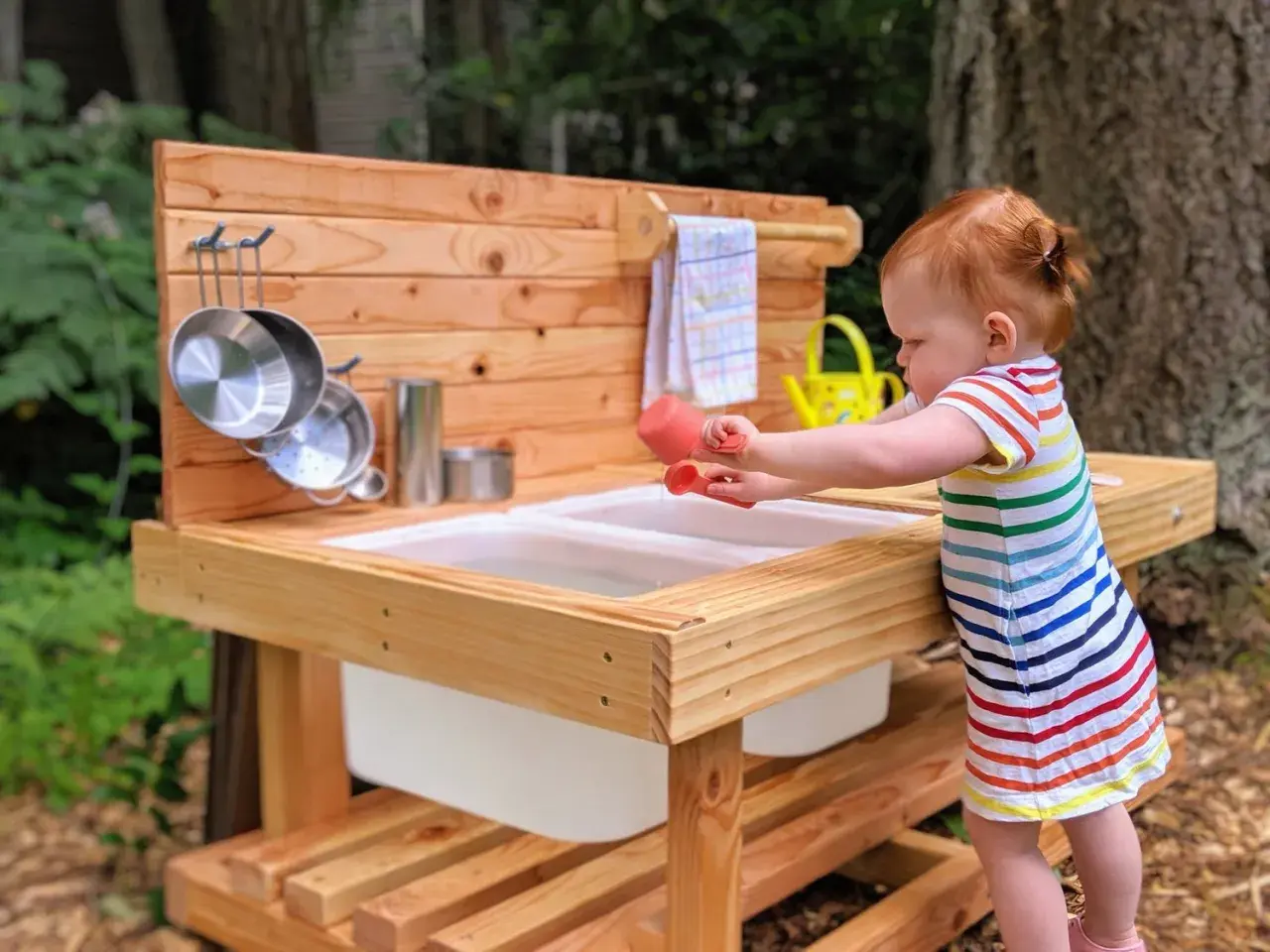
Good Montessori movement activities do more than burn energy; they train control, balance, and independence. When a child pours, carries, climbs, traces, or walks with precision, the body is practicing coordination while the mind learns patience and self-correction. In this article, I break down which movement ideas work at different ages, how to keep the setup simple, and where families usually overcomplicate the process.
The practical takeaway is to choose movement that builds control, not just noise
- Purposeful movement matters more than sheer activity, because Montessori links body control with focus and independence.
- Simple materials often work best: tape, trays, small pitchers, and everyday household objects can do most of the job.
- Age and readiness matter more than labels, so the same task may need to be simplified or made more challenging.
- A prepared space should be calm, visible, and easy for the child to use without constant adult help.
- Repetition is a feature, not a flaw; children often need the same movement work many times before it looks smooth.
What makes movement work Montessori instead of just active play
In Montessori, movement is attached to a purpose. A child is not bouncing around to burn energy; the child is carrying, stacking, pouring, balancing, or tracing a line in a way that sharpens coordination. That is why a tray with a pitcher can be more valuable than a room full of flashy active toys.
The American Montessori Society describes freedom of movement as part of helping children control their bodies in a defined space, and that detail matters. I look for activities that ask the child to slow down, notice position, and finish the work cleanly. When the task has a beginning, a clear sequence, and a place to return it, concentration usually follows.
- Practical life builds everyday movement through tasks like pouring, sweeping, buttoning, and carrying.
- Control of movement refines balance, posture, and precision through activities such as line walking or quiet stepping.
- Gross motor work strengthens the whole body through climbing, crawling, lifting, and coordinated large movements.
That distinction matters because not every active game is Montessori. Once you can separate purposeful movement from random motion, it becomes much easier to choose activities that actually help the child grow. Next, I will map the best options by developmental stage so you can match the work to the child in front of you.
Movement ideas that fit each developmental stage
I prefer to group movement work by readiness instead of by a rigid label. A younger child may still need large, whole-body repetition, while an older child may be ready for precision, stamina, and longer sequences.
| Age range | Good examples | What it builds | Typical attention span |
|---|---|---|---|
| 0-12 months | Floor time, reaching for a mobile, grasping rings, rolling a ball, tummy time on a mat | Head control, visual tracking, hand opening, early body awareness | 1-5 minutes at a time |
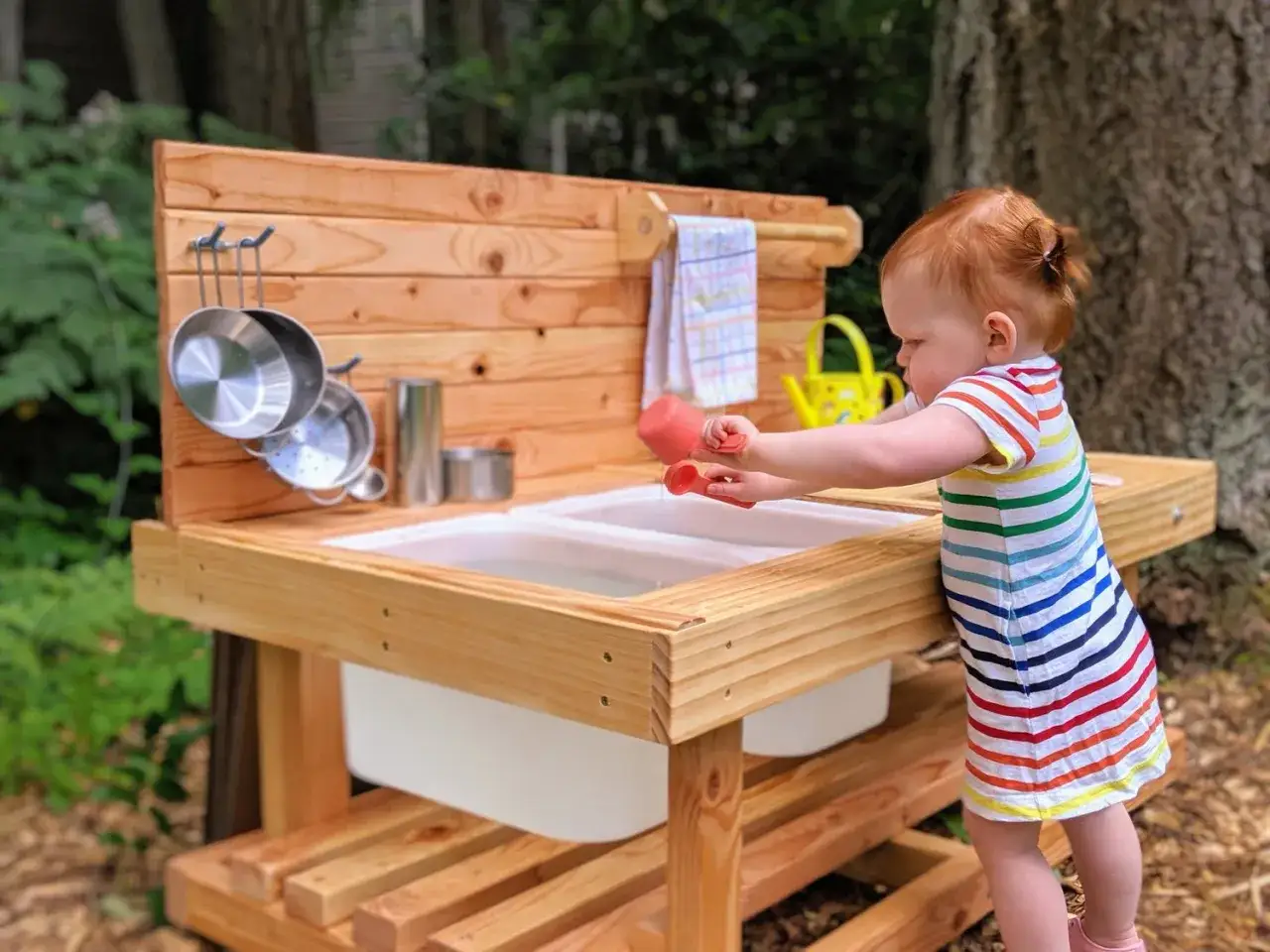
| 1-3 years | Carrying a small tray, pouring beans or water, stepping over cushions, pushing a toy cart, walking along a tape line | Balance, bilateral coordination, independence, controlled stepping | 5-10 minutes |
| 3-6 years | Line walking, bell carry, obstacle path, sweeping, watering plants, simple yoga cards, careful climbing and descending | Body awareness, rhythm, precision, sequencing, concentration | 10-15 minutes |
| 6-9 years | Jump rope sequences, measured carries, garden work, nature walks with tasks, longer balance games | Stamina, planning, cooperation, stronger motor control | 15-25 minutes |
Three activities show up again and again because they do so much with so little: walking the line, carrying a tray with a stable grip, and pouring from one small vessel into another. They look almost too simple, which is exactly why they work. The child can repeat them, notice mistakes immediately, and improve without being overwhelmed.
For babies, I stay even simpler: floor time, reaching, rolling, and crawling are enough. AMI emphasizes that infants should not be rushed into walkers or other containers; natural floor movement gives them the experiences they need first. If the child is not ready, the right move is usually less equipment, not more.
These examples also show the pattern behind good movement work. Next, I will show the materials and room setup that make those patterns easy to repeat at home or in a classroom.
Materials that do the most work with the least clutter
You do not need a large collection of Montessori materials to support movement. In fact, a tight setup is usually better because it keeps the child focused. A basic starter kit can cost about $0-$50 if you use household items, and a fuller setup with a balance aid or soft climbing piece may run about $50-$150.
| Material | What it is used for | Typical cost | Why it is worth keeping |
|---|---|---|---|
| Painters tape | Line walking, hopping paths, floor patterns, stepping targets | $5-$10 | Creates precise movement tasks without buying a special toy |
| Small tray and pitcher | Pouring, carrying, transferring water or dry goods | $10-$25 | Trains control, grip, and two-hand coordination |
| Child-size broom or duster | Sweeping, dusting, tidying, care of the environment | $10-$25 | Combines movement with real responsibility |
| Bell or small shaker | Quiet walking, rhythm work, sound control | $5-$15 | Adds focus and precision without clutter |
| Low step or foam block | Stepping, climbing, descending, balance practice | $20-$60 | Builds confidence in controlled large movement |
| Tunnel or soft climber | Crawling, climbing, core strength, indoor gross motor work | $30-$150 | Useful when a child needs more full-body challenge indoors |
If I were buying in order, I would start with tape, a tray, and one or two everyday tools before I bought anything decorative. The most useful materials are the ones that can be used repeatedly in different ways, not the ones that merely look Montessori on a shelf.
Once the materials are in place, the environment itself has to do some of the teaching. That leads directly to how the space should be arranged.
How to prepare the space so children can move independently
A good Montessori movement area does three jobs at once: it invites the child, limits the task, and makes cleanup easy. I want the child to be able to choose the work without asking permission every time, but I also want the room to stay calm enough that movement feels intentional rather than chaotic.
- Clear the path. Keep a straight line, a small open floor area, or a low obstacle course free of clutter.
- Store one activity per tray or basket. The child should be able to see the whole task at a glance.
- Use floor markers. Tape, rugs, or small mats help define where the body should go.
- Keep the difficulty visible. If a child must ask what to do next, the setup is too busy.
- Separate movement from fragility. Water carrying and fast gross motor play should not compete for the same corner.
For home use, the easiest option is often a hallway line, a small mat, or a basket with three movement items on rotation. In classrooms, the setup can be more formal, but the principle stays the same: the child should be able to start, repeat, and return the work with as little adult intervention as possible. That is also why I avoid overstuffing the area with too many open-ended toys that invite noise instead of control.
For infants, the environment should favor floor time and unrestricted reaching rather than containers or devices that hold the body in place. That small design choice often makes a bigger difference than adding a new toy.
Even with the right environment, movement work can lose its value if it is delivered badly. The next section covers the mistakes I see most often.
Common mistakes that make movement less effective
- Turning everything into a performance. If the child is always being watched, corrected, or timed, the work stops feeling like self-directed practice.
- Skipping the sequence. Montessori movement usually has steps, and showing the sequence matters more than explaining it with a lot of words.
- Choosing work that is too hard. A task should stretch control, not create constant failure.
- Adding too many materials at once. More options usually mean less focus.
- Rewarding speed over precision. The goal is better control, not faster chaos.
- Stopping repetition too early. Children often need the same task many times before the movement becomes smooth.
There is also a practical limit here: movement work supports development, but it is not a substitute for professional help if a child consistently avoids movement, falls often, or seems unusually fatigued. In those cases, a pediatrician or occupational therapist can help rule out a deeper issue. When the child is typical but simply restless, though, repetition and a clearer environment usually solve more than people expect.
With the common traps out of the way, the final step is making movement feel easy enough to keep doing. A simple weekly rhythm is usually enough.
A simple movement rhythm you can start this week
If you want a practical starting point, keep it small. I like a rhythm that mixes one large-body activity, one precision task, and one calm finish, because that mirrors how many children actually regulate well.
- Offer 10-15 minutes of free floor movement or outdoor play.
- Choose one purposeful task such as pouring, sweeping, carrying, line walking, or stepping over cushions.
- Repeat the task 3-5 times, then stop while the child is still successful.
- Add one harder variation only after the original movement looks smooth and controlled.
- Close with a quiet reset such as slow walking, stretching, or carrying a light object back to the shelf.
For toddlers, one or two short movement works a day is often enough. For preschoolers, I usually prefer a slightly longer work cycle with more repetition and a little more independence. For early elementary children, the strongest version of this approach is often practical life plus outdoor physical challenge, because they are ready for both precision and stamina. When movement is simple, repeatable, and tied to real use, it stops feeling like an activity you have to manage and starts becoming part of the child's own discipline.