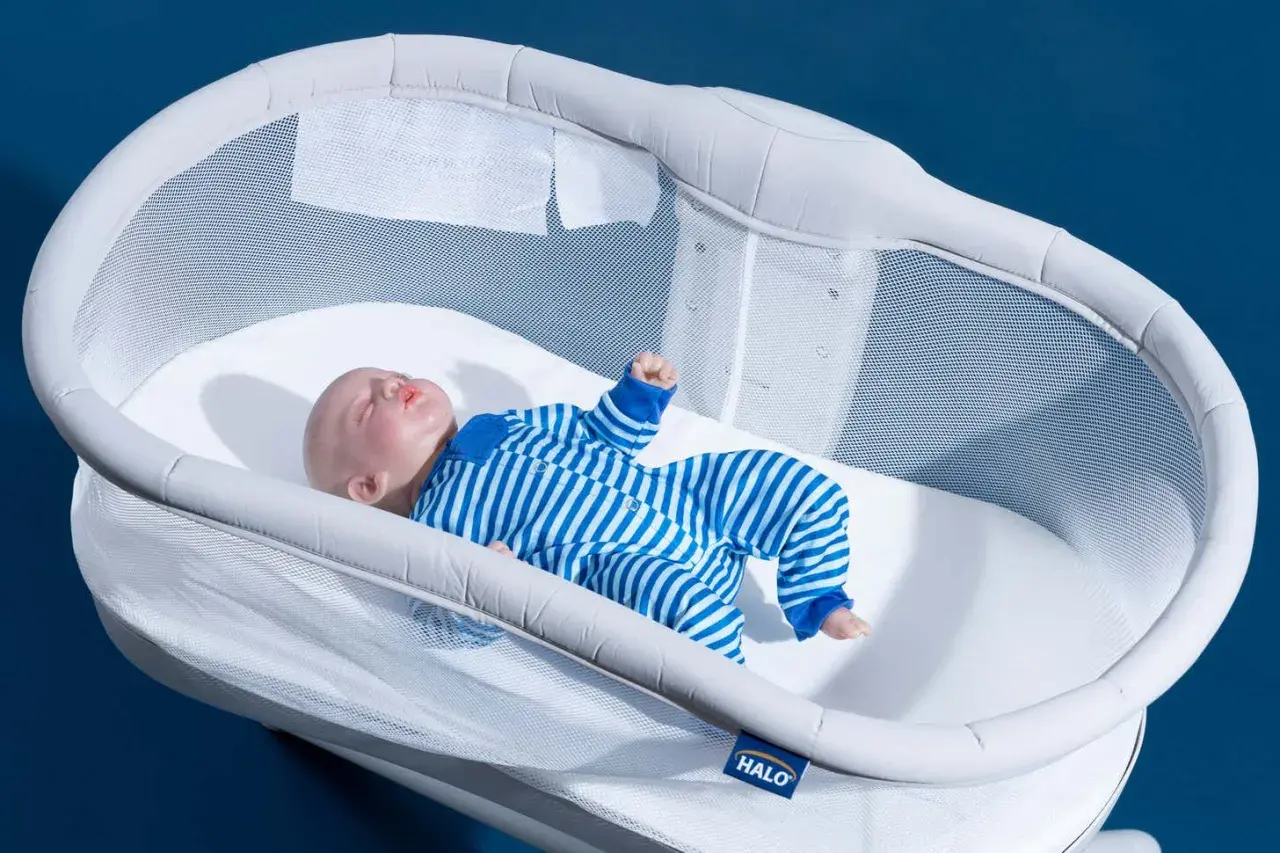
Choosing where a baby sleeps is less about matching nursery decor and more about finding a surface that is flat, firm, easy to use at 2 a.m., and built for infant sleep. There are several bassinet alternatives that can do that job well, but they are not interchangeable, and the wrong choice can create avoidable safety problems. In this guide, I break down the options that make sense in a U.S. nursery, what to avoid, and how to set the sleep space up so it works in everyday life.
The safest setup is simple, flat, and approved for infant sleep
- A full-size crib, mini crib, portable crib/play yard, or bedside sleeper can all work when they meet current safety standards.
- The safest surface is firm, flat, and uncluttered, with only a fitted sheet.
- Room-sharing is recommended for the first 6 months, but bed-sharing is not.
- Swings, loungers, car seats, and inclined sleepers are not sleep substitutes.
- The best choice usually depends on room size, how long you want to use it, and whether you need portability.
The sleep spaces I trust most for newborns
When I narrow this down, I start with products designed for sleep first and convenience second. In sleep gear, boring is good. A full-size crib is the long-haul answer; a mini crib, play yard, or bedside sleeper can be a better fit when space or nighttime access matters more than longevity. The table below shows how I usually compare them.
| Option | Best for | Typical U.S. price | Main trade-off |
|---|---|---|---|
| Full-size crib | Long-term nursery use, especially if you want a convertible model | $150-$500+ | Takes the most space |
| Mini crib | Small bedrooms, apartments, or a temporary newborn setup | $100-$300 | Outgrown sooner than a full-size crib |
| Portable crib / play yard | Travel, grandparents' homes, or one product that moves around the house | $80-$250 | Less furniture-like, but very practical |
| Bedside sleeper | Room-sharing with quick access for feeding and soothing | $120-$350 | Usually has the shortest useful window |
If I had to simplify the choice even more, I would say this: a crib gives you the most runway, a play yard gives you the most flexibility, and a bedside sleeper gives you the most convenience for night care. That baseline makes it easier to see which products should stay off the list entirely.
What should not replace a bassinet
Some products look soothing but fail the basic test for unattended sleep. Swings, bouncers, car seats, loungers, nests, and inclined sleepers can make a baby look comfortable while increasing the risk of slumping or airway obstruction. If a product is meant for supervised awake time, I do not repurpose it for overnight sleep, even for a short nap.
- Adult beds and sofas: soft surfaces, gaps, and bedding make them unsafe for infant sleep.
- Car seats: useful for travel, not for routine sleep once you are out of the car.
- Swings and bouncers: motion can calm a baby, but they are not sleep surfaces.
- Loungers, nests, and soft baskets: too much padding or unstable sides for routine use.
- DIY or decorative setups: pretty is not the same as approved.
If a product is not clearly intended and approved for infant sleep, I assume it is the wrong tool for the job. That leads straight to the real decision parents have to make: which safe option fits the room and the routine they actually live with.
How I narrow the choice for a real home
I usually decide by asking four questions: How much floor space do I have? Do I want this item to last past the newborn stage? Will I move it from room to room? And do I need to reach the baby without fully getting out of bed? The answers usually point to one product type very quickly.
| Situation | Best fit | Why it works |
|---|---|---|
| Small apartment or shared bedroom | Mini crib or bedside sleeper | Smaller footprint and easy nighttime access |
| One product for home and travel | Portable crib / play yard | Folds up, moves easily, and handles naps or overnight sleep |
| Want the longest value | Full-size crib | Usually lasts much longer, especially with adjustable mattress heights |
| Need a closer setup for feeds | Bedside sleeper | Keeps the baby separate but within arm’s reach |
- Measure the footprint, not just the product width.
- Check weight and height limits, not only the age label.
- Compare the cost of buying twice against buying once.
- Think about how often the sleep space will move between rooms.
For most families, the hidden variable is not the baby but the room. A tiny nursery can make a crib feel oversized, while a play yard can feel temporary for years if you never plan to move the baby into a dedicated nursery. I like to choose the product that makes the safest routine easiest to repeat every night, because that is the setup that actually lasts.
How to set the space up safely from day one
The hardware matters, but the setup matters just as much. A CPSC-compliant sleep space is still only safe if you use it the way it was designed. Bare is best is still the simplest rule I know.
- Place the baby on the back for every sleep, including naps.
- Use a firm, flat mattress or pad that fits the product correctly.
- Keep only a fitted sheet in the sleep space.
- Leave out pillows, blankets, bumpers, toys, wedges, and positioners.
- Keep the baby in the same room as the parents for at least the first 6 months if possible.
- Stop using the product if the baby reaches the weight limit, outgrows the space, or starts climbing.
The AAP recommends room-sharing without bed-sharing for at least the first 6 months, and that is one of those recommendations that is easier to follow when the sleep space is simple and close by. The problem is not usually the product itself; it is the temptation to add comfort items that turn a safe setup into a risky one. That is why I treat restraint as part of the design.
How to know the temporary setup has done its job
A lot of families wait until the last minute to move up, and that usually makes the transition harder than it needs to be. I make the switch sooner when the weight limit is close, the baby can roll reliably, the sleep area feels cramped, or nighttime access starts to get awkward.
- If the newborn setup is short-lived, set the crib or larger sleep space up before you need it.
- Keep the new environment nearly identical: dark, cool, quiet, and bare.
- Use a gradual transition only if it helps the family stay consistent.
- Do not add pillows, wedges, or soft inserts to make the baby settle.
In practice, the best bassinet alternatives are the simplest ones: a crib, mini crib, play yard, or bedside sleeper that fits the room and can stay clean, flat, and uncluttered. If I were helping a new parent start from scratch, I would usually narrow the choice to those four, then pick the one that makes the safest routine feel easiest at 3 a.m.
