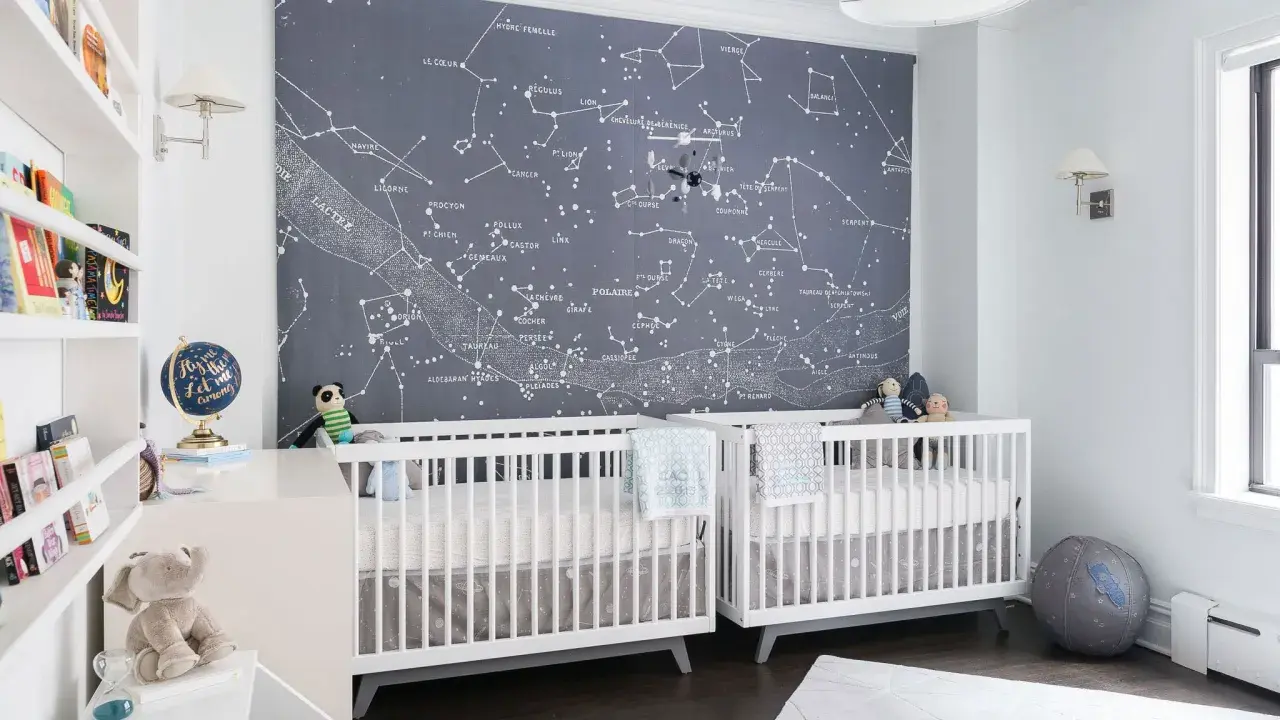
Strong baby boys nursery designs balance calm sleep, easy changing, and enough open space for early play. I look for rooms that feel soft and practical first, then layer in character with color, texture, and one or two details that can grow with the child. In this guide, I break down the design directions that work, the layout choices that save space, and the safety details that should be settled before the decor gets cute.
What matters most in a baby boy nursery
- Start with the sleeping zone. The crib, mattress, and window treatment matter more than wall art.
- Choose a palette that lasts. Soft blue, cream, sage, walnut, and warm gray age better than heavily themed colors.
- Design for two stages. The room should work as a nursery now and as a play space later.
- Prioritize storage early. Baskets, drawers, and a clear toy plan prevent the room from feeling crowded fast.
- Spend where it counts. Crib, mattress, glider, and blackout shades usually deliver more value than decorative extras.

Design directions that fit the room, not the stereotype
The best nursery themes are specific enough to feel intentional, but flexible enough to survive toddlerhood. Right now, the strongest looks lean less cartoonish and more material-driven: earthy tones, soft contrast, natural wood, and one clear idea repeated with restraint. That gives the room personality without making it feel locked into a baby-only phase.| Style direction | Best palette | Why it works | Watch out for |
|---|---|---|---|
| Modern neutral | Cream, oat, warm gray, black accents | Clean, calm, and easy to update with toys or art later | Can feel flat if you skip texture |
| Woodland calm | Sage, moss, bark brown, muted blue | Feels soothing and natural without reading as overly themed | Too many animals can turn sweet into busy |
| Soft nautical | Navy, cloud white, sand, pale denim | A classic baby boy look that still feels polished | Anchors, stripes, and ship motifs need a light hand |
| Vintage storybook | Buttery cream, faded blue, wood, brass | Warm, charming, and great for heirloom furniture | Too much antique styling can make the room feel formal |
| Playful adventure | Clay, olive, sky blue, mustard | Works well if you want energy without loud primary colors | Needs visual discipline so it does not become cluttered |
Start with layout, then build the room around it
A nursery works best when the daily routine feels almost automatic. I always think in zones: sleep, change, feed, store, and eventually play. If the room is small, the same square footage has to do more than one job, so the layout should make movement easy instead of decorative.
- Place the crib first. It should go on the calmest wall, away from direct sun, HVAC blasts, and anything that encourages climbing later.
- Keep the changing area close to storage. Diapers, wipes, creams, and spare onesies need to be within arm's reach.
- Use the chair for more than feeding. A good glider or rocker should leave room for a side table, lamp, and a basket for burp cloths or books.
- Reserve one open floor area. That space becomes tummy-time territory now and a soft play corner later.
- Think about the door swing and walking path. A beautiful crib is useless if drawers cannot open cleanly or if the room feels cramped every time you step inside.
In practice, I often prefer a dresser with a changing top over a separate changing table, especially in smaller rooms. It gives you more useful storage after the diaper stage ends, which is exactly the kind of flexibility a nursery needs. From there, color and material choices decide whether the room feels calm or merely functional.
Choose colors and materials that will still look good in two years
For 2026, the nursery palettes that feel most current are softer and more natural than they are themed. Cream, warm white, dusty blue, sage, muted teal, and walnut are doing more work than saturated primary colors, because they create a room that feels restful now and adaptable later. That does not mean the room has to be bland. It just means the energy should come from texture, pattern, and one or two accent pieces instead of five competing colors.
I like this rule of thumb: let the walls stay quiet, then add depth through the rug, curtains, crib sheet, and wall art. A room with pale walls and a woven rug often feels more finished than a room with loud paint and random decor. If the nursery has limited natural light, lean warmer with cream, oat, and soft wood tones. If it gets plenty of sun, a cooler blue-gray or sage can feel fresh without turning cold.
- Best base colors: cream, greige, pale blue-gray, soft sage.
- Best accent colors: navy, olive, rust, brass, muted mustard.
- Best materials: white oak, walnut, woven cotton, boucle, washable wool blends.
- Best pattern scale: one large pattern and one small pattern is usually enough.
The biggest mistake I see is making the room too literal too early. A sky wallpaper, airplane mobile, and navy stripes can work, but only if the rest of the room stays restrained. Otherwise the nursery reads like a costume instead of a room. Once the palette is settled, the next question is whether the space is actually safe for sleep.
Build a safe sleep zone before adding decor
This is the part I would not treat as optional. The American Academy of Pediatrics recommends a safe sleep space that stays uncluttered, with a firm, flat mattress and only a fitted sheet in the crib. That means no pillows, quilts, stuffed toys, or loose bedding inside the sleep area, no matter how finished the room looks in photos.I also pay close attention to the window treatment. The CPSC advises using cordless or otherwise inaccessible-cord coverings in rooms used by children. In real life, that usually means cordless shades, hidden lift systems, or a clean retrofit before the crib ever goes in. If a room has old blinds with dangling cords, I would fix that before I bought one more decorative item.
- Crib setup: firm mattress, tight fitted sheet, nothing else in the crib.
- Furniture safety: anchor dressers and bookcases to the wall.
- Lighting: use dimmable lamps or a soft overhead fixture for night feeds.
- Window control: choose blackout or room-darkening coverage that is cordless or cord-safely installed.
Safety rarely looks glamorous, but it is what lets the rest of the nursery work. When the sleep zone is right, storage becomes the next major stress test, because babies arrive with more gear than people expect. That is where the room either stays calm or starts to feel overloaded.
Storage that can handle diapers now and toys later
A good nursery does not just hide mess; it organizes the life of the room. I like storage that can shift with age, because the same room will need diapers this month and blocks, books, and stuffed animals later on. That transition is where baby boy nursery ideas often succeed or fail. A room with flexible storage ages well. A room with decorative-only storage usually collapses the moment real life enters it.
The simplest formula is closed storage for the unglamorous items and open storage for the things you want easy access to. Drawers or cabinet doors can hold diapers, wipes, medicine, extra sheets, and seasonal clothing. Baskets and low bins can hold swaddles, toys, board books, and eventually play equipment. If the room is small, choose a few larger containers rather than many tiny ones. Fewer containers usually mean less visual noise.
- Dresser drawers: best for clothing, linens, and backup supplies.
- Woven bins: good for fast cleanup and toy rotation later.
- Wall shelves: useful for a few books or a keepsake, not everything.
- Closet organizers: ideal if the nursery closet is doing most of the work.
If you want the room to convert smoothly into a playroom, I would leave one low shelf or bin system open from the beginning. That way the nursery is not only beautiful for the first six months; it is also ready for the stage when toys, puzzles, and floor play take over. Once storage is under control, the final question is how much to spend and where to stop.
A budget range that keeps the project under control
I usually tell people to think in layers. First comes the function layer, then the comfort layer, then the style layer. If money is tight, the function layer deserves almost all of the budget. If the room is already furnished, you can spend more on wallpaper, custom textiles, or a statement light. The point is to avoid buying pretty things before the room has the basics.
| Scope | Typical planning range | What it usually covers | Best when |
|---|---|---|---|
| Simple refresh | $300 to $900 | Paint, decals or art, baskets, a few textiles, basic lighting changes | You already have the crib and want a cleaner, calmer look |
| Balanced setup | $1,000 to $2,500 | Crib, mattress, dresser, glider, rug, blackout shades, storage pieces | You are furnishing the room from scratch but do not want custom work |
| Design-heavy room | $3,000 to $7,000+ | Premium furniture, wallpaper, custom window treatments, built-ins, layered decor | You want a polished room that feels finished from day one |
If I were prioritizing the spend, I would put the money into the crib, mattress, blackout shades, and glider before anything else. Those are the pieces you will use daily. After that, a rug, lamp, and a few framed prints can make the room feel complete without swallowing the budget. The last step is making the room feel personal instead of staged.
The details that make the room feel ready to grow
This is where the nursery stops feeling generic. I like to add just enough personality to tell a story without overcommitting to a theme. A few framed animal prints, a knitted throw, a handmade mobile, or a single vintage toy can do more than a wall full of matching decor. The trick is to let one object lead and keep the rest quiet.
- One statement piece: a canopy, wallpaper accent wall, or standout light fixture.
- One soft anchor: a washable rug that can handle crawling and later play.
- One personal detail: a family photo, heirloom, or handmade object.
- One future-facing choice: storage that still works when the room becomes a play zone.
If I were finishing a baby boy nursery today, I would keep the palette calm, the storage practical, and the decor slightly edited. That combination gives you a room that feels intentional now and does not need a full redesign the moment the baby starts sitting up, grabbing books, and claiming the floor. The best rooms are rarely the most decorated ones; they are the ones that still make sense on the busiest day of the week.
