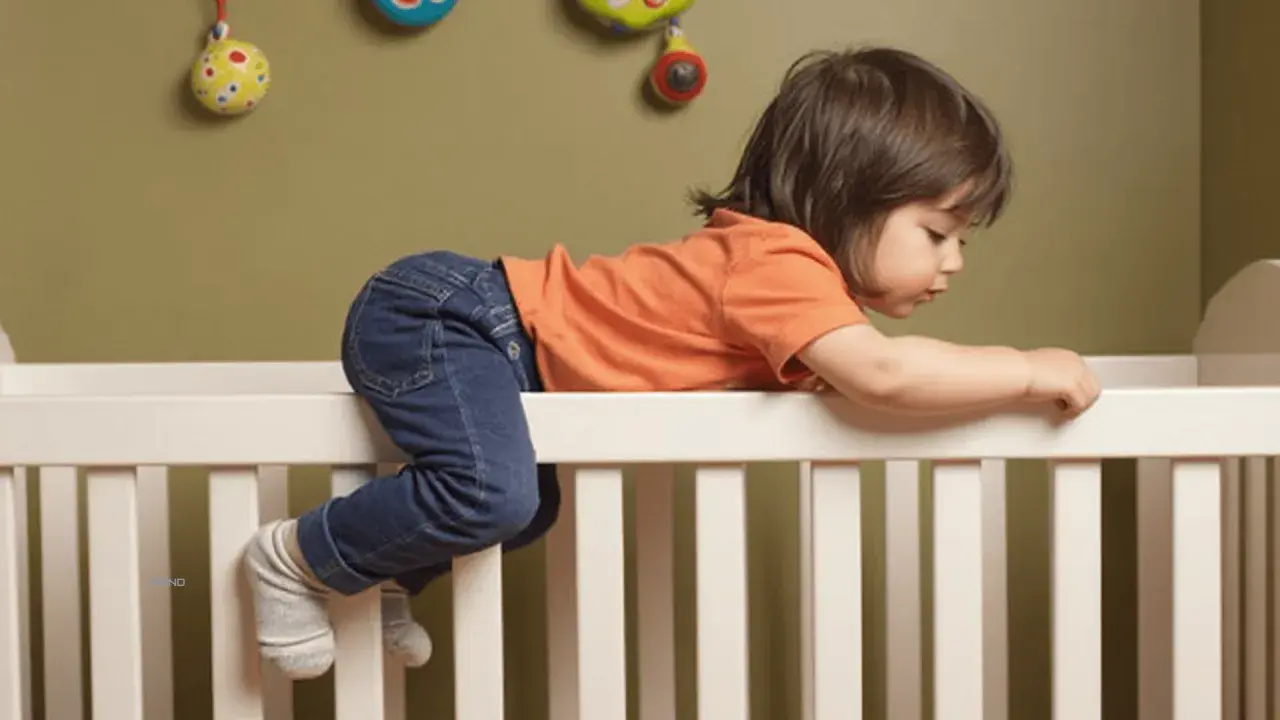
Lowering a crib mattress is one of those nursery changes that looks minor until your baby starts sitting up, pulling to stand, and leaning over the rail. The right setup keeps the sleep space flat, firm, and snug, while giving you enough side height to reduce fall risk. Here I cover when to make the change, how to do it safely, how it differs from putting the mattress on the floor, and the mistakes that quietly create new hazards.
The safest move is usually lowering the mattress, not reinventing the crib
- Lower the mattress as soon as your baby can sit independently, and do not wait for the first climb-out attempt.
- By the time a baby can stand or pull up, the crib should already be at its lowest approved setting.
- The mattress should fit tightly, sit flat, and use only a fitted sheet.
- Never improvise with books, blocks, or loose supports under the mattress.
- If your child is too tall for the crib, move to another bed instead of forcing the crib to do a job it can no longer do well.
What lowering the crib mattress actually changes
The goal is not to change how the mattress feels. The goal is to increase the wall height around your baby so a curious, more mobile child cannot simply lever themselves over the side. In practice, a lower mattress gives you more fall protection without changing the core safe-sleep setup: a firm, flat surface with no loose bedding.
The American Academy of Pediatrics is blunt about the timing. Once a baby can sit, the mattress should come down, and the lowest position should be in place before the child learns to stand. That advice matters because the first big risk is usually not sleep itself, but the moment a child starts treating the crib rail like a climbing aid.
I also keep the fit question front and center. A mattress that is too small, too soft, or too loose in the frame creates a different kind of danger, including entrapment at the edges. That is why the next step is not just “lower it,” but “lower it correctly.”
When it is time to lower it
I use mobility, not birthday math, as the trigger. Age can be a rough guide, but it is the baby’s movement that tells the truth. The change usually becomes urgent when sitting turns into standing practice, because that is when the crib side stops feeling high and starts feeling reachable.
| Stage | What I do | Why it matters |
|---|---|---|
| Newborn or mostly immobile | Use the highest approved setting | Easier on your back, and the baby is not yet using the rail to pull up |
| Sits independently | Lower the mattress now | This is the point where lean-over falls become more realistic |
| Pulls to stand or cruises | Move to the lowest approved position | The rail is now something the baby can use to boost upward |
| About 35 inches tall, or the side rail is less than three-quarters of body height | Move out of the crib | The crib is no longer giving enough containment for safe use |
That last measurement is especially useful when a toddler seems “fine” in the crib but is physically outgrowing it. I would rather move early than wait for a successful escape attempt. The next question is how to make the adjustment without introducing a new hazard.
How to lower a crib mattress safely
Before I touch the hardware, I read the crib manual. That sounds basic, but it is the only way to know which slots are approved and whether the lowest position is truly the lowest position for that model. Some cribs have three settings, some have four, and a few have quirks that make one side look right when it is not actually locked.
- Take the baby, mattress, sheet, and any soft items out of the crib.
- Release the mattress support evenly on all sides so the frame does not twist.
- Set the support into the lowest approved slots and confirm that all corners are matched at the same height.
- Lock the hardware fully and check that nothing rattles or shifts when you press down on the center.
- Put the mattress back in and confirm that it fits snugly with no visible edge gap.
- Use only a tight fitted sheet.
- Recheck the setup after the first nap and again after the first night, because a bad fit is easier to miss once the crib is back in use.
If you feel tempted to prop the mattress up with books, foam, towels, or spare wood, stop there. That turns a safety adjustment into an improvised build, and improvised builds are where gaps and shifting surfaces show up. The next section is where the distinction between a lowered crib and a floor setup really matters.
Crib lowest setting vs placing the mattress on the floor
These are not the same solution, even though they can look similar at a glance. A lowered crib still uses the crib as designed. A mattress on the floor changes the sleep system entirely, which can be useful in some situations but should not be treated as a casual workaround.
| Setup | Best for | Main limitation |
|---|---|---|
| Lowest crib setting | Babies who can sit or stand but still need crib containment | Still becomes unsafe once the child can climb out reliably |
| Mattress directly on the floor | A temporary or transition setup when the sleep space can stay flat, firm, and gap-free | Can become nonstandard fast if the crib frame was never meant to be used that way |
| True floor bed with a crib mattress | Older, mobile toddlers in a fully baby-proofed room | Removes the fall risk from height, but also removes containment, so the room has to do more work |
My rule is simple: if the crib still works at its approved lowest setting, use that first. If you are moving to a floor mattress, treat it as a different sleep environment, not an upgraded crib. That distinction leads straight into the mistakes I see most often.
Mistakes that turn a safer setup into a risky one
- Waiting too long because the baby has not actually climbed out yet.
- Using the crib mattress with extra padding, a topper, or a softer aftermarket replacement.
- Leaving bumpers, pillows, blankets, stuffed toys, or loose quilts in the crib.
- Assuming a mattress that “almost fits” is good enough.
- Lowering only one side or leaving the support uneven.
- Using a crib with drop-side rails. Those are not considered safe.
- Choosing age over mobility, when mobility is the real trigger.
The AAP and the CPSC keep coming back to the same essentials for a reason: flat, firm, snug, and bare. Once you strip away the extras, the crib is easier to manage and less likely to become a trap. The final decision point is knowing when even the lowest setting has run its course.
When the crib is no longer the right answer
When your child is around 35 inches tall, or when the side rail is less than three-quarters of their height, the crib has usually reached the end of its useful range. The same is true if your child can climb out while the mattress is already at the lowest approved position. At that point, I stop trying to make the crib do more than it was designed to do.
The next step is usually a toddler bed or a floor-bed style setup, depending on how the room is prepared and how independent your child already is. If you go that route, the room becomes part of the sleep surface in a very practical sense, so furniture anchoring, cord management, and hard-edge cleanup matter more than ever. That is the real transition, not just the mattress move itself.
The last safety check I use before every sleep change
- Press on all four mattress corners and confirm the fit has no looseness.
- Check that the fitted sheet stays tight after washing and does not ride up.
- Measure the crib side height again if your child has had a growth spurt.
- Scan the room for cords, blinds, lamps, monitors, and furniture the child can climb.
- Confirm that no hardware shifted when the mattress support was moved.
- Keep the sleep space bare, with only the mattress and fitted sheet.
Lowering the crib mattress is not a decoration choice, it is a mobility response. If the crib still has the right amount of containment, keep using the lowest approved setting; if it does not, move to a sleep setup that matches your child’s size and movement instead of stretching the crib past its limit.
