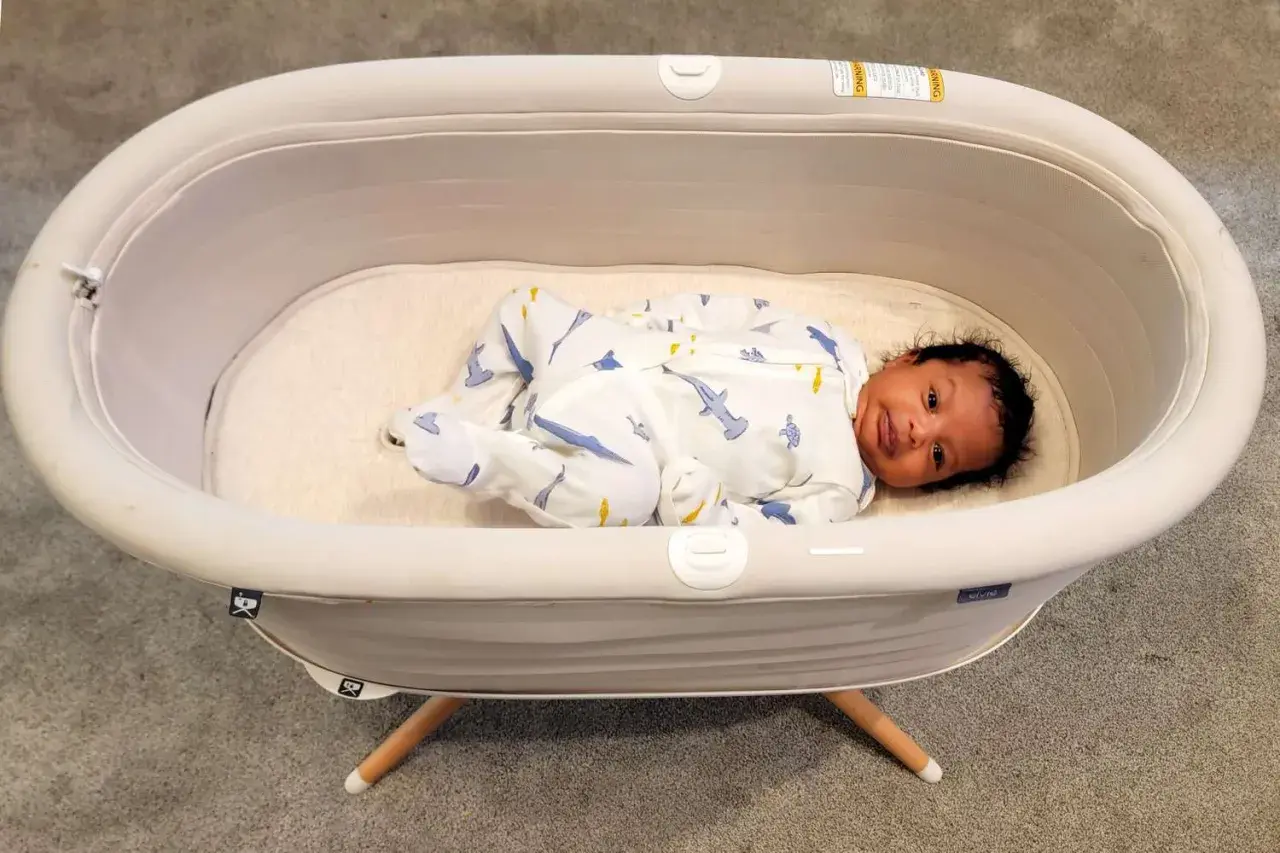
A bassinet is a compact sleep space for the newborn stage, and the practical answer to what a bassinet is used for is simple: it keeps baby close, flat, and contained while making nighttime care easier. It is designed for short-term use, not as a replacement for a crib, and that difference matters more than the product styling.
Key points to know before you buy
- A bassinet is meant for infant sleep in the earliest months, usually beside the parent bed.
- Its biggest advantage is convenience: easier feeding, soothing, and checking on baby at night.
- Safe use means a firm, flat surface, a fitted sheet, and nothing extra in the sleep space.
- Most babies outgrow a bassinet when they start rolling, pushing up, or reaching the product limit.
- In the US, choose a model made for infant sleep and sold under current safety rules.
What a bassinet is built to do
A bassinet is a small freestanding bed designed primarily for infant sleep. The size is intentional: it gives a newborn a snug sleep area while keeping the baby within easy reach of an adult bed or chair.
That small footprint is the main reason it exists. In the first weeks, parents usually want a sleep setup that is easy to reach, easy to check, and easy to use in a dark room at 2 a.m. A bassinet does that job better than a full crib in many homes, especially when the nursery is still across the hall or upstairs.
It is also important to be clear about what it is not for. A bassinet is not a daytime lounge spot, a feeding station, or a place to set a baby and walk away while blankets, toys, or pillows pile up around them. I usually think of it as a focused tool: simple, temporary, and only useful when it stays a real sleep surface.
Once you see it as a purpose-built sleep space, the more practical question becomes why families reach for it so often during the newborn phase.
Why families use one during the newborn months
The biggest advantage is proximity. The AAP recommends room sharing for at least the first six months, and a bassinet makes that setup practical without forcing the baby into the adult bed. That matters for feeding, soothing, and simply keeping an eye on a newborn without trekking down the hall every hour.
In real life, that closeness reduces friction. A parent can respond faster to hunger cues, diaper leaks, or a baby who just wants to be settled again after a short sleep cycle. For breastfeeding families, that convenience can be the difference between a manageable night and a miserable one.
There is also a psychological benefit that people do not always mention: a bassinet can make the first nights feel less intimidating. A full crib can look large and distant for a tiny infant, while a bassinet feels easier to integrate into the room you already use. In my view, that is not a small detail when you are running on very little sleep.
Those benefits are real, but they only make sense when you compare the bassinet with the other sleep options parents are usually considering.

Bassinet vs crib vs bedside sleeper
Parents often compare these three products because they solve related but different problems. A bassinet is the most compact and short-term of the group, a crib is the longest-lasting, and a bedside sleeper sits somewhere in between depending on the design.
| Sleep option | Best for | Main strength | Main limitation |
|---|---|---|---|
| Bassinet | Newborn sleep in the first months | Small footprint and easy bedside access | Short usable window |
| Crib | Long-term sleep from infancy through toddlerhood | Lasts much longer and adapts as baby grows | Takes more space and usually sits farther from the parent bed |
| Bedside sleeper | Keeping baby right next to the adult bed in a separate structure | Very close access during the night | Designs vary more, so safety and fit need extra attention |
If the goal is only to get through the newborn period with less walking and less disruption, the bassinet is often the easiest answer. If the goal is to buy once and use the same sleep space for years, the crib wins every time. The bedside sleeper can be useful, but it is not a shortcut around safe-sleep rules, which is where the next section matters.
The safety rules that protect the sleep space
Safe use matters more than branding, fabrics, or extra features. The basic rule is simple: the sleep surface should be firm, flat, and free of anything soft enough to create a suffocation risk. Anything that inclines more than 10 degrees is not a safe sleep surface for an infant.
- Place the baby on the back for every sleep.
- Use only a fitted sheet made for the bassinet mattress.
- Keep pillows, quilts, bumpers, stuffed toys, and loose blankets out of the sleep area.
- Do not use a bassinet on counters, tables, sofas, or other unstable high surfaces.
- Move the baby to the bassinet, crib, or play yard if sleep happens elsewhere.
- Avoid any product that creates an incline or relies on extra padding to seem more comfortable.
The CPSC standard for bassinets and cradles exists to reduce risks such as falls, entrapment, and structural problems, and that tells you a lot about where the real danger lives: not in the word “bassinet,” but in the details of how it is built and how it is used.
I also tell parents to be skeptical of features that sound soothing but do not improve the actual sleep setup. Lights, sounds, swaying, and plush add-ons rarely matter as much as a stable frame and a correct mattress fit. Once those basics are in place, the next question is timing: when does a bassinet stop being the right tool?
When it stops being the right sleep space
A bassinet is temporary by design, and that is not a flaw. Many models are intended for only the first few months, and some are not meant to be used beyond about 5 months or once a baby starts pushing up on hands and knees, rolling with intent, or reaching the product’s stated limit.
In practical terms, the useful window often closes earlier than parents expect. A baby that suddenly looks cramped, can touch the sides easily, or starts moving with more force is usually telling you the bassinet has done its job.
There is a difference between chronological age and developmental readiness. Some babies outgrow a bassinet very quickly because they are longer, stronger, or more mobile than average. Others stay within the safe window a bit longer. I would treat the baby’s movement and the manufacturer’s limit as more important than a calendar guess.
That short lifespan is why the buying decision should be more about fit and function than about looks alone.
How to choose one that fits a real home
If you are shopping for a bassinet, I would start with the boring details first. The best ones are usually the ones that feel stable, simple to clean, and easy to reach in the dark.
- Check the base for stability and a wide enough footprint that it will not wobble when nudged.
- Make sure the mattress fits tightly and feels firm rather than plush.
- Look for fabric or mesh that is easy to wipe down or remove for washing.
- Measure the space beside your bed before you buy so the bassinet does not block drawers, outlets, or walking space.
- Skip features that add clutter without solving a real problem.
- If you are buying secondhand, inspect the hardware carefully and make sure the product is still appropriate for infant sleep.
In my experience, the safest purchase is not the one with the most features. It is the one that supports the routine you actually have: a sleepy adult, a small room, and a baby who needs to be reached quickly without a lot of fuss.
The real mistake is buying a bassinet for the idea of it instead of the nightly routine it has to support, and that is the last thing worth keeping in mind before you decide.
The first months are where a bassinet earns its keep
A bassinet is useful because it solves a narrow problem very well: it gives a newborn a safe, close-by sleep space before a crib becomes the better long-term fit. That makes it a strong choice for room-sharing, night feeds, and smaller homes where every inch matters.
If you need a simple rule, use this one: choose a bassinet only if it makes safe sleep easier during the first stretch of infancy. If it adds clutter, encourages unsafe shortcuts, or will be outgrown before it ever feels useful, a crib near your bed may be the smarter move.
For most families, the bassinet is not the centerpiece of the nursery. It is the short-term tool that makes the first few months calmer, closer, and easier to manage.
