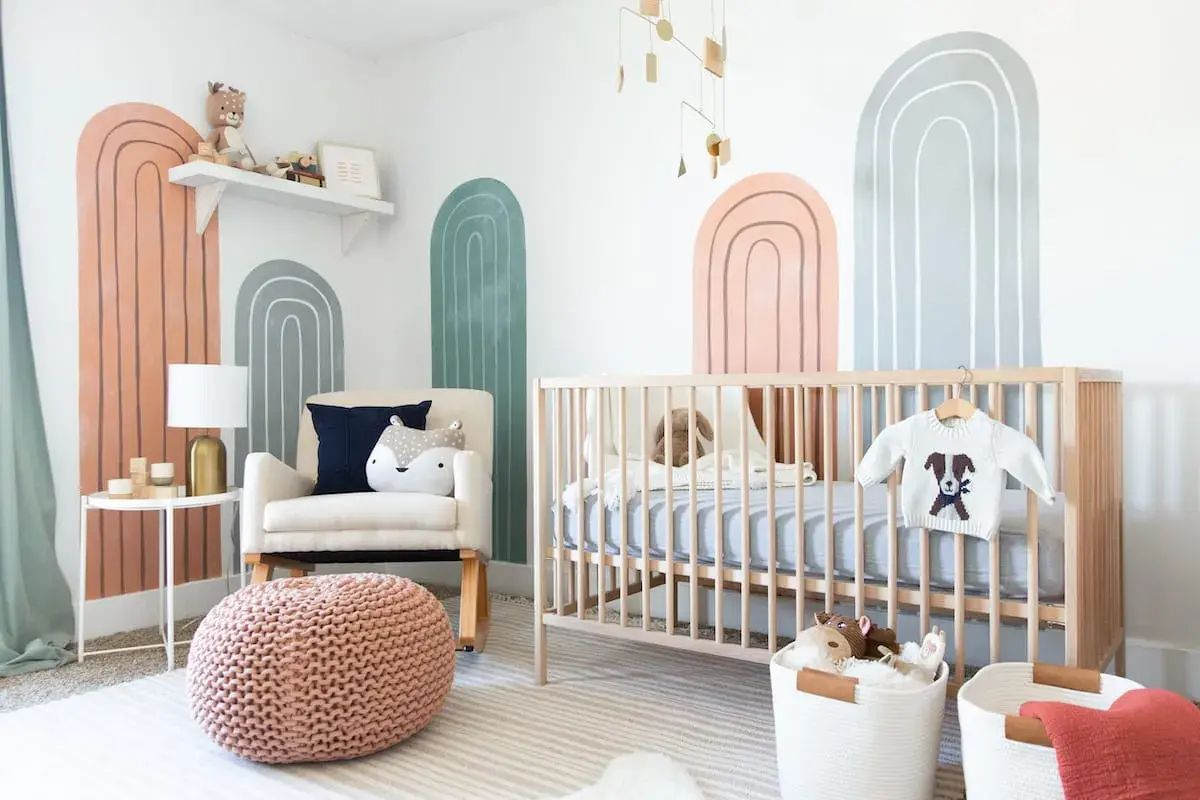
Designing a nursery for twins is less about matching everything and more about building one calm room that can handle two sleep setups, two personalities, and twice the gear. The best twin nursery themes give you a clear visual direction without getting in the way of sleep safety, storage, or nighttime routines. In practice, the smartest rooms blend one strong motif with practical choices that make the space easier to live in every day.
What matters most when you design a room for two babies
- Start with one base palette, then give each baby a small personal accent.
- Choose a theme that can survive cribs, toys, and toddler years.
- Plan the layout before buying decor, because two sleep zones change everything.
- Use storage as part of the design, not as an afterthought.
- Keep the crib itself bare and decorate around it instead.
How to choose a theme that still works after the room fills up
I always begin with the room's constraints, not the paint swatches. A good twin nursery theme has to work with the square footage, the amount of natural light, and how long you want the room to feel relevant, because babies grow out of overly literal decor fast.
- Small rooms usually do better with a soft neutral base and one repeatable motif, such as stars, clouds, leaves, or animals.
- Rooms with strong daylight can handle slightly deeper color, like sage, clay, navy, or olive, without feeling heavy.
- Rooms that may become a playroom later benefit from themes that age well, such as woodland, coastal calm, or modern monochrome.
- Different twin personalities are easier to handle when the base theme is shared and only the accents change.
If I had to simplify the decision, I'd say this: pick a story that can stretch from newborn stage into toddlerhood without needing a full reset. That is why soft nature themes, celestial rooms, and clean graphic palettes keep showing up, because they feel warm now and still make sense when the bassinets are gone. Next, I like to compare the actual directions side by side so the choice gets easier.
The theme directions I would shortlist first
The strongest rooms for twins usually lean into one of a few directions. I'm less interested in whether the theme is trendy than whether it can handle two cribs, a lot of laundry, and a changing routine that will probably evolve faster than anyone expects.
| Theme direction | Why it works well for twins | Best styling move | Watch-out |
|---|---|---|---|
| Nature and woodland | Calm, timeless, and easy to personalize without turning the room into two separate styles | Warm wood, leaf prints, woven baskets, sage or moss accents | Too many dark greens can make a small room feel dense |
| Coastal calm | Light and airy, especially good when the nursery is short on square footage | Sandy neutrals, washed blue, soft stripes, natural textures | It can become too nautical if you pile on anchors, shells, and literal beach decor |
| Celestial | Flexible enough for shared art, mirrored cribs, and tiny personal accents | Stars, moons, layered lighting, soft gray or deep midnight blue | High contrast should stay controlled so the room still feels restful |
| Safari or animal | Playful without being babyish, and easy to expand as the kids get older | Pick one animal family or one animal per crib area | Avoid turning every surface into plush overload |
| Travel and adventure | Feels personal and story-driven, which is useful if you want the room to reflect your family | Map art, subtle aircraft shapes, suitcase-style storage, vintage prints | Can feel busy if every wall competes for attention |
| Monochrome with accent colors | Clean, modern, and very easy to balance when two babies share one room | Black-and-white base, then assign each baby one accent color | Needs texture, or it can feel flat |
In 2026, the look I see most often is warmer and softer, with natural wood, layered texture, and quieter patterns doing more of the work than loud, cartoon-heavy decor. I like that shift for twins because it gives the room more breathing room and makes it easier to evolve into a play space later. If you want the shortest path to a room that feels current without being locked to a trend, I would start with woodland, coastal calm, or monochrome and build from there.
How to lay out the room so the theme stays calm and usable
Theme matters, but layout matters more. Two cribs, a shared dresser, a chair, and a place to stash diapers can turn a pretty nursery into a tight little obstacle course if you do not plan the big pieces first.
- Side-by-side cribs work best when the room is wide enough to keep the center clear and let the symmetry feel intentional.
- Back-to-back placement gives you more wall space for storage and changing, which can be the better move in a smaller room.
- Angled cribs can soften a boxy room and open hidden corners, but they take more planning and usually work best when you have an odd-shaped layout.
- A daybed or couch is worth considering if you want a place for feeding, contact naps, or a second caregiver at bedtime.
- Storage should live close to the action, which means diapers, wipes, spare sheets, and swaddles need to be within arm's reach of the changing area.
For sleep, I keep one rule non-negotiable: the crib is for sleep, not styling. The AAP and CPSC both emphasize a firm, flat sleep surface with a fitted sheet only, so the theme should show up in the walls, rug, art, and lighting rather than inside the crib. That leaves room for a room that looks thoughtful and stays safer, which is exactly the balance you want before you start personalizing each side.
How to personalize twins without making the room feel divided
The easiest mistake is trying to give each baby a full theme of their own. That usually makes the room feel smaller and more chaotic, not more special. I get much better results when I give each twin one clear cue inside a shared visual system.
- Use one color family, two accents. Sage and rust, navy and sand, or blush and oatmeal all work better than two unrelated palettes.
- Assign each baby one icon. If the theme is celestial, one crib can lean into the moon while the other uses stars. If the theme is woodland, one can get a fox and the other a bear.
- Use names or initials above each crib. It creates identity without adding clutter on the floor.
- Pick different fitted sheets within the same palette. That is a subtle way to distinguish the cribs while keeping the room visually coherent.
- Label storage early. Bins for clothes, sleep sacks, and toys are easier to manage when each baby has a dedicated section.
Where the money usually goes and how to keep the budget under control
Budgeting for twins is less about spending more on everything and more about deciding what actually deserves the money. Babylist's 2026 advice still makes sense here: put roughly 75% of the budget toward the large structural pieces, then reserve the remaining 25% for the finishing layer, such as art, baskets, decals, and textiles.
| Category | Typical US planning range | Why it matters |
|---|---|---|
| Two cribs | $300-$1,600 total | The main visual anchor and a long-use purchase |
| Two firm mattresses | $120-$500 total | Non-negotiable for sleep setup and fit |
| Nursing chair or daybed | $150-$900 | Makes feeds, soothing, and bedtime less stressful |
| Storage dresser and bins | $200-$900 | Twins generate clutter quickly, so storage is not optional |
| Paint or wall treatment | About $100 DIY, about $500 pro paint, more for wallpaper install | Usually the fastest way to make the room feel designed |
If you want the room to look polished without overspending, I would usually put the money into the cribs, the chair, and the storage first. A painted accent wall is often the better value than full-room wallpaper, especially if you are renting or want the nursery to flex later. For wallpaper, I treat it as a focal-point spend, not something that needs to cover every wall. That approach leaves enough room in the budget for the pieces that will actually get daily use.
- Reuse a dresser as a changing station instead of buying a dedicated changing table.
- Choose paint over wallpaper if you want the theme to be affordable and easier to change.
- Buy secondhand art, baskets, and shelves when the condition is solid.
- Register for practical items like sheets, mattress protectors, and diaper storage.
- Pick one splurge item, then keep the rest deliberately simple.
The finishing details I would never skip in a twin nursery
If I were finishing the room today, I would keep the story simple: one shared palette, one repeatable motif, and two or three personal notes that quietly separate the babies without breaking the whole composition. That is the sweet spot for a nursery that still looks thoughtful when toys, laundry, and sleep schedules start taking over.
- Use one large rug to anchor both cribs and the caregiver zone.
- Choose washable textiles, because twins are hard on fabrics earlier than most people expect.
- Leave room for a later play area if the nursery will need to double as a playroom.
- Keep wall art high enough to stay out of the crib zone, but low enough to matter visually.
When I judge a twin room concept, I ask one final question: would this still work if the cribs disappeared and the room became a toddler playroom for a year? If the answer is yes, the theme is strong enough. That is the kind of room I would build, because it feels calm now and still earns its place later.
