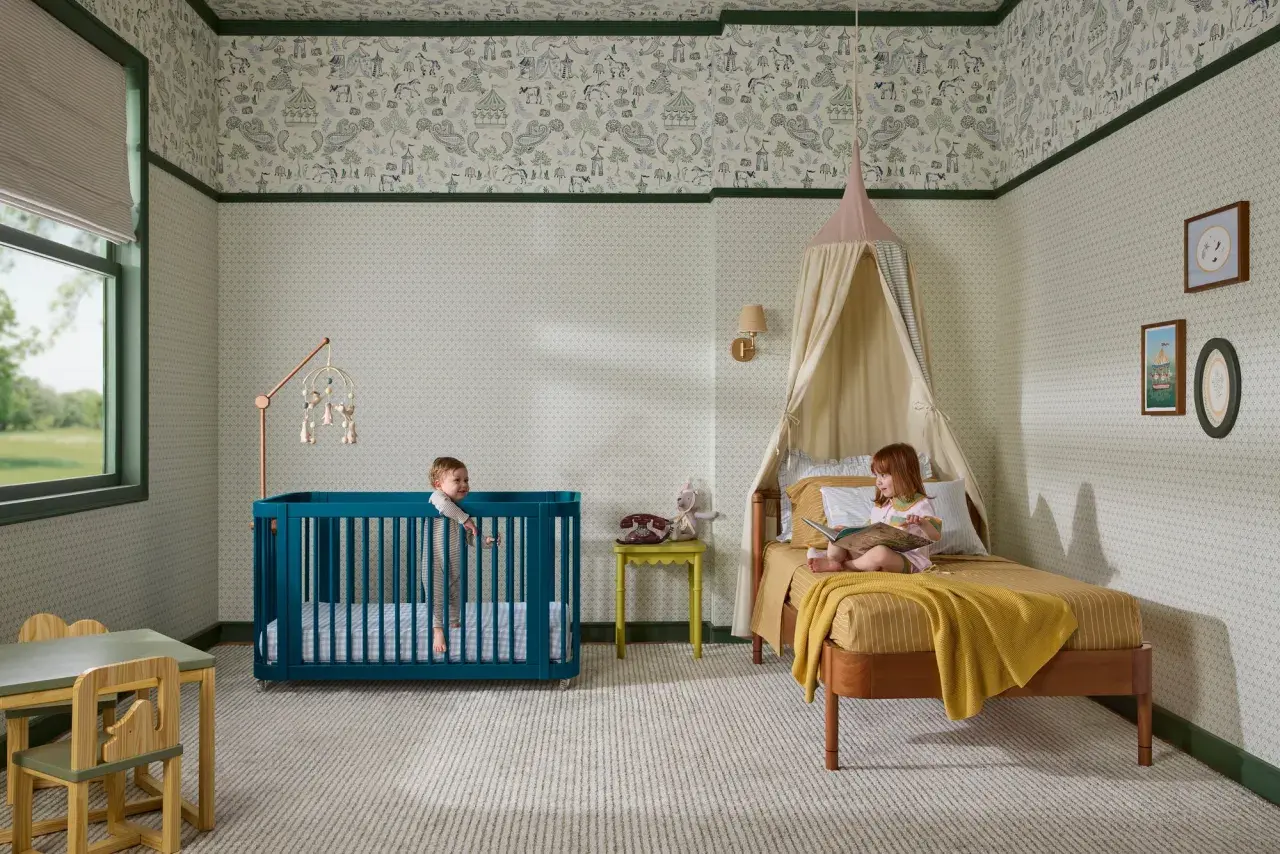
Choosing a crib finish is less about decoration than about how the whole nursery will feel at 2 a.m., in daylight, and again two years later. There are plenty of crib color ideas that look beautiful on a screen but feel wrong once the room has a rug, storage baskets, bedding, and toys. I usually think in terms of light, warmth, and longevity before I think about style.
The crib finish should calm the room and still work when the nursery grows up
- Warm white, ivory, and natural wood are the most flexible choices for a long-lasting nursery.
- Muted sage, dusty blue, and blush add personality without making the crib overpower the room.
- Black, charcoal, and deep walnut can look strong and modern, but they need more light and softer surrounding colors.
- A crib finish should work with wall color, flooring, and bedding, not compete with them.
- Low-odor, water-based finishes are worth prioritizing if you are painting or refinishing nearby furniture.
- For a nursery that may later become a play space, the safest visual move is usually the most adaptable one.
What makes a crib color work in a real nursery
I start with the room before I start with the crib. Natural light, wall color, floor tone, and the amount of visual clutter all change how a finish reads in the space. A white crib in a bright room feels airy; the same crib in a dim corner can feel stark unless the rest of the palette is soft and warm.
I also think about how long the room needs to stay useful. If the nursery will later absorb book storage, toy bins, or a small play area, a crib finish that feels too themed can age fast. Neutral or softly colored cribs usually give you more room to add personality elsewhere, which is why they are the safest starting point for most families. Once those basics are clear, the color choices below become much easier to judge.
- Bright rooms can handle cooler whites, deeper wood tones, and a little more contrast.
- Smaller rooms usually feel better with light finishes that reflect more light.
- Warm floors pair well with ivory, oak, walnut, sage, and muted blush.
- Cool gray walls often need a warmer crib finish so the room does not feel flat.
Practical crib color ideas that age well

When I want a nursery to stay calm for years, I look first at finishes that do not fight the rest of the room. These are the crib colors that are easiest to live with, easiest to style, and least likely to feel dated after the newborn stage.
| Crib finish | What it does visually | Best use case | Main tradeoff |
|---|---|---|---|
| Warm white | Feels clean, soft, and classic without looking sterile | Small nurseries, mixed decor, rooms that need flexibility | Can show scuffs more easily if the finish is very glossy |
| Ivory or cream | Warmer and cozier than bright white | Rooms with wood floors, beige textiles, or softer wall colors | May look slightly yellow under very warm lighting |
| Natural oak or maple | Adds texture and warmth without visual noise | Nurseries that also need to feel playroom-friendly later | Can look plain if the rest of the room lacks texture |
| Light gray | Modern and restrained, with a cool edge | Fresh, airy spaces with white walls and simple bedding | Can feel cold if the room already has cool floors or walls |
| Warm walnut | Grounds the room and gives it a more tailored look | Rooms with plenty of daylight and lighter textiles | Can visually shrink a small room if everything else is dark |
My honest take: warm white and natural wood are the most forgiving choices, and they are also the easiest to build around if the nursery evolves into a toddler room later. That is why they remain the safest first recommendation when the goal is flexibility rather than a strong theme. If you want a little more personality, the softer color families are the next place to look.
Soft color finishes that add personality without taking over
The best colored cribs are usually muted, dusty, or slightly earthy. The moment a finish becomes too saturated, it starts to dictate everything else in the room, which is fine if that is the effect you want but frustrating if you want the nursery to stay adaptable.
| Color | Why it works | Pairs well with | Best for |
|---|---|---|---|
| Sage green | Calm, natural, and current without being trendy in a loud way | Oak, cream, oatmeal, brass, woven textures | Parents who want softness with a little character |
| Dusty blue | Feels restful and slightly cooler than green | White walls, pale gray, natural linen, blond wood | Rooms that get plenty of light |
| Muted blush | Gentle and warm when it is toned down properly | Beige, taupe, soft clay, light wood | Nurseries that need warmth without heavy color |
| Soft butter yellow | Cheerful without becoming overly bright | Cream, warm gray, natural fibers, warm white | Rooms that need a little lift on darker days |
| Dusty terracotta | Adds warmth and a slightly more designed feel | Sand, rust accents, oak, textured rugs | Nurseries with an earthy or boho direction |
I like these colors because they give the crib a point of view without locking the room into one look. Sage is probably the most versatile of the group, especially if the room also needs to work for toys, storage, and future kid decor. Dusty blue and muted blush are softer statements, and they work best when the rest of the room stays quiet so the color does not start competing with bedding or wall art. From here, the question becomes how much contrast you want in the room overall.
Darker and two-tone cribs can work when you want more contrast
Dark cribs are not the default choice, but they can be strong and beautiful when the room supports them. A deep walnut finish, charcoal gray, or even black can make a nursery feel more tailored and intentional, especially if the walls are light and the textiles stay soft.
- Black looks crisp and modern, but it needs breathable visual space around it so the crib does not feel heavy.
- Charcoal is slightly softer than black and often easier to layer with warm neutrals.
- Deep walnut works well when you want richness without the starkness of black paint.
- Two-tone cribs are useful when you want the warmth of wood with the clarity of a painted frame.
My rule here is simple: if the room is small, dark, or already packed with strong patterns, I would avoid a very bold crib finish. If the room is bright and simple, a darker crib can become the visual anchor that keeps everything from feeling too washed out. The crib does not live alone, though, so the rest of the room has to support the choice.
How to pair the crib with walls, bedding, and flooring
This is where a good color choice becomes a complete room. The crib should connect to at least one other surface in the nursery, even if the connection is subtle. When the crib and the room share a few tones, the whole space feels calmer and more finished.
- White crib works best with warm walls, a textured rug, and bedding in cream, sand, or pale green.
- Natural wood crib pairs well with linen, woven baskets, and soft accent colors like sage or clay.
- Sage crib looks best when the room stays mostly neutral, with one or two natural materials repeating the tone.
- Black crib benefits from soft white walls, natural fiber textiles, and at least one other dark detail such as a lamp base or frame.
- Blush crib feels most balanced with beige, ivory, or muted terracotta instead of more pink.
If the nursery also needs to function as a playroom later, I would lean even harder into flexibility. A crib color that works with baskets, toy storage, picture books, and a future reading nook is usually more useful than one that only looks good in a styled newborn setup. The color should support the room, not become the whole story. Once that part is sorted, the finish itself is the last thing I check.
Finish and safety details I never skip
Color matters, but finish quality matters more than most people expect. A crib can look beautiful on day one and still be a poor choice if the coating chips quickly, scratches easily, or gives off a strong odor during setup. I prefer water-based, low-odor finishes whenever possible, especially if the crib is going into a freshly painted nursery.
I also make sure the crib itself meets current U.S. safety requirements and that the mattress fits properly. The CPSC crib safety guidance is the standard I would trust before any paint chip, stain tone, or glossy finish. If you are refinishing an older crib, use a product intended for furniture, let it cure fully, and do not rush assembly just because the surface feels dry. That last step is where a lot of well-meaning projects go sideways.
For a nursery finish, I care more about a quiet, durable surface than about a dramatic color statement. That usually means choosing a shade that does not fight the room, a coating that holds up to cleaning, and a look that can survive the shift from crib to toddler space without feeling out of date.
The crib finish I would choose if the room has to grow with the child
If I had to narrow it down, I would pick warm white or natural wood first. Those two finishes are the easiest to style, the easiest to keep calm, and the least likely to clash with future bedding, storage, or playroom pieces. Sage is my next choice when I want color that still feels soft and useful.
The biggest mistake I see is treating the crib like a standalone design object. It works better as part of a larger palette. Choose one finish that feels restful, repeat that tone in another place in the room, and let the rest of the nursery stay simple enough to change as your child grows. That approach is less flashy, but it is the one I trust most when the room has to stay useful for a long time.
