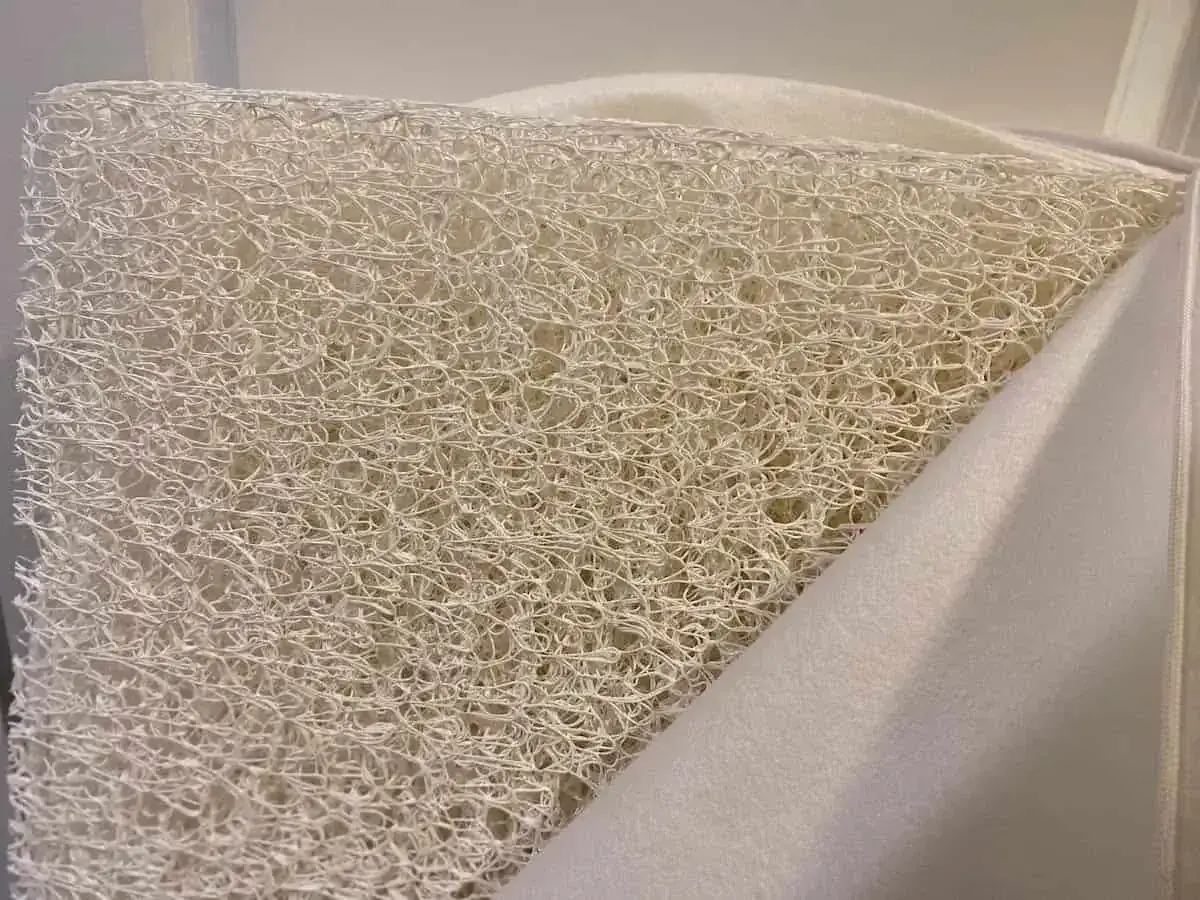
A Newton crib mattress is built around a breathable Wovenaire core rather than a dense foam block or coils. The materials matter because they change airflow, firmness, cleanup, and the way the mattress feels under a fitted sheet in a crib or toddler bed. If you care about nursery safety and easy maintenance, the construction is the part worth understanding first.
At a glance, Newton’s build is centered on airflow and easy cleaning
- The main structure is Wovenaire, a food-grade polymer core that is mostly air by volume.
- There is no foam, latex, or spring system inside the mattress.
- A viscose inner encasement wraps the core and supports the fire-resistant build.
- The outer cover varies by model: Essential is slimmer, Original is quilted and thicker, and Waterproof adds a waterproof layer.
- The result is a firm, washable, nursery-friendly mattress designed for crib sleep.
How the layered construction actually works
When I break the mattress down layer by layer, the build is straightforward: a Wovenaire core in the middle, a viscose encasement around it, and a removable outer cover on top. That three-part structure is the real answer here, because each layer does a different job.
| Layer | Material | What it does |
|---|---|---|
| Core | Wovenaire, a food-grade polymer matrix that is mostly air | Provides the mattress structure, airflow, and washable support |
| Inner encasement | Viscose, a wood-pulp-based fiber | Wraps the core and supports the mattress’s safety and fire-resistance design |
| Outer cover | Polyester spacer fabric or a quilted waterproof version, depending on model | Creates the sleeping surface and handles everyday wear |
That is why a Newton mattress feels less like a soft foam cushion and more like a structured, airy sleep surface. The next question is what the Wovenaire core actually changes once the mattress is in a crib.
Why the Wovenaire core matters more than the cover
The Wovenaire core is the part that makes Newton unusual. Newton describes it as a food-grade polymer structure with about 90 percent air by volume, which is very different from the dense foams most parents know. In practice, that means the mattress is built to let air move through the interior instead of trapping it in a solid block.
That difference affects three things parents notice fast: heat, cleanup, and firmness. A mesh-like core usually feels cooler and less sinky than foam, and it is one reason the mattress can be washed from cover to core. It also explains why the surface stays intentionally firm, which is exactly what you want in a crib. For infant sleep, softness is not the goal; stability is.
There is a tradeoff, of course. If you are expecting a plush, pressure-relieving feel, this is not that kind of mattress. The Wovenaire build is closer to a technical sleep surface than a luxury pillow-top, and for nursery use that is usually the point. That tradeoff becomes clearer once you compare the different cover options.
How the cover options differ across Essential, Original, and Waterproof
The cover is the part you touch every day, so I do not treat it as cosmetic. Newton’s three standard crib mattresses all use the same core family, but the outer build changes enough to matter when you are choosing between them.
| Model | Cover build | Thickness | Best for |
|---|---|---|---|
| Essential | Single-layer breathable cover over the Wovenaire core | 4 inches | Families who want the simplest, lighter profile |
| Original | Quilted dual-layer spacer-material cover | 5.5 inches | Buyers who want a more cushioned hand feel without giving up the breathable core |
| Waterproof | Quilted dual-layer cover with waterproof underlining on the toddler side | 5.5 inches | Nurseries that expect more spills, leaks, or potty-training cleanup |
All three are made for standard American cribs, so the decision is mostly about material build, not fit. The Essential keeps things lean and simple, the Original adds more material in the cover, and the Waterproof version is the practical pick when cleanup convenience matters most. That choice matters because material build is only half the story; safety and maintenance are the other half.
What the materials mean for safety, firmness, and cleanup
The biggest reason parents look at Newton is not the brand name; it is the material logic behind the mattress. Newton says the crib mattress is free of foam, latex, springs, vinyl, and PVC, and that it is lead- and phthalate-free. It also carries Greenguard Gold certification, which is useful if you care about lower-emission nursery products.
Newton also says the mattress meets ASTM and CPSC standards and has been tested to meet the Australian firmness standard. I read that as a strong signal that the build is meant for crib-level support rather than couch-like softness. In other words, this is a mattress designed to stay firm enough for infant use and still remain practical as your baby grows.
Cleanup is where the materials really pay off in everyday life. Because the core and covers are built to be washed, the mattress is easier to reset after leaks than many conventional crib mattresses. That does not mean you can ignore care instructions, but it does mean the mattress is built for real nursery messes instead of only showroom neatness. And even with a breathable mattress, the crib should still stay bare aside from a fitted sheet.How Newton compares with foam, latex, and innerspring crib mattresses
If I compare Newton to the mattresses most parents see elsewhere, the difference is less about branding and more about structure. Traditional crib mattresses usually lean on foam, latex, or innersprings, then add comfort layers and a cover on top. Newton takes a different route by using a breathable polymer core and simplifying the rest of the stack.
| Mattress type | Typical build | What it usually feels like | What to expect |
|---|---|---|---|
| Foam | Polyurethane foam core with a fabric cover | Soft to medium, often the most familiar feel | Usually less washable and more likely to trap heat than a mesh-style build |
| Latex | Natural or synthetic latex core | Springy and responsive | Can be durable, but it is not usually chosen for full-core washing |
| Innerspring | Steel coils with padding layers | Bouncy and structured | Traditional and sturdy, but not built around breathable core washing |
| Newton | Wovenaire core plus breathable or waterproof cover system | Firm, airy, and technical rather than cushy | Designed for airflow, easy cleaning, and a simple nursery maintenance routine |
I do not think foam, latex, or innersprings are bad categories on their own; they just solve a different problem. If you want plush pressure relief, those materials may feel more familiar. If you care more about a washable crib surface, light maintenance, and a very firm sleep setup, Newton is playing a different game. That makes the final buying check less about marketing and more about your nursery routine.
The details I would check before buying for a crib or toddler bed
If I were choosing a Newton mattress for a nursery, I would focus on three things: the cover style, the thickness, and how often I expect spills. The core is the same idea across the line, but the cover build changes the day-to-day experience more than most buyers realize.
For a lighter, simpler setup, the Essential makes sense. For a more cushioned feel, the Original is the better fit. For a room where cleanup is likely to be frequent, the Waterproof model is the one I would look at first. In all three cases, the real advantage is the same: a mattress built around breathable support rather than a dense foam block.
That is the practical answer to what Newton’s mattress materials are doing for you. They are not just marketing ingredients; they shape airflow, firmness, cleaning, and how long the mattress stays useful as your baby moves from crib to toddler bed.
