The best games for a one-year-old are short, physical, and interactive. At this age, I look for simple back-and-forth play that builds language, coordination, and confidence without overwhelming a child who may still have a very short attention span. This article breaks down which games work best, why they matter for development, and how to keep play safe and frustration-free.
What matters most at this age
- Choose games that last 30 seconds to 3 minutes, then repeat them.
- Prioritize face-to-face play such as peekaboo, pat-a-cake, ball rolling, and simple hide-and-find games.
- Use play to practice one skill at a time: movement, language, imitation, or cause and effect.
- Keep toys large, sturdy, and easy to clean; avoid small parts, loose magnets, and button batteries.
- Let your child lead when possible. At this age, repetition is more valuable than novelty.
What a one-year-old is ready for
Most 1-year-olds learn best through repetition, imitation, and movement. They are usually drawn to cause-and-effect play, like dropping, stacking, hiding, and finding, and they often enjoy simple social games such as waving, clapping, and peekaboo. The CDC includes games like pat-a-cake, looking for hidden objects, and putting something into a container among common 1-year skills, which is a strong clue that the best play at this age should be simple, responsive, and hands-on.
I think of this age as the sweet spot for games that are easy to start and easy to repeat. If a child can do the same action again with a grin, a squeal, or a clap, you are usually on the right track. That is why the strongest options are rarely fancy toys; they are ordinary interactions with a clear turn-taking rhythm. With that in mind, I would start with the games below.

Simple games that are easy to start today
| Game | Why it works | How to play | Best for |
|---|---|---|---|
| Peekaboo | Builds object permanence, social turn-taking, and anticipation | Cover your face or a toy with a cloth, then reveal it with a smile | Fussy moments, diaper changes, quick resets |
| Pat-a-cake | Supports imitation, rhythm, and language | Clap slowly, sing the words, and pause so your child can copy you | Seated play and calm bonding time |
| Roll the ball | Practices turn-taking, gross motor control, and tracking movement | Sit a few feet apart and roll a soft ball back and forth | Floor play indoors or outdoors |
| Drop it in the container | Strengthens fine motor skills and cause-and-effect thinking | Drop blocks, cups, or large pom-poms into a bowl, then dump them out together | High chair play or quiet tabletop play |
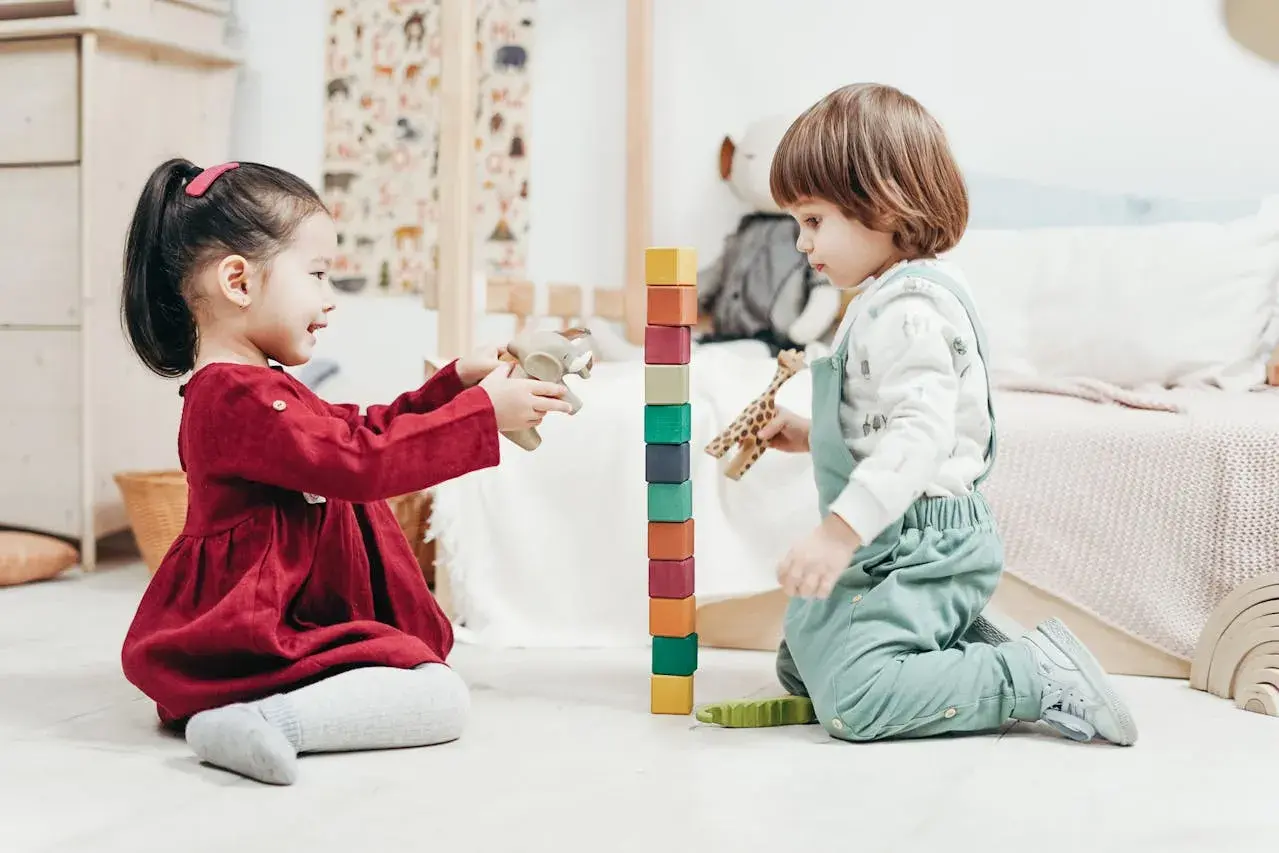
| Stack and knock down | Builds hand-eye coordination and persistence | Stack 2 to 4 blocks or cups, then let your child knock them over | Short bursts of focused play |
| Bubble chase | Supports visual tracking, reaching, and movement | Blow a few bubbles and let your child pop or follow them | Energetic play when you need movement |
| Dance and freeze | Helps with listening, balance, and body control | Play music, dance together, then stop suddenly and hold still | Burning off energy before nap or dinner |
| Puppet talk and animal sounds | Encourages language, imitation, and shared attention | Use a puppet or stuffed animal to make sounds, then wait for a response | Quiet, language-rich play |
If your child only stays with one of these games for 20 to 60 seconds, that still counts. At this age, a few short rounds usually beat one long activity, because the goal is not performance. It is repeated interaction, and repeated interaction is what turns a simple game into a developmental win.
How to match the game to the day
Not every one-year-old wants the same kind of play on the same day. Some want to move, some want to observe, and some want to grab every object within reach. The easiest way to keep play successful is to match the game to the child’s mood instead of insisting on the plan you had in mind.
- For busy movers: try bubbles, dance and freeze, crawling through a pillow tunnel, or pushing a sturdy toy across the floor.
- For cautious explorers: use peekaboo, a soft cloth hide-and-find game, or gentle puppet play with lots of pauses.
- For container lovers: offer stacking cups, nesting bowls, simple block dropping, or a basket they can fill and empty.
- For language-heavy moments: sing songs with actions, name body parts, make animal sounds, and wait for their copy.
- For sensory-seeking play: let them splash at the sink, handle textured balls, or explore a scarf box with supervision.
I prefer to think of these as flexible templates rather than fixed activities. The same child may want fast, noisy play in the morning and quiet, repetitive play later in the day. Once you stop treating every game like a performance, it becomes much easier to keep play going without forcing it.
How to keep play from falling flat
The fastest way to lose a one-year-old is to make the rules too long or the setup too complicated. I keep directions to one action, show the first round myself, and then let the child take over. Repetition matters more than novelty here; the child is learning what happens next, not collecting new experiences every thirty seconds.
- Start with one step. “Roll the ball” works better than a three-part explanation.
- Show before you ask. Demonstrate the action once or twice, then pause.
- Use the same words. Repeated phrases help your child connect sound, action, and meaning.
- End on success. Stop while the game is still fun so your child remembers it positively.
- Repeat favorite games across the day. A child may enjoy the same game at breakfast, after nap, and before bath.
That is also why low-tech play works so well. You do not need a fresh activity for every 10-minute window. You need a few reliable games that your child can understand quickly and want to revisit.
The safety rules I never skip
HealthyChildren’s toy-safety guidance is practical: choose items large enough that they cannot fit in the mouth, avoid loose magnets and button batteries, and check age labels instead of assuming a toy is fine because it looks cute. For one-year-olds, supervision matters more than clever design, because they explore with their hands and mouths at the same time.
- Choose large, sturdy items. Small parts are not worth the risk, even during supervised play.
- Skip anything that shoots, pops, or breaks apart. Those pieces are hard to control around toddlers.
- Inspect toys regularly. Loose eyes, cracked plastic, and peeling stickers become hazards quickly.
- Keep magnet toys and button batteries out of reach. These are serious choking and injury risks.
- Use water and movement games with close attention. A few inches of water or a fast-moving toddler can turn a simple game into a problem.
If a toy or game feels too advanced, it probably is. The safest option is often the simplest one: a soft ball, a few stacking cups, a cloth, or a board book that can survive being dropped, chewed, and rediscovered. Once the space is safe and the game is simple, you can build a routine that actually fits everyday life.
A starter rotation that works for most families
If I had to choose just three games for the next week, I would pick peekaboo, rolling a ball, and drop-and-dump play with a sturdy container. Those three cover social connection, movement, and fine motor practice without needing special equipment, and they are easy to repeat in the living room, nursery, or kitchen floor.
- Peekaboo for comfort, attention, and quick connection.
- Ball rolling for movement and turn-taking.
- Container play for stacking, dropping, and problem-solving.
- Pat-a-cake for imitation and language.
- Bubble chase for active play when your child needs to move.
That rotation is enough to cover most everyday moments, and it leaves room for your child to lead the next round instead of forcing a schedule of activities that looks good on paper but never survives contact with a real toddler.
