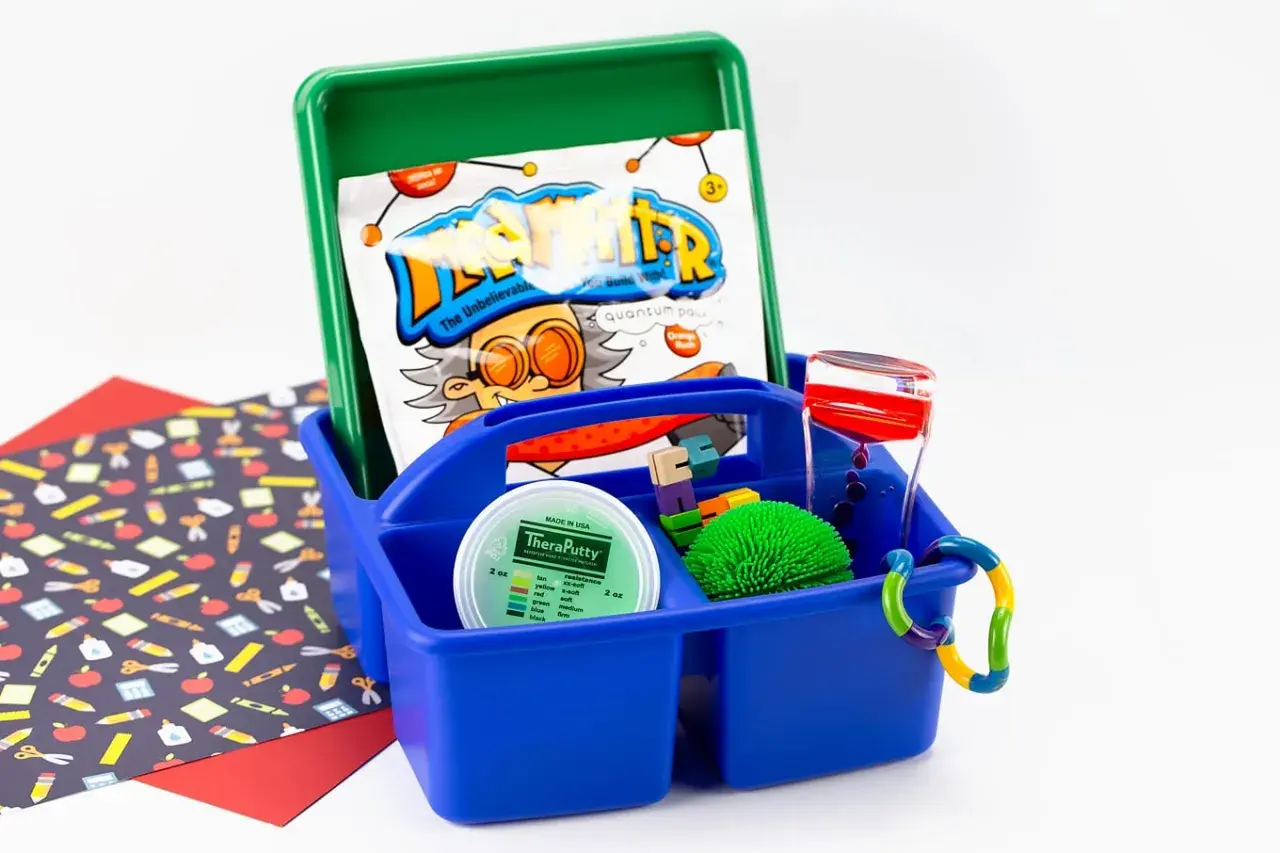
A sensory box is a simple, contained setup that gives children something to touch, pour, sort, squeeze, and notice. In this article, I explain what it is, why it supports play and development, what to put inside at different ages, and how to keep it safe enough for everyday use. For parents, nurseries, and early-learning spaces, the appeal is practical: low-cost materials can turn into focused, open-ended play without much prep.
The fast answer for busy caregivers
- A sensory box is a container filled with safe, varied materials designed for hands-on exploration.
- The best versions are open-ended, so the child leads the play instead of following a fixed task.
- The main benefits are language growth, fine motor practice, problem-solving, and self-regulation.
- For children under 3, size and supervision matter more than theme or visual style.
- You do not need fancy fillers; a shallow tub, one scoop, and a few textures are enough to start.
What a sensory box actually is
A sensory box is usually a shallow container, tub, tray, or crate filled with materials that invite exploration through touch, sight, sound, and sometimes smell. In many homes and classrooms, people use the terms sensory box and sensory bin almost interchangeably; the box itself is less important than the way it is used.
I think the most useful way to understand it is this: it is not a toy with one correct answer. It is a play space built around materials that can be moved, scooped, poured, hidden, sorted, or combined. That is why the best setups feel calm and open rather than crowded or overdesigned. The child should be able to notice the materials first, and the adult should resist the urge to direct every move.
That open-ended quality is what makes the setup interesting for development, which leads directly to the real reason parents and educators keep coming back to it.
Why it supports play and development
A sensory box does more than keep a child occupied for ten minutes. The American Academy of Pediatrics has pointed out that play helps children plan, organize, get along with others, and regulate emotions, and sensory play fits that idea very well. When children manipulate different materials, they are building skills that show up later in much bigger tasks.
- Language: Children naturally start describing texture, temperature, weight, and action words such as soft, bumpy, heavy, scoop, pour, and hide.
- Fine motor skills: Pinching, transferring, stirring, and tonging strengthen the small muscles used for writing, buttoning, and self-feeding.
- Problem-solving: A child figures out how to move material from one cup to another, how to balance a scoop, or how to uncover a hidden object.
- Self-regulation: Repetitive, predictable movements can be calming, especially for children who need help slowing down or settling into one task.
- Social play: Shared bins encourage turn-taking, imitation, and simple cooperation, which matters in nurseries and sibling play.
In practice, I see the biggest gains when the setup is simple enough for the child to notice patterns and experiment. Too much visual noise usually works against that, so restraint is not a compromise here; it is part of the method.
What to put inside for different ages
The right filler depends on the child’s age, the setting, and whether the child still mouths objects. This is where a sensory box becomes less about aesthetics and more about judgment. If you are choosing materials for children under 3, keep in mind that the CPSC treats small parts as a choking hazard for that age group, so I would avoid loose items that could fit inside a small-parts tester or anything similarly tiny.
| Age range | Good choices | What I would avoid | Why it works |
|---|---|---|---|
| Under 3 | Water play, large sponges, washcloth strips, big blocks, sturdy cups, large scoops | Beads, buttons, marbles, dry beans, small figurines, water beads, any loose filler that can be mouthed | Large pieces support grasping, filling, dumping, and cause less choking risk |
| 3 to 4 | Rice, pasta, oats, kinetic sand, larger toy animals, scoops, funnels, cups | Sharp objects, sticky residue, anything fragile or easily swallowed | This is the sweet spot for sorting, scooping, and simple pretend play |
| 5 and up | Themed loose parts, counting chips, alphabet pieces, tweezers, magnets with supervision, natural materials | Still avoid unsafe small parts if the child mouths objects or has mixed-age siblings nearby | Older children can use the box for patterning, storytelling, and small challenges |
If you want a cleaner home setup, I would start with one filler, one tool, and one open-ended object rather than throwing in every texture at once. A bin with rice, a scoop, and a few cups usually gives more useful play than a bin packed with twenty novelty pieces.
How to build one that stays interesting
The easiest way to build a good sensory box is to choose a purpose before you choose the materials. Do you want calm play, scooping practice, color sorting, or pretend play? Once I know the goal, I can keep the setup focused and avoid the common mistake of making it look busy but feel vague.
- Pick a shallow container with enough space for both hands to move freely.
- Choose one main filler and, if needed, one secondary texture.
- Add 2 or 3 tools that match the goal, such as cups, tongs, spoons, or funnels.
- Include a few open-ended objects for imagination, such as animals, cars, or shells if the child is old enough.
- Rotate one element at a time instead of rebuilding the whole thing each week.
That rotation step matters more than most people think. A new scoop, a different color filler, or a seasonal theme can make the same box feel fresh without turning setup into a project. In most homes, that keeps the cost low too: a starter version often costs little more than what you already have on hand, while themed versions can still stay modest if you skip specialty fillers and buy only one or two extras.
Safety rules and mistakes I would not ignore
This is the section I would never skip, because sensory play only helps when the child can explore without constant risk. For younger children, supervision is non-negotiable. If a material is small enough to swallow, crack, break, or hide inside a fist, it is the wrong material for the wrong age.
- Do not use tiny loose parts with children under 3.
- Do not assume a beautiful filler is automatically a safe filler.
- Do not leave a child alone with a box that contains anything that could be mouthed or inhaled.
- Do not overload the box; clutter makes it harder to focus and easier to spill.
- Do not ignore allergies, dust, strong scents, or sticky materials that are hard to clean.
I also avoid water beads for young children. They are visually appealing, but I do not think the payoff is worth the risk when there are safer options that do the same job. If a child is overwhelmed rather than engaged, the solution is usually simpler materials, not more variety.
Where a sensory box fits best in real life
The best sensory box is the one that matches the setting. At home, I like it as a calm-down station after daycare, a morning invitation, or a rainy-day activity that does not require screens. In nurseries and preschool rooms, it works well as a learning center because it can support vocabulary, turn-taking, and independent exploration without needing constant adult direction.
- Home: Use it for quiet focus, transitions, or sibling-friendly play.
- Nursery: Use it for guided exploration, small-group interaction, and language building.
- Travel or waiting time: Use a smaller, closed version with a few large pieces so it stays tidy and portable.
- Neurodivergent children: Match the textures to the child’s sensory profile instead of assuming all sensory input is helpful.
That last point is important. Sensory play is not magic, and not every child likes the same level of texture, noise, or movement. I get better results when I watch what the child returns to, what they avoid, and what leaves them calmer afterward. That observation tells you more than any generic list of trendy fillers ever will.
The small adjustments that make it worth repeating
The real value of a sensory box is not in the container or the theme. It is in the way a simple setup invites a child to stay with one idea long enough to explore it properly. If you remember only one practical formula, make it this: one container, one main texture, one tool, one clear purpose.
From there, I would build slowly. If the child is engaged, add one new object next time. If the child is distracted, remove items instead of adding them. That is usually the difference between a box that gets used once and a box that becomes part of your weekly rhythm. For play that supports development without turning into clutter, simplicity still does the heavy lifting.
