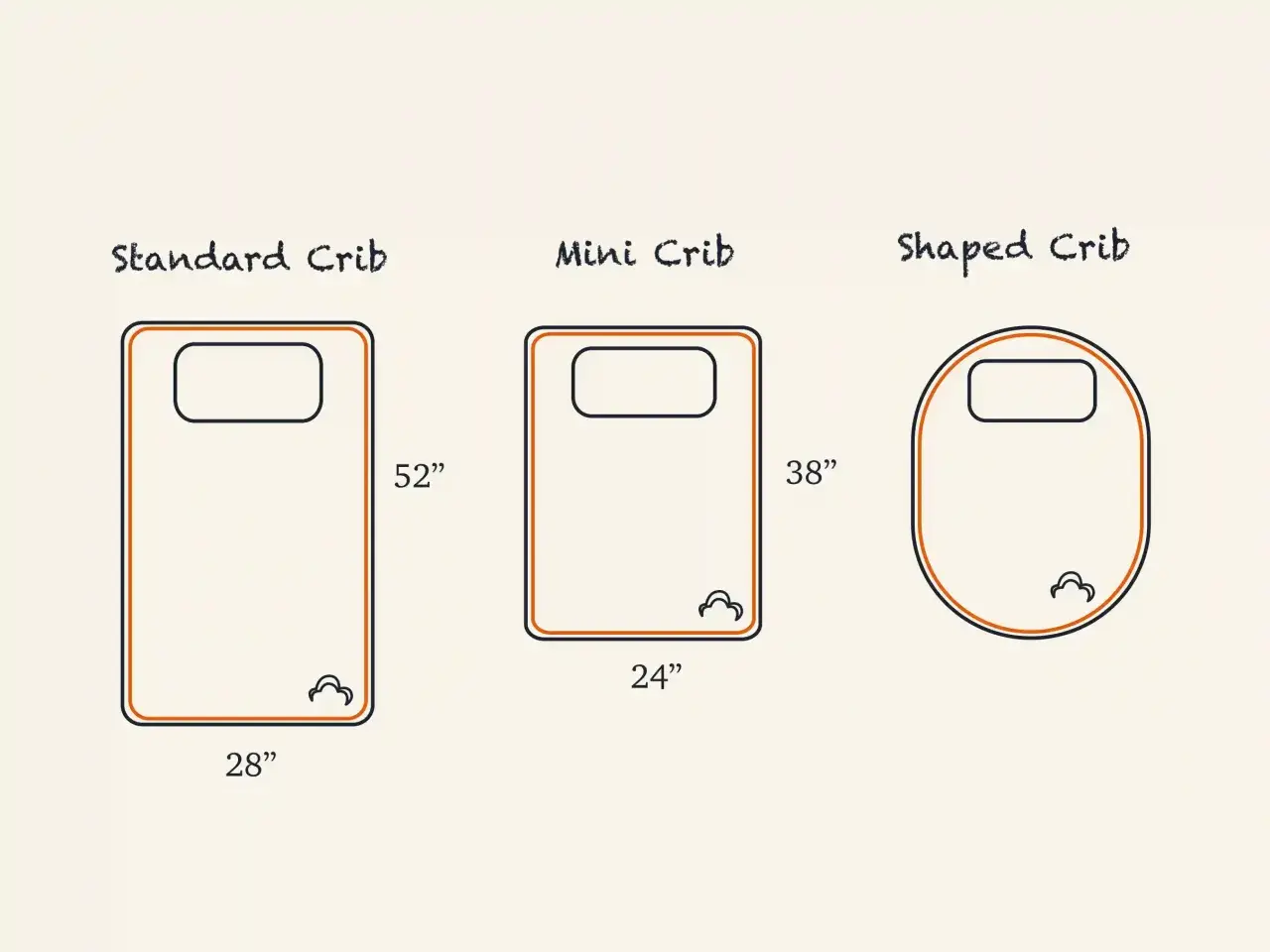
Crib size is one of those nursery details that looks simple until you start shopping. Are all cribs the same size? No: full-size cribs follow one U.S. standard, but mini cribs, portable models, and specialty designs can differ a lot. That matters because the wrong mattress fit is not just inconvenient; it can create a safety problem.
The safest choice starts with the crib category
- Full-size cribs in the U.S. are standardized, so a standard mattress can usually move between brands.
- Mini cribs, portable cribs, and specialty shapes are not interchangeable with full-size mattresses.
- For full-size setups, the mattress should measure at least 27 1/4 x 51 5/8 inches and no more than 6 inches thick.
- The crib frame size and the mattress size are different measurements; the inside dimensions are what matter.
- If the crib is non-full-size, buy the mattress made for that exact model whenever possible.
The short answer is no, and the reason is more than style
In real life, crib size depends on the category, not just the brand name. A nursery store may place several models side by side and they can look similar from a distance, but one may be a standard full-size crib, another a mini crib, and a third a portable design that folds for travel. I treat that as a measurement problem first and a design choice second.
That distinction matters because infant sleep safety depends on a firm, snug sleep surface. If the mattress does not match the frame, you are not just dealing with a loose fit; you are creating space where a baby can become trapped. That is why I always start with the product class before I compare finishes, convertibility, or price.
Once you see crib sizing this way, the U.S. standards make a lot more sense. The next section breaks down the dimensions that actually define a standard crib.
What a standard U.S. crib looks like
According to the CPSC, a full-size crib has interior dimensions of 52 3/8 inches by 28 inches, each with a small allowed tolerance. These are inside measurements, not the outside footprint you see on the showroom floor. If a crib falls outside that range, it is treated as non-full-size.
That is also why mattress sizing is standardized. Federal rules require a full-size crib mattress to measure at least 27 1/4 inches wide and 51 5/8 inches long, and it cannot be more than 6 inches thick. Those numbers are designed so the mattress fits tightly enough to avoid dangerous gaps, but still sits properly inside the frame.
The practical takeaway is simple: if you have a standard full-size crib, you should not need a custom mattress. If you have to guess, eyeball, or “make it work,” the crib is probably not standard. That brings us to the models that break the pattern.

The crib types that are actually different sizes
Once you move beyond the standard frame, size differences become very real. I find this is where shoppers get tripped up, because the crib may still look like a crib even though it uses a smaller or unusual mattress.
| Crib type | How size works | Best for | What to watch for |
|---|---|---|---|
| Full-size crib | Built around the standard U.S. interior dimensions | Main nursery use and the broadest mattress compatibility | Match the crib to a full-size crib mattress, not an adult mattress or a random foam pad |
| Mini crib | Smaller footprint, often with mattresses around 24 x 38 inches, but exact sizing varies by brand | Small rooms, shared bedrooms, grandparents' homes | Do not assume a mini crib mattress from one brand fits another brand's frame |
| Portable crib | Usually folds or collapses and may be designed for temporary use | Travel, second sleep space, occasional use | Check the folding mechanism, mattress thickness, and whether the product is intended for sleep |
| Specialty crib | Unusual shape or custom configuration, often with a matching mattress | Design-led nurseries | These are the least interchangeable and often the hardest to replace parts for |
| Convertible crib | Same crib size in crib mode, then changes function later | Families who want a longer product lifespan | Conversion does not mean the mattress or frame is universal across all stages |
The pattern here is straightforward: the more unusual the crib, the less likely it is to share parts with anything else. That is exactly why I like to identify the category before I start comparing finishes or storage features.
Why mattress fit matters more than the frame design
A crib can look solid and still be the wrong size for a mattress. That is why fit matters more than the style of the headboard, the color of the wood, or whether the model converts later. A mattress that shifts, bows, or leaves a visible gap is the real problem.
The safest setup is a firm mattress that sits snugly against the crib sides with no meaningful space around the edges. Soft bumpers, extra padding, or “gap fillers” are not a fix. In fact, they can make the sleep space less safe by adding soft material where a baby should have a clean, bare sleep surface. A fitted sheet is the only add-on I would keep in the crib.
I also would not trust a used mattress unless its condition is excellent and its size is verified against the exact crib. Foam breaks down, springs sag, and even a mattress that once fit well can become loose over time. That is why the next step is always measurement, not assumption.
How to measure before you buy anything
When I measure a crib, I focus on the inside of the frame, not the outside footprint. The outside size tells you whether the crib will fit in the room; the interior size tells you whether the mattress will fit safely.
- Find the model name and read the manufacturer’s dimensions first.
- Measure the interior length and width of the crib after assembly.
- Check whether the crib is full-size or non-full-size before shopping for a mattress.
- Compare the mattress size, thickness, and fit instructions against the crib model.
- Re-check the fit after the mattress has had time to expand, especially if it was shipped compressed.
If you are right between categories, I would not “round up” and hope for the best. Mini cribs and specialty cribs are where people most often make that mistake. In those cases, the safest move is to buy the mattress recommended for that exact crib model and avoid substitutions.
Why convertible cribs are not a shortcut around sizing rules
Convertible cribs create a common misunderstanding: people assume the ability to turn into a toddler bed somehow makes the crib more flexible in size. It does not. In crib mode, the product still has to follow the same dimensional rules and accept the correct crib mattress.
What changes is the function, not the sleep surface. A convertible crib may later use a toddler rail or a different open-sided setup, but that is a separate stage with separate hardware. If the crib is being used as a crib today, the mattress still needs to fit like a crib mattress, not like a later bed frame.
This is one reason convertible models are popular: they can stretch the product’s lifespan without changing the first-year safety requirements. The important thing is to buy for the current stage first and the future stage second. That leads naturally into choosing the right crib for the space you actually have.
The best choice depends on the room, not just the label
If you have a normal nursery and want the most flexibility, I would usually lean toward a standard full-size crib. It gives you the easiest mattress replacement path, the clearest safety standards, and the least confusion when you shop for sheets or protectors later.
- Choose a full-size crib if you want the most universal mattress options and a longer usable window.
- Choose a mini crib if the room is tight and you are comfortable replacing it sooner.
- Choose a portable crib only if you need a foldable sleep space for travel or temporary use.
- Avoid old, modified, or visually charming cribs unless you can verify they meet current safety rules and still fit a modern mattress properly.
One detail people forget is the nursery’s future, not just its present. If you expect to move the crib between rooms, the extra convenience of a smaller model can be worth it, but only if you are ready for the shorter mattress and product lifespan that usually come with it. That makes the final check less about decoration and more about how the crib will actually be used day after day.
The practical rule I trust when shopping in 2026
The safest way to think about crib sizing is this: standard cribs are standardized, but not every crib is standard. Once you know the model category, the rest becomes much easier to judge. You can match the mattress correctly, avoid dangerous gaps, and choose a crib that fits both the room and the way your family actually lives.
If I were buying today, I would keep the model number, manual, and hardware with the crib, then re-check the mattress fit after every move or reassembly. A crib that was snug on day one can become a poor fit after parts are swapped, warped, or assembled incorrectly. That is the small habit that keeps the whole setup honest.
