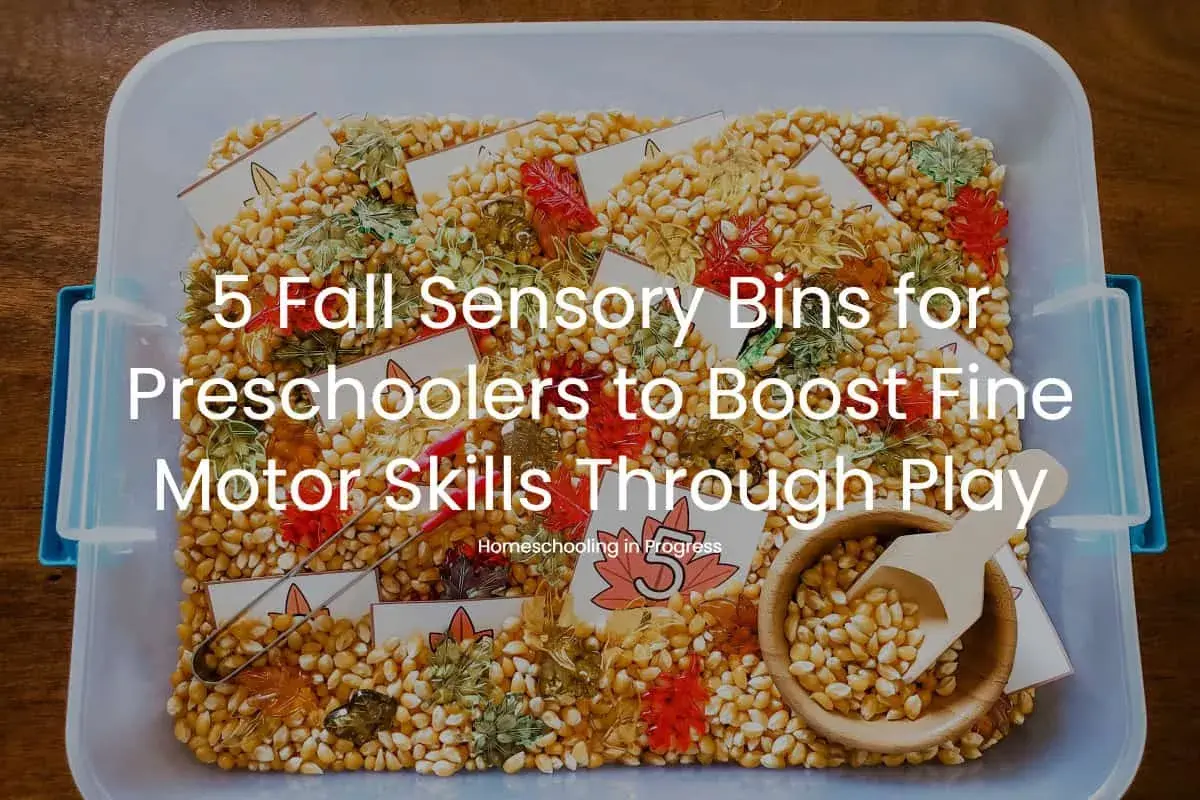
A fall sensory bin can turn a simple plastic tub into a compact learning space: children scoop, pour, sort, bury, uncover, and talk through what they feel. I use that kind of setup when I want seasonal play to do more than look cute; it should support fine motor control, early vocabulary, and the kind of attention that grows through repetition. The best versions are simple, not crowded, and easy to adapt as the child gets older.
The essentials to get right before you start
- Start with one main filler, then add only a few accent textures and tools.
- Choose larger pieces for toddlers; save tiny sorting items for older preschoolers with close supervision.
- The biggest developmental gains usually show up in fine motor work, language, early math, and self-regulation.
- A focused 10- to 15-minute play session is enough for many younger children.
- A basic DIY setup often costs $5 to $15 if you already own a bin, and $15 to $30 if you need filler and tools.
What a seasonal sensory bin really adds to play
What makes this kind of play worth setting up is not the theme alone. It is the combination of texture, repetition, and open-ended choices. Autumn gives the bin a clear visual language, so children can connect what is in front of them with things they already know from the outdoors: leaves, pumpkins, seeds, bark, pinecones, and harvest colors. That makes the play feel familiar without becoming predictable.
I like this format because it gives children a purpose without giving them one fixed answer. They can fill cups, hide objects, sort by shape, make a pile, or simply run their fingers through the materials and describe what they notice. That flexibility is exactly why the setup works so well for mixed ages. A toddler may just dump and refill; a preschooler may start inventing a story, counting objects, or making categories.
When I build one well, it becomes a small invitation to explore: touch first, name second, organize third. Once that purpose is clear, choosing the right materials becomes much easier.

Materials that make the texture feel like autumn
The strongest setups usually mix one base filler with a few seasonal accents. I prefer materials that give children a clear tactile difference, because contrast is what keeps the play interesting. Soft next to rough, light next to heavy, smooth next to crinkly: that is where the learning starts.
| Material | Why I use it | Best fit | What I watch for |
|---|---|---|---|
| Dyed rice or rolled oats | Easy to scoop, pour, and bury objects in | Preschoolers; older toddlers with close supervision | Mess, moisture, and mouthy children |
| Felt or fabric leaves | Soft, bright, and easy to grip | Toddlers and preschoolers | Very small pieces that could be swallowed |
| Pinecones | Bring in a rough, natural texture | Most ages with supervision | Sharp tips, loose bits, or sap residue |
| Mini pumpkins or foam gourds | Give the bin an immediate seasonal cue | Great for pretend play and sorting | Small sizes if the child still mouths objects |
| Wooden spoons, cups, and tongs | Turn simple touching into scooping and transferring | Most ages | Tools that are too awkward for small hands |
| Large dried pasta or beans | Add sound and weight during pouring | Older toddlers and preschoolers | Choking risk for children who still explore with their mouths |
What I leave out matters just as much as what I add. I skip anything tiny, sharp, brittle, or difficult to clean once it has been touched by sticky hands. That means glass decor, loose confetti, broken twigs, and very small beads stay out of the bin. If a child still mouths objects, I stick with oversized pieces and a base that is easy to supervise, even if it is less dramatic visually.
Once the material choices are clean and intentional, the setup itself becomes simple enough to repeat instead of reinventing every week.
How I build one without overcomplicating it
I do not treat this as a craft project that has to look perfect. The bins that get used the most are the ones that can be assembled quickly and reset just as quickly. My rule of thumb is simple: one base filler, two accent textures, two tools, and one clear invitation. That is enough structure to guide play without shutting it down.
- Pick the base. I start with one main filler such as rice, oats, or shredded paper.
- Add contrast. Two seasonal textures, such as felt leaves and pinecones, make the bin feel layered.
- Choose tools on purpose. A scoop, spoon, cup, or pair of tongs changes the kind of movement the child practices.
- Add one invitation. That might be a prompt like sorting by color, hiding small pumpkins, or making a pile of leaves.
- Decide how the play ends. A clear cleanup routine matters, especially for younger children.
If I already have the container, I can usually keep the first version in the $5 to $15 range by using pantry items or materials from a walk outside. If I need to buy filler, themed pieces, and tools, the total often lands closer to $15 to $30. That is still relatively low-cost compared with most short-lived toys, which is part of why this format stays so useful.
But the real value is not in how little it costs. It is in what children practice while their hands are busy, and that is where the developmental side becomes more interesting.
What children actually practice while they play
I do not think of sensory play as a break from learning. For many children, it is the learning. The hands move first, but the brain is busy organizing, comparing, predicting, and naming.
- Fine motor control improves when children pinch leaves, pour rice, transfer pieces with tongs, or bury and uncover objects.
- Language development grows when adults name textures and actions: rough, smooth, crunchy, heavy, light, scoop, pour, hide, find.
- Early math shows up through sorting, counting, matching, and comparing sizes or quantities.
- Self-regulation can improve when the play is calm, predictable, and paced well enough for the child to stay engaged.
- Imaginative play appears when the bin becomes a pumpkin patch, a leaf pile, a harvest table, or a squirrel stash.
There is one important caveat I always keep in mind: sensory play is not automatically calming. A child who loves one texture may dislike another. Too many loose parts can also be overstimulating. When that happens, I reduce the number of materials, shorten the session, or switch to a softer base. The goal is not maximum complexity. The goal is a level of input the child can actually use.
That same idea becomes even more useful when I adjust the setup for age and attention span.
Easy ways to change the challenge by age
I get much better results when I match the bin to the child instead of trying to make every setup work for everyone. A toddler version and a preschool version may share the same autumn theme, but they should not share the same level of detail.
| Age range | Good setup | What the child can do | Watch for |
|---|---|---|---|
| 1 to 2 years | Large felt leaves, foam pumpkins, big cups, and a soft base | Fill, dump, carry, and explore with both hands | Short sessions and close supervision |
| 3 to 4 years | Rice, oats, pinecones, scoops, and sorting bowls | Sort by color or size, count objects, and use simple tools | Keep an eye on mouthing and overexcited dumping |
| 5 years and up | More varied textures, tongs, cards, and challenge prompts | Make patterns, complete scavenger hunts, and explain choices | Do not let the task become so structured that play disappears |
I do not force a toddler bin to behave like a classroom math center. If the child is still in the stage where everything goes to the mouth, I use larger pieces and keep the session simple. For older children, I add rules only when they make the play better, not just busier. A challenge is useful when it creates focus, not friction.
Once the bin is matched to the child, the last job is making sure it stays safe enough and easy enough to repeat.
How to keep it safe, clean, and reusable
Safety is not an afterthought here. A good setup is one you can supervise without constantly interrupting the play. That starts with the materials, but it also includes the space, the storage plan, and the cleanup routine.
- Use a tray, mat, sheet, or baking pan under the bin if you want to contain the mess.
- Keep small pieces out of reach for children who still mouth objects.
- Skip anything sharp, brittle, or likely to splinter during play.
- Avoid damp food items if you want to reuse the bin over multiple sessions.
- Check for loose fragments, moisture, or debris before each use.
- Store filler in a lidded container so it does not pick up dust or get mixed with other toys.
When I use food-based filler, I treat it as a short-term material. If it gets wet, sticky, or strongly scented after a few sessions, I throw it out and start fresh. For reusable setups, dry filler lasts much longer, especially if you keep the bin closed between uses. A handheld vacuum or a simple dustpan also makes cleanup less annoying, which matters more than people think. If the cleanup is painless, the bin gets used again.
And that is what turns a seasonal activity into something worth keeping around instead of a one-time project.
The small adjustments that keep it worth revisiting
I get the most value out of these bins when I change one thing at a time. That keeps the play fresh without turning setup into a chore. If the child already likes the bin, I do not rebuild it from scratch. I rotate the texture, the tool, or the prompt and let the rest stay familiar.
- Swap the base: rice one week, oats the next, shredded paper or fabric strips after that.
- Swap the tools: spoon, cup, funnel, tongs, or a small sieve.
- Swap the task: sort by color, count by twos, hide and find, or match pairs.
- Swap the story: pumpkin patch, leaf pile, squirrel pantry, or harvest market.
That approach keeps the bin useful all season because it preserves the part children actually care about: the chance to touch, move, and discover. When the materials are safe, the texture is inviting, and the task is just challenging enough, the setup becomes a small but genuinely effective tool for play and development.
