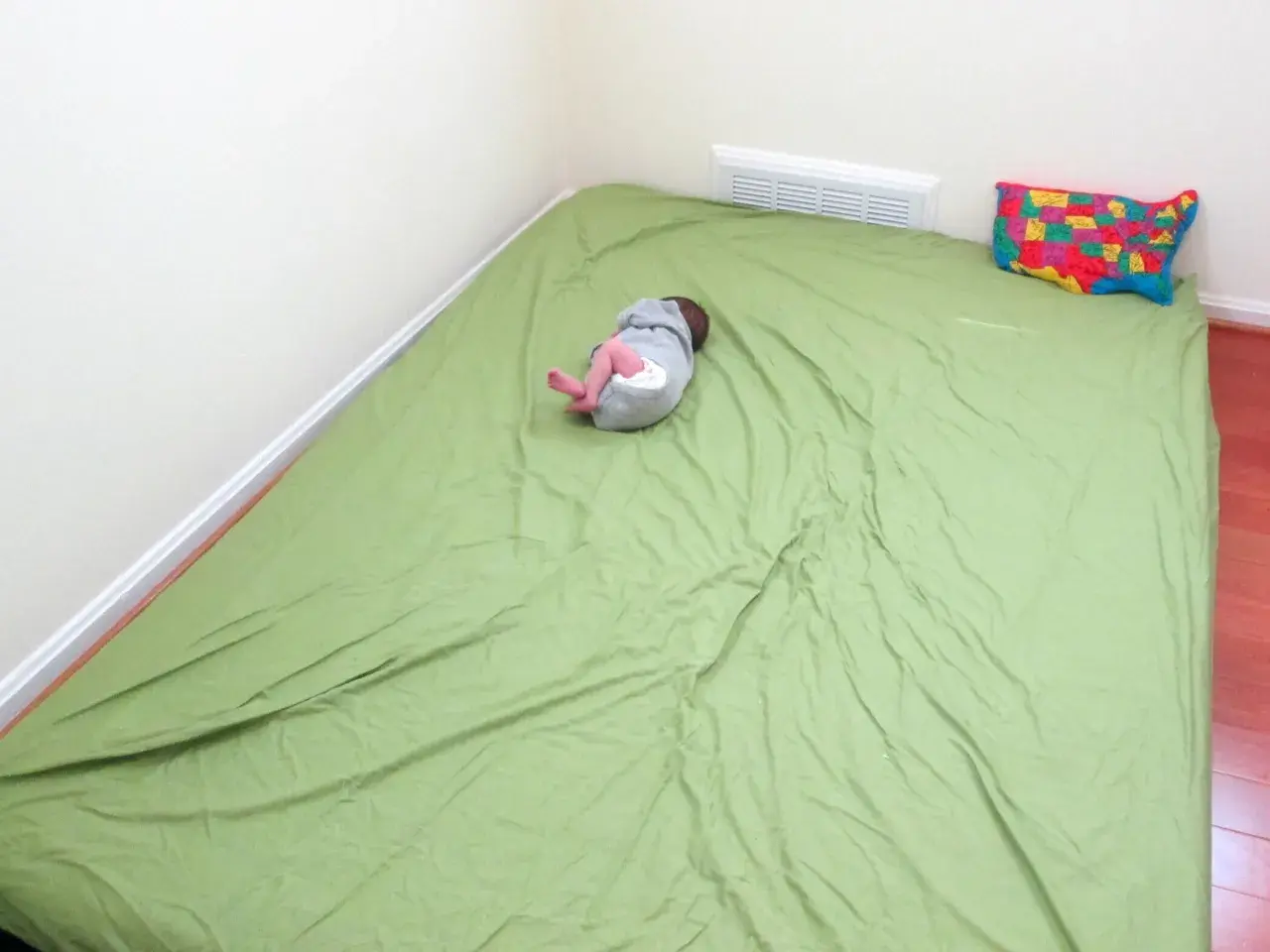
A floor bed can be a practical, low-stress way to support independent sleep, but only when the mattress, room, and routine are set up with safety in mind. The practical question behind how to make a floor bed for baby is really about timing, room proofing, and choosing a sleep surface that stays flat and simple. I would treat it as a nursery system, not just a piece of furniture, because the whole room becomes part of the bed.
The safest setup is simple, flat, and fully baby-proofed
- For babies under 12 months, an approved crib, bassinet, portable crib, or play yard is still the safer sleep choice.
- A floor bed works best when the child is ready for more independence and the room is completely hazard-free.
- Choose a firm, flat mattress with only a fitted sheet, and skip pillows, blankets, bumpers, and toys.
- Room-proof the space first: anchor furniture, manage cords, cover outlets, and remove climbable items.
- Start with a daytime nap so you can see how your child moves, rolls, and settles in the new setup.
Start with age and readiness, not the bed frame
I would not use a floor bed as a crib replacement for a young infant. The AAP’s safe sleep guidance is clear that babies under 12 months should sleep in a crib, bassinet, portable crib, or play yard that meets current safety standards. A floor setup makes more sense once the child is past the early infant stage and the room can be treated as one large sleep-safe zone.
| Child’s stage | Best sleep setup | Why it fits |
|---|---|---|
| Under 12 months | Crib, bassinet, portable crib, or play yard | Designed for safer infant sleep and easier control of the sleep environment |
| Older infant or toddler ready for transition | Floor bed or mattress close to the floor | Reduces fall risk and can support independent in-and-out movement |
| Child who climbs out of the crib | Low bed or mattress on the floor | Often safer than letting the child keep attempting crib escapes |
That age check matters more than the style of bed, because the next decision is choosing a mattress and base that stay firm, flat, and easy to keep clean.
Choose the simplest mattress setup that fits your room
For most families, the cleanest solution is also the safest one: a firm mattress with very little around it. I prefer the least complicated setup that still fits the child’s size and the room’s layout, because extra structure usually adds extra risk.
| Setup | Typical U.S. cost | Best for | Main caveat |
|---|---|---|---|
| Crib mattress on the floor | $80 to $250 | Families who want the simplest and lowest-cost transition | Only works well if the room is fully baby-proofed |
| Low platform floor bed | $120 to $500+ | Parents who want a more finished look with a defined edge | Avoid gaps, sharp corners, and storage spaces underneath |
| Toddler mattress near the floor | $100 to $300 | Older babies and toddlers who need more room to stretch | Takes more floor space and usually needs stronger room-proofing |
The mattress itself should be firm enough that it does not indent heavily under your child’s weight. I would skip plush toppers, thick pads, and anything marketed as extra cozy. Soft surfaces may look comfortable, but for infant sleep they create the wrong kind of comfort.
If you already own a crib mattress, that is often the most practical starting point. A plain mattress that fits the size of the setup is easier to manage than a decorative frame with hidden spaces or complicated corners. Once that choice is made, the real work begins in the room around it.
Baby-proof the entire room before the mattress goes in
A floor bed works only when the bedroom itself is safe enough to act like the sleep enclosure. That means I would treat the room as if the child may roll, crawl, stand, and explore at any time. Once the mattress is on the floor, every hazard at floor level becomes part of the sleep environment.
- Anchor dressers, bookcases, and any heavy furniture to the wall.
- Remove cords from lamps, monitors, blinds, and chargers, or keep them completely out of reach.
- Cover outlets and tape down or remove loose cables.
- Take out sharp-edged furniture, low shelves, and anything climbable near the bed.
- Keep windows secured and use guards where needed so a climbing child cannot reach an open window.
- Clear the floor of small toys, baskets, cords, and hard objects.
- If your child gets up independently, use a door gate or another safe boundary so the room stays contained.
HealthyChildren’s home-safety guidance is useful here: furniture tip-overs, cords, and climbable objects are the problems that sneak up on families who assume the bed itself is the main risk. In a floor-bed room, I think the safest habit is to remove anything you would not want a sleepy, unsteady child to bump into at 2 a.m. That leads directly into the actual setup.

Set it up step by step
When I set up a floor bed, I keep the process boring on purpose. The goal is not decoration; it is a flat, stable sleep surface with a clear path around it.
- Clean the floor and check the space for sharp edges, gaps, splinters, and loose trim.
- Place the mattress directly on the floor or on a very low, solid base made for that mattress size.
- Make sure the mattress sits flat with no tilt and no soft materials underneath it.
- Use only a fitted sheet on the mattress.
- Leave enough open space around the bed so the child can move without hitting furniture or cords.
- Test the room from floor level by crawling around it yourself.
- Start with a daytime nap before committing to the whole night.
If you want a practical rule, I use this one: if the setup would make you nervous to watch a child move around in daylight, it is not ready for sleep yet. A daytime test also tells you whether your child rolls to one side, gets stuck against furniture, or wakes up more often because the space feels unfamiliar. Once the bed is in place, the sleep rules need to stay just as simple.
Keep the sleep rules simple once it is in use
The CDC’s safe-sleep guidance is straightforward: put babies on their backs, use a firm flat sleep surface, room-share ideally until at least 6 months, and keep soft bedding out of the sleep area. That advice fits floor-bed planning well, because a floor bed should still look and behave like a sleep space, not a cushioned play area.
- Put your child down on the back for naps and nighttime sleep.
- Keep the room in the same sleeping space as the caregiver when possible, especially in the first months.
- Use only a fitted sheet on the mattress.
- Leave out pillows, quilts, bumper pads, stuffed animals, and weighted blankets.
- Do not use wedges, propped cushions, or any surface that tilts the body.
- Keep the mattress low, flat, and free of loose layers.
I also like to keep the routine predictable. If the child wakes and moves around, the room should already be safe enough that the movement itself is not a problem. That is where families sometimes go wrong, so it helps to call out the most common mistakes before they happen.
Common mistakes that make floor beds riskier
The biggest floor-bed mistake is assuming that low means automatically safe. Low reduces fall height, but it does not remove suffocation risk, entrapment risk, or room hazards.
- Using the floor bed before the room is fully baby-proofed.
- Adding pillows, bumpers, loose blankets, or stuffed toys to make the bed look softer.
- Choosing a mattress that feels plush or sinks too deeply.
- Leaving cords, heaters, lamps, or window coverings within reach.
- Putting the mattress against furniture in a way that creates a gap or pinch point.
- Using the floor bed as a shortcut for bed-sharing, which is a different safety issue entirely.
- Skipping the first-nap test and discovering problems in the middle of the night instead.
Another mistake is overbuilding the bed. Rails, pillows, and extra padding are often added with good intentions, but they can make the setup less safe rather than more secure. If the room still has weak points, the better move is to simplify again, not to layer on more products. Before the first night, I would do one final check and keep it short.
The five-minute check I would do before the first nap
Before I let a child sleep in a floor bed, I want the room to pass a fast visual test. If any item below is unresolved, I would fix it before trying sleep again.
- The mattress is firm, flat, and sized correctly for the setup.
- Only a fitted sheet is on the bed.
- No pillows, loose blankets, toys, or bumpers are in the sleep area.
- Furniture is anchored and nothing climbable is near the mattress.
- Cords, blinds, outlets, and window hazards are out of reach.
- The floor around the bed is clear and dry.
- The room has a clear boundary for when the child wakes and moves around.
If the room still needs compromises, I would keep the crib a little longer. A floor bed should make sleep simpler, not create new ways for a child to get hurt, and that is the standard I would use before calling the setup finished.
