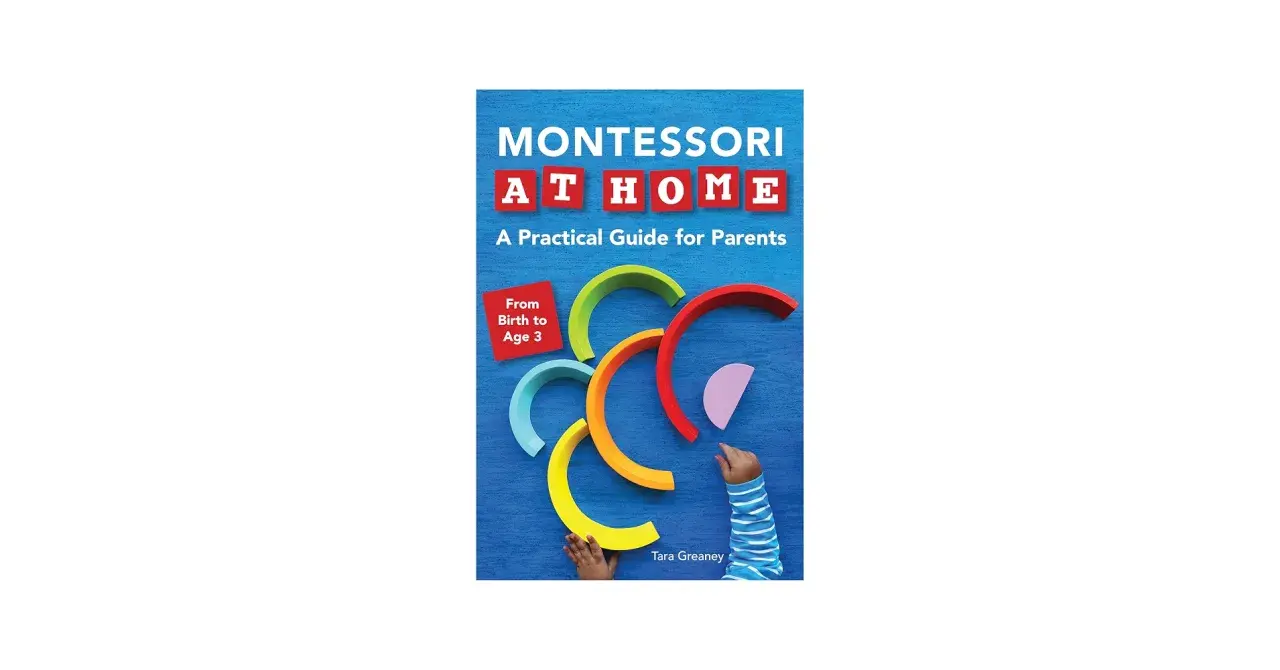
Montessori parents are not trying to turn every room into a classroom. The real goal is simpler: give a child a home where independence, concentration, and respectful habits are easier to practice every day. That usually means choosing fewer but better toys, setting up reachable spaces, and building routines that let children do real work instead of waiting to be entertained.
The home setup, routines, and toy choices that matter most
- Keep the environment reachable. Low shelves, child-size tools, and clear storage make independence possible.
- Limit visible choices. A shelf with 6 to 8 items is usually easier for a young child to use well than a crowded room.
- Choose real, repeatable work. Practical-life tasks like pouring, wiping, dressing, and sorting build more than flashy toys do.
- Protect concentration. Montessori works best when adults interfere less and observe more.
- Set firm limits without harshness. Freedom matters, but only within boundaries that keep the child and the house functioning.
- Adjust by age. The same philosophy looks different for a baby, a toddler, and an elementary child.
What Montessori asks from parents at home
The biggest misunderstanding I see is that Montessori is mostly about buying the right materials. In reality, the adult’s job is to prepare the environment, observe the child, and step back enough for real practice. That shift matters more than any aesthetic shelf photo on social media.
At home, Montessori is built around freedom within limits. The child gets real choices, but not unlimited options. The child gets independence, but not chaos. That is why the method works best when the adult is calm, consistent, and willing to let a child repeat the same activity many times without rushing in to improve it.
I also think it helps to stop treating every moment as a teaching moment. Sometimes the most Montessori thing a parent can do is make a room orderly, offer a simple task, and then let the child work. Once that mindset is clear, the next step is making the house itself easier for the child to use.
Prepare the home so independence is actually possible
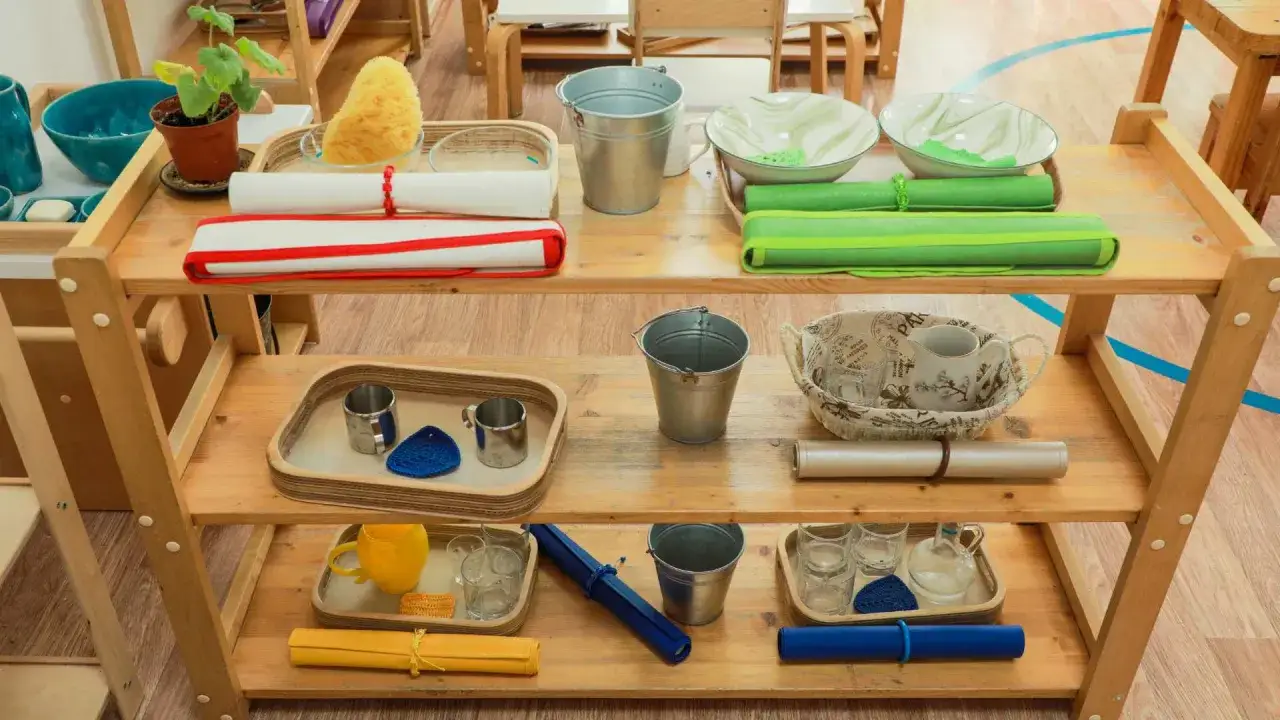
A Montessori home does not need to look like a classroom, but it does need to be usable by a child. If the coat hook is too high, the cups are out of reach, and every toy is buried in a chest, the child has to ask for help constantly. That creates friction the family feels all day.
| Area | What I would set up | Why it helps | Common mistake |
|---|---|---|---|
| Entryway | Low hooks, a small shoe basket, and a place for a bag | The child can enter and leave without a full parent takeover | Too many items piled on one hook or floor space blocked by clutter |
| Kitchen | A reachable shelf for cups, a small pitcher, snacks, and a step stool | Children can pour, serve, and participate in meals | Keeping everything behind adult-only cabinets |
| Bedroom | A low bed, a small drawer or basket for clothes, and a few books within reach | Dressing and bedtime become practical routines, not negotiations | Overfilling the room with toys and clothes the child cannot manage |
| Bathroom | A stool, child-size towel, toothbrush, and simple hand-washing setup | Self-care becomes part of the child’s daily rhythm | Expecting independence without making the sink reachable |
| Play area | Open shelves, baskets or trays, and enough floor space to work | The child can see choices, return materials, and concentrate | A toy chest that hides everything at once |
I would rather see one small shelf done well than a house full of expensive gear that nobody uses. If you are short on space, start with the place where your child gets stuck most often. For many families, that is the kitchen or the bedroom. That practical lens leads straight into toy selection, because not every object deserves shelf space.
Choose toys and nursery essentials that earn their shelf space
Montessori-aligned toys are not defined by wood, minimalism, or price. They are defined by what the child can do with them. I look for three things: independent use, repetition, and a clear purpose. If a toy only produces a short burst of novelty, it is probably not doing much developmental work.
For a child under six, I usually prefer fewer, better-chosen items over a large pile of “options.” A visible shelf with 6 to 8 activities is often enough. That limit is not about being strict; it is about helping the child choose without overload.
| Type of item | What to look for | Why it works | Usually less helpful when |
|---|---|---|---|
| Blocks and construction sets | Open-ended pieces the child can stack, balance, and rebuild | They support problem-solving and repeated play | They are so themed or overdesigned that the child only follows one script |
| Practical-life tools | Child-size brooms, pitchers, scoops, tongs, and trays | They connect play to real life and build coordination | They are fake versions that cannot actually be used |
| Puzzles and inset shapes | Simple, self-correcting tasks with clear success | They strengthen concentration and visual discrimination | They are too advanced or too noisy to finish calmly |
| Books and picture cards | Real images, rich language, and topics the child can revisit | They support vocabulary and focused attention | They are flashy but disposable after one look |
| Art materials | Crayons, paper, watercolor, clay, or scissors with supervision | They invite creative repetition without constant adult direction | They are so messy or complicated that the adult ends up doing the work |
| Nursery essentials | Low storage, baskets, a stool, and simple sleep or changing setup | They make daily care smoother and less dependent on adults | They are decorative but not reachable or useful |
If I had to reduce the whole selection process to one test, it would be this: Can the child use it, repeat it, and put it away without me taking over? If the answer is yes, it belongs much closer to the shelf. If the answer is no, it may still be a nice toy, but it is not especially Montessori. That question becomes even more useful once you start weaving real work into the day.
Use daily routines as practical-life practice
Practical life is where the philosophy becomes visible. Children do not just “help” with the house; the house becomes their training ground for coordination, concentration, and responsibility. This is one reason Montessori families often notice that ordinary jobs like pouring water or wiping a table have more impact than another pile of gadgets.
I like to think in short, repeatable tasks rather than long lessons. For many toddlers, 2 to 5 minutes of focused work is enough. For many preschoolers, 10 to 20 minutes of uninterrupted activity can be a meaningful stretch. The exact number depends on the child, but the principle is stable: real tasks, done slowly, repeated often.
- Morning - Let the child choose between two outfits, carry a diaper or backpack, and put shoes in the right place.
- Meals - Invite pouring, spreading, scooping, setting the table, and carrying a small plate or napkin.
- Cleanup - Keep a cloth, small broom, or basket within reach so spills and messes become part of the routine, not a crisis.
- Dressing - Practice buttons, zippers, socks, and folding clothes into a reachable drawer or basket.
- Care of the home - Water a plant, feed a pet, sort laundry, or wipe a surface with a child-size cloth.
The point is not perfect execution. A toddler who spills while pouring is still learning. A preschooler who folds a towel unevenly is still building control. I usually aim for descriptive feedback instead of vague praise: “You carried the glass slowly,” or “You put the socks together.” That kind of language helps without interrupting the child’s attention. Once routines start working, the next challenge is knowing what to avoid.
Watch for the mistakes that make the approach feel rigid or chaotic
Montessori can fail in two opposite ways: it can become too strict, or it can become too loose. One family turns it into a carefully staged aesthetic with no real freedom. Another uses the word “Montessori” to avoid setting any boundaries at all. Both versions miss the point.
| Common mistake | What it looks like | Better move |
|---|---|---|
| Overloading the shelves | The child cannot choose, and cleanup becomes a battle | Keep visible choices limited and rotate the rest |
| Correcting too quickly | The adult steps in before the child has a chance to solve the problem | Pause, observe, and only help when help is truly needed |
| Confusing respectful parenting with permissiveness | The child has “freedom” but no reliable limits | Stay kind, but make the boundaries clear and consistent |
| Chasing academic results too early | Letters, numbers, or worksheets crowd out real-life work | Lean harder into movement, practical life, and hands-on repetition |
| Buying gear instead of changing habits | The room looks improved, but daily life still feels hectic | Use one stool, one shelf, or one basket before adding more |
The deepest mistake is assuming Montessori is a product category. It is not. It is a set of adult behaviors: observe, simplify, respect concentration, and keep the child connected to real life. That becomes clearer when you see how the priorities change with age.
How the priorities shift from babies to elementary children
The philosophy stays the same, but what it looks like changes a lot. A baby does not need the same environment as a preschooler, and a preschooler does not need the same setup as an eight-year-old. When parents ignore that, they either under-stimulate the child or overcomplicate the home.
| Age group | Main focus | What to offer | What to avoid |
|---|---|---|---|
| Infant | Movement, sensory input, language, and order | Safe floor time, simple objects, calm routines, and responsive talk | Too much noise, too many flashing toys, or a crowded nursery |
| Toddler | Independence, repetition, and practical life | Child-size tools, reachable shelves, pouring, carrying, and simple cleanup | Long explanations and constant switching from one activity to another |
| Preschooler | Concentration, self-control, and grace and courtesy | Work trays, puzzles, art, and real responsibility around the home | Overhelping or filling the day so tightly that focus never has room |
| Elementary child | Deeper interests, planning, and follow-through | Research projects, more complex chores, reading, and time management | Assuming the home should still look like an early-childhood shelf setup |
When parents adjust the setup to match the stage, Montessori stops feeling like a trend and starts feeling like common sense. The home gets calmer because the child is working at the right level, not fighting an environment that was designed for someone else. From there, the most useful step is to decide what to change first.
The first changes I would make this week
If I were helping a family start from scratch, I would not begin with a shopping spree. I would begin with five practical moves that make the house easier to use immediately.
- Clear one shelf. Keep 6 to 8 visible items and put the rest away.
- Add one child-accessible station. A stool, a low basket, or a small tray can change a daily routine fast.
- Pick two real-life tasks. For example, pouring water and wiping the table, then repeat them for a week.
- Slow down before helping. Give the child a moment to try before you step in.
- Buy for use, not for display. Choose toys and nursery pieces that the child can actually reach, carry, and return.
Those changes do not make a home perfect, and they do not need to. They make it workable. That is the real promise of a Montessori approach: less friction, more practice, and a child who gradually learns that everyday life is something they can participate in, not just watch.