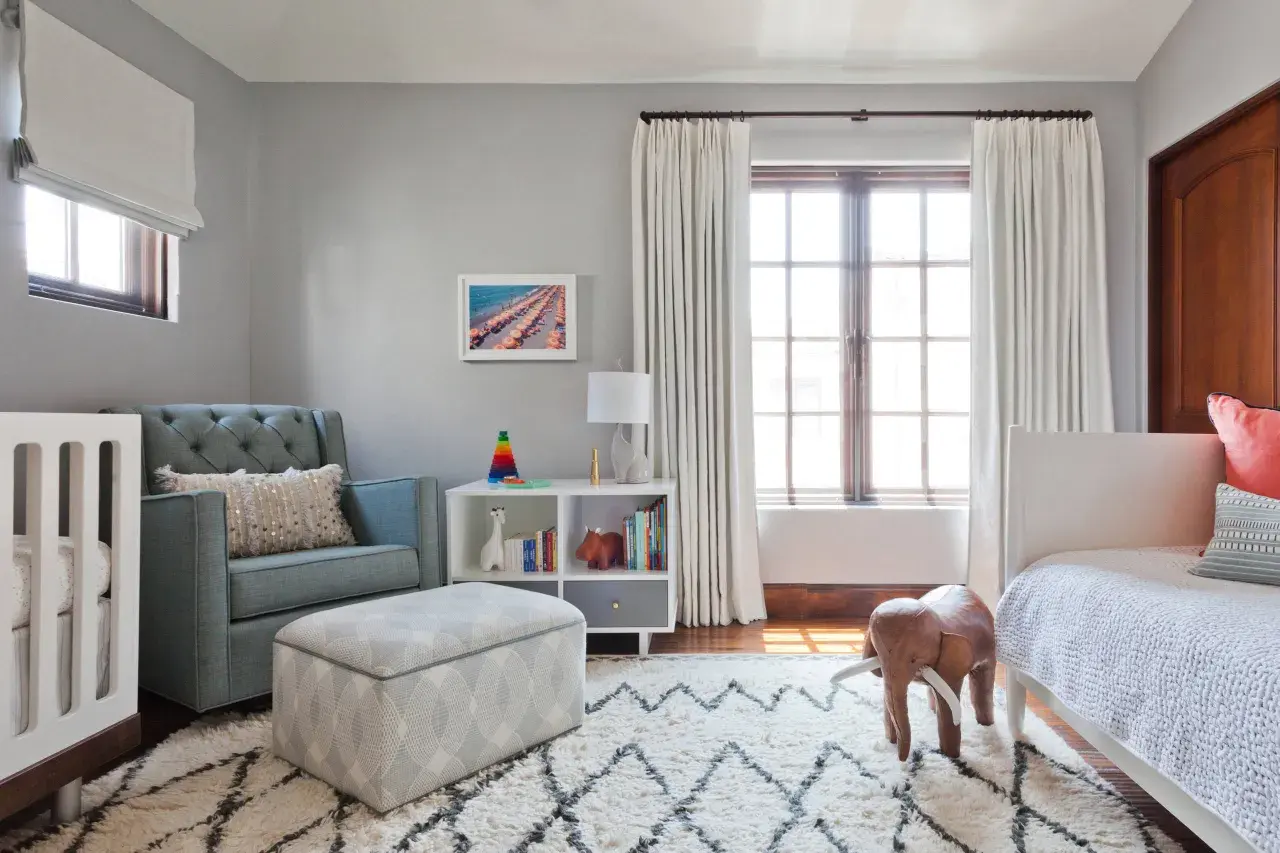
A couch in the nursery can make late-night feedings, story time, and partner handoffs much easier, but it only works well when it fits the room and supports safe routines. In this article, I’m focusing on the decisions that matter most: where a sofa helps, where it creates problems, what to choose, and how to keep the space practical as the baby grows.
The main decisions are comfort, safety, and room flow
- A nursery sofa is useful when it supports feeding, reading, and resting without taking over the room.
- It should never be treated as a sleep surface for the baby, even for short naps.
- A compact loveseat is usually the easiest fit for most nurseries; larger rooms can handle a sofa or sleeper.
- Performance fabric, firm cushions, and easy-clean surfaces matter more than decorative extras.
- Good layout leaves clear walking space, open drawers, and an easy path to the crib.
- If the room is tight, a glider or recliner may solve the same problem with less bulk.
Why a nursery sofa can earn its place
I like a nursery that supports real routines, not just a pretty moment. A sofa gives you a place to settle in for feeding, hold the baby after a bath, read a board book with an older sibling, or sit with a partner during those half-awake nighttime handoffs. That flexibility matters more than people expect, especially once the room starts serving as both a sleep space and a daily work zone.
The best use cases are simple. If the nursery is where you plan to nurse, bottle-feed, or soothe the baby for long stretches, a sofa is often more useful than a single accent chair. If the room will eventually become a playroom or guest space, the seating can keep earning its keep long after the newborn stage. I usually think of it as a support piece, not the star of the room. That distinction matters, because the room still has to function around the crib, the changing setup, and your walking path.
That leads straight into the one rule I would never compromise on.
Safety comes first because the sofa is not a sleep surface
This part is not optional. A nursery sofa is for adults to sit on, not for the baby to sleep on. The AAP says the risk of sleep-related infant death is far higher when an infant sleeps with someone on a couch, soft armchair, or cushion, and the warning is especially important during late-night feeding sessions when exhaustion makes bad decisions more likely. If the baby falls asleep while you are on the sofa, move them back to a crib, bassinet, or play yard as soon as it is safe to do so.
I also keep the seating area stripped down when the baby is very small. Loose pillows, throws, and plush cushions may look cozy, but they create the exact kind of soft environment that belongs nowhere near infant sleep. CPSC guidance is blunt about this: babies cannot reliably move away from soft objects that can block breathing, so the safest sleep setup is flat, bare, and dedicated to sleep only. That means the sofa can support the routine, but it should never blur the line between sitting and sleeping.
- Keep the crib, bassinet, or play yard as the only true sleep surface.
- Do not use the sofa for supervised naps.
- Keep extra pillows and heavy blankets out of the baby zone.
- If you feel yourself nodding off, put the baby back in their sleep space and stop the session.
Once safety is clear, the room layout becomes the real design problem.

How to fit it into the room without crowding the crib
Most nursery layout mistakes happen because people buy the sofa first and plan the room second. I do the opposite. I measure the crib wall, the door swing, the closet doors, and the path from the entry to the changing area before I decide whether a sofa belongs there at all. As a rule of thumb, I like to leave about 30 inches for the main walking path and at least 18 to 24 inches of breathing room around the sofa so drawers, cabinet doors, and laundry baskets can still move freely.
Room size changes the answer fast. In a smaller nursery, a deep couch can make the space feel boxed in, especially if the crib already dominates one wall. In a medium room, a compact loveseat can work well if it sits opposite the crib or along the longest wall. In a larger room, you can afford a more generous piece, but I would still keep it visually light with slimmer arms and exposed legs so the nursery does not start to feel like a mini living room.
Two checks save a lot of regret later. First, sit where you expect to feed the baby and make sure your knees, shoulders, and elbows are not fighting the furniture around you. Second, open every nearby drawer and door while the sofa is in place. If anything hits, the layout is already too tight. After the footprint is set, the next decision is which type of seating actually earns its space.
Which type works best for your space and routine
There is no single best choice, but there is usually a best fit for the room you have. I tend to sort nursery seating by how much flexibility you need, whether the room doubles as a guest room, and how much visual weight the piece will carry. The table below gives you the version I would use when comparing options.
| Option | Typical footprint | Best for | Main upside | Main trade-off |
|---|---|---|---|---|
| Loveseat | About 60 to 72 inches wide | Most standard nurseries | Balanced size, comfortable for one adult and usable for two | Still sizable in a tight room |
| Apartment-size sofa | About 72 to 84 inches wide | Medium to larger nurseries | Feels substantial and works well beyond the baby stage | Can overpower the room if the layout is narrow |
| Daybed | About 75 to 80 inches long | Nursery and guest-room hybrids | Flexible for sitting, resting, or future playroom use | Less upright support for long feeding sessions |
| Sleeper sofa | About 75 to 90 inches wide | Rooms that truly need overnight guest space | Maximum flexibility when the nursery doubles as a spare room | Heavy, deeper, and often too bulky for smaller nurseries |
| Glider or recliner | About 32 to 40 inches wide | Small rooms or feeding-focused setups | Better fit when floor space is limited | Less communal and less versatile than a sofa |
My short version is this: if the nursery is mostly for the baby, choose the smallest comfortable seat that solves the feeding problem. If the room also has to host guests or become a playroom later, a loveseat or daybed usually gives you the best long-term value. If the room is genuinely small, I would rather see a well-made glider than a cramped sofa that forces the rest of the room to work around it. Once the structure is right, the upholstery and finish decide whether the piece survives baby life.
Materials and features that handle real baby life
Nursery furniture gets tested by milk, drool, spit-up, lotion, snack crumbs, and the occasional sleepy spill. That is why fabric choice matters more than style trends. I would look first for performance fabric, microfiber, or another tightly woven material that is easy to wipe down and less likely to show every mark. Removable cushion covers are a strong bonus, and stain-resistant treatments are worth considering if you know the room will see a lot of daily use.
The cushion feel matters too. Too soft, and the seat becomes tiring during long feeds. Too firm, and it is hard to relax. I usually look for a supportive seat cushion with enough structure to keep you upright without feeling stiff. Rounded arms are nicer than sharp ones when you are carrying a baby, and low-profile legs help the piece look lighter while making it easier to clean underneath.
- Choose a fabric you can spot-clean quickly.
- Prefer firm or medium-firm cushions over deep, sink-in seating.
- Skip delicate white linen if you expect a lot of feeding sessions.
- Look for removable, washable covers when possible.
- Test whether the arm height supports feeding without hunching your shoulders.
Then comes the part that makes the room feel calm instead of crowded.
Styling it so the room still feels like a nursery
The sofa should support the nursery, not turn it into a diluted living room. I keep the styling simple: one side table, one good lamp, and a basket for burp cloths, swaddles, or spare bibs. That gives you the practical tools you need without piling clutter into the visual field. If the room is small, this restraint makes a big difference. A sofa surrounded by too many pillows, trays, and decorative objects starts to feel like furniture congestion, not comfort.
Color also changes the mood. Soft neutrals, warm wood, and one or two repeating tones usually work better than a lot of competing patterns. That does not mean the room has to be bland. A textured throw, a framed print, or a small rug can keep the space warm while still letting the crib and the seating area breathe. If the nursery will later become a playroom, I like styling it with pieces that can transition gracefully, because the room should not feel overly babyish after the first year.
I also think about how the seat will be used in the daytime. If siblings will sit there for reading, or if a parent may use it for a short reset between tasks, the sofa should feel inviting without becoming oversized. The goal is a room that still looks like a nursery first, but one that can grow up a little without a full reset. The last layer is the buying checklist I use when I want the room to work in real life, not just in a mood board.
The small checks that save you from buying the wrong piece
Before I bring any nursery seating home, I test it in the way it will actually be used. I sit down, stand up while holding a bag or blanket, check whether the fabric feels easy to clean, and make sure the piece does not block any high-traffic part of the room. I also look at the frame and base. If the sofa wobbles, squeaks, or feels flimsy when I sit on the edge, I pass on it immediately. Nursery furniture should feel steady, not just soft.
- Measure the room one more time with the door fully open.
- Check that the sofa clears the crib, dresser, and closet doors.
- Make sure the seat depth supports feeding without forcing you to slump.
- Confirm that the fabric and cushions are easy to clean.
- If buying secondhand, avoid anything with strong odors, broken springs, or a sagging frame.
If I had to narrow the decision to one sentence, I would say this: choose the smallest sofa that still lets you sit comfortably for 20 to 30 minutes at a time, then make sure it is easy to clean, easy to move around, and easy to keep out of the sleep zone. For many families, that ends up being a compact loveseat rather than a full sofa, and that is usually the right trade-off. In a nursery, the best piece is the one that makes the day smoother without demanding attention every time you walk past it.
