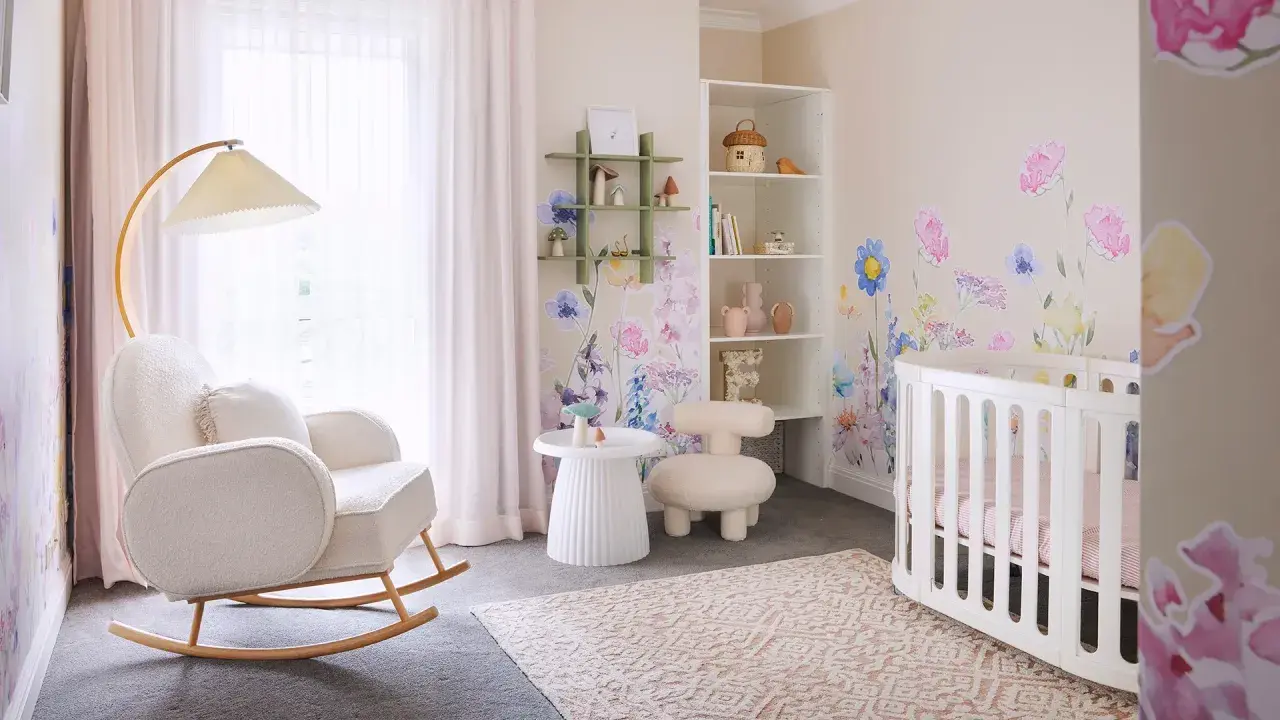
A white nursery can be calming without feeling bland, but the room only works if the finish, texture, and layout are chosen with real daily use in mind. These white nursery ideas work best when the space feels warm, practical, and easy to evolve, not just pretty in photos. I’m focusing on the parts that matter most: how to keep the palette soft instead of clinical, which details add depth, how to arrange the furniture, and where safe-sleep rules should override style.
The essentials of a calm white nursery
- Choose a warm white rather than a stark blue-toned white if you want the room to feel softer.
- Use at least 3 texture types, such as wood, linen, and woven storage, to keep the space from looking flat.
- Keep the crib area simple and uncluttered; style the rest of the room instead.
- Plan the layout around daily tasks first, especially feeding, changing, and storage.
- Expect a realistic full setup to land somewhere around $1,000 to $3,500 depending on what you already own.
- Build for the next stage too, so the room can transition toward playroom use later.
Why white nursery ideas work so well right now
I like white nurseries because they give you breathing room. In a baby room, that matters more than people admit: the lighter backdrop makes the space feel larger, the furniture stands out more clearly, and you can update the room later without repainting everything. White is also forgiving if you want the nursery to grow with your child, because it can shift from newborn calm to toddler-friendly with a change of textiles, art, and storage.What makes the look hold up in 2026 is not the white itself, but the move toward warm minimalism. That means fewer hard contrasts, more natural materials, and a calmer mix of matte finishes, soft textiles, and simple forms. A room like that feels intentional rather than empty, which is exactly the balance I would aim for in a nursery that also needs to be lived in every day.
Once that goal is clear, the next step is choosing the right shade of white and the textures that keep it from feeling flat.
The undertones and textures that make white feel warm
White is not one color. Some whites lean cool and crisp, while others carry cream, ivory, or greige undertones that read much softer in a nursery. In most homes, I would avoid a very icy white unless the room gets a lot of natural light and the rest of the furnishings bring warmth back in. A warmer white is usually easier to live with, especially in the evening when artificial light can make cooler tones feel sharper than they looked on the paint chip.
| White direction | Best when | What to watch for | My take |
|---|---|---|---|
| Crisp white | The room has strong daylight and modern trim | Can feel stark or hospital-like at night | Use only if you plan to add plenty of wood and fabric texture |
| Warm white | You want the safest all-around choice | Can look yellow if the bulbs are too warm | My default recommendation for most nurseries |
| Ivory or cream white | The room is north-facing or naturally dim | Trim and ceiling need enough contrast to avoid a washed-out look | Very cozy, especially with linen and oak |
| Off-white with greige undertones | You want softness without obvious beige | Can read dull if the room lacks contrast | Best for a nursery that should transition into a playroom later |
Texture does the real work here. If I were styling the room, I would make sure the palette included at least one natural wood piece, one woven element, one soft textile layer, and one subtle finish that reflects light gently. That combination keeps white from becoming a blank wall story, and it gives the nursery enough visual depth to feel finished. From there, the fun part is deciding which white room style actually fits your home.

Four white nursery looks that are easy to live with
These are the versions I reach for when someone wants the room to feel calm but not generic. Each one keeps the same white foundation, but the mood changes completely depending on the furniture, textures, and accents.
| Style | Main palette | Best for | Why it works |
|---|---|---|---|
| Warm minimal | Warm white, oak, oatmeal, a touch of black | Small rooms and modern homes | It feels clean, but the wood and neutral textiles keep it from looking empty |
| Soft cottage | Ivory, linen, cream, brass, beadboard | Older houses and rooms with character | Paneling, skirted details, and classic shapes make white feel layered instead of plain |
| Japandi-inspired | Off-white, ash wood, sand, muted gray | Parents who want a calm, uncluttered room | The look is restrained, but the natural materials keep it warm and human |
| White with a quiet accent | White, sage, blush, or pale sky blue | Families who want a little color without committing to a theme | One muted accent color is enough to soften the room without stealing the main story |
The thread connecting all four is restraint. I would rather see one beautiful crib, one good rug, and one meaningful piece of art than a dozen small decor items fighting for attention. That is the difference between a nursery that feels styled and one that feels assembled. Once the style is set, the layout needs to support the routine that happens in the room every day.
A layout that keeps the room calm, not crowded
Nurseries look better and function better when the furniture plan is simple. I usually start with the crib on the quietest wall, then place the chair where it has good light and a clear view of the sleep area. The changing station should be close enough that you can reach diapers, wipes, and clothes without crossing the room. That sounds basic, but it prevents the kind of clutter that creeps in once the baby arrives.
- Put the crib away from windows, cords, and direct airflow.
- Keep the chair beside a small side table for bottles, books, or a water glass.
- Use one closed storage piece, such as a dresser or wardrobe, for the bulk of baby items.
- Reserve open baskets for the things you reach for daily so the room stays visually quiet.
- If the nursery will later become part playroom, leave one open floor zone from the start.
In a white room, negative space matters. You do not have to fill every corner, and in a nursery that is often a mistake. A little open space makes the room feel calmer, gives you room to move during nighttime care, and keeps the design flexible when the baby outgrows the newborn stage. That practical mindset matters even more once safety enters the picture.
Safe sleep and nursery essentials I would not compromise on
A beautiful nursery should still obey the basics of safe sleep. The crib needs a firm, flat mattress that fits the frame properly, plus a fitted sheet and nothing else inside the sleep space. No pillows, loose blankets, bumper pads, stuffed animals, or decorative pillows should be in the crib. If the room has a monitor, cords should be routed so they are well out of reach. I would also keep the sleep area simple enough that you can see immediately whether it is clear.
For many families in the United States, room-sharing is still part of the plan for the early months, so the nursery should not depend on a perfect sleep setup to look complete. It should work as a feed-and-change room first, and as a sleep room second. That is why I would spend less energy on crib styling and more on the pieces that make nights easier: a good chair, a soft but washable rug, dimmable lighting, and storage that does not force you to stack things on the floor.
This is also where it helps to think like a parent, not just a decorator. A nursery can be beautiful and still be wrong if it is hard to clean, hard to navigate in the dark, or full of things you never actually use. From there, the budget question becomes much easier to answer.
What a white nursery costs and where to spend first
The cost depends mostly on whether you are starting from scratch or reworking a room you already have. In the U.S., a lightweight refresh can be surprisingly manageable, while a fully furnished nursery with new pieces adds up quickly. The trick is to spend on the items that affect comfort and daily use, not on decor that can be changed later for very little money.
| Item | Typical budget range | Why it matters |
|---|---|---|
| Paint and prep | $75 to $250 | This sets the tone for the entire room |
| Crib and mattress | $250 to $900 | Safety and long-term use matter more than decorative details |
| Chair or glider | $250 to $1,000 | You will use it constantly, especially at night |
| Dresser or storage | $200 to $800 | Good storage keeps the room from feeling messy |
| Rug and curtains | $150 to $600 | These soften the room and absorb sound |
| Decor and art | $50 to $300 | Easy to adjust later, so it should not eat the budget early |
A realistic full nursery setup often lands around $1,000 to $3,500, while a room refresh that reuses furniture can stay much lower, often around $300 to $900. I would put the first dollar toward the mattress, the chair, and the storage system before I worried about decorative extras. That order usually produces a room that feels more finished, because the pieces you use most are the ones doing the visual heavy lifting. After that, the only real question is how the room will age.
How to keep the room useful after the newborn months
The best white nursery is the one that still makes sense when the baby becomes a toddler. I would keep the shell of the room neutral and let the personality live in the things that are easy to swap: art prints, bedding once age-appropriate, storage baskets, and a few accessories. A white background gives you room to add a muted sage, dusty blue, or soft blush later without repainting the whole room.
If you want the room to slide toward playroom use naturally, choose furniture that can stay in place for years. A dresser with clean lines, a shelf for books, and a rug that can handle spills will do more for the room than a themed wall decal ever could. That is the part people often miss: the nursery should not only look soft today, it should be able to absorb more color, more toys, and more motion later without losing its calm.
If I had to narrow it down, I would build the room from warm white walls, one natural-wood anchor piece, and storage that hides the clutter. That combination gives you a nursery that feels peaceful on day one and still works when the space grows into something more active later on.
