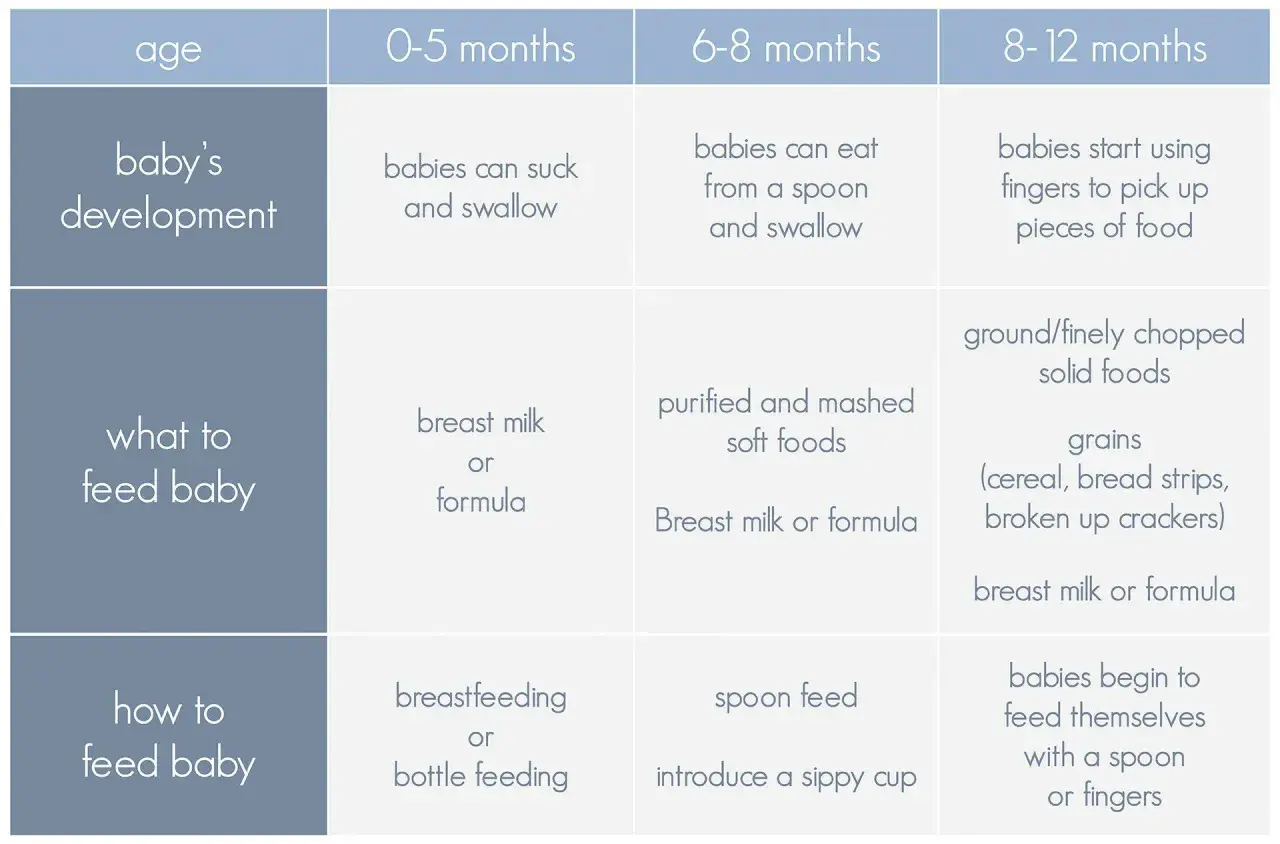
The short answer to when do babies start to eat baby food is usually around 6 months, when most infants are ready to move beyond milk-only feeding. That first step is usually small: a few teaspoons of smooth puree or a very soft finger food, not a full meal. The real job is to match the timing, the readiness signs, and the food texture so the transition feels safe instead of chaotic.
The safest starting point is usually about 6 months
- Most U.S. guidance points to solids at about 6 months, not before 4 months.
- Readiness matters more than age alone: good head control, sitting with support, and swallowing are the big clues.
- First foods should be soft, nutrient-dense, and easy to swallow.
- Breast milk or formula stays the main source of nutrition through the first year.
- Honey, cow's milk as a drink, juice, and obvious choking hazards should stay off the menu.
- There is no single “right” first food, but iron-rich options deserve priority.
Six months is the usual starting point
In the U.S., current guidance is consistent: start solids at about 6 months, and do not begin before 4 months unless a pediatrician gives a specific reason. The CDC and the American Academy of Pediatrics both frame 6 months as the practical target because most babies have the head control, trunk stability, and swallowing coordination they need by then.
I would not treat that as a hard birthday switch. A baby who is a few weeks early or late can still be perfectly normal. What matters is whether the baby can handle the movement, texture, and posture of eating without fighting the process. That is the bridge to reading readiness signals rather than chasing the calendar.
Once you stop thinking in exact dates, the cues become much easier to read.

How to tell your baby is actually ready
Readiness shows up in behavior, not in birthday math. I look for a few physical signs before I worry about the menu, because the menu is only useful if the body can handle it.
| Readiness sign | What it looks like | Why it matters |
|---|---|---|
| Sits with support | The baby can stay upright in a high chair or feeding seat without collapsing forward. | Good posture helps with safer swallowing. |
| Good head and neck control | The head stays steady instead of bobbing or flopping. | It is one of the clearest signs the baby is ready for more than milk. |
| Opens the mouth for food | The baby watches you eat, reaches for your plate, or leans toward the spoon. | Interest plus coordination usually means the timing is close. |
| Swallows instead of pushing food out | Food does not immediately come back out onto the chin. | The tongue-thrust reflex is fading and feeding is becoming possible. |
| Brings objects to the mouth | Hands, toys, or small items go straight to the mouth. | That mouth-hand coordination helps with early self-feeding. |
A messy first spoonful is normal. Spitting food out, wrinkling the nose, or needing a few tries does not mean the baby is unready; it usually means the skill is new.
Readiness tells you when to start. The next question is what belongs on that first spoon.
What to offer first
There is no required order. Babies do not need to start with rice cereal, and they do not need an elaborate menu on day one. I usually recommend a mix of smooth textures and iron-focused foods: fortified infant cereal, pureed meat or beans, mashed sweet potato, avocado, banana, plain yogurt, or well-cooked egg.
| First food | Why it helps | How to serve it |
|---|---|---|
| Iron-fortified infant cereal | Easy to swallow and useful for iron support. | Mix with breast milk or formula until thin and smooth. |
| Pureed meat, beans, or lentils | Strong sources of iron, zinc, and protein. | Blend until smooth, then keep portions tiny at first. |
| Avocado, banana, sweet potato, squash | Soft texture and mild flavor make them beginner-friendly. | Mash very well or cut into soft, manageable pieces later on. |
| Plain yogurt, egg, thin peanut butter | Protein plus early exposure to common allergens. | Use plain, unsweetened yogurt; make sure egg is fully cooked; thin nut butter so it is not sticky. |
| Oat, barley, or multigrain cereal | Broader variety than rice-only feeding. | Rotate grains instead of leaning on one cereal every day. |
If you are introducing a new food for the first time, offering one new item at a time and waiting 3 to 5 days before the next one makes it easier to spot a reaction. That does not mean common allergens need to be delayed for months; it means they should be introduced thoughtfully, in age-appropriate texture, and with attention to the baby's history.
What you serve matters, but how you serve it matters just as much.
How to keep early feeding safe
Safety is mostly about texture, posture, and supervision. Feed the baby upright in a high chair, keep portions tiny, and choose foods that mash easily with the gums or dissolve quickly. I would rather see a baby eat too slowly than too fast.
- Do not give honey before 12 months, and never dip a pacifier in honey.
- Do not put cereal in a bottle; it raises choking risk and can encourage overfeeding.
- Do not use cow's milk as a drink before the first birthday; it is not a suitable replacement for breast milk or formula yet.
- Skip obvious choking risks such as whole grapes, popcorn, hard nuts, and round chunks of hot dog or raw apple.
- Stay within arm's reach whenever the baby is eating.
- Keep juice out of the picture during the first year; it adds little value and can crowd out better options.
The texture ladder should move gradually: smooth puree, thicker puree, mashed food, soft lumps, then soft finger foods. If a food seems to require real chewing, it is probably too early.
Once safety is covered, families usually have to choose a feeding style, and that is where most of the confusion starts.
Purees, baby-led weaning, or a mix
There is no single correct method. Purees work well for babies who need a gentler start, baby-led weaning works for families who want more self-feeding from the beginning, and a mixed approach is often the easiest to live with.
| Approach | Best for | Watch-outs |
|---|---|---|
| Purees | Parents who want tight control over texture and portion size. | It is easy to stay at this stage too long if you never move textures forward. |
| Baby-led weaning | Babies who can sit well and reach for food confidently. | Food shape and size matter a lot; sloppy prep raises risk. |
| Mixed approach | Most families, especially those balancing convenience and learning. | It takes a little planning, but it lowers pressure and keeps options open. |
I lean toward the mixed route because it respects the baby's pace without turning every meal into a test. A spoon one day and soft strips of avocado or well-cooked vegetables the next is often enough to build confidence.
The first month is less about volume than repetition, routine, and patience.
How the first few weeks usually go
Expect tiny amounts at first. Half a spoonful, then a teaspoon or two, is normal. Many babies need several exposures before they accept a food, and some food will end up on the face, hands, bib, and tray before much of it gets swallowed.
- Offer solids when the baby is calm, not frantic.
- Start after a milk feed if hunger tends to turn into frustration.
- Repeat the same food a few times before deciding it is a no.
- Keep breast milk or formula as the main source of calories through this transition.
- By 7 or 8 months, widen the mix so the baby sees vegetables, fruit, proteins, grains, and dairy foods in age-appropriate forms.
Early variety matters more than most parents realize. I like to expose babies to different flavors and textures while curiosity is still high, because that makes later feeding less rigid and less stressful.
If the process feels harder than it should, the final thing to check is whether the baby is telling you something important.
When to pause and call your pediatrician
Pause and ask for advice if your baby is still not showing readiness around 6 months, cannot sit with support, has persistent trouble swallowing, or seems to gag and choke on every attempt. The same is true if there is poor weight gain, a history of prematurity, or concern about reflux, muscle tone, or developmental delay.
I also advise extra caution if the baby has severe eczema or an egg allergy, because peanut introduction may need a more specific plan. And if a new food causes hives, swelling, vomiting, wheezing, or any breathing trouble, stop and seek medical help promptly.
For most families, the best answer is simple: start around 6 months, follow the baby's cues, keep the foods soft and safe, and let the amount grow slowly. That is usually enough to turn the first spoonful into a steady routine instead of a stressful milestone.
