Pacifiers can be useful in infancy, but the story changes when they become a constant comfort tool past the baby stage. The long term effects of pacifier use are usually dental first, with feeding, sleep, and speech concerns showing up mainly when the habit is frequent, strong, or left in place for too long. What matters most is not whether a child ever used a pacifier, but how long the habit lasted, how often it was used, and whether it displaced feeding cues or normal oral development.
The biggest risks show up when the habit stops being temporary
- Pacifiers are generally reasonable in early infancy, especially once breastfeeding is established.
- The clearest long-term concern is dental: open bite, crossbite, and a narrower upper arch.
- Risk rises when use stays strong beyond 18 months and becomes more concerning after age 2 to 3.
- A pacifier should not replace or delay meals; it should only be used when the baby is not hungry.
- If the habit is still strong at age 3, a pediatric dentist should look at the bite and palate.
What prolonged pacifier use actually changes
I usually separate pacifier use into three phases: helpful soothing in early infancy, a habit that is still manageable, and a pattern that starts affecting the mouth. In the first few months, a pacifier can be a normal self-soothing tool. After that, the risk is less about the pacifier itself and more about how long the child keeps it in the mouth each day and how strongly the habit is tied to sleep and comfort.
That distinction matters because not every child with a pacifier develops a problem. The issues tend to appear when sucking remains strong and frequent into the toddler years, especially once teeth and the upper jaw are actively changing shape. In practical terms, I think of this as a habit that can be harmless for a while and then cross a line where the benefit no longer matches the cost.
The clearest warning signs show up in the bite, which is where I would look next.
The mouth and bite are where the clearest changes show up
If a pacifier is used too long, the most common long-term changes are dental and structural. The front teeth may stop meeting properly, the upper arch can become narrower, and the bite can shift in ways that are easy to miss until a dentist points them out. The key point is that duration matters more than an occasional use pattern. A child who uses a pacifier only for sleep in early infancy is in a very different category from a child who keeps it in the mouth for hours every day at age 3.
| Age range | What usually matters | Practical response |
|---|---|---|
| 0 to 6 months | Pacifiers can be soothing and may still have a role at sleep time once feeding is established. | Keep use tied to sleep or genuine calming, not as a replacement for meals. |
| 6 to 12 months | Habits start to harden, and constant use can crowd out feeding cues and create dependency. | Begin limiting daytime use and keep it out of the mouth when the baby is content. |
| 12 to 18 months | Ear infection risk becomes more relevant, and the jaw is still developing quickly. | Reduce use to naps and bedtime and watch the teeth and palate. |
| 18 to 36 months | Open bite, crossbite, and a narrower upper arch become more plausible if sucking stays strong. | Aim to wean, and get a dental check if the habit is still daily. |
| 3+ years | Persistent habits are more likely to leave visible bite changes. | Book a pediatric dentist visit if the child still relies on a pacifier. |
I would not panic over a baby who uses a pacifier briefly for sleep. I would pay attention when it becomes a default during the day or survives past the stage where the front teeth should be meeting normally. That is also the point where sleep and feeding questions start to overlap with oral health.
Feeding, sleep, and ear infections are tied to the same habit
A pacifier should not replace a feed or postpone one. The easiest mistake to make is using it to quiet a baby who is actually hungry; that can blur feeding cues, frustrate breastfeeding, and make intake harder to read. For breastfed babies, I would wait until breastfeeding is going well, usually around 3 to 4 weeks, before introducing one.
Used at nap time or bedtime, a pacifier can still have a role. In the U.S., pediatric guidance supports sleep-time use in infancy because it can reduce SIDS risk. The tradeoff is that a child who depends on it for sleep may wake when it falls out, and prolonged use can raise the risk of middle ear infections. In plain terms: the same object that settles a baby can also become the thing that keeps everyone awake later.
If you keep a pacifier in the routine, clean it properly and keep it out of the mouth when meals matter. Once feeding is no longer the main concern, the next question is speech, and that is where the conversation usually gets overstated.
Speech concerns are real, but they are easy to overstate
I would be careful with blanket claims here. The evidence connecting pacifiers to true speech delay is limited. What I find more plausible is a narrower issue: if a child keeps a pacifier in for hours each day, the tongue, lips, and jaw spend less time in the positions needed for clear articulation.
That means the concern is usually articulation, not language itself. A child can still understand words, learn vocabulary, and communicate normally while the habit quietly affects a few sounds. The sounds that may get messy are the ones that depend on precise tongue placement, especially if a child is still using a pacifier while trying to talk.That means the concern is usually articulation, not language itself. A child can still understand words, learn vocabulary, and communicate normally while the habit quietly affects a few sounds. The sounds that may get messy are the ones that depend on precise tongue placement, especially if a child is still using a pacifier while trying to talk.If speech sounds muddy after age 2 or 3, or if the pacifier is still in the mouth during most waking hours, I would not wait and hope it disappears on its own. I would pair a pediatric dentist check with, if needed, a speech-language evaluation. From there, the next question is whether the pacifier is simply a habit or whether it is crowding out another habit entirely.
Pacifier use is easier to control than thumb sucking, but both can become the same problem
Pacifiers and thumb sucking sit in the same category: nonnutritive sucking. They soothe, but they can also push the bite in the wrong direction if they last too long. The reason many parents prefer a pacifier in infancy is simple: it is easier to clean, easier to take away, and easier to limit than a thumb that is always available.
| Factor | Pacifier | Thumb sucking |
|---|---|---|
| Ease of stopping | Easier to remove because it is an object, not a body part. | Harder to stop because the child always has access to it. |
| Hygiene | Can be washed, replaced, and monitored for wear. | Harder to sanitize and often more exposed to germs. |
| Oral habit pressure | Can still affect the bite if used too long or too often. | Can be just as disruptive, and sometimes harder to break once established. |
One important caution: if a pacifier is removed too abruptly, some children switch to thumb or finger sucking, which can be harder to break. I prefer a calm transition over a forced one unless the bite is already changing. The goal is not to win a battle; it is to stop the habit before it starts shaping the mouth.
How I would wean a child without creating a bigger battle
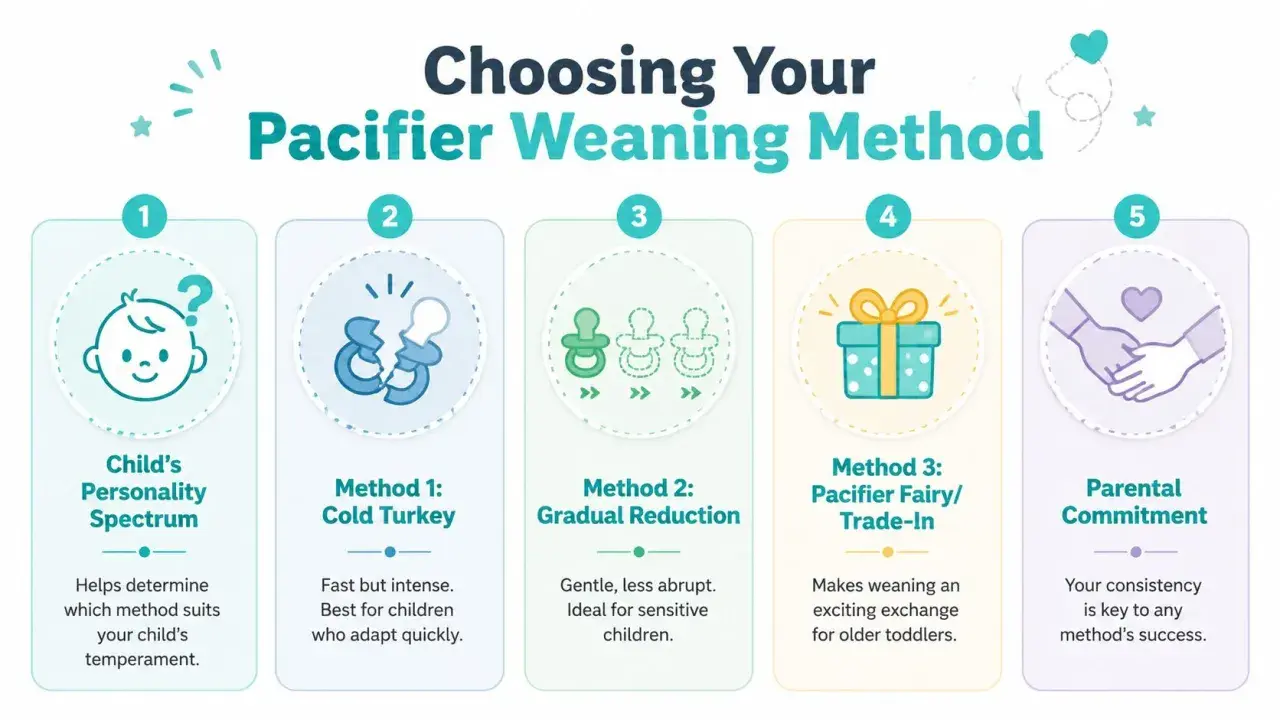
The mistake I see most often is going from “everywhere, all the time” to a dramatic cold-turkey cut. That can backfire. I prefer a simple sequence: daytime first, then car rides and comfort moments, then naps, then bedtime only. Once the habit is limited to sleep, it is much easier to break.
- Keep the pacifier for sleep only before removing it completely.
- Replace it with one steady soothing cue, such as a stuffed toy, song, or short bedtime routine.
- Use praise or small rewards for no-use days instead of shame or bargaining.
- Do not cut the nipple, dip it in bitter substances, or tie it to the crib.
- If your child is older than 2 and the teeth already look off, move faster and involve the dentist.
I also avoid turning the pacifier into a power struggle. A calmer plan usually sticks better than a harsher one, especially with toddlers who are using the habit to manage transitions. If you need the habit to end because the bite is changing, that is the point to be firm, not punitive.
When the habit has outlived its job
My rule of thumb is simple: a pacifier is a short-term soothing tool, not a permanent sleep accessory. It makes sense in early infancy, especially after breastfeeding is established, and it can still be reasonable for naps and bedtime in the first year. It stops making sense when it becomes the default answer to every fuss, every meal, and every bedtime.
If your child is approaching age 2 with a pacifier in the mouth for long stretches, that is the moment to get intentional. If the habit is past age 3, or you already see an open bite, a narrow smile, ear infections, or persistent speech concerns, I would book a pediatric dentist visit instead of waiting for the problem to self-correct.
The safest path is usually the least dramatic one: use the pacifier when it genuinely helps, keep it out of the feeding routine, and wean it before it starts shaping the bite more than it soothes the child.