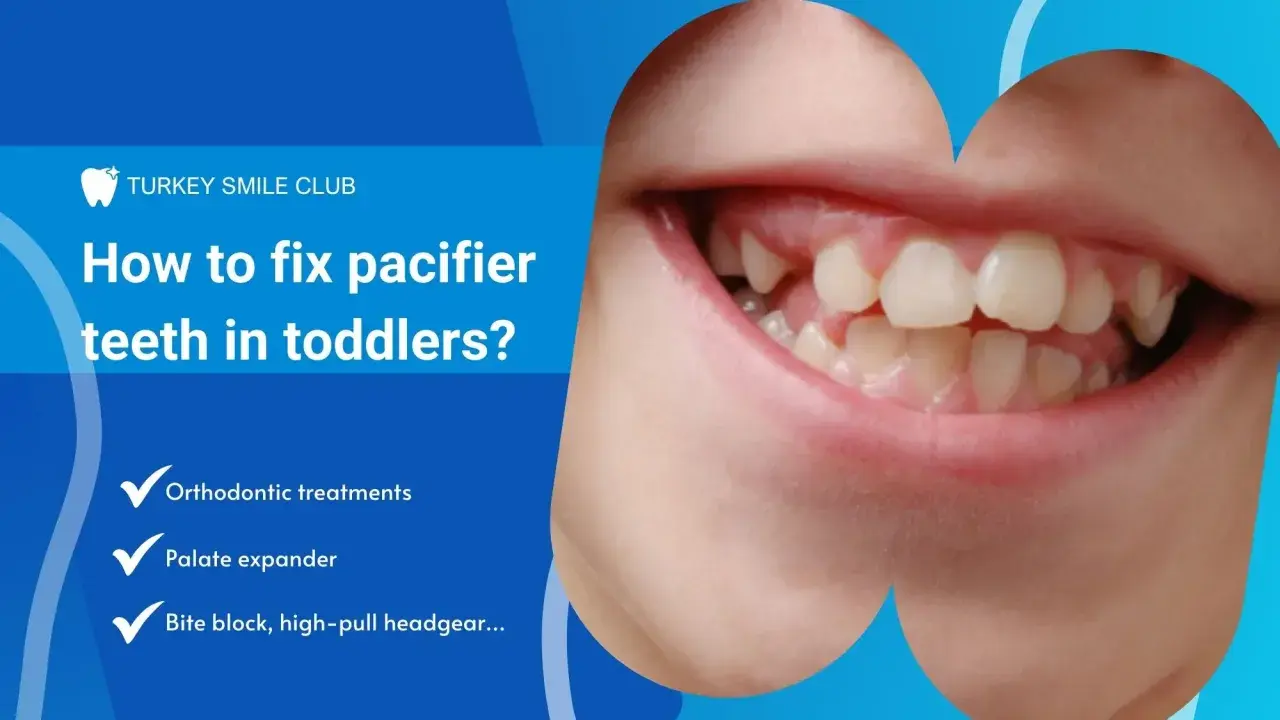
Pacifier use can be helpful in the first months of life, but the line between soothing and causing dental trouble is thinner than many parents expect. Pacifier teeth usually refers to the bite and alignment changes that can appear when sucking lasts too long, especially once the baby teeth are in place. In this article, I break down what actually changes, when the risk rises, how to spot early warning signs, and how to wean without turning bedtime into a battle.
The short version is that duration matters more than the pacifier itself
- Short-term pacifier use in infancy is usually less concerning than a habit that continues through the toddler years.
- The main dental risks are an open bite, a crossbite, and upper front teeth that start to stick out.
- If the habit stops before the permanent front teeth erupt, the bite often improves on its own.
- Using a pacifier to soothe is fine; using it to replace meals or stretch feeding intervals is not.
- A first dental visit by age 1 gives you a baseline and makes habit counseling much easier.

What prolonged sucking does to a child’s bite
In dental terms, this is a form of nonnutritive sucking: the child is sucking for comfort, not for feeding. That repeated pressure can shape the palate and move the front teeth just enough to change how the bite closes. Baby teeth are not disposable placeholders; they help with chewing, speech, and the space adult teeth will eventually need.
The patterns I look for most are straightforward:
- Anterior open bite - the front teeth do not meet when the back teeth close.
- Posterior crossbite - the upper back teeth sit inside the lower back teeth instead of outside them.
- Forward tooth movement - the upper front teeth lean outward and become easier to chip or injure.
An orthodontic-shaped pacifier may feel a little more natural in the mouth, but I would not treat the shape as a guarantee. In practice, how long and how often the pacifier stays in matters far more than the label on the package. That is why timing the habit matters so much, which leads straight to the age question.
When the habit starts to create real risk
I do not use one magic birthday. I look at age, frequency, and whether the child still needs the pacifier all day or only at sleep times. A pacifier that shows up for naps and bedtime is very different from one that stays in the mouth during play, car rides, and snacks.
| Age or pattern | What I usually think about |
|---|---|
| Birth to 12 months | Usually low dental concern if use stays limited and the baby is not using it to replace feeding. |
| 12 to 18 months | Still manageable, but this is the point where I start watching frequency and bedtime dependence more closely. |
| 18 to 36 months | Risk rises for bite changes, especially if the pacifier is used often and for long stretches. |
| Past age 3 | I would want a pediatric dental check if the habit is still active or if the bite already looks different. |
As a rule of thumb, I am much less concerned about a brief infant habit than about a toddler who still relies on sucking to get through the whole day. That is why many pediatric dental guidelines push for the habit to be gone by around age 3. The earlier the habit ends, the better the odds that the bite will drift back on its own.
Signs I would not ignore
Not every child with a pacifier habit develops a visible problem, but when changes do appear they are usually easy to spot once you know where to look.
- The front teeth do not touch even when the back teeth close together.
- The upper front teeth look more prominent than they used to.
- The upper and lower back teeth do not line up evenly on one side.
- Your child keeps the lips apart at rest or seems to breathe through the mouth more often.
- Speech sounds, especially sibilants like “s” and “z,” sound a little distorted or sloppy.
- Chewing looks awkward, or your child avoids biting into firmer foods with the front teeth.
If the habit ends before the permanent front teeth arrive, there is a good chance the bite will improve without treatment. If the bite does not correct itself, a pediatric dentist may recommend orthodontic care later to realign the teeth and reduce the risk of injury to the front teeth. That is why I prefer to catch these changes early, while the fix is still mostly about stopping the habit rather than treating the aftermath.
Feeding, sleep, and cleaning rules that protect the teeth
I do not treat pacifiers as villains; I treat them as tools that need boundaries. Used for soothing when the baby is not hungry, they can fit into a healthy routine. Used to stretch feeds, sweeten sleep, or stay in the mouth all day, they start to work against healthy oral development.
These are the rules I give parents most often:
- Do not use a pacifier to replace or delay meals.
- If breastfeeding is going well, waiting about 3 to 4 weeks before introducing one is a sensible safeguard.
- Never dip it in honey, sugar, or other sweeteners.
- Rinse and inspect it regularly, and replace it if it cracks, tears, or changes shape.
- Do not clean it in your own mouth, which can pass cavity-causing germs to the baby.
- As soon as the first tooth appears, brush twice a day with fluoride toothpaste: a rice-sized smear under age 3 and a pea-sized amount from age 3 to 6.
- Book the first dental visit by the first birthday, or sooner if you see changes in the bite.
The practical goal is not zero comfort. It is keeping the pacifier from becoming the main way a child eats, falls asleep, and self-soothes for too long.
How I would wean a pacifier without making the habit louder
- Cut daytime use first and keep it for sleep only.
- Replace the pacifier with another calming routine such as a short book, cuddling, music, or a comfort object.
- Use praise and small rewards for pacifier-free stretches instead of punishment or shame.
- Stay consistent for at least 1 to 2 weeks before deciding the plan is not working.
- If the child is already 3 or the bite looks changed, schedule a pediatric dental visit while you are weaning.
What usually backfires is trying to quit, relenting for a week, and then restarting the same battle. Children read that pattern quickly. A calm, boring, repeatable routine works better than a dramatic cutoff in most families, especially when the pacifier has become part of the sleep routine.
When a pacifier habit stops being harmless
My decision point is simple: if the pacifier is still just an infant soothing tool, I focus on clean use and healthy limits; if it has become an all-day toddler habit, I start treating it as an oral-development issue. Once a child is past age 3 or you can already see the front teeth no longer meeting, I would not wait for the problem to disappear on its own.
The reassuring part is that early bite changes often improve after the habit ends, especially before the permanent front teeth come in. The most useful move is usually not a special pacifier or a clever trick, but a clear weaning plan, a dental check when needed, and enough consistency to let the mouth settle back into a healthier pattern.
