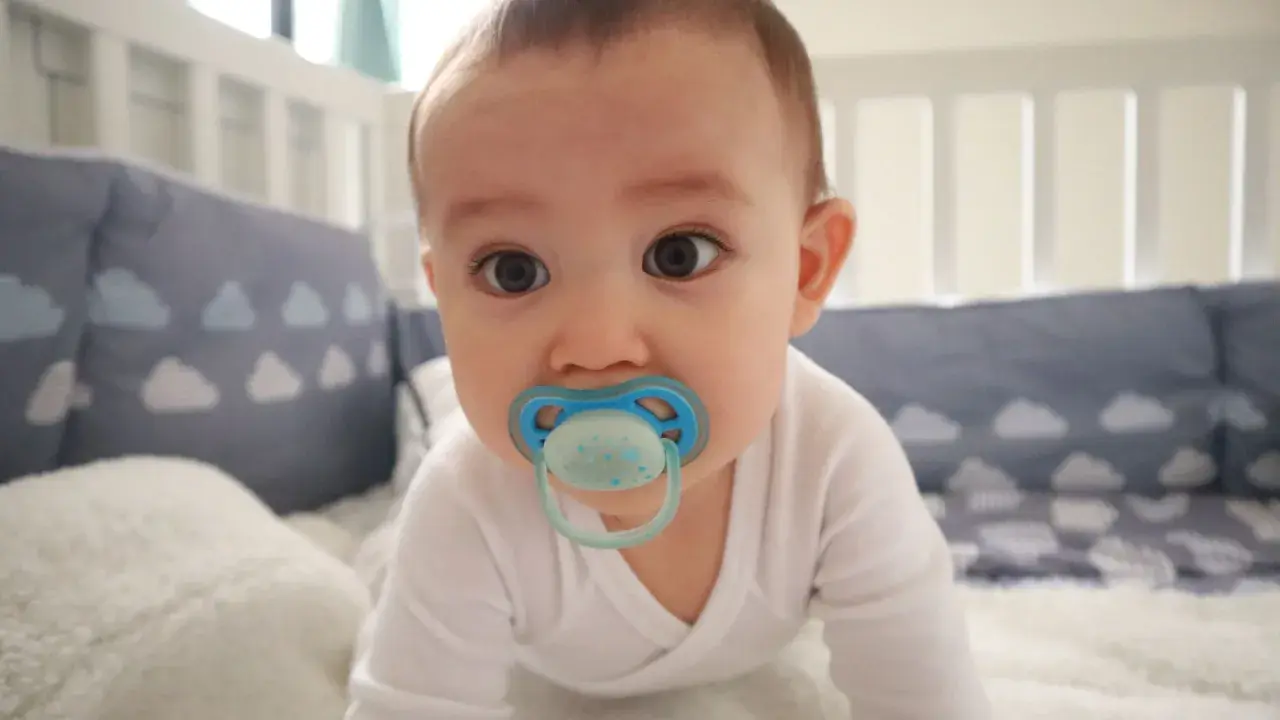
Orthodontic pacifiers are often presented as the gentler option for growing mouths, and that claim is only partly true. So, are orthodontic pacifiers better? In many babies they can be a better fit than classic round nipples, but the real difference comes from size, duration of use, and when the habit ends. This article breaks down what they do well, where the evidence is thin, and how to decide whether one is worth buying.
What matters most when choosing a pacifier
- Orthodontic shapes may be gentler on the palate than a standard round nipple, but they do not eliminate bite risk.
- Duration matters more than branding; long-term use is far more important than the label on the package.
- Pacifiers still have real benefits, including soothing and sleep-related use that can lower SIDS risk.
- Fit and safety features matter: choose the right size, a one-piece design, and a firm shield with air holes.
- Weaning on time is the real dental protection, ideally by the toddler years rather than letting the habit linger.
How orthodontic pacifiers differ from standard ones
The basic idea behind an orthodontic pacifier is simple: the nipple is shaped to sit more naturally in the mouth, usually with a flatter or angled top and a narrower neck. That design is meant to spread pressure differently across the palate and gums, instead of pushing the same way a round, bulb-style nipple can.
In practice, I think of this as a design advantage, not a guarantee. A pacifier can be labeled orthodontic and still be too large, too rigid, or a poor fit for a particular baby. The shield, nipple size, and material all matter.
| Feature | Orthodontic pacifier | Standard round pacifier |
|---|---|---|
| Nipple shape | Flatter or angled to better match the mouth | Rounded and more symmetrical |
| Pressure pattern | May reduce focused pressure on the front of the mouth | Can press more directly against the palate and front teeth area |
| Best use | Families who want a pacifier but want a more mouth-friendly design | Can still soothe effectively, but may be less ideal for long-term use |
| Main limitation | Does not prevent dental changes if used too long | Also useful, but may create more bite stress in prolonged use |
The shape is useful, but it is only one part of the story. Once you understand that, the real question becomes whether the design meaningfully changes dental outcomes.
What the research says about bite development
The honest answer is mixed. Some studies show orthodontic pacifiers cause less open bite than conventional pacifiers, while other reviews say the evidence is still not strong enough to claim they prevent malocclusion. Malocclusion simply means the teeth or jaws do not line up the way they should.
The pattern that shows up again and again is that duration matters more than frequency. A child who uses any pacifier heavily for years is at much higher risk for bite changes than a child who uses one briefly and stops early. Open bite, for example, is when the front teeth do not touch when the mouth closes. Posterior crossbite is when the upper back teeth sit inside the lower back teeth, which can signal altered jaw growth.The American Academy of Pediatric Dentistry notes that pacifier use beyond about 18 months can start to influence the developing orofacial complex, and use for 36 months or longer is tied to a higher incidence of anterior open bite. In plain language, that means the pacifier label matters less than how long the habit lasts. That is why I never treat an orthodontic model as a free pass to keep using it indefinitely.
There is one more useful detail: if a child stops the habit before the permanent front teeth come in, the bite often corrects itself on its own. That makes timing the next step just as important as choosing the pacifier itself.
Why parents still use pacifiers
Even with the dental trade-offs, pacifiers still have real value. They can soothe a baby, satisfy a strong sucking reflex, and help some infants settle more easily at sleep time. For many families, that is not a small benefit. It is the difference between a manageable evening and a hard one.
HealthyChildren, the AAP’s parent site, says to offer a pacifier at nap time and bedtime because that can help reduce SIDS risk. If breastfeeding is going well, the usual advice is to wait until it is established before introducing one, which typically takes about 3 to 4 weeks. If the baby does not want the pacifier, do not force it. If it falls out after sleep begins, you do not need to keep putting it back in.
I also think pacifiers are most useful when they are doing a specific job. They are better as a soothing tool than as a default fix for every cry. They should not replace feeding, and they should not become a habit that runs all day because it is convenient for adults.
That balance matters, because the next decision is not whether pacifiers are always good or always bad. It is whether you are using the right type in a way that stays controlled.
What I look for when choosing one
When I help parents sort through pacifiers, I focus on a short list of practical features rather than the marketing on the box. The right choice is usually the one that fits the baby well, is easy to clean, and is less likely to create avoidable problems.
- Choose the right size. A pacifier should be age-appropriate, not oversized.
- Pick a one-piece design if possible, because it is less likely to break into separate parts.
- Check the shield size. It should be firm and wide enough that the baby cannot put the whole pacifier into the mouth.
- Look for air holes in the shield for added safety.
- Keep the nipple soft and inspect it often for cracks, discoloration, or wear.
- Do not attach it to clothing or bedding; that creates a choking or strangulation risk.
- Never dip it in honey or sweeteners. That is a real safety issue, not a minor habit.
I would also add one practical point that parents often overlook: fit matters more than the orthodontic label. A well-fitting standard pacifier may be better than a poor-fitting orthodontic one, because mouth size and comfort still drive how the sucking pressure spreads.
When to stop before the habit becomes the problem
If you want the most dental-friendly outcome, the pacifier should be temporary. The broad guidance in pediatric dentistry is to start thinking seriously about weaning in the toddler years, and to avoid letting the habit stretch into the preschool years if you can help it. By about 2 to 4 years, strong sucking habits can begin to change mouth shape and tooth position.
Here is the timeline I usually keep in mind:
- 0 to 12 months: pacifiers can be useful for soothing and sleep, especially when used with safe-sleep rules.
- 12 to 18 months: begin limiting use to naps, bedtime, or specific calming moments.
- 18 to 36 months: this is the window where prolonged use starts to matter much more for bite development.
- After 3 years: if the child is still heavily dependent on it, I would treat weaning as a priority rather than a maybe.
If you notice that the front teeth no longer meet, the upper teeth look pushed forward, or the back teeth seem to close unevenly, that is a good time to check in with a pediatric dentist. Catching a problem early usually gives you more options and less stress.
For most families, the cleanest approach is gradual: shorten the daily use, keep the pacifier to sleep only, and replace it with another comfort routine before the habit becomes deeply embedded.
The simplest rule I would use before buying one
My rule is straightforward: if you are going to use a pacifier, an orthodontic model is usually the better starting point, but it is only a modest upgrade. It may reduce some pressure compared with a conventional round pacifier, yet it cannot cancel out long-term use or poor fit.So the decision is less about chasing the “perfect” pacifier and more about stacking a few good choices together. Pick a safe design, use it for a clear purpose, keep the habit limited, and plan the exit early. That is where most of the benefit lives.
In real life, that is the answer I trust: orthodontic pacifiers can be better, but only when they are part of a broader, sensible feeding and sleep routine that does not let the habit run too long.
