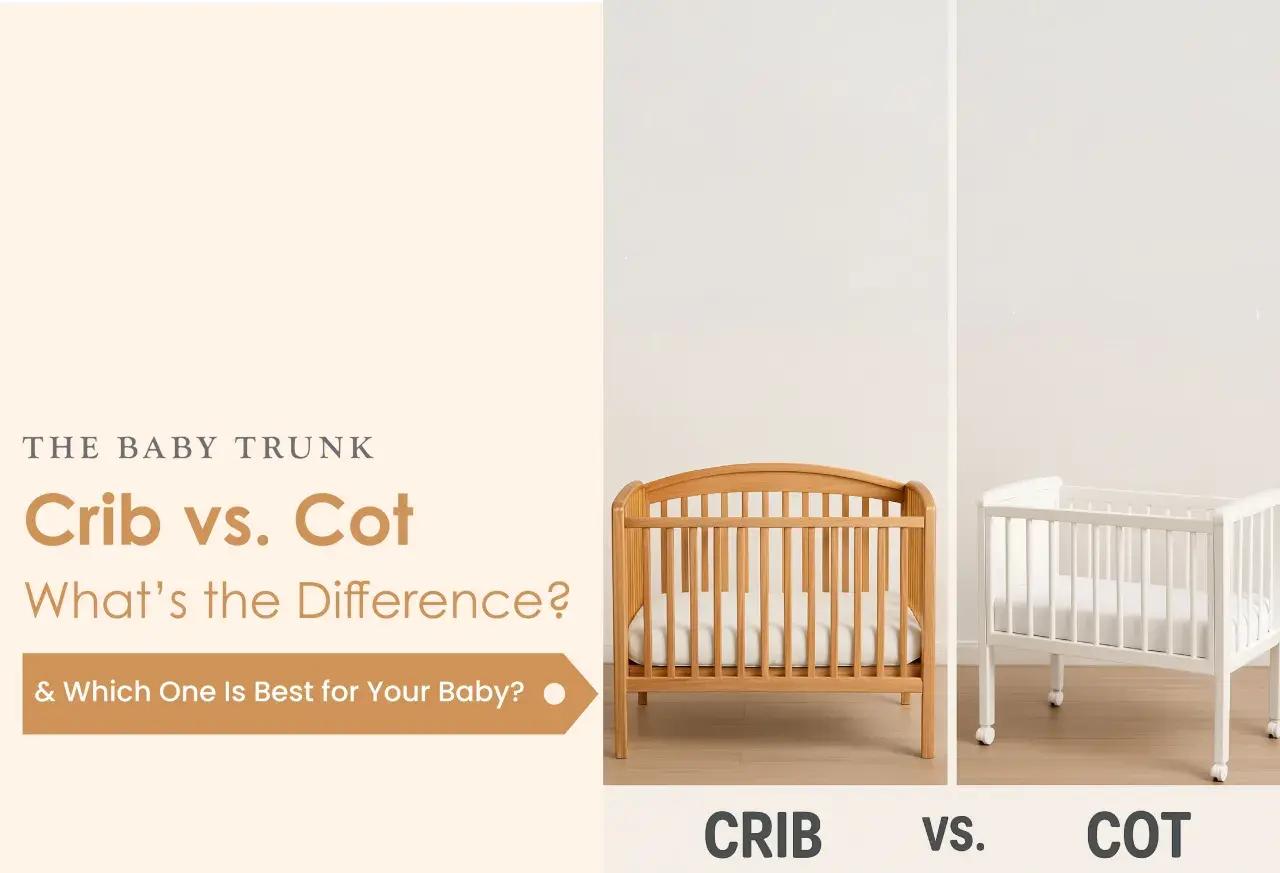
A nursery decision often looks simple until you compare labels, dimensions, and safety rules. In the U.S., the baby cot vs crib question is usually less about two identical products and more about whether you are looking at a standard crib or a portable sleep solution, and that difference changes what makes sense for daily use.
The practical difference comes down to terminology, portability, and sleep safety
- In American English, crib is the normal word for a baby’s main bed.
- Cot in the U.S. often means a folding bed or camp bed, not the default nursery choice.
- If a seller uses “cot,” check whether it is really a travel cot, portable crib, or play yard.
- For most home nurseries, a fixed crib is the more practical long-term option.
- For trips, grandparents’ homes, or backup sleep space, a portable unit can be more useful.
- Whatever you buy, the sleep surface should be firm, flat, and free of soft bedding.
How the words are used in the United States
I would start with language, because that is where a lot of confusion comes from. In the U.S., a crib is the standard infant bed you put in a nursery, while cot usually points to a folding bed, camp bed, or portable sleep setup; if someone from the UK says cot, they may mean what Americans call a crib.
| Term | Typical U.S. meaning | What to think of it as |
|---|---|---|
| Crib | Standard baby bed for the nursery | The default infant sleep option |
| Cot | Often a folding bed or camp bed; not the default baby term | Check the spec sheet before assuming it is a nursery bed |
| Travel cot / portable crib / play yard | Portable infant sleep option | A temporary or secondary sleep solution if it meets safety standards |
So if you are shopping domestically, crib is the word that matters. If you are reading an imported listing or a marketplace description, I would not trust the label alone; I would read the dimensions, age range, and safety language before I assume what the product actually is. That leads to the more useful question: if the product is portable, how does it compare to a crib in daily life?

If cot means a travel cot, this is the real tradeoff
Once cot means a portable sleep solution, the decision becomes practical rather than linguistic. A crib is built for repeat use in one room; a travel cot or portable crib is built to fold, move, and handle occasional sleeping away from home.
| Feature | Crib | Travel cot / portable crib |
|---|---|---|
| Main role | Primary nursery bed | Secondary or mobile sleep space |
| Setup | Stays assembled in one room | Folds for transport and storage |
| Best for | Daily at-home sleep | Trips, grandparents, backup use |
| Lifespan | Usually more months of use | Often outgrown or limited sooner |
| Tradeoff | Less portable | Less permanent |
When a crib wins
I usually point parents to a crib when the baby will sleep in one place most nights. It gives you a stable nursery setup, tends to feel less temporary, and is easier to treat as the baby’s main sleep space from day one.
Read Also: Newton Crib Mattress - Why Wovenaire Core Matters for Your Baby
When a travel cot wins
A portable option makes more sense when you move between homes, visit family often, or need one extra safe sleep surface outside the nursery. It is also useful if room-sharing is tight and the baby needs a separate place that can be moved out of the way during the day.
In other words, the portable option solves mobility; the crib solves permanence. That distinction matters more than the word on the box, and it matters even more once safety enters the picture.
Safety rules I would not bend on
The AAP and CDC both point to the same basic safe-sleep rules: put the baby on their back, use a firm flat surface, and keep the sleep area clear of soft items. I also treat the CPSC crib standard as non-negotiable, because a nursery bed should meet current federal safety requirements rather than older design habits.
- Use a firm, flat surface; anything that inclines more than 10 degrees is not considered safe for infant sleep.
- Choose a mattress that fits the frame tightly, with only a fitted sheet on top.
- Keep pillows, blankets, bumper pads, stuffed toys, and quilts out of the sleep space.
- Room-share, but do not bed-share; the first 6 months in the same room is the common recommendation.
- Skip broken, missing-hardware, or recalled cribs, and be cautious with older hand-me-downs.
- Avoid drop-side cribs and any product that does not clearly meet current U.S. infant-sleep standards.
If you want one concrete number to keep in mind, full-size cribs in the U.S. are built around interior dimensions of about 28 by 52 inches, which is why mattress fit and standard sizing matter so much. That little detail saves a lot of guesswork when you start comparing nursery options.
How I would choose for common nursery setups
When I narrow the choice down, I think in scenarios rather than in product marketing. The best answer is different if you live in a small apartment than if you are building a dedicated nursery and barely travel.
| Situation | Better fit | Why |
|---|---|---|
| Dedicated nursery in one home | Crib | Most stable long-term setup |
| Frequent travel or weekends away | Travel cot / portable crib | Folds and moves easily |
| Room-sharing in a small bedroom | Compact crib or portable crib | Simpler to fit beside adult furniture |
| Grandparents’ house | Portable crib | Easy to store between visits |
- Choose a crib first if the baby will sleep mostly at home and you want one main sleep space.
- Choose a portable cot or crib if you need a second sleep setup for travel or grandparents’ houses.
- Choose a crib plus portable backup if you want the most stable home setup and occasional flexibility.
- Recheck the mattress and frame if you are buying used, because fit and hardware are where most mistakes happen.
I am usually skeptical of buying based on convenience alone. If the portable option is doing the job of a nursery bed every night, the fixed crib is often the better long-term tool.
What I would buy first in a U.S. nursery
For most families, I would start with a crib, not because the portable option is bad, but because a crib is the cleaner fit for daily infant sleep in the United States. Add a portable cot or play yard later if travel, storage, or a second home genuinely makes it useful.
- Pick the sleep space that matches where the baby will actually spend most nights.
- Check the label, the mattress fit, and the recall status before you fall for the finish or style.
- Keep the setup simple: firm mattress, fitted sheet, empty crib.
That is the easiest way to turn a confusing comparison into a practical purchase: buy for the way you live, then let safety rules do the rest.
