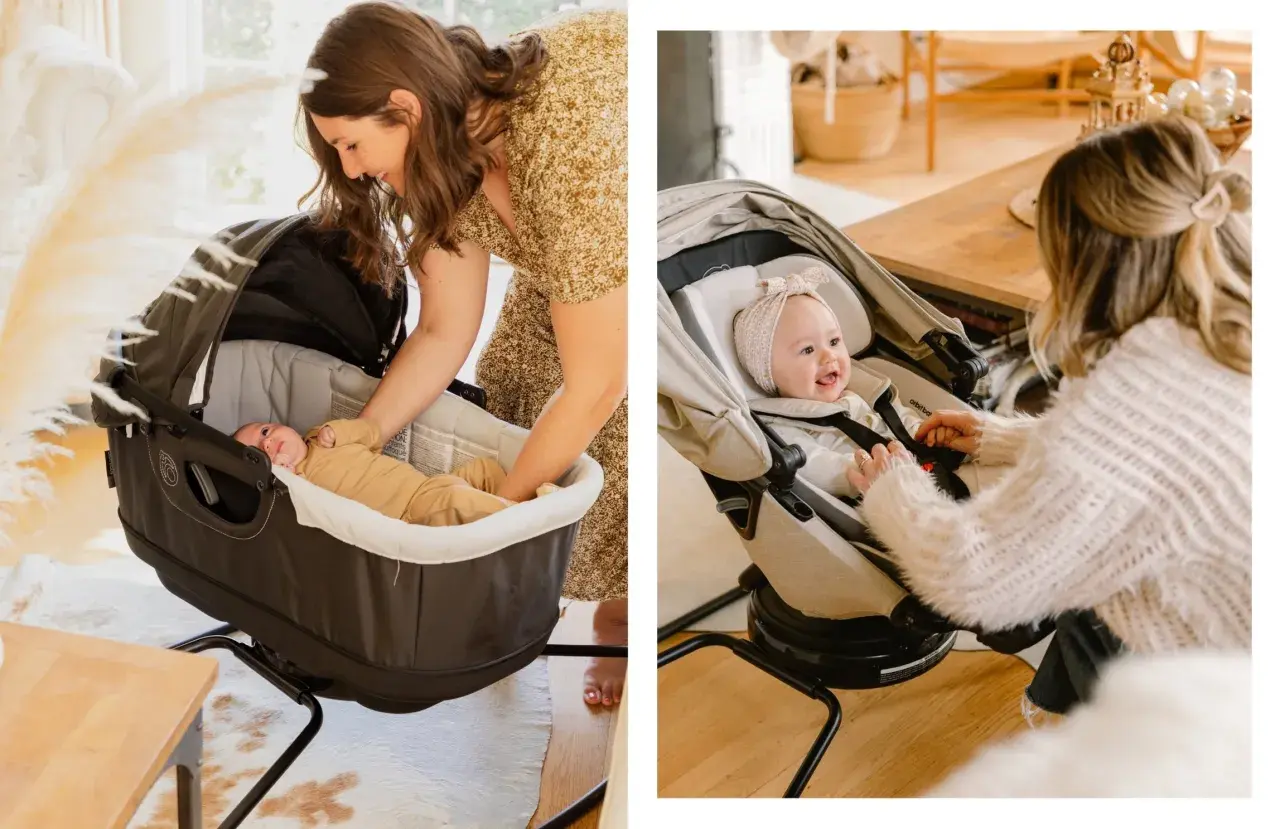
The weight limit on bassinet models is a hard safety boundary, not a comfort guideline. I break down what that limit really means, the typical numbers U.S. families see, when to stop using a bassinet before the scale catches up, and how to check a product without guessing.
The safest rule is to follow the model-specific limit and stop at the earlier warning sign
- There is no single universal bassinet limit. The safe maximum comes from the exact model and its instructions.
- 15 lb and 20 lb are the most common U.S. numbers. Some accessories and portable models stop at 15 lb, while many bedside sleepers and standalone bassinets stop at 20 lb.
- Development matters as much as weight. If a baby pushes up on hands and knees, rolls, or starts to fit too tightly, it is time to move on.
- Read the label, not the marketing copy. Bassinet mode, playard mode, and changer mode can all have different limits.
- Safe sleep still comes first. A firm, flat surface, fitted sheet only, and back sleeping are non-negotiable.
What the bassinet limit actually tells you
I treat the bassinet weight limit as a safety threshold, not a target to reach. It tells you the maximum load the product is designed to support under its tested conditions, but it does not mean the bassinet is automatically safe up to that number if the baby can already roll, push up, or fit awkwardly inside.
According to the CPSC, bassinets and cradles must meet federal safety rules for stability, sleep-surface angle, and structural performance; the point is safe use, not a one-size-fits-all pound number. That is why two bassinets that look similar can have different limits, different stop points, and different warning signs for when to stop using them. That distinction matters once you start comparing actual products, which is where the numbers get more useful.
Common numbers you will see on U.S. models
In the U.S. market, I most often see bassinet limits in the 15 to 20 pound range. That range is broad enough to matter, because a baby who is still well within one brand’s limit may already be over the line for another.
| Common setup | Typical limit | How I read it |
|---|---|---|
| Portable or travel bassinet | 15 lb | Usually the shortest-use option. Good for the early newborn stretch, but easy to outgrow quickly. |
| Standalone bassinet or bedside sleeper | 20 lb | Often paired with an age guideline such as “up to about 5 months” or “until baby pushes up.” |
| Bassinet attachment on a playard | 15 to 20 lb | The bassinet mode may end long before the playard itself does, so the accessory limit matters more than the frame. |
| Multi-use product with separate modes | Varies by mode | The sleep surface, changer, and main play space can each have a different cap. Never mix them up. |
The practical takeaway is simple: 15 lb usually means a shorter newborn window, while 20 lb usually gives you a bit more runway. I would never buy or keep a bassinet based only on the headline number, though, because the real limit is always the one printed for that exact product and that exact mode. Once the weight range is clear, the next step is knowing when to stop before the number even arrives.
Stop using it before the scale catches up
The fastest mistake I see is parents treating the pound limit as the only reason to move a baby. In real life, the baby’s movement and posture matter just as much, and sometimes more. A bassinet can become inappropriate while the baby is still under the stated weight if the child has gained enough strength or mobility to create a safety problem.
- Push-up behavior - If the baby starts pushing up on hands and knees, that is a stop sign on many models.
- Rolling - A baby who can roll, or is getting close to rolling, can shift position fast enough to outgrow a bassinet’s confined space.
- Tight fit - If the baby’s head and feet can touch both ends at the same time, the sleep space is no longer a comfortable or safe fit.
- Visible sag or bounce - A sleep surface that sags, dips, or feels less stable under load is not something to ignore.
- Age guidance in the manual - Many products pair the weight cap with an age cap around 5 months, and the earlier limit wins.
I like to frame it this way: weight is the last check, not the first one. If the baby still weighs less than the limit but has already passed one of those developmental markers, I would move to a crib or play yard right away. That leads naturally to the part many parents skip: checking the instructions for the exact product in the room.
How to check the manual and label without guessing
When I inspect a bassinet, I start with the product label and the instructions, not the box or the retailer listing. A used bassinet can look perfect and still be the wrong size, the wrong generation, or the wrong accessory mode for the baby now using it.
- Find the model number and date of manufacture on the label or frame.
- Check the manual for the bassinet mode specifically, not just the main product frame.
- Look for separate limits if the product converts between bassinet, bedside sleeper, playard, or changer.
- Confirm the stop rule for age, rolling, pushing up, or height, because those can end use before the pound limit.
- Verify that the product has not been recalled before putting a baby in it.
If the manual is missing, I do not assume the limit from memory or from a similar model. That is a weak shortcut, especially with secondhand gear, because one mode may be rated differently from another. Once the paperwork is clear, the rest of safe use comes down to the sleep setup itself.
The safety habits that matter as much as weight
The AAP recommends a firm, flat sleep surface, back sleeping, and room sharing for at least the first 6 months. I agree with that advice because bassinet safety breaks down fastest when people turn a sleep product into a convenience zone - soft bedding, extra padding, and loose accessories tend to create more risk, not more comfort.
- Use only a fitted sheet - nothing extra belongs in the sleep space.
- Keep the surface flat - anything that inclines more than 10 degrees is not appropriate for infant sleep.
- Leave out pillows, blankets, and bumpers - soft items can block airflow or create entrapment risks.
- Do not use weighted sleep products - weighted blankets and weighted swaddles do not belong in a bassinet.
- Move baby after sleep starts elsewhere - if the baby falls asleep in a car seat, stroller, swing, or carrier, transfer them to a proper sleep surface as soon as you can.
The point is not to make the bassinet more elaborate. The point is to keep it boring, firm, and predictable. That is what gives the weight limit real meaning in daily use, and it is also what makes the final decision easier when the baby is almost out of range.
The easiest decision rule when the numbers start to get close
If I am close to the limit, I move up early. That means I do not wait for the last ounce, the last week, or the first unstable sleep. A crib, portable crib, or play yard is the better choice the moment the bassinet starts to feel tight or the baby starts using strength in ways the product was not meant to handle.
The clean rule is straightforward: follow the printed limit, stop sooner if the baby can push up or roll, and use the larger sleep space before the bassinet becomes a borderline call. That approach is simpler, safer, and usually less stressful than trying to squeeze out a few extra days from a product the baby has already outgrown.
