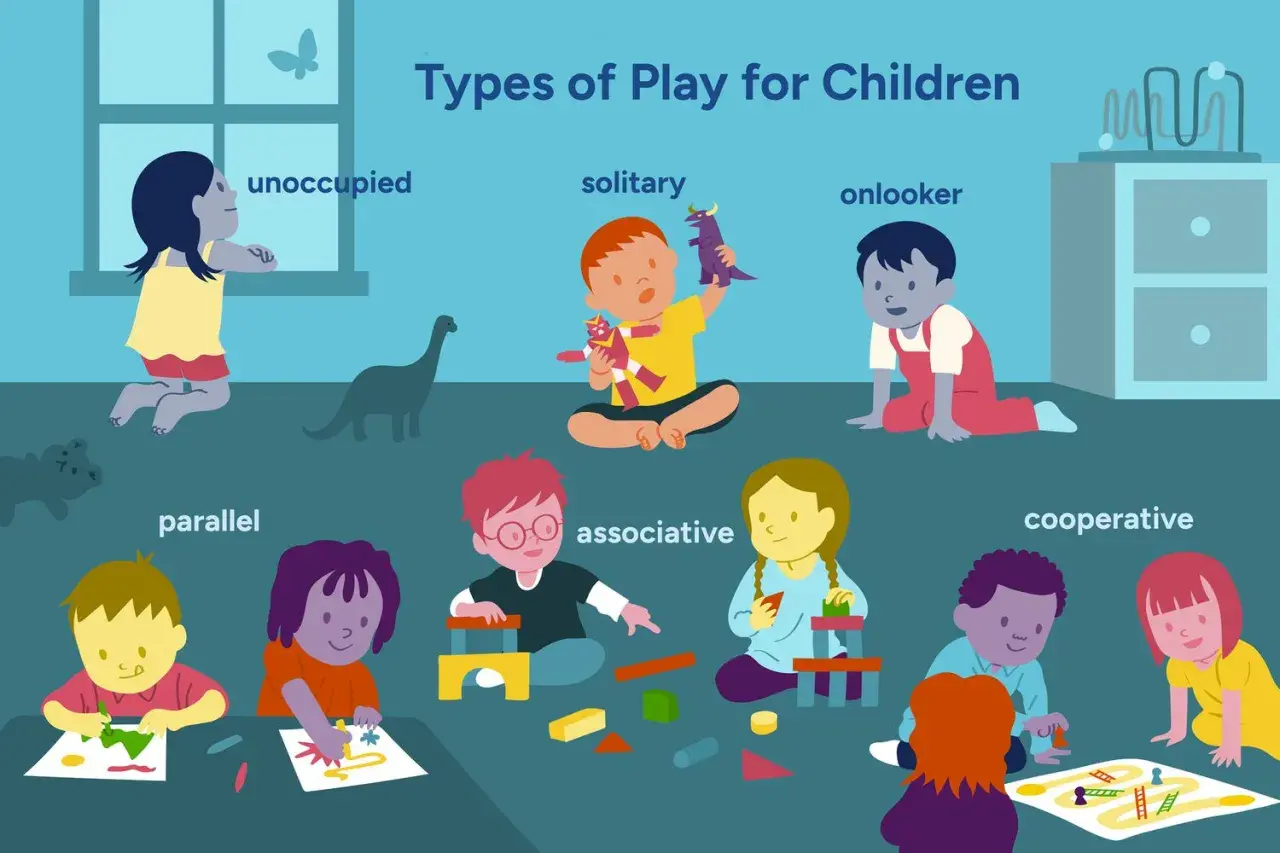
Once children move past playing side by side, the next shift is less about age and more about social attention. The usual answer to what comes after parallel play is associative play, when children begin to interact around the same activity instead of only beside one another. From there, many children gradually reach cooperative play, where they share goals, roles, and rules. I will walk through what each stage looks like, how to spot the difference, and what helps the transition happen naturally.
The next step is usually more interactive, not just more advanced
- Associative play usually comes after parallel play.
- Cooperative play is the later stage, with shared goals and turn-taking.
- These stages overlap; children do not move through them on a strict schedule.
- Age ranges are rough guides: many children show associative play around 3 to 4 and cooperative play around 4 and up.
- Open-ended toys, duplicate materials, and low-pressure playdates make the transition easier.
- If play stays isolated and there are language or social concerns, it is worth checking in with a pediatrician or early intervention provider.
What usually comes next after parallel play
In the classic play sequence, associative play is the bridge between side-by-side play and true teamwork. Children are no longer only watching each other from the edge; they start commenting, exchanging materials, copying one another, and responding to what a peer does. The activity is still loose, though, so there is usually interaction without a single shared goal.I like to keep the distinction simple: parallel play says, "I am doing my thing next to you," while associative play says, "I notice you, and I may join in a little." That shift sounds small, but it is the beginning of turn-taking, shared attention, and early social problem-solving. The table below shows the difference more clearly.
| Stage | Typical age | What it looks like | Why it matters |
|---|---|---|---|
| Parallel play | About 2 to 3 | Children play beside each other with little direct interaction. | Builds comfort with peers, imitation, and observation. |
| Associative play | About 3 to 4 | Children talk, borrow, copy, and comment while using the same materials. | Introduces real peer interaction without demanding full coordination. |
| Cooperative play | About 4 and up | Children share a plan, roles, or rules to reach a shared outcome. | Develops negotiation, empathy, and teamwork. |
The point is not to rush the child into the next box. It is to notice when the social energy starts to change, because that tells you what kind of play support will help next. That difference is easiest to see in real play scenes, especially around blocks, sand, and pretend setups.

How associative play looks in real life
This stage often looks messy from the outside. Two children may be at the same block table, one building a tower while the other adds a ramp, and then both of them start talking about the same structure even though nobody announced a plan. That is associative play: shared space, shared materials, and growing social awareness, but not yet a fully coordinated mission.- They exchange pieces or tools without making a big deal of it.
- They comment on each other’s play or mimic what the other child is doing.
- They drift in and out of the interaction instead of staying locked into a group goal.
- They may play with the same pretend theme without assigning roles in a structured way.
- They still need adult help when conflict starts, because sharing is still a work in progress.
What matters here is not perfect cooperation. What matters is that the child is beginning to treat other children as part of the play environment, not just background noise. Once that happens, the leap to cooperative play becomes much more visible.
When cooperative play starts to show up
Cooperative play is where children begin acting like a small team. They may decide who is the doctor and who is the patient, who gets the red blocks and who builds the roof, or who goes first in a simple game. The activity now has a shared goal, and the children have to negotiate roles, rules, and turn-taking to keep it going.
This is why cooperative play can look joyful and chaotic at the same time. Children are learning to agree, disagree, repair, and try again. That is a bigger social load than most adults realize, so conflict does not mean the play has failed. It usually means the children are practicing a skill that is still new.
In practice, I expect cooperative play to appear more reliably in the preschool years and strengthen through kindergarten. A child might still fall back to parallel play with a new peer, a crowded room, or a tired afternoon, and that is normal. The next section is where I explain how adults can make this transition easier instead of turning it into a power struggle.
How to support the move without forcing it
The easiest way to help is to lower the social friction. I would rather set up a play environment that invites interaction than demand that children "share nicely" before they are ready.
- Use duplicate materials. Two trucks, two scoops, or two sets of crayons reduce the turf war.
- Choose open-ended toys. Blocks, dolls, play food, animal figures, and art supplies give children room to create a shared story.
- Keep playdates short and predictable. Younger children do better when the social window is small and the routine is familiar.
- Model the language of play. I would narrate what each child is doing and offer a bridge: "You built a garage. Sam wants a road."
- Stay nearby, not controlling. The child needs room to try, but still needs help when turn-taking collapses.
One rule I trust: if the toy demands too much adult instruction, it is usually a poor tool for this stage. Children need enough structure to stay engaged, but enough freedom to discover each other inside the play. That balance is what makes the next section important, because not every child moves at the same speed.
When parallel play is still normal and when I would pay attention
A child who prefers parallel play is not automatically delayed. Some children are shy, some warm up slowly, some are overwhelmed by noisy groups, and some simply need more time before they feel ready to enter the social side of play. A child may also act more social with a sibling than with unfamiliar peers, which is a useful clue that the environment matters.
What I watch for is the overall pattern. If a child rarely notices other children, has very limited pretend play by the preschool years, struggles to imitate simple social actions, or shows no real movement toward more interactive play over time, I would not brush that off. The same is true if there are broader concerns about speech, communication, regression, or repeated frustration around peers.
In those cases, a pediatrician or early intervention evaluation can be useful, not because parallel play is bad, but because play is one of the clearest windows into development. The next step after that is often not a diagnosis; it is a better setup, better observation, and better support.
What a good toy box and play space do for this stage
For this transition, the room setup matters more than a lot of parents expect. A good play space makes it easier for children to notice one another, share materials, and build a common story without constant adult intervention. Open shelves and low bins matter because children can reach the same items without asking an adult every time.
| Setup choice | Why it helps | Examples |
|---|---|---|
| Open-ended toys | They invite children to invent a shared plan instead of following one scripted outcome. | Blocks, magnetic tiles, dolls, animal figures, play food |
| Duplicate basics | They reduce conflict and keep the focus on interaction rather than possession. | Two dump trucks, extra scoops, multiple crayons, spare cups |
| Shared surfaces | They create a natural meeting point for side-by-side play to turn social. | Low table, floor mat, sand table, water table |
| Pretend-play props | They make role-taking and shared imagination easier. | Kitchen set, doctor kit, costume pieces, dolls, puppets |
| Simple turn-taking games | They teach waiting, rules, and shared wins in a low-stakes way. | Rolling a ball back and forth, matching games, very simple board games for older preschoolers |
If I had to choose one principle, it would be this: simple beats flashy. A battery-powered toy that does all the work often gives children less reason to negotiate, cooperate, or invent. A small set of durable, open-ended pieces usually does more for social play than a crowded toy bin full of single-use gadgets.
That is also why nursery essentials matter here: a low shelf, easy-to-reach bins, and enough duplicate items can support better play than an expensive toy upgrade.
What I would watch for as shared play starts to take over
The big picture is straightforward. After parallel play, children usually move into associative play, then into cooperative play as their social, language, and self-regulation skills grow. The pace varies, and the same child may look more advanced with one peer and more reserved with another.
- Look for movement, not perfection. Even small signs of commenting, copying, or borrowing are progress.
- Expect conflict. Cooperation is built through negotiation, not instant harmony.
- Use play to your advantage. The right toys and layout can make social interaction easier without pressure.
If I were tracking one thing over time, it would be whether the child is gradually becoming more interested in other children as play partners, not just as people sitting nearby. That is the clearest sign that the next developmental step is taking hold.
