Parallel play is one of those early-childhood patterns that looks simple on the surface and turns out to be surprisingly important. A child may sit beside another child, use the same kind of toys, and seem fully absorbed in their own activity, yet they are learning how to notice peers, tolerate shared space, and slowly move toward more social play. This article explains the stage clearly, shows what it looks like in real life, and gives practical ways to support it without pushing children faster than they are ready to go.
The quick version of parallel play
- Parallel play means children play beside each other, not truly with each other.
- It usually appears in toddlerhood, most often around ages 2 to 3, but the timing varies.
- It helps children observe, imitate, build confidence, and get comfortable around peers.
- It is normal and healthy, not a sign that a child is antisocial.
- The best support is simple: nearby space, open-ended toys, and no pressure to perform socially on cue.
What is parallel play and why does it matter
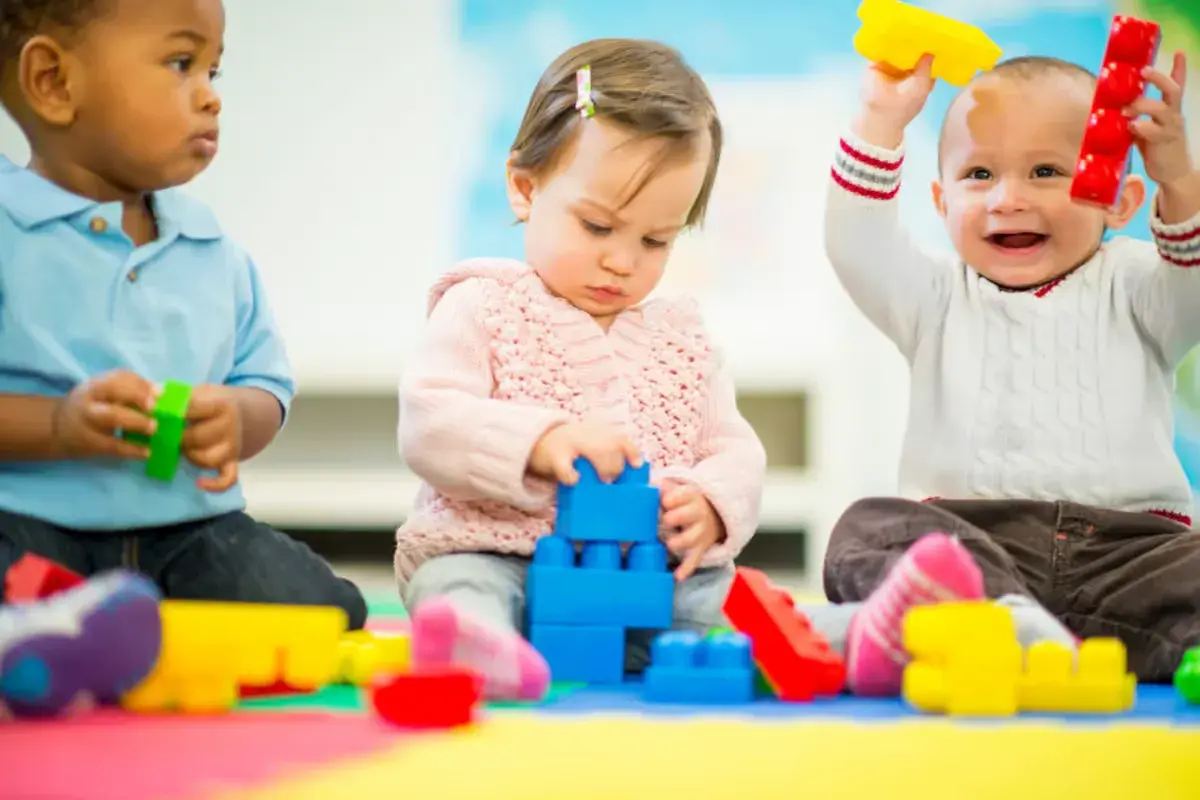
I usually describe parallel play as the stage where a child is ready to share space before they are ready to share a game. Two toddlers may sit in the same sandbox, stack blocks at the same table, or drive toy cars side by side, but each child stays focused on their own activity. There is awareness of the other child, just not much direct interaction yet.
That distinction matters because it tells you something useful about social development: children do not jump straight from playing alone to negotiating roles, turn-taking, and group rules. They usually need a bridge in between. Parallel play is that bridge, and I think it is often underestimated because it looks quiet. In reality, it is one of the first places where a child begins to practice being around other children without feeling overwhelmed.
It also helps to keep expectations realistic. A toddler who is happily playing next to a peer is not “missing” social skills. In many cases, they are exactly where they should be. That side-by-side pattern is useful because it sits between playing alone and actually collaborating, which is where the next distinction matters.
Why this stage matters for development
Parallel play supports several areas of development at once, which is why it shows up so often in early childhood classrooms, daycare rooms, and home play spaces. The benefits are not dramatic in the moment, but they add up quickly.
- Social awareness - Children start noticing that other children have their own ideas, rhythms, and preferences.
- Imitation - A child may copy how a peer holds a crayon, builds a tower, or sorts toys, and imitation is a major learning tool at this age.
- Language exposure - Even without full back-and-forth conversation, children hear words, tones, and reactions from the people around them.
- Emotional regulation - Being near peers without having to interact constantly can feel safer and less demanding, especially for quieter children.
- Motor practice - Many parallel-play activities involve grasping, stacking, pouring, drawing, climbing, and other fine and gross motor skills.
The stage also builds a kind of social stamina. A child learns, “I can be near other kids and still feel fine.” That may sound small, but it is a real developmental step. The next question is how this stage compares with the ones around it, because that is where parents often get confused.
How parallel play fits between solitary and cooperative play
It is easier to understand the stage when you place it on the broader ladder of play development. Ages are approximate, not deadlines, and children often overlap stages depending on temperament, language, and the setting they are in.| Stage | What it looks like | Typical age range | Why it matters |
|---|---|---|---|
| Solitary play | Child plays alone and shows little interest in nearby children | Birth to about 2 years | Builds focus, exploration, and independent play |
| Onlooker play | Child watches others play but does not join in | Often around 2 years | Helps children learn by observation before they participate |
| Parallel play | Child plays beside others with little direct interaction | Commonly 2 to 3 years | Builds comfort with peers, imitation, and shared space |
| Associative play | Children begin to talk, share materials, and influence each other more | Often 3 to 4 years | Introduces turn-taking and casual peer interaction |
| Cooperative play | Children work toward a shared goal with roles or rules | Often 4 years and up | Builds teamwork, negotiation, and group problem-solving |
The CDC notes that by 30 months, many children play next to other children and sometimes with them. By age 3, many notice other children and join them to play. That progression is gradual, which is exactly why it is better to watch for movement over time than to fixate on one age or one playdate. Once you can place parallel play on that ladder, the practical question becomes how to support it well.
How to support it with the right toys and setup
The easiest way to support parallel play is to make the environment calm, open, and predictable. I would rather see a small group of children with good materials than a crowded room with too many interruptions. The goal is not to force social interaction. The goal is to make side-by-side play easy enough that children can settle into it naturally.
- Choose open-ended toys such as blocks, stacking cups, crayons, play dough, toy cars, or simple pretend-play items.
- Offer duplicates when possible so children do not have to negotiate every single item before they can start.
- Keep groups small because one or two peers are often easier than a noisy crowd.
- Stay nearby, not over the top of them so children feel secure without being micromanaged.
- Narrate lightly by naming what you see, such as “You’re both building tall towers,” instead of directing the play.
- Avoid forcing sharing as the first lesson, because many toddlers need time before they can truly understand it.
For homes and nurseries, the best toy setup is usually simple: a clear floor area, a few inviting toys, and enough space for each child to focus. Sensory bins, blocks, art supplies, and pretend-play stations work especially well because they let children play in parallel without needing to coordinate every move. And just as important, not every quiet moment needs adult intervention. If the play is calm and safe, that is often enough. The next section is where I would separate normal variation from something worth a closer look.
When parallel play is typical and when to pay closer attention
Parallel play is typical in toddlerhood, especially between about 2 and 3 years old, and it can continue to show up after that in certain settings. A child may be very social at home and slower to warm up in a new room, or the reverse. Temperament matters. So does language development, sleep, how crowded the room is, and whether the child feels secure with the adults nearby.That said, I would pay closer attention if a child consistently avoids all nearby peers, never shows any interest in what other children are doing, or seems stuck at a much earlier play style well past the toddler years. It is also worth discussing with a pediatrician if social concerns appear alongside language delays, limited eye contact, very little imitation, or trouble using gestures and simple pretend play. Those patterns do not point to one single issue, but they do deserve a closer look rather than a wait-and-see approach.
Another useful rule of thumb: do not judge one afternoon at daycare or one awkward playground visit. What matters is the pattern over time, across different settings, with different adults present. That broader view makes the next cues much easier to spot.
The cues that the next play stage is arriving
When parallel play starts turning into more social play, the signs are usually small but noticeable. A child may begin to offer a toy, copy a peer’s actions with more intention, look for an adult’s reaction after doing something funny, or stay with the same child for longer than a few minutes. They may also start using words to coordinate play, even if the “conversation” is only a few simple phrases.
Another cue is shared focus. Instead of each child doing their own thing in the same space, both children start reacting to the same event, such as a tower falling, a pretend meal being served, or a toy car race. That shift toward shared meaning is the real beginning of associative and cooperative play.
When I watch that transition happen, I do not see parallel play as something to outgrow quickly. I see it as a necessary phase that lets children get comfortable, observant, and ready. If you keep the setup simple, the expectations calm, and the toys open-ended, the next stage usually shows up on its own.