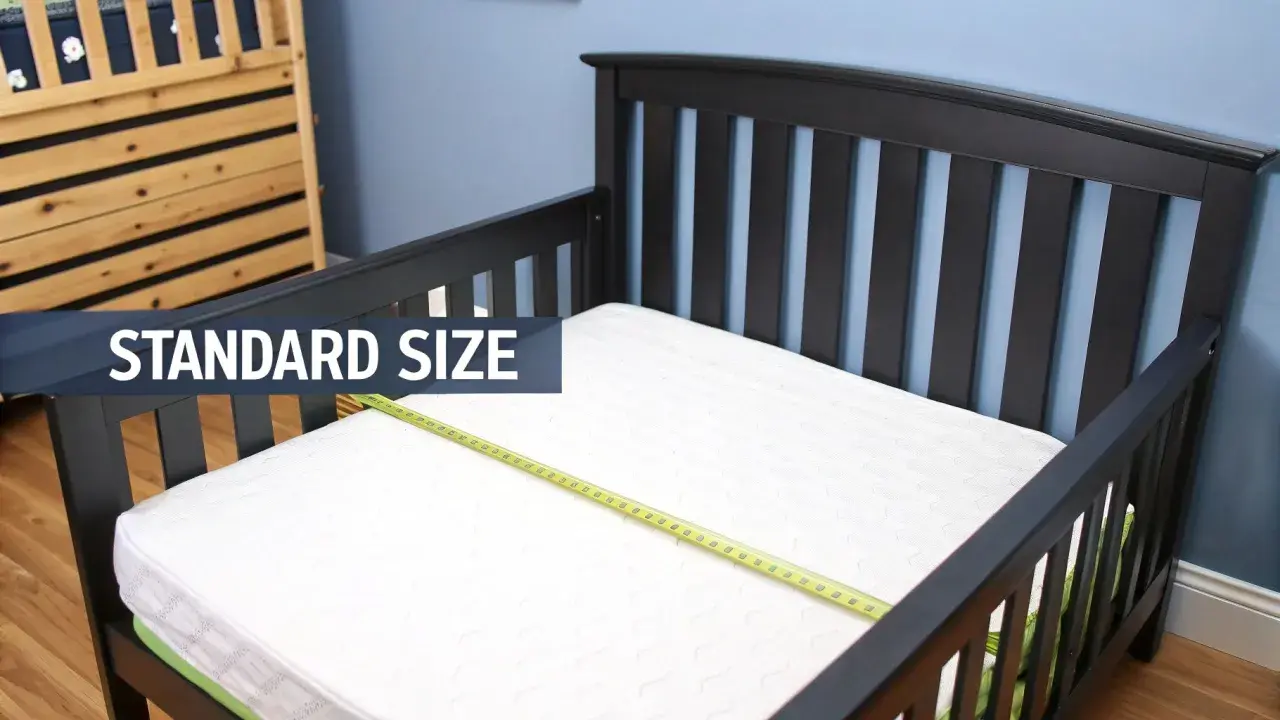
A toddler bed is supposed to make the crib-to-bed shift easier, and the mattress question is usually the first one worth settling. The practical answer to does a crib mattress fit a toddler bed is yes in most U.S. homes, but only when both pieces follow standard dimensions. The details matter, though: fit, firmness, and the condition of the mattress all affect whether reusing it is smart or sloppy.
Here is the practical answer before you measure anything
- A standard U.S. toddler bed is built to fit a standard full-size crib mattress.
- Mini crib mattresses usually do not fit a standard toddler bed frame.
- The mattress should sit flat and snug, with no shifting or obvious gaps.
- If the mattress is sagging, torn, moldy, or badly worn, I would replace it even if it technically fits.
- Always check the bed manual before buying anything new, because some frames use nonstandard dimensions.
The short answer for most U.S. toddler beds
In the United States, a standard toddler bed is designed around the same footprint as a full-size crib mattress. Under CPSC guidance, that mattress size is tied to a frame that accommodates a mattress with minimum dimensions of 51 5/8 inches by 27 1/4 inches. In plain English, if you already own a standard crib mattress, you can usually move it into a standard toddler bed without buying a new one.
That is also why many parents use a convertible crib setup. The frame changes, but the sleep surface stays the same. What changes is access: the toddler bed sits lower and usually adds an open side or guardrail, so the child can climb in and out more easily. I treat that as a furniture change, not a mattress-size change.
Once you know that basic rule, the next question is where it stops working and which beds need a closer look.
When a crib mattress fits and when it does not
The phrase “toddler bed” sounds simple, but not every frame follows the same dimensions. The fit is straightforward in standard setups and unreliable in anything mini, custom, or heavily branded around a special mattress system.
| Setup | Typical result | Why it works or fails |
|---|---|---|
| Standard crib mattress + standard toddler bed | Usually fits | Both are built around the same full-size crib footprint. |
| Standard crib mattress + crib-to-toddler conversion kit | Fits | The frame is the same crib, only adapted for toddler use. |
| Mini crib mattress + standard toddler bed | Usually does not fit | Mini mattresses are smaller and leave unsafe gaps. |
| Standard crib mattress + custom toddler frame | Maybe | You need the exact interior measurements from the maker. |
| Worn, sagging crib mattress + toddler bed | May fit physically, but not well enough | Fit is only one part of the decision; support and condition matter too. |
The biggest mistake I see is assuming that “toddler bed” always means “crib mattress bed.” That is common, but not universal. If the frame is nonstandard, the mattress may sit too loosely, rub at the corners, or leave a gap that makes the bed feel sloppy and unsafe.
Once you know the basic fit categories, the next step is a quick measurement check that removes the guesswork.

How to check the dimensions before you move the mattress
I start with the manual, not the mattress label. The manufacturer’s specs tell you what the bed was designed to hold, and that matters more than any generic “toddler” tag.
- Measure the inside length and width of the bed frame, not the outside edges.
- Compare those numbers with the mattress dimensions printed on the mattress tag or product page.
- Check whether the bed has a recommended maximum mattress thickness.
- Set the mattress in place and look for rocking, sliding, or visible corner gaps.
- Press down on the edges to make sure the mattress sits fully on the support surface.
For a standard U.S. crib mattress, the common reference point is 27 1/4 inches wide by 51 5/8 inches long. A standard toddler bed should be built to accept that size. If your numbers are close but not exact, do not assume that “close enough” is fine. Even a small mismatch can matter once a child starts tossing, climbing, or standing in the bed.
That measurement check takes only a few minutes, and it tells you more than a marketing label ever will.
Safety details that matter more than the label
A mattress can fit and still be the wrong choice. That is the part people skip, and it is where I slow down. CPSC safe-sleep guidance still points to a firm, tight-fitting mattress, because gaps and looseness create room for a child to get trapped or for the mattress to shift out of position.
Here is what I would not ignore:
- The mattress should sit snugly against the frame without wandering side to side.
- The bed should not create a gap where the mattress meets the side rail or headboard.
- I would avoid toppers, folded blankets, or foam padding to “fix” a bad fit.
- The fitted sheet should match the mattress size closely; loose bedding can bunch and undo a decent fit.
- The frame should stay low enough that the child can get in and out without an awkward climb.
There is also an age-and-weight context behind toddler beds that is easy to miss. Under CPSC guidance, they are intended for children not less than 15 months old and up to 50 pounds. That is not a mattress-sizing rule, but it is a useful reminder that the frame is part of a broader safety transition, not just a smaller bed.
If the mattress passes the fit test but fails the safety test, I would treat that as a no. The next question is whether the mattress itself is still worth keeping.
Reuse the old mattress only if it still passes a basic inspection
Reusing a crib mattress is often the most practical move, but only if it is still in good shape. I look at it as a simple pass-fail check rather than a sentimental decision.
- Support - If the center sags or you can feel worn spots, replace it.
- Surface condition - Tears, cracks, exposed foam, or broken seams are deal-breakers.
- Moisture damage - Any mildew smell, water stain, or mold risk means the mattress should go.
- Cleanliness - If the cover cannot be cleaned properly, I would not keep using it.
- History - If the mattress was borrowed, stored badly, or used for years, the savings are usually not worth the uncertainty.
If the mattress is clean, firm, and still the right size, reusing it is usually the better value. If it is tired, the toddler bed is the moment to stop hoping it will somehow improve. A new frame does not rescue an old mattress.
That leads to the last piece of the decision: how to make the transition feel easy instead of improvised.
What I would check before bedtime on night one
When the mattress is the right fit, the transition usually goes smoothly, but I still like to make the room work around the bed instead of forcing the bed to do all the work. A toddler bed is lower and more open than a crib, so the rest of the setup should be calm and predictable.
- Use the existing mattress only if it fits firmly and still feels supportive.
- Keep the room baby-proofed, because the child can now get out on their own.
- Anchor nearby furniture and move cords, lamps, and small objects out of reach.
- Use familiar bedding and a fitted sheet sized for that mattress footprint.
- Expect a few rough nights if the child is adjusting to the new freedom.
If you are choosing between a new mattress and a new frame, I would usually prioritize the frame only when the current mattress is still solid and standard-sized. If either piece is nonstandard, buy the pair that actually matches. That is the cleanest way to avoid gaps, guesswork, and a second purchase a few weeks later.
In practice, the answer is simple: a standard crib mattress usually does fit a standard toddler bed, but the fit only counts if it is snug, supported, and still in good condition. When the bed is mini, custom, or vaguely labeled, I would measure first and decide second. That one habit prevents most of the mistakes parents make during the crib-to-bed transition.
