A compact crib only works if the measurements line up with the room, the mattress, and the sheets. Mini crib dimensions matter because a few inches can decide whether the nursery feels usable or crowded, especially in apartments and shared bedrooms. Below, I break down the usual size range, how it compares with a standard crib, and the details that keep a small nursery practical.
The numbers that matter before you buy
- Most mini cribs land around 36-43 inches long and 24-28 inches wide, but there is no single fixed market size.
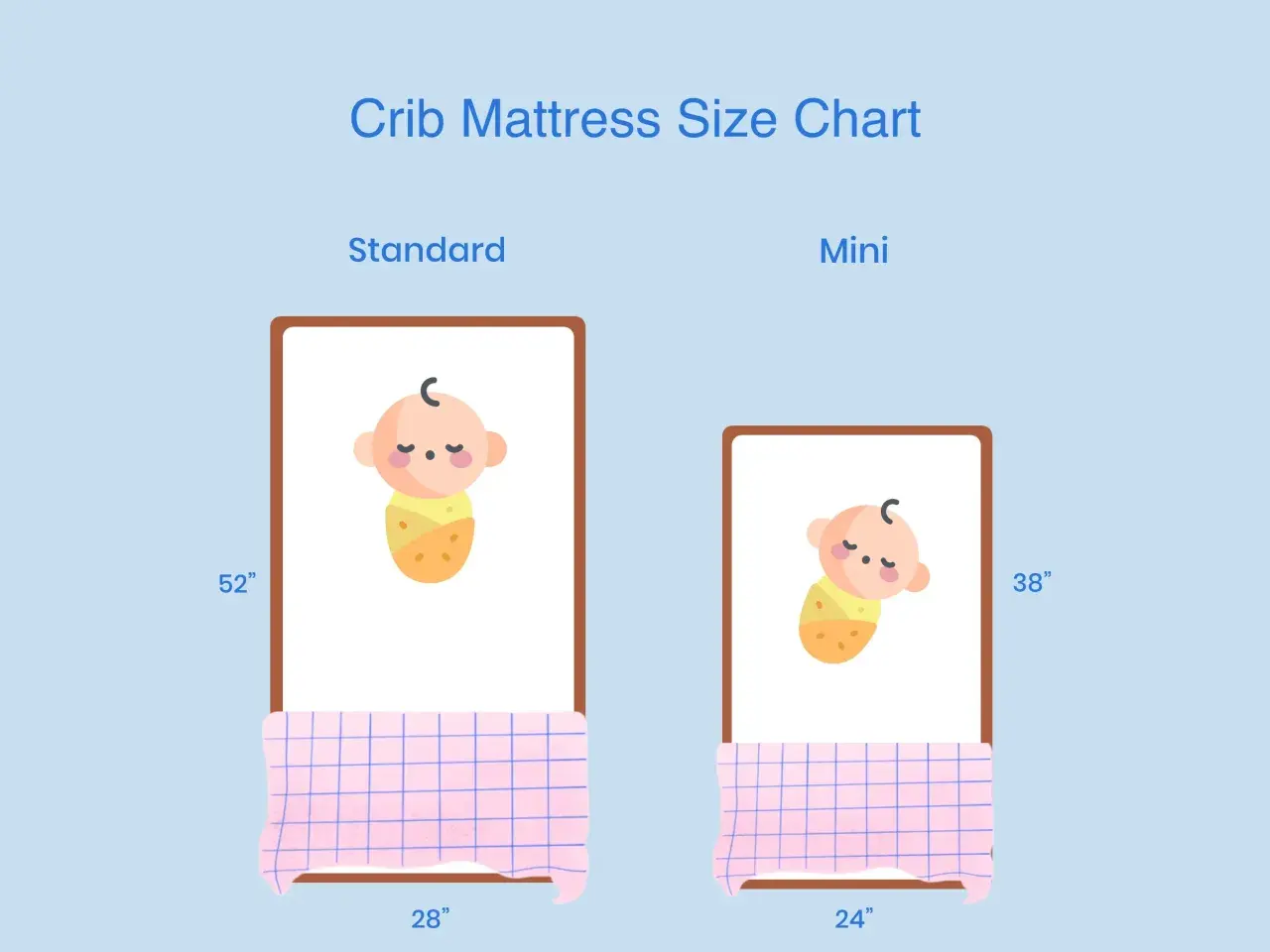
- Many mini crib mattresses are built around 37-38 inches by 23-24 inches, so mattress fit matters as much as the frame.
- A standard crib mattress is 52 3/8 inches by 28 inches, which makes the compact version noticeably easier to place in a tight room.
- CPSC regulates the broader non-full-size crib category by interior measurements, not by one universal mini-crib footprint.
- The safest purchase is the crib and mattress pair the maker designed to work together.
What counts as a mini crib
In the U.S., the official category is usually non-full-size baby crib, not a single standardized mini size. CPSC classifies that category by interior measurements: anything with an inside length below 49 3/4 inches or above 55 inches, or an inside width below 25 3/8 inches or above 30 5/8 inches, falls outside the full-size crib range.
That is why two cribs can both be called mini cribs and still feel a little different in practice. One brand may be built for portability, another for a permanent nursery setup, and a third may trade a bit more width for a sturdier frame. For shoppers, the label matters less than the exact mattress spec and the assembled footprint. That range sets the stage, but the real question is how the frame behaves once it reaches your room.

Typical dimensions you will actually see
When I look at real products, I care less about the marketing label and more about the sizes that show up on the box. Newton Baby notes that many mini cribs are designed around a 24 by 38 inch mattress, while individual product pages often list mattress dimensions in the 37 to 38 inch range for length and about 23 to 24 inches for width.
| Item | Typical size | Why it matters |
|---|---|---|
| Mini crib interior | About 36-43 inches long and 24-28 inches wide | Shows the compact footprint you are really buying for |
| Mini crib mattress | Often around 37-38 inches by 23-24 inches | Controls sheet fit and how snug the sleep surface feels |
| Standard crib mattress | 52 3/8 inches by 28 inches | Useful comparison point when deciding whether to save space |
| Bedding | Sized to the mattress, not the frame | Prevents the most common fit mistake shoppers make |
The useful takeaway is simple: the frame is compact, but the mattress is the number that prevents frustration. If the mattress is too loose, too thick, or a quarter-inch off in the wrong place, the whole setup becomes annoying fast. Once you know the sizes that show up in the market, it becomes easier to compare them with the crib size most parents already know.
How it compares with a standard crib
A standard crib gives you more runway, but it also takes more floor space. Compared with a full-size crib mattress at 52 3/8 by 28 inches, a mini setup usually saves about 14 inches in length and roughly 4 inches in width, which is a real difference in a small room.
| Factor | Mini crib | Standard crib |
|---|---|---|
| Floor space | Smaller and easier to place in tight rooms | Larger footprint with more room around the frame |
| Bedding options | More model-specific | Usually easier to find in stores and online |
| Use window | Usually shorter, because babies outgrow the compact size sooner | Usually longer, because the sleep space stays useful for more growth |
| Portability | Often easier to move or reposition | Usually heavier and less convenient to shift |
| Best fit | Apartments, room sharing, grandparents' homes, or a nursery with limited space | Rooms where long-term use matters more than saving inches |
I usually recommend a mini crib when the room is genuinely tight or when the crib has to live beside an adult bed, dresser, or reading chair. If space is not the limiting factor, the full-size crib still wins on longevity and bedding convenience. If the compact option still looks right, the next job is measuring your room correctly.
How to measure your space before ordering
Measuring the nursery is where most buyers either save themselves a headache or create one. I would measure the room in three layers: the wall space where the crib will sit, the path from the door to that wall, and the open area you need to reach the baby without bumping into furniture.
- Measure the wall section first, including baseboards, heaters, vents, and window trim.
- Check the doorway and hallway so the boxed crib or assembled frame can actually get inside.
- Confirm the mattress dimensions separately from the crib frame.
- Look at the sheet package or product listing for the exact mattress size, not just the phrase “mini.”
- Leave room for drawers, closet doors, and a parent chair so the nursery still works after the crib arrives.
The best layouts feel calm because there is breathing room, not because every inch is packed. That is also where safety and fit become more than just paperwork. After that, the final check is whether the mattress and hardware actually work together safely.
Fit and safety details that matter more than the label
A crib can be called mini and still be poorly matched to the mattress you buy with it. The mattress should sit flush, stay in place, and not leave a noticeable gap along the sides or at the ends. If you can easily shift it around by hand, the fit is too loose for my taste.
- Buy the mattress recommended for that exact crib model whenever possible.
- Check thickness as well as length and width, because a mattress that is too thick can change how sheets fit.
- Use sheets made for the mattress size, not generic crib sheets that claim to stretch.
- Inspect wheels, folding hardware, and storage features, since they can change how the frame behaves in a tight room.
- Do not assume a convertible crib stays the same size in later stages; the final setup may have a different footprint.
Safety rules cover the crib itself, but real-life usability comes down to the fit between the frame, the mattress, and the room around it. That is the part I see people underestimate most often. Those checks are what I rely on when the choice has to work in a real home, not just on a product page.
The small details I would check before choosing one
If I were buying a compact crib for a small nursery, I would focus on four things: the exact mattress dimensions, the assembled footprint, the quality of the hardware, and whether the crib still works after you add sheets, a mattress protector, and everyday use. Those details tell you more than the product photo ever will.
- Exact mattress size so sheets and fit are predictable.
- Assembled footprint so you know the crib will not crowd the room.
- Weight and mobility if you plan to move it between rooms.
- Longevity if you want a crib that buys you time before the next bed.
For a lot of families, the right choice is not the smallest crib on the shelf; it is the one that fits the room cleanly, matches the bedding you can actually find, and leaves enough space to use the nursery without constant rearranging. That is the practical version of choosing mini crib dimensions well: measure the real room, match the real mattress, and buy the setup you will still like after the first week.
