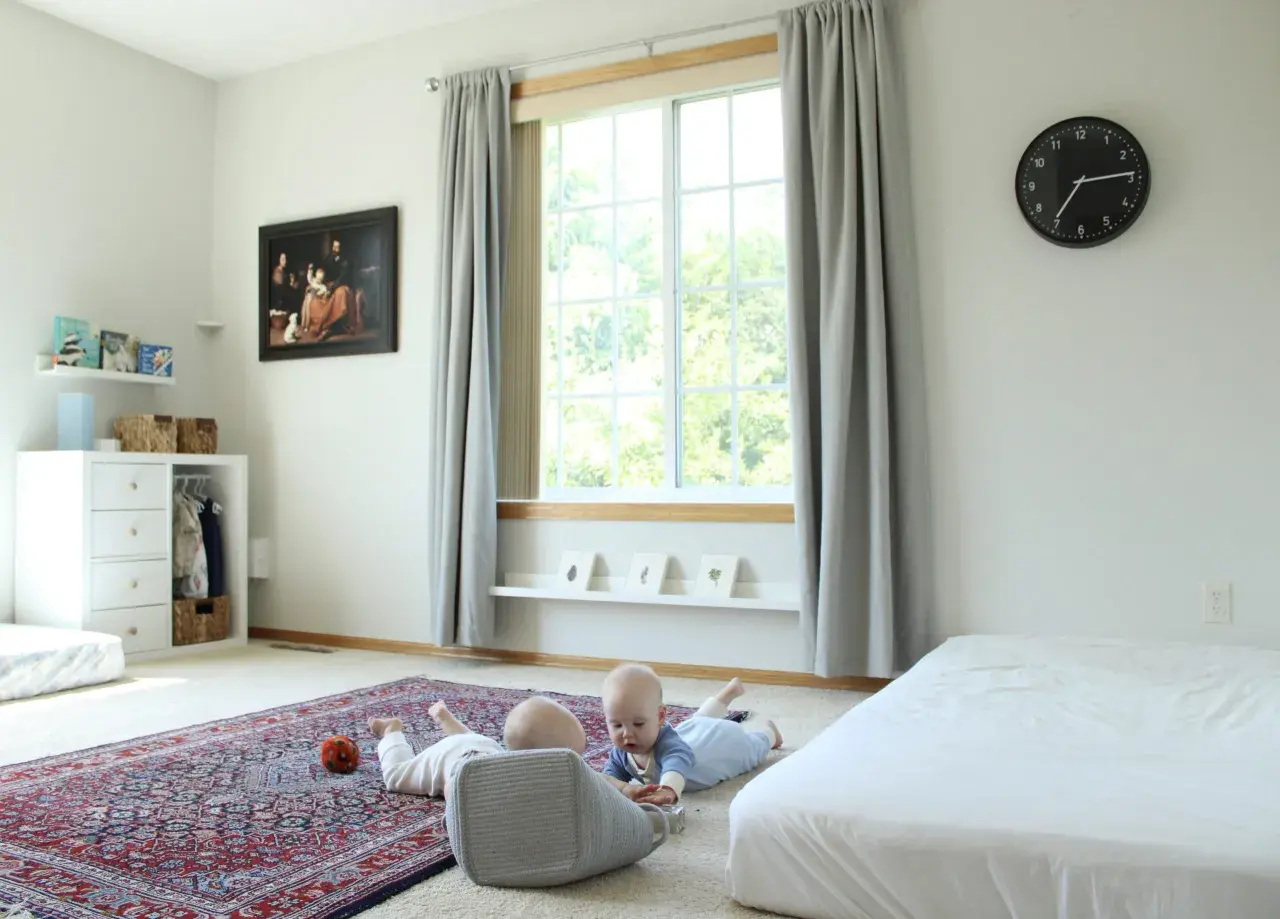
Montessori-inspired spaces work best when they make a child’s day easier, not busier. I’m focusing on the toy and nursery choices that actually support independence: simple materials, reachable storage, child-sized furniture, and a calm layout that still feels lived in. The goal is not to copy a classroom exactly, but to build a home setup that helps children practice real skills and keeps parents from buying the wrong things.
What matters most before you buy anything
- Function beats the label. A piece only helps if a child can use it independently.
- Natural materials and simple design usually do more for focus than flashy plastic toys.
- True Montessori materials are not the same as Montessori-inspired products.
- For U.S. homes, safety testing and sturdy construction matter more than marketing copy.
- Start small. One shelf, one age-appropriate toy, and one independence tool is enough to begin.
What Montessori-inspired really means in practice
The phrase gets used loosely, so I separate the label from the function. Playroom Collective makes a useful distinction here: true Montessori materials are classroom tools built for a specific curriculum, while Montessori-inspired pieces borrow the same principles without pretending to be formal classroom materials. That difference matters because a product can look calm and still be useless if it does not help a child explore, repeat, and master one skill at a time.
Lovevery frames it in a similar way: the best pieces engage natural interests, build real-life skills, and connect children to the world around them. In home use, that usually means simple, tactile, and purposeful items rather than toys that try to do everything at once. A wooden rattle, a stacking ring, or a basket of soft blocks may look understated, but that simplicity is the point.
| Category | What it is | Best use | What to watch for |
|---|---|---|---|
| True Montessori material | A purpose-built learning tool designed around one concept | Skill mastery and repetition | It should not be bundled with unrelated lights, sounds, or gimmicks |
| Montessori-inspired toy | A toy that borrows the philosophy without being a classroom material | Open-ended, child-led play | It still needs to be simple, durable, and age-appropriate |
| Marketing-only product | Anything that uses the word Montessori without the underlying design logic | Usually none | Plastic noise, crowded features, and no clear learning purpose |
Once that distinction is clear, the design rules become much easier to judge, and the next step is knowing which features actually belong in the room.
The design rules that make it work
I usually look for five things before I call any setup genuinely Montessori-inspired: reachability, simplicity, repetition, realism, and sensory quality. Those are not decorative choices. They shape how a child moves through the room and how much help the room demands from an adult.
- Keep it reachable. Low shelves, open baskets, and hooks at child height let children choose and return items without a constant lift from an adult.
- Limit the number of choices. Six to eight visible toys is often enough for a young child. Too many items create noise, not freedom.
- One purpose per object works best. A stacking toy should stack well. A pouring tool should pour well. When a toy tries to do ten jobs, it usually teaches none of them clearly.
- Favor real-life materials and tasks. Small pitchers, child-safe brooms, dressing frames, baskets, and simple kitchen tools are more useful than novelty toys that mimic learning without supporting it.
- Use texture on purpose. Wood, cotton, wool, and metal feel different in a child’s hands. That variety matters more than people expect because it makes the environment richer without making it louder.
This is also where the budget conversation gets real: a well-made wooden toy often outlasts several cheaper replacements, but it still has to earn its place by being useful, not just beautiful. Once you know what the room should do, choosing age-appropriate pieces becomes much simpler.
Best Montessori-inspired picks by age and purpose
I think the best way to shop is to match the item to the developmental task, not just the birthday on the box. That keeps you from overbuying and helps you avoid pieces a child will ignore after ten minutes.
| Age range | Good picks | Why they work | Typical U.S. price range |
|---|---|---|---|
| 0-6 months | High-contrast books, grasping toys, simple rattles | Supports visual focus, hand opening, and early sensory tracking | $8-$25 |
| 6-12 months | Wooden balls, object permanence boxes, soft stacking pieces | Builds cause and effect, reach, and hand-eye coordination | $15-$40 |
| 12-24 months | Stacking rings, shape sorters, simple puzzles | Supports one-skill repetition and early problem-solving | $12-$35 |
| 2-3 years | Pouring sets, small brooms, dressing tools, practical-life baskets | Lets toddlers copy real routines and build independence | $20-$60 |
| 3-4 years | Play kitchen tools, counting beads, building trays, small pretend-work sets | Supports sustained focus and more complex play sequences | $20-$80 |
| Nursery essentials | Low shelf, floor bed setup, learning tower, child-sized table or chair | Makes the room accessible and supports daily routines | $40-$600+ |
If I were buying for a family in the U.S. and trying to stay sensible, I would start with one or two toys per stage and one piece of furniture that changes the child’s daily routine. The bigger items are where the cost climbs fast, so they should solve an actual problem before they earn a place in the room.
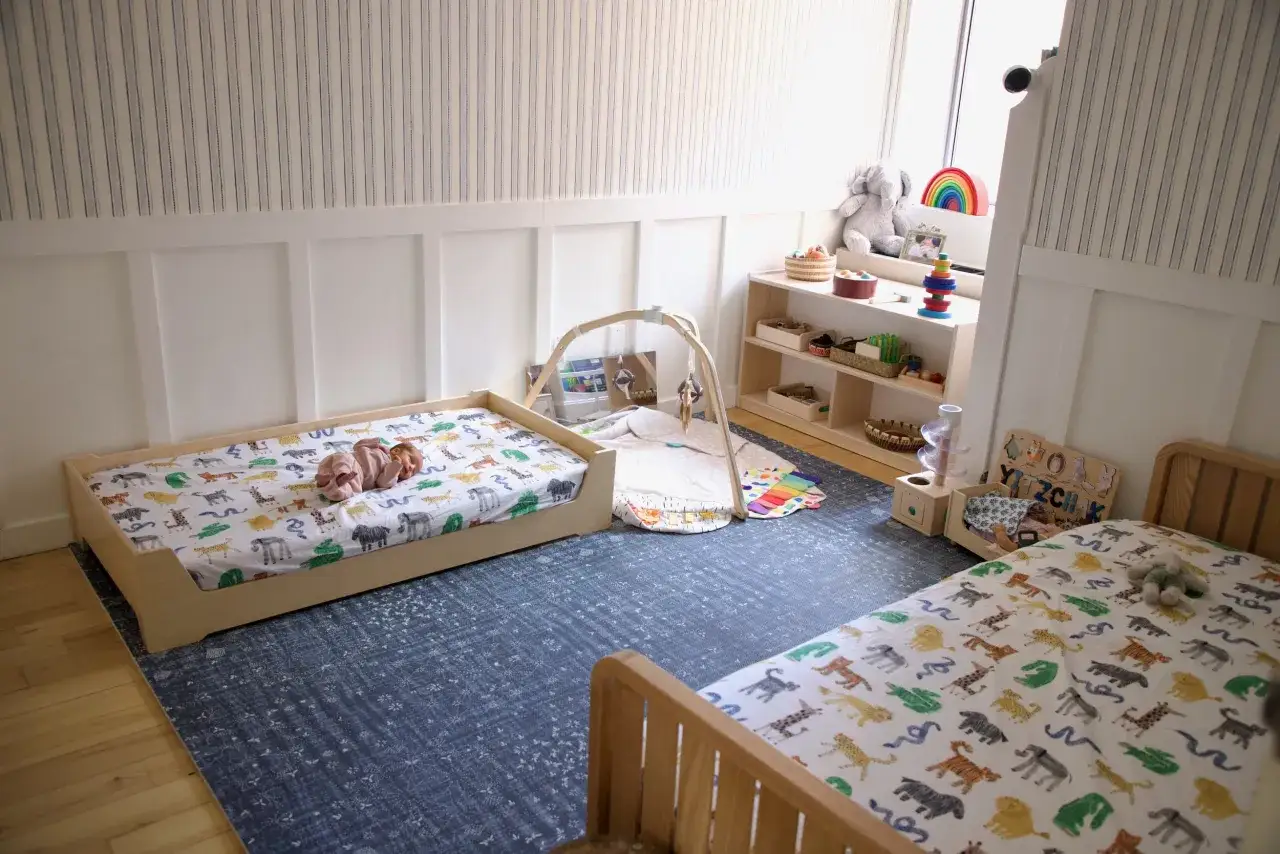
How to set up a nursery that feels calm and usable
A nursery only earns the Montessori-inspired label if a child can move through it with some independence. That does not mean every baby needs a floor bed on day one, and it does not mean the room has to look sparse. It means the room should be arranged so the child can reach what is theirs, while the adult still controls what needs to stay out of reach.
- Separate the sleep zone from the play zone. A calm sleep area is easier to preserve when toys and busy visuals are not crowding it.
- Keep care items in a parent zone. Diapers, creams, medicine, and loose small parts belong where a child cannot grab them.
- Use a low shelf with rotation in mind. A small number of toys on display is enough. Rotation keeps the room fresh without turning it into clutter.
- Add a child-height mirror or a simple visual cue. Babies and toddlers notice themselves and their environment more when the space is arranged at their level.
- Give clothing and daily items a home. A low basket for pajamas, a hook for a sweater, or a small tray for socks creates real independence in tiny steps.
In smaller homes, I would rather see one good shelf and a few intentional baskets than a full room of gear. A room that looks beautiful but requires an adult to reset it every five minutes is not actually serving the child, and that is where the next section matters most.
Common mistakes that make the label meaningless
The fastest way to miss the point is to treat Montessori as a style filter instead of a function filter. A room can look calm on social media and still frustrate a child if the objects are out of reach, overdesigned, or too expensive to use freely.
- Buying for aesthetics first. White wood and beige baskets do not make a room Montessori if the child cannot independently use the furniture or toys.
- Overfilling the shelf. When everything is visible, nothing stands out. Children end up bouncing between options instead of settling into play.
- Chasing the label instead of the build. In U.S. shopping, I care more about CPSIA-tested construction, stable hardware, and safe finishes than the word printed on the box.
- Choosing noisy, battery-heavy toys. Flashing lights and sound effects usually do the work for the toy. That leaves less for the child to discover.
- Ignoring age and size. A beautiful item that is too hard or too small creates frustration, not confidence.
- Mixing too many styles in one space. A few open-ended pieces are enough. Once you cram in dozens of options, the room starts behaving like a storage bin.
Most of these mistakes are expensive because they lead to replacement purchases. That is why I prefer a slower, more deliberate approach when building the first setup.
A starter kit I would buy first for a U.S. home
If I had to build a Montessori-inspired room from scratch without wasting money, I would start with a short list that actually changes how the child uses the space.
- One low storage surface. A shelf or book ledge gives toys a clear home and keeps the room readable for a child.
- Three to six high-quality toys. Pick pieces that match the child’s current stage rather than buying a large mixed bundle.
- One independence tool. A learning tower, child-sized chair, or reachable basket can make daily routines easier almost immediately.
- One practical-life item. A small pitcher, dustpan, dressing basket, or kitchen helper tool does more for independence than another decorative toy set.
| Budget | Best first purchases |
|---|---|
| Under $100 | Shelf, baskets, and a small set of simple toys |
| $100-$300 | Add a learning tower or a larger toy rotation |
| $300-$800 | Add child-sized furniture, a floor bed setup, or a more complete storage system |
The smartest Montessori-inspired rooms are not the most perfect-looking ones; they are the ones that quietly help a child reach, choose, repeat, and put things back. Start with one useful change, watch how your child uses it for a couple of weeks, and build from there.