
Pacifiers can be a useful soothing tool, but their effect on the mouth depends on how long, how often, and how intensely a child uses them. The concern behind passy teeth is usually not the pacifier itself, but prolonged sucking during the years when the jaw is still growing. In this article I focus on the bite changes that matter, how feeding habits affect dental risk, and what I would actually do if I were guiding a family through the toddler years.
The short version for busy parents is simple
- Short-term pacifier use is usually a comfort issue, not a dental crisis. The risk rises when it becomes a daily, all-day habit.
- The biggest dental changes are bite-related. I watch most closely for open bite, crossbite, and upper front teeth drifting forward.
- Duration matters more than the exact shape. An orthodontic pacifier may be a little gentler, but it is not a free pass.
- Pacifiers are different from sugar exposure. The cavity risk rises when a pacifier is dipped in sweeteners or paired with bedtime bottle habits.
- My practical cutoff is toddlerhood. I start reducing use around age 2 and aim to stop by 36 months.
How pacifiers change a growing bite
When I look at pacifier-related dental issues, I start with one term: nonnutritive sucking, which means sucking for comfort rather than for feeding. That kind of pressure can influence how the upper and lower jaws meet because baby teeth and developing bone are still flexible. A pacifier used briefly for sleep is very different from one that stays in the mouth through most waking hours.
The three variables I pay attention to are duration, frequency, and intensity. Duration is usually the biggest driver, because a little pressure repeated for a long time can shape the bite more than a stronger suck used briefly. That is why a child who only settles with a pacifier at bedtime is in a different risk category from a child who keeps it in all day.
There is also an important tradeoff for parents to understand: some babies use a pacifier instead of their thumb or fingers, and that can be easier to wean later. So I do not treat pacifiers as automatically bad; I treat them as a habit that needs a time limit. That leads directly to the changes I check first.
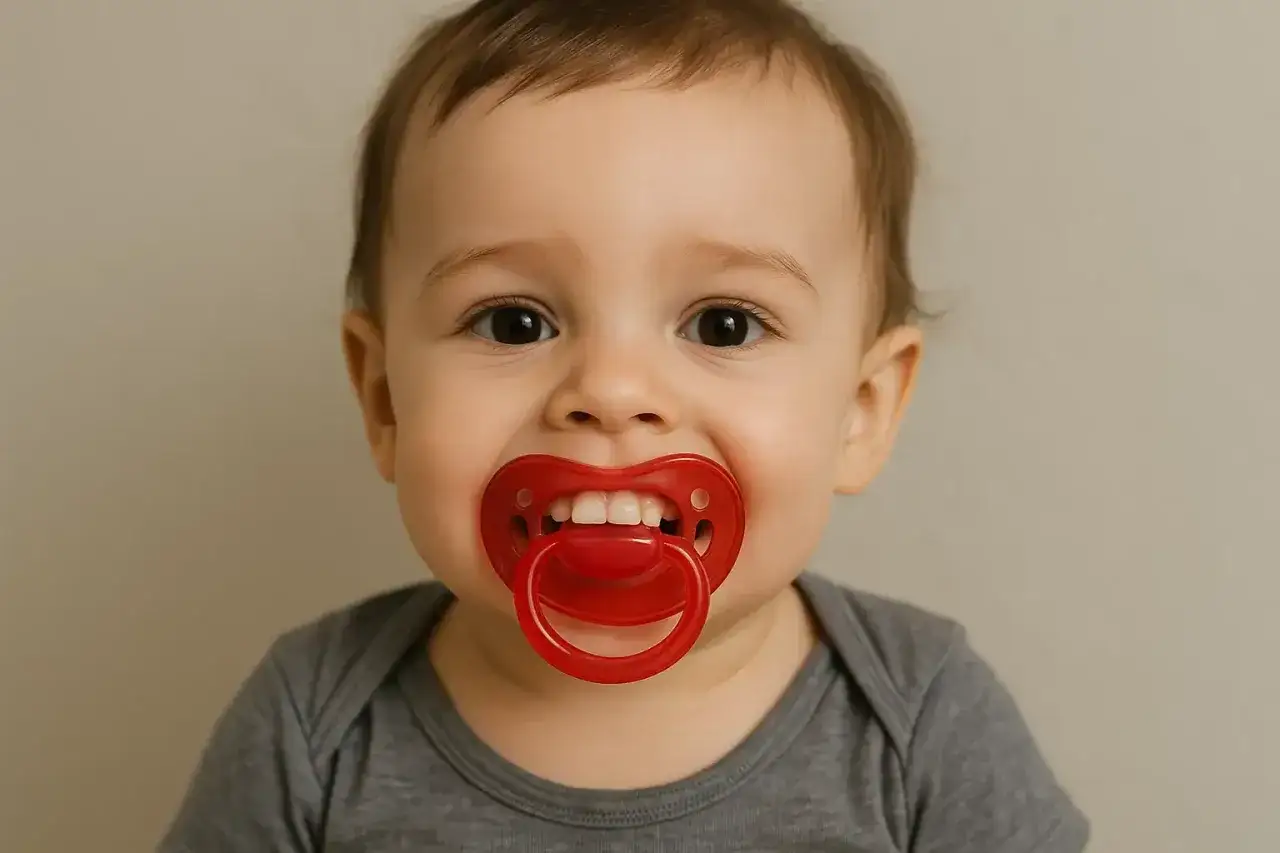
Which bite changes I check first
Most parents notice something “off” long before they can name it. I usually look for a few predictable patterns, because they are the ones that show up most often with prolonged sucking habits.
| Change I watch for | What it looks like | Why it matters |
|---|---|---|
| Anterior open bite | The front teeth do not meet when the child bites down | It can affect chewing, speech sounds, and how the bite closes |
| Posterior crossbite | The upper back teeth bite inside the lower back teeth | It can signal a narrower upper arch and uneven jaw growth |
| Increased overjet | The upper front teeth stick out more than they should | It can raise the chance of injury if the child falls or bumps the mouth |
| Narrow palate | The roof of the mouth looks high and constricted | It can go along with bite changes and a less stable smile as the child grows |
I am careful not to overstate this. Not every pacifier user develops a dental problem, and some mild changes improve after the habit stops and growth continues. But if the habit has been strong and long-lasting, the odds of persistent bite changes go up. That is why the next issue is not just what the bite looks like, but how feeding and soothing habits stack up over the day.
Pacifiers, bottles, and cavity risk are not the same problem
A pacifier mainly affects alignment and jaw position; it does not usually create cavities by itself. Tooth decay becomes a bigger concern when the pacifier is dipped in honey, sugar, or other sweeteners, or when a child falls asleep with a bottle of milk or juice. Those routines keep sugar against the teeth for long stretches, which is far more damaging than a clean pacifier used for soothing.
HealthyChildren also warns against dipping a pacifier in honey or any sweetener, and I would extend that rule to anything sticky or sugary. The mouth problem changes from “pressure on the bite” to “fuel for decay,” and that is a much uglier combination. In practical terms, I would rather see a child use a plain pacifier than drift into a bedtime bottle habit that bathes the teeth in sugar.
| Habit | Cavity risk | Bite risk | My take |
|---|---|---|---|
| Plain pacifier for sleep | Low | Low to moderate, depending on duration | Usually acceptable in infancy and early toddlerhood |
| Pacifier dipped in sweetener | High | Similar to any pacifier habit | Skip it entirely |
| Bottle of milk or juice at bedtime | High | Less about bite, more about decay | A habit I would phase out early |
| Pacifier used all day | Low unless sweetened | Higher | This is the pattern most likely to create orthodontic issues |
That comparison matters because parents sometimes focus only on the pacifier and miss the real problem: the entire soothing routine. Once the cavity issue is separated from the bite issue, the next step is figuring out which pacifier habits are actually safer in everyday life.
Which pacifier habits are safer in everyday use
If a family wants to keep the pacifier, I try to make the habit as low-risk as possible. The AAPD recommends discontinuing nonnutritive sucking habits by 36 months, and I agree with that practical cutoff. Before that point, the goal is to keep use limited and avoid turning the pacifier into a constant companion.
- Use it for soothing, not for all-day carrying. Naps, bedtime, and a rough moment are different from leaving it in from morning to night.
- Choose a safe design. A firm shield, ventholes, and a one-piece construction reduce choking concerns and make the pacifier sturdier.
- Do not sweeten it. No honey, no sugar, no juice.
- Replace damaged pacifiers quickly. Cracks and wear matter because they make the item less safe and less hygienic.
- Consider an orthodontic shape if the child accepts it. It may be a little gentler on the bite, but I would not rely on shape alone to solve a prolonged habit.
- If thumb sucking is the fallback, think twice before removing the pacifier too abruptly. Sometimes the easier habit to wean is the one the parent can actually control.
The point here is not perfection. It is to keep a soothing tool from becoming a structural habit. That brings me to the part many parents want most: when to start weaning, and when the bite deserves a real dental look.
When to wean and when I would call the dentist
I usually think in stages. In the first year, a pacifier can be a reasonable calming aid. By the second year, I want use moving toward sleep only. By the third birthday, I want the habit gone unless there is a clear reason a dentist or pediatrician has given different advice. That timeline is not arbitrary; it gives the jaw a better chance to grow without repeated pressure.
Weaning works better when it is gradual. I like to start by dropping daytime use first, then limiting the pacifier to specific moments, and finally removing it from the bedtime routine once the child has another way to settle. A predictable replacement helps more than a dramatic cutoff: a book, a song, a stuffed toy, or a fixed sleep sequence can take over the comforting job.
I would call a dentist sooner if the front teeth stop touching after the habit should have ended, if the upper and lower teeth look clearly misaligned, if chewing seems uneven, or if the child has speech concerns that seem tied to the bite. The earlier I see those changes, the easier it is to tell whether they are still temporary or whether they are settling into the developing bite.
The rule I use when comfort and teeth both matter
My rule is straightforward: use the pacifier as a short-term comfort tool, not as an all-day oral habit. If it is helping an infant settle, that is one thing. If it is still needed constantly in toddlerhood, I start treating it as a dental issue, not just a soothing preference.
That is the balance I would aim for in a real home. Keep the pacifier plain, keep the use limited, and keep an eye on the bite as the child grows. If the habit starts to outlast its usefulness, the safest move is usually to phase it out before the mouth has to pay for it later.