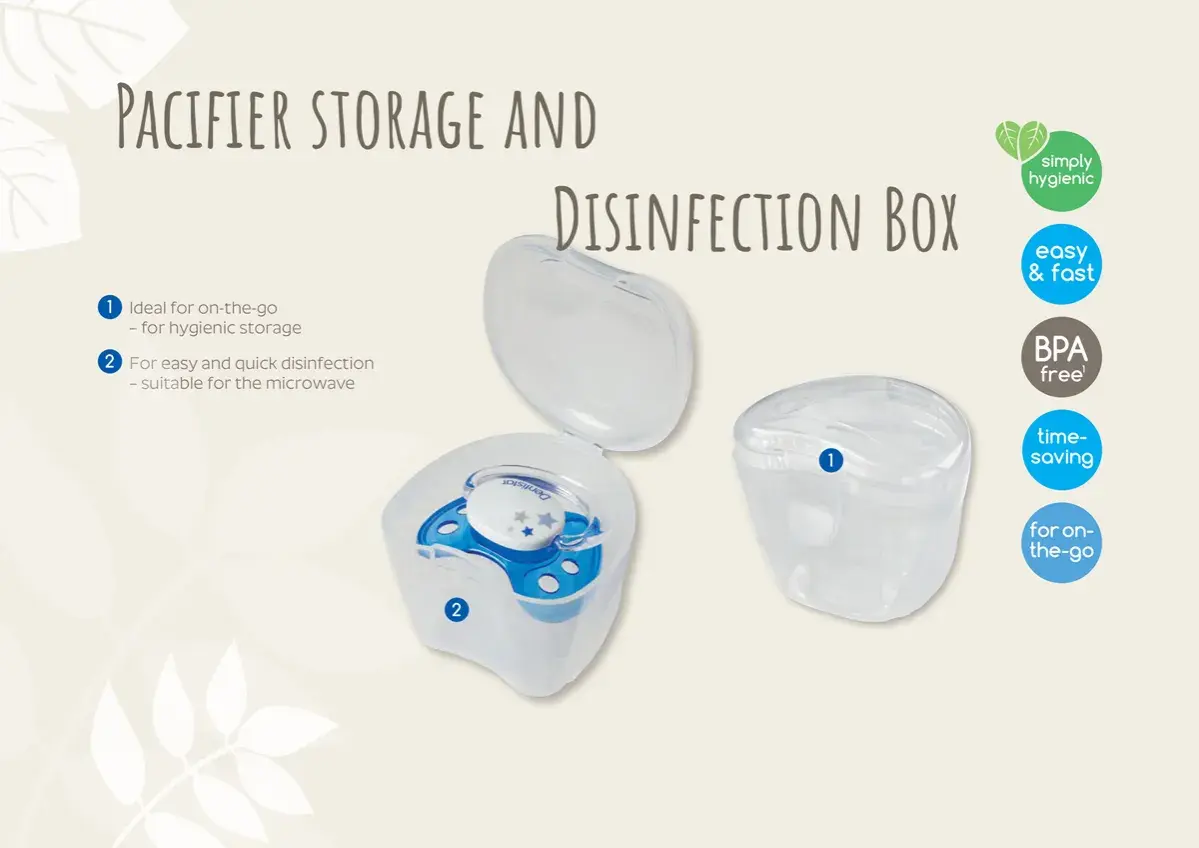
A good pacifier routine is less about gadgets and more about three habits: keep it clean, keep it dry, and keep it covered. This guide explains how to store pacifiers at home and on the go, which containers actually help, when a quick wash is enough, and when sterilizing or replacing is the smarter move.
The safest storage routine is short, dry, and enclosed
- Never seal a damp pacifier in a closed case. Moisture is what turns simple storage into a mold problem.
- Let the pacifier air-dry completely before it goes back into a drawer, case, or nursery caddy.
- Use a clean, closed container for travel and a protected cabinet or drawer for spare clean pacifiers at home.
- Keep pacifiers away from crumbs, lint, keys, coins, and other diaper-bag clutter.
- Clean more aggressively for newborns, premature babies, or babies with higher infection risk.
- Replace any pacifier that looks cracked, sticky, swollen, or discolored.
The cleanest way to keep pacifiers ready between uses
My rule is simple: wash first, dry fully, then store. That order matters because storage only works when there is no trapped moisture left inside the nipple or around the shield. If a pacifier is freshly washed and still cool or slightly wet, it does not belong in a closed container yet.
For everyday use, I would handle it in this sequence:
- Wash your hands before handling the pacifier.
- Rinse and wash the pacifier with warm water and mild soap if it has been dropped or visibly soiled.
- Let it air-dry on a clean paper towel or an unused dish towel in an area protected from dust.
- Store it only when it is fully dry.
- Place it in a clean, covered spot that stays away from heat, sunlight, and clutter.
If you want the practical version in one line, it is this: a pacifier should be dry before it is sealed. That is the same basic logic the CDC uses for infant feeding items, and it is the best way to reduce germs and mildew from building up during storage. Once that habit is in place, the next question is which container actually makes daily life easier.
Which storage container works best at home and on the go
I like a clean, closed, dry case for travel because it protects the pacifier from crumbs, lint, and the usual diaper-bag mess. At home, a dedicated cabinet or drawer works well if it is reserved for clean baby items and kept away from damp cloths or toiletries. Cleveland Clinic’s advice lines up with that approach: closed, dry storage beats an open spot that collects dust.
| Option | Best for | Why it works | Watch out for |
|---|---|---|---|
| Hard plastic case | Diaper bag, stroller basket, car trips | Protects against crumbs and dirt, and it is easy to wipe clean | Only use it after the pacifier is completely dry |
| Silicone pacifier box | Short-term storage and some sterilizing setups | Flexible, lightweight, and usually simple to clean | Check that the box is meant for your cleaning method and does not trap moisture |
| Closed nursery drawer or cabinet | Spare clean pacifiers at home | Keeps them out of dust and off exposed surfaces | Do not mix them with loose toys, lotions, or other clutter |
| Open tray or shelf | Dry spares in a very tidy nursery | Easy to grab and easy to see | Not ideal if the room is dusty, humid, or busy |
| Soft pouch or zip bag | Only in a pinch, and only for fully dry pacifiers | Light and convenient | Can trap moisture and collect lint, so it is not my first choice |
If I were setting up a real nursery, I would use two systems: a closed drawer or cabinet for spare pacifiers at home, and a hard-sided case for the diaper bag. That separation keeps the clean supply from getting mixed up with the one that has already been out in the world, which leads naturally into cleaning and sterilizing.
When a pacifier needs more than a quick rinse
Not every pacifier needs the same level of care every time. A quick wash is fine after routine use, but some situations call for a deeper clean. I think in three categories: everyday cleaning, extra sanitizing, and replacement.
| Situation | What I would do | Why it matters |
|---|---|---|
| Light daily use with no visible dirt | Wash with warm water and mild soap, then air-dry fully | Keeps the pacifier clean without overcomplicating the routine |
| First use or extra germ protection | Use a manufacturer-approved sterilizing method such as boiling, steaming, or a dishwasher hot cycle | Useful for newborn routines and for families who want a stricter hygiene setup |
| Baby is younger than 2 months, premature, or has a weakened immune system | Be more consistent about sanitizing and drying before storage | Higher-risk babies benefit from a tighter cleaning routine |
| Pacifier is cracked, sticky, swollen, or discolored | Replace it | Storage will not fix wear, and damaged material can hold grime |
Storage mistakes that create mold faster than most parents expect
Most pacifier storage problems come from a small handful of habits that seem harmless at first. The biggest one is sealing in moisture. Even a few drops inside a covered container can leave the pacifier damp long enough for mildew or odor to start.
- Putting a wet pacifier away too early. A covered case is helpful only after the pacifier is bone-dry.
- Using the same space for clean and dirty items. A clean pacifier can pick up crumbs or bacteria from keys, coins, wipes, or random bag debris.
- Relying on a case that never gets washed. The container itself needs cleaning, not just the pacifier inside it.
- Leaving pacifiers in hot places. A stroller pocket, car seat gap, or sun-warmed console is not a good storage spot.
- Drying and storing with the same towel every time. A shared kitchen towel can transfer germs back onto the pacifier.
- Storing the clip with the pacifier. Clips and pacifiers should be cleaned and kept separately so moisture and grime do not transfer back and forth.
When I see a family struggling with “mystery” smell or sticky residue, it is usually not because they are cleaning too little. It is because they are cleaning, but not drying or storing well enough. Fix the moisture problem and the rest becomes much easier.
A realistic nursery and diaper bag setup I would actually use
For home, I would keep a small stash of clean spares in one closed drawer or cabinet and reserve one open spot only for air-drying. That keeps the workflow simple: wash, dry, store, use. You do not need a complicated setup, just a place where clean items stay clean.
At home
- Keep spare pacifiers in a closed drawer or cabinet that holds only clean baby items.
- Let washed pacifiers dry on a clean paper towel or unused dish towel before they go back into storage.
- Check the pacifiers weekly for cracks, cloudiness, or stickiness.
In the diaper bag
- Carry one clean pacifier in a hard-sided case.
- Keep a backup pacifier in a separate clean case if you are out for longer stretches.
- Wash the case regularly so the container does not become the dirty part of the system.
If you want the lowest-friction routine, keep it boring: dry fully, close the case, and store it in a clean protected place. That is the version I would trust on a tired day, which is usually the only version that matters.
