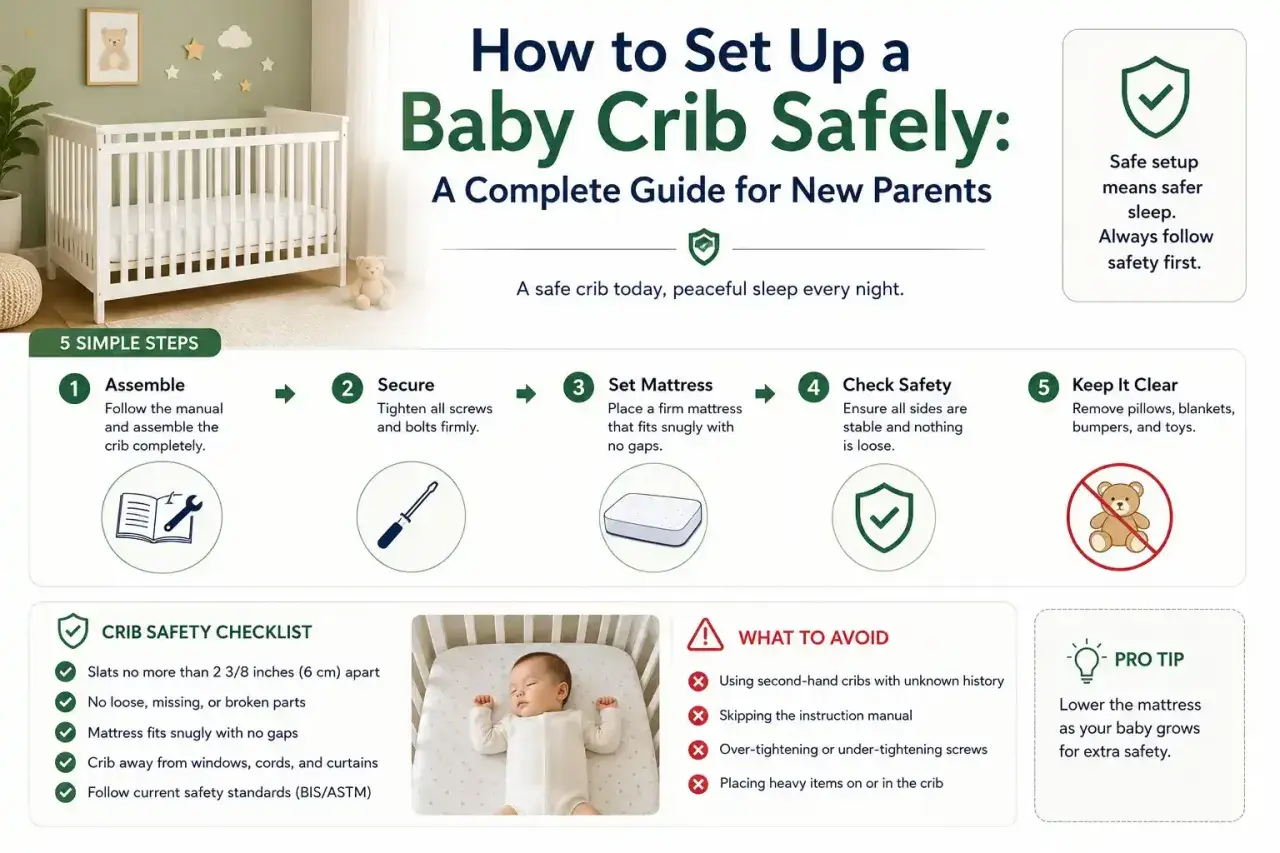
Safe nursery layout is usually less about decorating and more about removing the small risks that become real problems at 2 a.m. In practice, that means choosing the right sleep zone, keeping cords and windows out of reach, and making sure the crib supports calm, easy care without creating clutter around the baby. The goal is simple: a room that looks good, works well, and stays safe when you are tired.
The safest crib setup is the one that keeps the sleep space bare, visible, and away from hidden hazards
- Keep the crib in the same room as the parents for the early months if you can, but never in the same bed.
- Choose a spot that stays clear of windows, cords, heaters, shelves, and anything that could fall.
- Use a firm, flat mattress with only a fitted sheet in the crib.
- Make the crib easy to reach so nighttime soothing does not turn into a crowded, awkward setup.
- Walk the room from a baby’s point of view, because many nursery hazards only show up at floor level.

Crib placement that keeps sleep safer
When I look at crib placement, I start with one rule: the crib should make sleep simpler, not more complicated. The AAP recommends room-sharing for at least the first 6 months, which means the crib belongs close to where you sleep, but still in its own sleep space. That setup makes nighttime feeding easier, reduces the temptation to improvise, and keeps the nursery focused on rest rather than storage.
The safest arrangement is usually the one that gives you a straight, unobstructed path to the crib. I like a layout where I can reach the baby without stepping over baskets, cords, toy bins, or a rocking chair that blocks the route. If the room feels cramped, the answer is usually to remove furniture, not to squeeze the crib into a tighter corner.
Think of the crib as a small safety zone. Once you place it, everything around it should support that zone instead of crowding it. That idea sounds basic, but it is what separates a clean nursery layout from one that slowly fills up with avoidable hazards.
The best spot in the room
There is no perfect floor plan for every nursery, but some placements are consistently better than others. I usually compare the room like this:
| Placement option | Why it helps or hurts | My take |
|---|---|---|
| Along an interior wall | Usually offers a stable, quiet spot with fewer temperature swings than a window wall. | A strong default if the wall stays clear of cords, art, and furniture that could tip. |
| Next to the parents' bed | Makes room-sharing easier and reduces the amount of moving around at night. | Often the best choice for newborn months, especially in smaller homes. |
| Under or beside a window | Creates cord exposure, climbing risk, and possible drafts or bright light issues. | I would avoid it unless the room has no safer alternative and the window area is fully corrected. |
| Near a heater, vent, or radiator | Can lead to overheating, uneven air flow, and a less comfortable sleep zone. | Not worth the compromise; move the crib first, adjust the rest of the room later. |
| Beside tall shelves or dressers | Looks tidy at first, but it increases the risk of climbing access and falling objects. | Fine only if the furniture is securely anchored and far enough away to stay outside reach. |
If the choice is between a pretty corner and a practical one, I choose practical every time. A nursery that functions well at night matters more than a perfect photo angle.
What I would keep far away from the crib
This is the section that prevents most avoidable mistakes. The crib itself may be safe, but the area around it can still create risk if you let the room get busy.
- Windows and window-covering cords, because young children can get tangled or strangled quickly.
- Loose cords from blinds, lamps, baby monitors, chargers, or anything plugged in near the sleep space.
- Heaters, radiators, vents, and fireplaces, which can make the sleep area too warm or too exposed.
- Wall decor, shelves, mirrors, and hanging storage that could fall or become reachable later.
- Stuffed animals, pillows, bumper pads, loose blankets, and anything soft inside the crib.
- Mobiles and hanging toys that are low enough for a baby to grab once they start pushing up.
CPSC says cordless window coverings are the safest option when young children are in the room, and I agree with treating that as non-negotiable. If the nursery has corded blinds, the crib should not live anywhere near that window. Tying cords higher is a partial fix at best; removing the risk is better.
A simple room check that catches the overlooked problems
Once the crib is in place, I do a quick setup pass instead of assuming the room is done. A few minutes here can save a lot of second-guessing later.
- Stand where you expect to feed or soothe the baby and check whether the crib is easy to reach without squeezing past furniture.
- Get down low and look for cords, dangling ribbons, loose curtain ties, and small objects that are invisible from adult height.
- Make sure the mattress fits tightly and the crib only has a fitted sheet.
- Lower the mattress before the baby can sit, pull up, or attempt to climb.
- Check whether a door, drawer, or closet opening interferes with the crib area.
- Look upward as well as downward so you catch shelves, frames, and decor that could fall or be reached later.
I also pay attention to the feel of the room. If the crib sits in the middle of a busy traffic path, someone will eventually bump it with a diaper bin, a laundry basket, or a sleepy elbow. The easiest fix is to make the crib location the calmest part of the room.
The mistakes that look harmless until you live with them
Most nursery mistakes are not dramatic. They are small compromises that seem fine during setup and become annoying or risky once the baby actually starts sleeping there.
Putting the crib in a decorative corner is a common one. It may look balanced in a photo, but if that corner sits under a window, beside a cord, or behind a chair that blocks access, the layout is working against you.
Another mistake is treating the crib like a storage edge. I have seen nurseries where baskets, books, stuffed toys, and spare blankets slowly creep closer and closer to the sleep space. That kind of drift is easy to miss because it happens gradually. The fix is to give every item a real home and keep the area around the crib intentionally empty.
A third mistake is ignoring future mobility. A spot that feels fine for a newborn may become a problem when the baby can roll, push up, stand, and reach. When I choose a location, I think not just about week one, but about what the same room will look like in month four or month seven.
That forward view matters because a nursery should not need a full reset every time the baby grows a new skill.
The last pass I would make before bedtime
If I were finishing a nursery tonight, I would keep the crib close enough for easy night care, far enough from windows and cords to remove the obvious hazards, and clear enough that nothing soft, dangling, or unstable could drift into the sleep zone. That is the heart of good crib placement, and it is simpler than most people make it.
Before I call the room ready, I would ask one final question: can I explain this layout in one sentence without using the words "we made it work"? If the answer is yes, the crib is probably in the right place. If the answer is no, I would move it until the room feels quiet, open, and easy to use in the dark.
