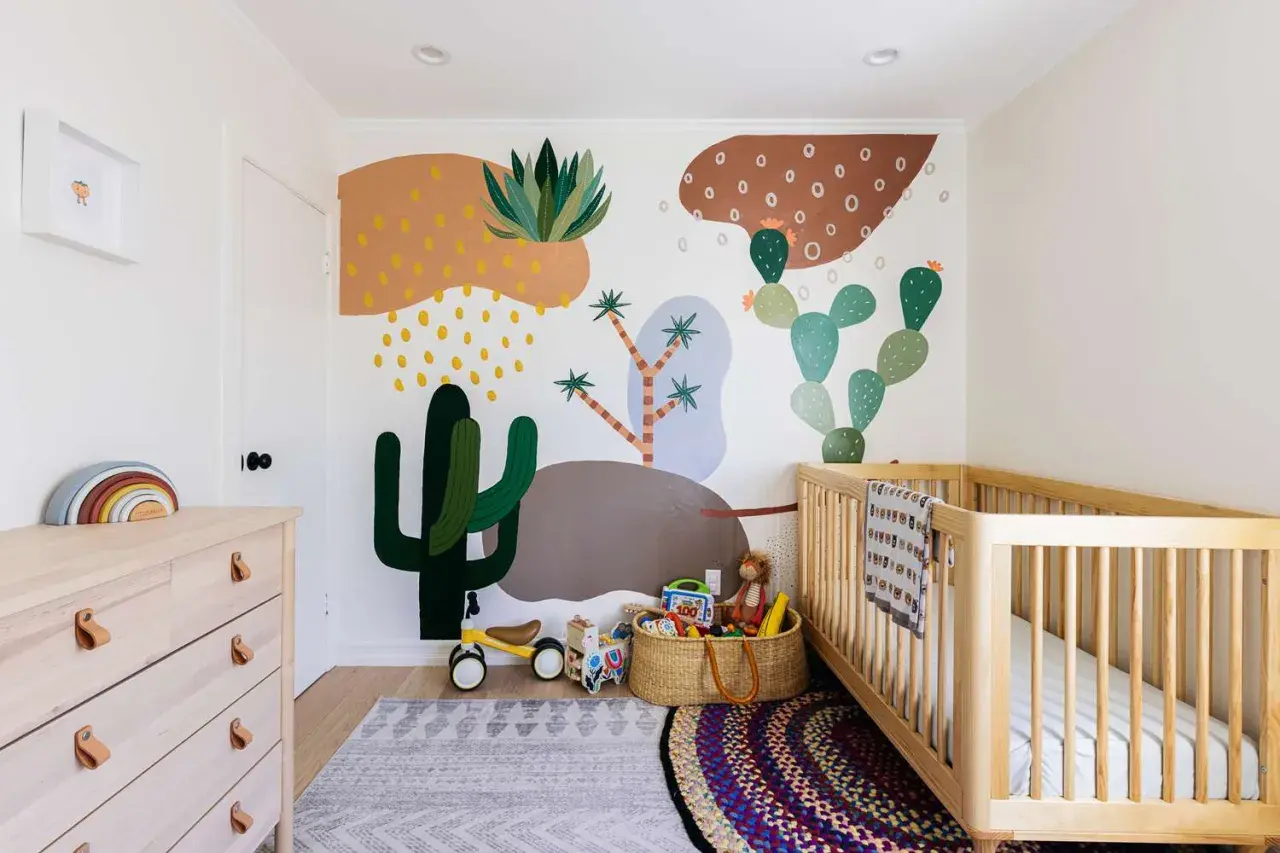
A colorful gender neutral nursery works best when it feels cheerful first and themed second. I usually build these rooms around one calm foundation, then layer in bright accents through paint, textiles, artwork, storage, and toys so the room still feels right when the baby grows. This guide walks through the palette choices, layout decisions, safety basics, budget priorities, and the styling moves that make the whole space feel finished.
The room works when color, function, and flexibility stay in balance
- Use a quiet base color, then repeat 2 or 3 brighter accents instead of scattering every color everywhere.
- Start with the crib, dresser, glider, and storage; decor comes after the room works.
- Anchor furniture to the wall and keep window cords out of reach, especially near the crib and changing area.
- Bright rugs, books, curtains, and wall art add more personality than paint alone.
- Choose a theme that can grow into a playroom, not one that depends on a single baby-stage trend.
- Spend first on sleep, safety, and storage, then on the fun details.

Choose a palette that stays lively as the baby grows
I rarely start with a dozen colors. I start with one base, one support color, and one accent family, then I let the rest of the room stay quiet enough for those choices to breathe. That is usually the difference between a nursery that feels bright and a nursery that feels visually noisy.
| Palette formula | Mood | Why it works | Best when |
|---|---|---|---|
| Butter yellow, teal, warm white, oak | Sunny and fresh | The warm and cool colors balance each other, so the room feels playful but not frantic. | You want a happy room that still reads calm in daylight. |
| Coral, sage, cream, rattan | Soft and airy | Coral keeps the room lively while sage and cream keep it grounded. | You like a lighter palette that still has personality. |
| Sky blue, marigold, light gray, birch | Bright and modern | The contrast gives energy, but the gray and birch stop the palette from becoming too sweet. | The room gets decent natural light. |
| Leaf green, apricot, sand, walnut | Earthy and playful | The room feels colorful without leaning on pink or blue cues. | You want the nursery to age well into toddlerhood. |
I often use a 60/30/10 balance: 60 percent of the room stays calm, 30 percent carries the supporting color, and 10 percent is where the personality lives. If the room gets little natural light, I lean warmer; if it gets a lot of sun, I can push saturation harder because the color will not wash out as quickly. Repeating each accent color at least a few times also helps the palette feel intentional instead of random.
Once the palette is set, the next job is making the furniture and layout earn their space.
Build the room around furniture that earns its keep
The quickest way to make a nursery feel intentional is to let the furniture do real work. I like to choose a crib, a dresser that can double as a changing station, one comfortable chair, and closed storage that hides the practical clutter no one wants staring back at them at 2 a.m.
- Crib first because everything else should work around the sleep zone.
- Dresser over a separate changing table when floor space matters; it usually survives past the baby stage.
- One easy chair with arms and a washable cushion cover makes feeding and holding much easier.
- Closed bins or baskets keep diapers, spare sheets, and soft toys from taking over the room.
- Vertical storage helps in smaller nurseries, especially if you want a few shelves for books or collectibles.
For safety, I treat two things as non-negotiable: anchor dressers and bookcases to the wall, and keep corded window coverings out of reach or replace them with cordless options. That matches CPSC guidance on tip-over hazards and window cords. The crib itself should stay bare except for a fitted sheet. Once the room is organized around those basics, the color choices become much easier to enjoy.
When the structure is right, color can move out of the walls and into the layers, which usually looks better anyway.
Layer in color through textiles, art, and toys
Paint gives the room a backdrop, but the liveliness usually comes from the pieces you can change later. I like to think in layers: a rug or curtain for the larger color statement, wall art for personality, and then smaller hits of color in books, mobiles, stuffed animals, and storage bins.
- Rugs can anchor the whole palette and make a room feel warmer underfoot.
- Curtains are useful when the walls are busy because they can repeat one color quietly.
- Wall art is the easiest place to introduce a brighter shade without committing to it permanently.
- Toys and books are practical decor in a nursery, so keep a small, edited set visible and rotate the rest.
- Textiles such as blankets and pillow covers let you push a color story further without repainting anything.
If you want the room to feel polished instead of crowded, repeat each accent color at least a few times. One mustard pillow, one mustard print, and one mustard toy bin read as design. One mustard pillow by itself looks accidental. I also prefer a washable rug here, because bright nurseries look best when they can survive real life.
Once the layers are in place, the theme can be playful without taking over the room.
Pick a theme that feels playful without becoming babyish
I’m not against themes; I’m against themes that depend on buying a matching set of everything. The best nursery themes are flexible enough to survive a crib-to-bed transition and broad enough that you can swap the details later without repainting the whole room.
| Theme | Why it works | What keeps it fresh |
|---|---|---|
| Rainbow | It is joyful, familiar, and easy to make inclusive. | Keep the rainbow edited, with white or wood as the visual break. |
| Jungle or botanical | Green reads lively without feeling tied to one gender. | Use plants, leaves, and one or two animal motifs instead of a full zoo. |
| Sunshine or citrus | Warm yellow and apricot feel optimistic without looking overly styled. | Pair the brights with cream, sand, or pale wood. |
| Coastal | Blue, sand, and soft white can feel bright while still calm. | Lean on texture more than nautical clichés. |
| Outer space | It gives the room contrast and imagination. | Use deep tones sparingly so the room does not go too dark. |
A good rule of thumb is to choose one primary motif and one supporting motif. For example, a rainbow room works better when the rainbow is the hero and the books, rug, and art stay quieter. A jungle room works better when the leaves and wood tones lead, not a wall full of busy animals. That restraint is what keeps the room from feeling dated in two years.
After the style decisions come the details that matter most in daily use, especially at night.
Keep the room safe and simple to use at night
Safety can get buried under decor decisions, but in a nursery it should shape the layout from the beginning. I follow the same basic order every time: safe sleep first, then easy movement through the room, then the styling details.
- Keep the crib clear with no pillows, loose blankets, bumper pads, or hanging items within reach.
- Use cordless window coverings or secure cords high and out of reach.
- Anchor furniture that could tip, especially dressers, bookcases, and changing-storage units.
- Choose a dimmable lamp or warm night light so late-night feedings do not feel like a spotlight.
- Place the changing setup within easy reach of diapers, wipes, and spare clothes so you are not crossing the room half asleep.
That is also why I prefer fewer, better-placed objects over a wall packed with decor. A nursery should feel bright and comforting, not visually noisy at the exact moments when calm matters most.
Once those basics are covered, the budget becomes easier to control because you know what actually deserves the money.
Plan the budget so the room looks finished, not overworked
A bright nursery does not need a huge budget, but it does need a plan. These are planning bands, not hard quotes, but they are realistic enough to keep the project from drifting.
| Budget band | What it usually covers | Best strategy |
|---|---|---|
| $200 to $500 | Paint, a few framed prints, baskets, basic curtains, simple wall decals | Lean on color and DIY details; keep furniture you already own. |
| $600 to $1,500 | Rug, lighting, storage, upgraded textiles, maybe peel-and-stick wallpaper or a statement chair | Use one stronger focal point and keep the rest edited. |
| $1,500 to $4,000+ | New crib, dresser, glider, custom storage, wallpaper, higher-end decor | Spend on long-lasting pieces that can move into a playroom later. |
If I had to prioritize, I would spend first on the mattress, crib, storage, and lighting; second on the rug and chair; last on decorative accessories. That order keeps the room usable even if the rest of the styling takes a few months to finish. Low-VOC or no-VOC paint is worth considering, especially if you are painting the room shortly before the baby arrives.
And if you want the room to last beyond the infant stage, this is the part that matters most.
Let the nursery grow into a playroom without starting over
Because this site covers nursery and playroom ideas, I would not design the room as if it ends at the newborn stage. The easiest rooms to live with later are the ones that already have a little open floor space, storage that a toddler can reach, and a color story that does not depend on baby-only decor.- Zone the room early with a sleep area, a reading corner, and a floor space for play.
- Use low shelves and labeled bins so books and toys have a home when the baby starts grabbing everything in sight.
- Choose furniture with a second life, especially dressers, chairs, and storage benches.
- Keep the palette consistent even as the accessories change; that is what makes the room age well.
- Rotate the toys so the room feels edited instead of overloaded.
If I were designing one of these rooms from scratch, I would aim for a calm base, a few bold color moments, and storage that can absorb the inevitable mess. That combination gives you a nursery that feels happy now and still makes sense when it turns into a small playroom later.
