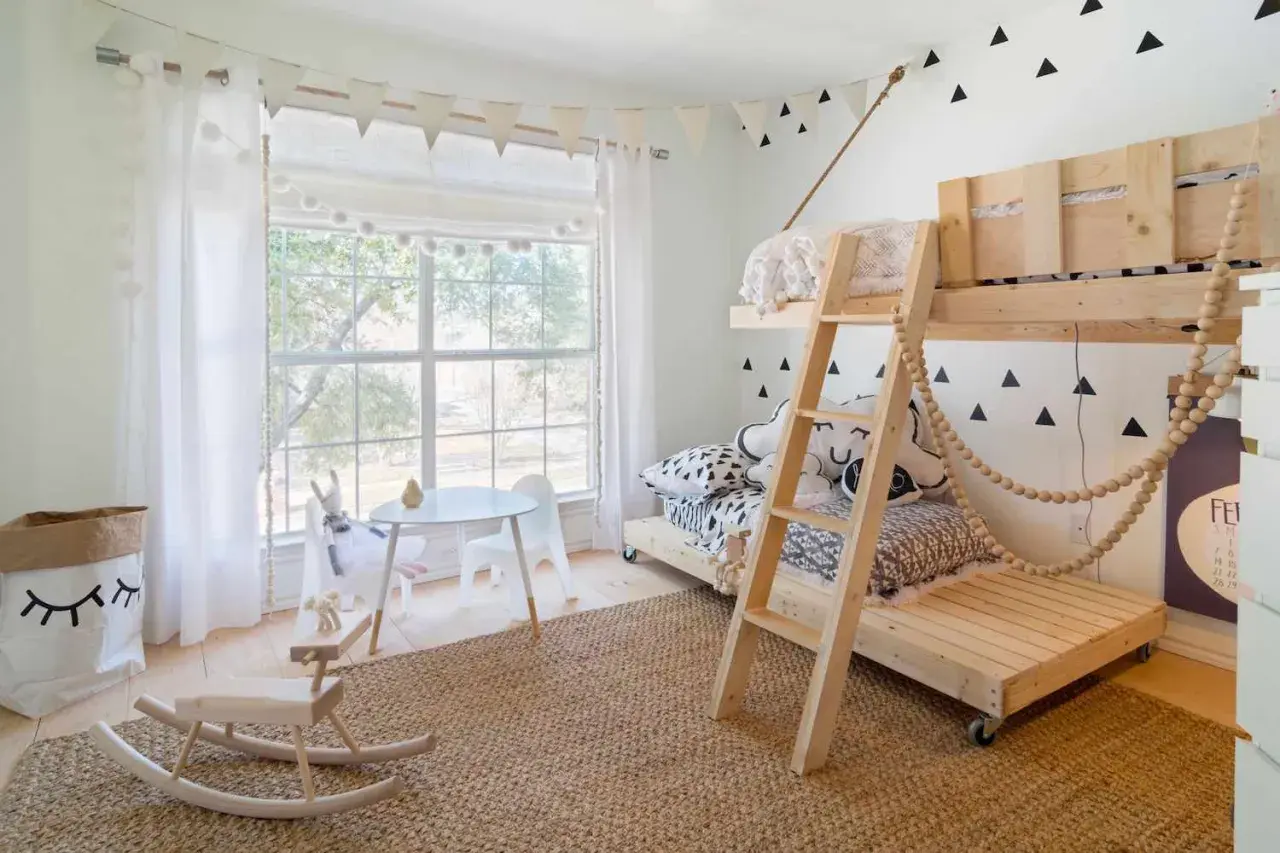
The best toddler bedroom ideas do three jobs at once: they help a child sleep well, make independent play easier, and keep cleanup realistic for adults. I like rooms that start with a calm base, use low storage, and add a few playful details that can change as interests shift. In this guide, I’m focusing on layout, color, furniture, storage, safety, and the small styling decisions that make the space feel finished without becoming fussy.
The right toddler room balances comfort, independence, and cleanup
- Start with a simple layout that separates sleep, play, and storage.
- Use a calm color base, then add personality through bedding, art, or wallpaper accents.
- Choose low, sturdy furniture that helps a toddler do more on their own.
- Keep storage visible and easy to reset, especially for toys and books.
- Check safety before you decorate too heavily, especially furniture anchoring and cords.
- Spend first on the pieces that affect sleep and daily use, not the decorative extras.
Start with a layout that supports sleep and play
Before I pick colors or bedding, I decide what the room has to do on an ordinary weekday: sleep well, give the child enough freedom to move around safely, and make cleanup possible in five minutes. That usually means dividing the room into three loose zones, a calm sleep area, a play corner, and a small storage or dressing zone. In a compact room, I still keep those jobs separate visually, even if they share the same footprint.
- Place the bed where it is least likely to become the landing zone for toys.
- Leave the center of the room open so floor play does not feel cramped.
- Keep books, stuffed animals, and comfort items close to the bed, not mixed in with every toy.
- Use one corner for active play and another for quiet reset time.
That kind of layout makes the room easier to keep tidy, and it also helps the room grow into the next stage without a full redesign. Once the layout works, color becomes much easier to choose.
Choose a color palette that can last past the toddler years
In 2026, the rooms I think age best usually start with a restrained base: warm white, soft beige, muted green, dusty blue, clay, or a light wood tone. The current look in kids’ rooms feels less cartoonish and more layered, which is good news if you do not want to repaint every time a favorite animal or character changes. A simple 60-30-10 balance works well here, with 60% base color, 30% secondary tone or material, and 10% accent color.
| Palette | Mood | Works well when |
|---|---|---|
| Warm white, oak, navy | Calm and bright | The room is small or does not get much light |
| Sage, cream, natural wood | Soft and timeless | You want a gender-neutral room that still feels warm |
| Clay, sand, rust | Cozy and grounded | The room feels a little cold and needs warmth |
| Pale blue, white, charcoal | Fresh and classic | You want contrast without making the room feel busy |
If your child already loves a theme, I would keep it out of the walls and put it into bedding, art, or a small accessory layer instead. That keeps the room flexible, which matters once preferences change faster than paint dries.
Pick furniture that lets your child do more on their own
I prefer furniture that supports independence without making the room feel crowded. A low bed, a stable dresser, and one reachable book shelf do more work than a full matching set that looks nice in photos but gets in the way in daily life.
| Option | Best for | Why it works | Watch out for |
|---|---|---|---|
| Toddler bed | Families moving away from a crib | Low to the ground and familiar in size | It will not last as long as a twin bed |
| Floor bed | Very small rooms or children who want easy access | Simple, open, and easy to get in and out of | The whole room must be childproofed carefully |
| Twin bed with a rail | Older toddlers or fast growers | Lasts longer and can work into the school years | It takes more floor space |
| Crib mattress on the floor | A brief transition period | Budget-friendly and simple | Should stay temporary and only be used in a safe room |
For storage, I like a dresser with soft-close drawers, which slow down before they slam shut, a low bookcase anchored to the wall, and a small stool or bench that doubles as a perch for getting dressed. If I can only buy one “nice” item, I make it the bed or the bookcase, because those shape the room every single day. Once the furniture does its job, storage becomes the next real design decision.
Build storage your toddler can actually use
Toddlers cooperate better with storage when it is obvious and low effort. I like open cubbies for bulky toys, baskets for loose parts, and picture labels for things a child cannot read yet. The goal is not perfect organization; it is a room the child can help reset.
- Use open bins for categories like blocks, cars, dolls, and dress-up pieces.
- Put books on forward-facing ledges so the covers do the selling.
- Hang a few hooks at child height for pajamas, backpacks, or play clothes.
- Keep the bedtime basket small, with only the comfort items that actually help your child settle.
- Rotate toys instead of displaying everything at once, which keeps the room calmer and the toys more interesting.
The trick is to stop treating every toy as decor. When the storage system is simple, the room looks better and cleanup gets faster, which matters more than matching containers. From there, the fun details have room to breathe.
Add personality through decor, not clutter
This is where I let the room feel like it belongs to a child without turning it into a theme park. One accent wall, a playful rug, framed art, or a strip of removable wallpaper can carry the personality load better than five different motifs fighting for attention.
- Do use one strong motif, such as animals, stars, transport, or storybook shapes, and repeat it quietly.
- Do choose bedding that can change easily when interests shift.
- Do keep wall art low enough that the child can actually see it.
- Do keep the bed itself simple, because the bed should feel restful, not overfilled with toys.
- Do use texture, such as a woven rug or a knit throw, if the room needs warmth without more color.
In practice, the best rooms usually have one thing that makes a child smile and several things that make bedtime easier. That balance keeps the room playful without making it noisy.
Check safety before you declare the room finished
Safety is not the boring part of decorating; it is the part that lets you relax after lights out. I start by anchoring dressers and bookcases, hiding cords, choosing cordless window coverings when possible, and keeping heavy or climbable pieces away from windows. HealthyChildren.org also advises making the room as hazard-free as possible and notes that some families need a safety gate across the bedroom door if a toddler is likely to wander at night.
- Anchor tall furniture to studs, not just drywall.
- Cover outlets and manage lamp cords.
- Use a non-slip pad under rugs.
- Keep small objects, sharp decor, and breakables out of reach.
- Choose lamps and nightlights with stable bases and tidy cords.
If the room is safe, the design choices can actually work the way you intended. That safety pass is what makes a floor bed, open shelving, or a shared play corner feel smart instead of risky.
The first five pieces I would buy if I were starting from zero
If I had to build the room in order, I would spend on the bed, a room-darkening window treatment, a low bookcase, a washable rug, and one reliable light source. Those five pieces do the heavy lifting: they shape sleep, simplify cleanup, and make the room comfortable without needing constant styling.
- The bed sets the transition from crib to big-kid sleeping.
- The window treatment improves naps and early mornings.
- The bookcase keeps books visible and reachable.
- The washable rug softens the floor and survives spills.
- The lighting makes the room feel calm after dark.
After that, I would add art, themed bedding, baskets, and any decorative extras one season at a time. That approach keeps the room useful now and flexible enough to change when your toddler does.
