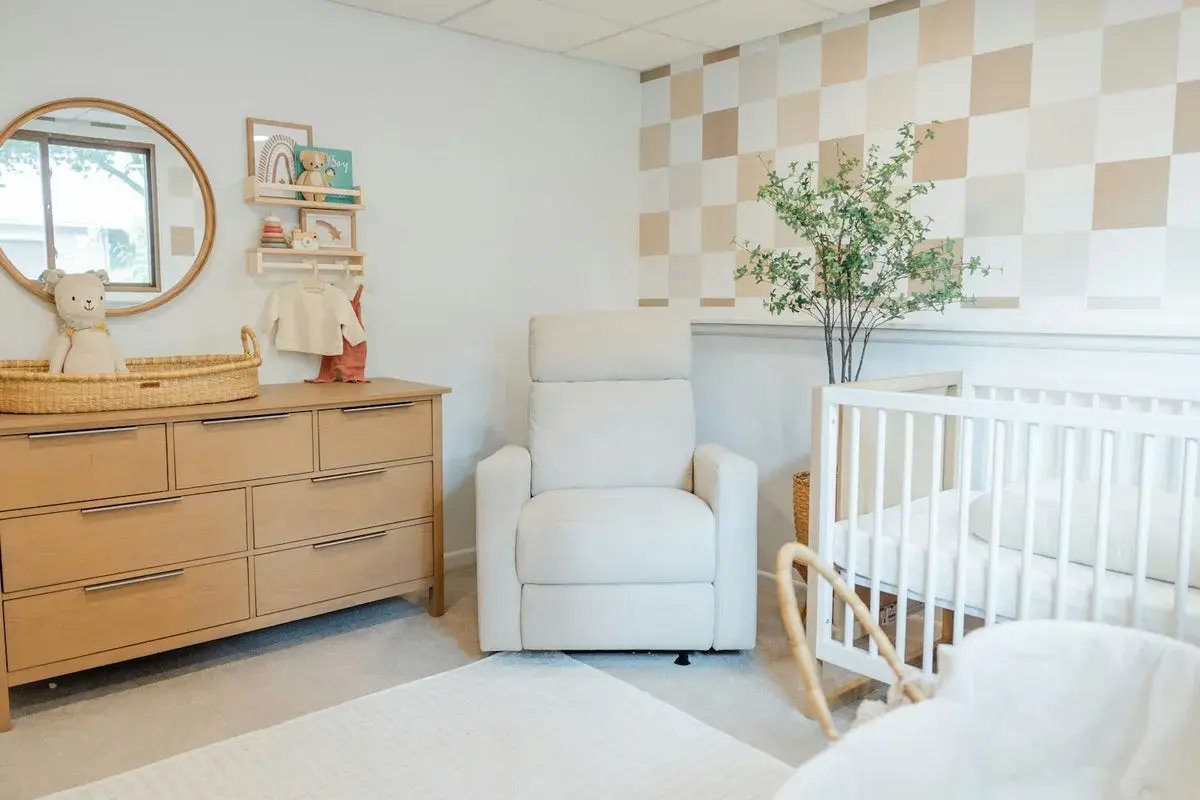
There are plenty of cute baby room ideas, but the ones that age well all share the same traits: calm color, practical storage, and a layout that makes nighttime care easier. I usually think about a nursery as a working room first and a pretty room second, because that is what keeps it comfortable at 2 a.m. and still pleasant at 2 p.m. In this guide, I’ll walk through room concepts, furniture choices, styling details, safety basics, and the small decisions that make the space feel finished.
The fastest way to make a nursery feel sweet and practical
- Start with one palette and one repeatable motif so the room feels calm, not crowded.
- Choose furniture that earns its footprint, especially a crib, dresser, and chair you will actually use.
- Use texture, lighting, and one focal wall to add personality without making the room busy.
- Keep the crib simple and the layout safe, with cords, anchors, and floor space handled early.
- Plan for the playroom stage now with low storage, washable textiles, and flexible decor.
What makes a nursery feel cute instead of cluttered
The sweetest nurseries usually do less, not more. I like to think in three layers: a quiet foundation, one focal moment, and a few soft textures that repeat around the room. If the walls, bedding, rug, and art are all competing for attention, the space starts to feel noisy fast. If you let one or two elements lead, the room feels intentional and much more relaxing.
My rule is simple: every item should either be useful or emotionally useful. A woven basket can hold blankets and still look good. A framed animal print can be charming without turning the room into a theme park. Even a neutral nursery becomes cute when the colors are warm and the materials have some depth.The easiest way to keep the room from drifting into clutter is to repeat a few things on purpose. That might mean rounded shapes, warm wood, one soft pastel, or the same natural texture in baskets, curtains, and the rug. Once that base is set, choosing a style becomes much easier, and the whole room starts to feel calmer.

The nursery styles I would actually recommend
When I narrow baby room inspiration down to styles that work in real homes, I keep coming back to four directions. They are cute, but they also age well, which matters more than people expect.
| Style | Look | Why it works | Watch out for |
|---|---|---|---|
| Warm neutral and wood | Oatmeal, sand, walnut, cream | Calm, flexible, and easy to grow with | Can feel flat if you skip texture |
| Soft botanical | Sage, leaf prints, cream, blush | Sweet without being overly themed | Too many prints can make it busy |
| Modern color-blocking | Muted terracotta, taupe, ivory | Clean and graphic, especially in small rooms | Needs warm materials so it does not feel cold |
| Storybook animals | Bunny, bear, lamb, duck, fox | Playful and memorable without being loud | Keep the palette restrained or it gets childish fast |
Warm neutral and wood accents
This is the safest choice if you want the room to feel soft and expensive without chasing a trend. A linen curtain, a walnut dresser, and a cream rug do most of the work here. I like this direction because it gives you room to add one playful piece, like a mobile or a patterned pillow, without changing the whole mood of the space.
Soft botanical layers
A botanical nursery can be charming when it feels quiet, not literal. Think leafy wallpaper on one wall, a small floral print, and natural baskets instead of a room full of green objects. That kind of layering keeps the space fresh and still gives it a little storybook character.
Modern color-blocking
If you prefer a cleaner look, color-blocking is one of the smartest baby room ideas to borrow. A painted arch behind the crib or a wide horizontal band can define the room without making it busy. It also works especially well when the furniture has simple lines, because the shape on the wall becomes the decoration.Read Also: Nursery Sofa - Choose the Best for Your Baby's Room
Storybook animals done lightly
This is the most playful option, but restraint matters. One rabbit print, a lamb lamp, or a bear-shaped pillow can be enough if the rest of the room stays calm. I like this style for families who want the nursery to feel sweet and a little whimsical without locking themselves into a theme they will outgrow in a year.
Once you pick a direction, the next step is making sure the furniture supports daily life instead of just filling space.
Furniture and storage that do the heavy lifting
The room only feels polished if the big pieces earn their keep. I always start with the crib, dresser, chair, and storage, because those items determine whether the room works at 3 a.m. and during the messy middle of the day.
- Crib: choose a simple silhouette that does not fight with the rest of the room.
- Dresser: a dresser with a changing topper usually gives better long-term value than a one-purpose changing table.
- Chair or glider: make comfort a priority, because this is where you will spend more time than you think.
- Storage bins: use two or three larger bins instead of many tiny containers, which tend to look messy fast.
- Rug: pick one that is large enough to anchor the crib or chair area rather than floating in the middle of the room.
If the room is small, I try to leave at least 2 to 3 feet of clear walking space where possible, especially around the chair and crib. That little bit of breathing room makes diaper changes and nighttime movement much less frustrating. It also keeps the nursery from feeling packed, which is one of the fastest ways to make a small room look smaller.
When the furniture is right, the room stops feeling like a catalog spread and starts feeling like a place you can live in, which is exactly where lighting and finishing details come in.
Lighting, textiles, and wall details that finish the room
Lighting does more for a nursery than most people expect. I like a layered setup: one ceiling light for general brightness, one softer lamp near the chair, and one small night light that keeps late-night care calm without waking everyone fully. A dimmer switch is a quiet upgrade that pays off almost every night.
Textiles are where the room gets its warmth. A washable rug, blackout curtains, and one soft throw make the nursery feel cozy without overdecorating it. I also prefer slightly textured materials, like bouclé, cotton, linen, or a low-pile wool blend, because they add depth even when the palette is simple.
For walls, I would rather see one strong idea than five small ones. A mural, one accent wall, or a single row of framed prints usually looks better than a scattering of tiny objects. If you want something extra sweet, a mobile over the crib or a scalloped shelf can add personality, but keep it balanced so the room still feels restful.
Before you buy the decorative extras, it helps to know where the money usually goes and which items are worth paying more for.
Safety choices I would not skip
Style should never override sleep safety. The American Academy of Pediatrics recommends room-sharing without bed-sharing for at least 6 months, and ideally up to 1 year, so I always think about how the crib fits into the room before I think about decor.
- Keep the crib empty except for a fitted sheet.
- Store blankets, pillows, bumpers, and stuffed animals outside the sleep space.
- Place the crib away from cords, blinds, and anything heavy that could fall.
- Anchor dressers and shelves to the wall as soon as they are installed.
- Check that the crib has clear instructions and has not been recalled.
If you want a cozy look, build it with lighting, rugs, and wall art instead of soft items inside the crib. That distinction matters more than people think, and it lets you keep the room cute without making the sleep setup less safe. Once safety is handled, budget becomes the next practical question.
What a realistic nursery budget looks like
The room can look expensive without actually being expensive, but only if you know where to spend and where to save. In my experience, most nursery budgets fall into one of three planning ranges in the U.S., depending on whether you are refreshing a room or building it from scratch.
| Budget range | What it usually covers | Best for |
|---|---|---|
| $150-$500 | Paint, wall decals, baskets, a lamp, art, and small textiles | A quick refresh or a room with existing furniture |
| $700-$1,800 | Crib, dresser, chair, rug, curtains, and several decor pieces | A solid mid-range nursery with comfortable basics |
| $1,500-$4,000+ | Higher-end furniture, custom window treatments, better lighting, and storage | A full setup that is meant to last into the toddler years |
If I had to choose where to splurge, I would pick the chair, mattress, blackout shades, and rug. Those are the items you feel every day. The easiest places to save are wall art, baskets, decals, and some of the decorative accessories, because those can be swapped later without much pain.
That long view matters even more when the nursery starts collecting toys and becomes part playroom.
How to keep the room ready for toys and toddler years
A nursery that will eventually turn into a play space works best when the storage is flexible from the start. Low open shelving, labeled bins, and a few closed baskets make toys easy to reach without letting them take over the whole room.
- Use low shelves for books and the toys that get rotated often.
- Keep a few larger bins for stuffed animals, blocks, and mixed toys.
- Choose washable textiles so spills and snack crumbs do not become a stress point.
- Leave one open floor area for play, even if the room is small.
- Keep the decor easy to swap so the room can grow beyond the baby stage.
I also like to keep the furniture neutral while letting the toys bring in the color. That approach makes the room feel playful without forcing a full redo every time a child’s interests change. It is the simplest way to make a nursery and playroom share the same footprint without looking confused.
The three decisions I would make first if I were starting today
If I were setting up a nursery from scratch, I would start with only three things: the palette, the big furniture, and the storage plan. Those decisions shape everything else, from wallpaper to the size of the rug.
First, I would pick a calm base color and one small visual motif, then repeat them just enough to feel intentional. Second, I would buy the pieces that actually get daily use before I touch the decorative extras. Third, I would leave some open space for the future, because the room will change faster than you expect.
That sequence keeps the nursery soft, practical, and easy to adapt, which is really what the best baby rooms do. When the space feels good to use, it usually looks good too.
