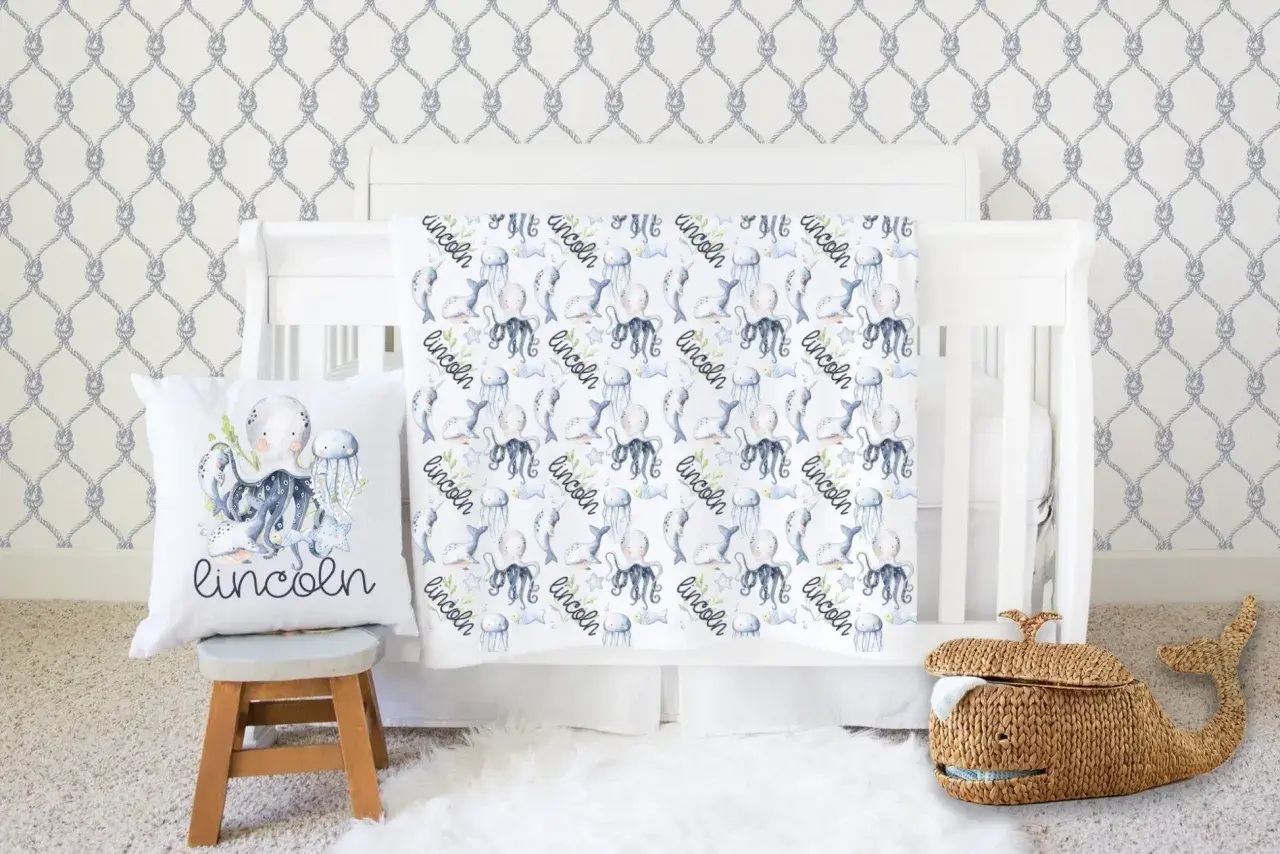
Decorative under the sea crib bedding sets can make a nursery feel calm, playful, and pulled together, but the best ones do more than carry a cute print. I focus on what actually belongs in the crib, which fabrics make daily life easier, how to choose a sea-life palette that won't feel busy, and where the safety line sits. If you're building a room that should still look good after months of washing, this is the part that matters.
What matters most before you buy
- Safety comes first: a fitted sheet on a firm mattress is the only bedding that should stay in the crib during sleep.
- Sheet quality matters more than box size: cotton and muslin usually win for comfort, breathability, and washability.
- The best ocean palettes are restrained: soft blue, sea-glass green, sand, and muted coral feel calmer than bright cartoon colors.
- Piece count is not the same as value: many decorative bundles include items for styling, not sleep.
- Budget ranges vary widely: in the U.S., you will usually see about $25 to $180+ depending on fabric and finish.
- The room matters as much as the crib: wall art, rugs, and storage can carry the theme without cluttering the sleep space.
What an ocean-themed crib set usually includes
Most ocean-themed nursery bundles are built for two different jobs at once: they make the room look coordinated, and they give you a few useful basics for the crib. In practice, that usually means fitted sheets, a crib skirt, and sometimes a quilt or decorative accessory. I treat those extras as room decor unless they are a fitted sheet that belongs on the mattress.
That distinction matters because many shoppers buy a set expecting every piece to be part of the sleep setup. In reality, the smartest purchase is often the one that gives you fewer but better sheets and leaves the decorative pieces for the nursery shelves, rocking chair, or changing area.
| Set type | Common pieces | Typical U.S. price | What it is good for | Watch-out |
|---|---|---|---|---|
| Sheet-only bundle | 2 to 4 fitted crib sheets | $25 to $60 | Daily use and easy rotation | Not decorative enough if you want a fully styled nursery |
| Decorative 3-piece set | Sheet, crib skirt, one themed accent | $45 to $90 | Balanced style with a few practical basics | Some pieces are for display, not sleep |
| 4- to 6-piece nursery bundle | Sheets, skirt, quilt, changing pad cover, or accessory | $70 to $150 | Giftable, coordinated rooms | Usually includes items that stay out of the crib |
| Premium organic set | Higher-end sheets and matching decor | $90 to $180+ | Parents who care about fabric feel and finish | Price can rise fast without adding more function |
If you remember one thing from this section, make it this: the box may look full, but the sleep value usually comes from just one or two pieces. Once you know what belongs in the box, fabric choice becomes much easier.
How to choose fabrics that look good and wash well
For a baby room, the fabric has to do more than match the whale print. It needs to survive spit-up, frequent laundering, and constant sheet changes without turning stiff or scratchy. I usually narrow the field to four materials.
| Material | Why it works | Tradeoff |
|---|---|---|
| Cotton | Breathable, familiar, easy to find, and usually comfortable right away. | Can wrinkle and may shrink a little if the care instructions are ignored. |
| Muslin | Light, airy, and softens nicely after a few washes. | Has a more casual texture, so it will not look ultra-polished. |
| Organic cotton | Good feel, popular in premium nursery lines, and often chosen for a cleaner product story. | Costs more, and the price jump is not always about visible quality. |
| Microfiber or blends | Budget-friendly, smooth, and often easy to care for. | Can feel warmer and less breathable in a warm room. |
Look for a clear care label, deep elastic, and stitching that does not pucker at the seams. If a brand mentions a safety or textile certification, that can be a helpful signal, but I still judge the actual construction first. Once the fabric and fit are right, the next decision is style, and that is where sea themes can either shine or become noisy.
Style directions that feel calm rather than busy
The strongest ocean nurseries right now are usually the ones that feel soft, not themed-to-death. I see three visual approaches that work especially well in a crib room.
Watercolor sea life
This is the gentlest option. Soft whales, jellyfish, turtles, and waves in washed blues and greens create a soothing look without demanding attention from across the room. I like this direction for small nurseries because it keeps the atmosphere light.
Classic nautical
Stripes, anchors, sailboats, and navy accents are more structured. That makes the room feel crisp and a little more traditional. The upside is flexibility: navy and white can be repeated in curtains, storage, and rugs without feeling overly childlike.
Neutral coastal
Sand, ivory, driftwood brown, and muted sea-glass tones create the most timeless version of the theme. This is the one I recommend when the nursery needs to grow into a toddler room or eventually a playroom, because it avoids a hard date stamp.
Read Also: Montessori Backyard - Create an Independent Play Space
Playful underwater storybook
This is where octopuses, fish, starfish, and coral patterns get brighter and more character-driven. It works well if you want the crib to be the visual anchor of the room, but I would keep the rest of the decor quieter so the space does not feel crowded.
A simple rule helps here: pick one hero motif, then repeat it in two or three places at most. A whale sheet, whale wall art, and a whale basket tag are enough. More than that, and the room starts to feel overdecorated rather than designed. That matters because safe sleep rules change what should actually stay in the crib.
What to keep out of the crib, even if the set includes it
This is the part I never soften. Current safe-sleep guidance from the CPSC and the AAP points to a bare sleep space: a firm mattress with a fitted sheet, and nothing soft or loose around the baby. That means quilts, bumper pads, pillows, stuffed toys, and loose blankets stay out of the crib during sleep.
It also means that a beautiful decorative set can still be useful, just not in the way the product photo suggests. I am perfectly happy to buy a themed quilt or plush accent when I want the room to look finished. I just do not treat those pieces as part of the sleep environment.
- Use in the crib: a snug fitted sheet made for the mattress.
- Use as decor: quilts, dust ruffles, wall hangings, baskets, and themed accessories.
- Use for warmth: a sleep sack or wearable blanket instead of loose bedding.
- Check before use: sheet fit after washing, crib hardware, and any product recalls.
If I had to reduce this section to one sentence, it would be: decorate the nursery generously, but keep the crib simple. Once that line is clear, budget becomes the next practical filter.
What these sets usually cost in the U.S.
Price varies more than most buyers expect, mainly because fabric, brand, and piece count all push the total in different directions. In the U.S. market, I usually think about ocean nursery bedding in three bands.
| Price band | Typical range | What you usually get | Best for |
|---|---|---|---|
| Budget-friendly | $25 to $45 | One or two fitted sheets or a simple coordinated bundle | Parents who want the theme without paying for extras |
| Mid-range | $45 to $90 | Better cotton, a tighter visual match, and sometimes a crib skirt or matching accessory | Most families who want balance between style and function |
| Premium | $90 to $180+ | Organic or higher-end fabrics, more careful finishing, and giftable presentation | Shower gifts, heirloom-style nurseries, and buyers who care about texture and finish |
My advice is simple: do not pay extra for pieces you will not use. A premium set with five decorative items can be less useful than a cleaner mid-range bundle with two excellent sheets. The highest-value buy is usually the one that gives you the best daily touch points, not the biggest box. From there, the room itself needs to carry the theme without clutter.
How to finish the nursery without overcrowding the crib
The easiest way to make an ocean nursery feel complete is to move the theme out of the crib and onto the walls, floor, and storage pieces. That gives you the atmosphere you want while keeping the sleep space calm.
- Wall art: one large whale, octopus, or shell print can do more than three smaller pieces.
- Rug: a soft blue, sand, or wave-textured rug helps anchor the room.
- Storage: woven baskets and labeled bins carry the theme without visual noise.
- Lighting: a warm lamp and blackout curtains make the room feel finished and practical.
- Color balance: use one main ocean color, one neutral, and one small accent so the palette stays controlled.
I also like the 60-30-10 rule here: 60 percent neutral base, 30 percent ocean tone, 10 percent accent color. That is a reliable way to keep the nursery coherent without making every surface part of the same print. If the crib sheet is playful, let the curtains or rug stay quiet.
The same approach works later if the room becomes a playroom. You can keep the sea-life palette, swap the crib for shelves or a reading nook, and reuse the artwork, bins, and rug instead of starting over.
The simplest version usually ages best
If I were building this room for a newborn, I would choose two fitted cotton or muslin sheets, one coordinated room accent, and a color palette that leans soft rather than loud. That gives you the ocean feeling without crowding the crib or locking you into a theme that feels too juvenile too soon.
The safest, most useful version of the look is rarely the fullest one. It is the one that keeps the crib bare, the fabric easy to wash, and the room calm enough to grow with the baby.
