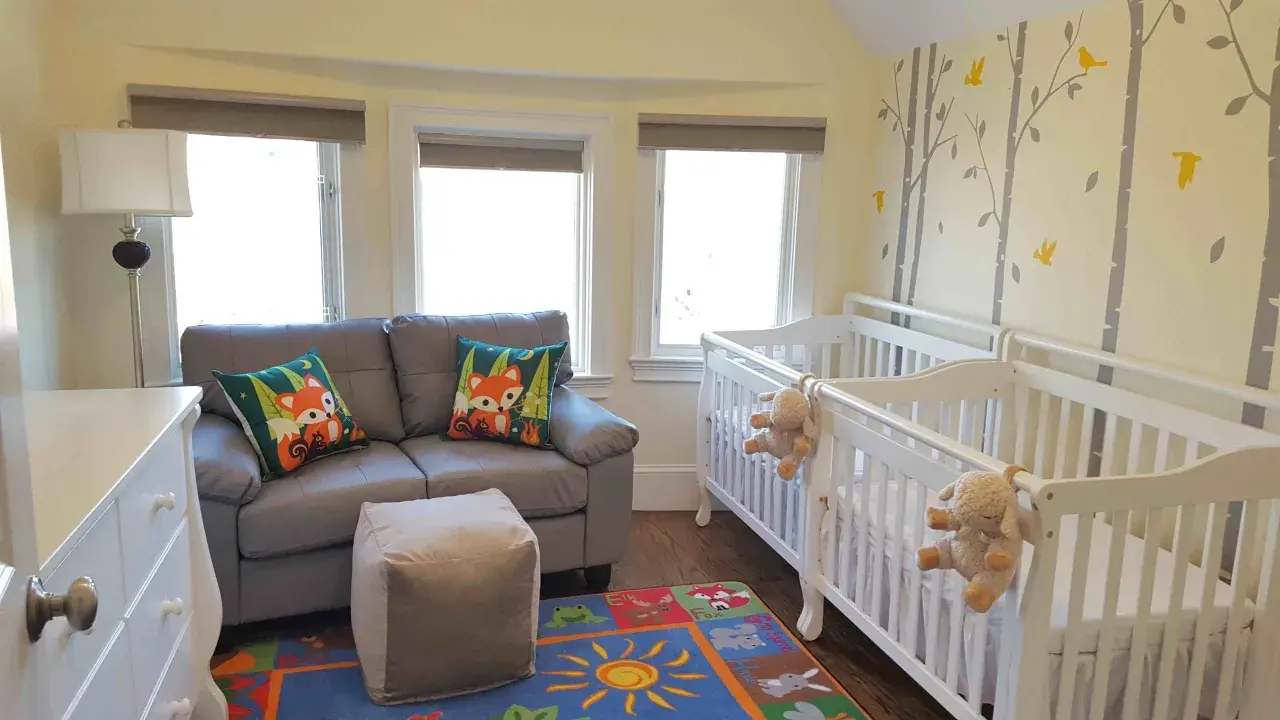
Designing a room for two babies is less about filling space and more about making every piece work harder. The right nursery sets for twins give you two safe sleep spaces, enough storage for double the gear, and a layout that makes night feeds and diaper changes feel manageable instead of chaotic. I focus on pieces that look coordinated without wasting floor space, because in a twin nursery every inch has a job.
The essentials that make a twin nursery work
- Two separate sleep spaces should be the starting point for the layout, not an afterthought.
- A shared dresser and changing zone usually makes more sense than buying two complete matching furniture sets.
- Neutral finishes age better, while color, art, and labels give each baby a clear identity.
- In the U.S. market, a practical twin nursery often lands around $900 to $3,500, with premium rooms going higher.
- Storage, walkways, and easy access at 2 a.m. matter more than extra decor pieces.
Start with the room and the sleep plan
The first decision I make is not style, it is circulation. Measure the room wall to wall, note window placement, door swing, and outlet locations, then map where you can keep two separate sleep spaces without forcing yourself to squeeze sideways past furniture. In a twin nursery, I like to leave enough space to stand at each crib comfortably and to open drawers without blocking the walkway.
For safe sleep, I build the room around the American Academy of Pediatrics guidance: babies should sleep in the same room as the caregiver for at least the first 6 months, but not in the same bed. That means the nursery setup has to support two cribs, two bassinets, or another approved sleep arrangement that gives each baby a clear, firm, uncluttered space. I would not treat decorative bedding, bumpers, or plush extras as part of the plan, because they solve nothing and create risk.
If the room is small, mini cribs can buy you time in the newborn stage, but I usually view them as a bridge rather than a final solution. Once the sleep plan is clear, the layout becomes much easier to design with purpose instead of guesswork.

The furniture layout that saves the most space
Most twin nurseries work best when the room is divided into three zones: sleep, changing, and feed-and-settle. I usually want the cribs on the longest wall or on opposite walls if the room is narrow, with the dresser and changing surface on a separate wall so the room does not feel packed. Symmetry looks nice, but function matters more than a perfectly mirrored floor plan.
| Layout | Best for | Why it works | Trade-off |
|---|---|---|---|
| Two full-size cribs on one long wall | Wider rooms | Simple access, clean symmetry, easy shared styling | Uses the most wall space |
| Two mini cribs on one wall | Tight rooms or nursery-bedroom hybrids | Saves floor space in the newborn phase | May need a later upgrade |
| Two cribs on opposite walls | Long, narrow rooms | Creates clear zones and reduces visual crowding | Less centered, less symmetrical |
| Two cribs plus a shared dresser wall | Most family nurseries | Balances sleep, storage, and changing access | Requires disciplined organization |
My default recommendation is two cribs plus one strong storage wall. A shared changing station keeps the room cleaner than trying to duplicate everything, and it prevents the nursery from feeling like a retail display instead of a working space. That layout also leaves room for the chair you will sit in far more often than you expect.
Once the floor plan is settled, the next question is what actually belongs in the furniture set and what is just extra weight.
What belongs in the set and what you can skip
People often assume a “set” has to mean a matching crib, dresser, chest, nightstand, and maybe a bookcase. In practice, I would rather see a coordinated collection that gives you the right core pieces than a fully packed bundle that steals square footage from the room. For twins, one well-built storage anchor usually does more work than a second decorative chest.
| Set type | What you get | Typical 2026 U.S. budget | Best for |
|---|---|---|---|
| Crib plus dresser | One sleep anchor and one storage anchor | $500 to $900 | Most families who want value and flexibility |
| Crib, dresser, and chest | More vertical storage and a fuller matching look | $800 to $1,500 | Medium to larger rooms |
| Modular collection | Core furniture plus add-ons such as toppers or shelving | $1,000 to $2,500+ | Parents who want the room to grow over time |
| Mix-and-match pieces | Coordinated look built from separate purchases | Varies widely, often $900 to $3,500 | Shoppers who want more control over size and style |
For twins, I care less about how many pieces are in the box and more about whether the set helps you keep clutter under control. A dresser with deep drawers and a secure changing topper is often more useful than a second small table that cannot hold diapers, wipes, spare pajamas, and burp cloths at the same time. If a piece does not make daily care easier, I usually skip it.
The next layer is visual: how to make the room feel coordinated without making the babies’ space look repetitive or overdesigned.
How to keep the room coordinated without making it look identical
I like a twin nursery to feel related, not cloned. The easiest way to do that is to repeat materials and finishes while varying the accent details. If both cribs share the same wood tone and hardware finish, the room already feels intentional; after that, you can use textiles, labels, and wall art to give each baby a distinct identity.
My favorite approach is to keep the large pieces calm and let the smaller layers do the talking. A warm oak dresser, matte black drawer pulls, and a neutral rug can handle almost any accent scheme. Then I introduce one color family for each child through framed prints, storage bins, swaddles, or name art. That gives the room personality without forcing every surface to match.
- Use the same finish on the biggest pieces so the room feels balanced.
- Give each baby a color cue, such as sage and clay or navy and sand.
- Repeat one texture, like woven baskets or linen curtains, to tie the room together.
- Keep wall decor light and flexible so it can move later into a playroom.
- Avoid overloading the room with themed decor, because twins already create enough visual interest.
If you want the room to age well, choose decor that can shift from nursery to toddler space without a full redesign. That is where budget discipline starts to pay off.
Where I would spend the money first
When I budget for a twin nursery, I spend on the pieces that affect safety, storage, and daily comfort before I spend on anything decorative. The room needs to survive two sleep schedules, two diaper loads, and a lot of repeated movement, so the “pretty” items come after the workhorses are handled.
| Item | Typical spend | What matters more than price |
|---|---|---|
| Two cribs | $500 to $1,800 total | Stable build, adjustable mattress height, conversion options |
| Dresser and changing surface | $300 to $1,200 | Drawer depth, smooth glides, wall anchoring, wipeable top |
| Glider or rocker | $250 to $900 | Seat width, arm support, fabric that cleans easily |
| Rug, curtains, and lighting | $300 to $1,000 | Low-pile rug, blackout or room-darkening curtains, dimmable light |
| Baskets, bins, and labels | $50 to $200 | Clear categories and quick access during night care |
That budget pattern usually produces a room that feels complete without blowing money on duplicate decor. In the U.S. market, a single solid crib can start in the low hundreds, while premium dressers and changing tables can climb much higher, so the biggest savings often come from keeping the furniture plan simple. I would rather own one excellent dresser and two dependable sleep spaces than six matching pieces that look nice but fight the room.
There is one more thing that saves parents money later: avoiding the mistakes that make twin nurseries feel cramped, noisy, or hard to use.
The mistakes I see most often in twin nurseries
The first mistake is buying too much matching furniture. A nursery can look coordinated with three strong pieces and thoughtful accessories; it does not need every item to come from the same collection. In fact, overmatching often makes a room feel flatter and less personal.
The second mistake is underestimating storage. Twins mean double swaddles, double sheets, double burp cloths, double backup outfits, and more gear than most people expect. If the nursery has no drawer space for everyday items, the room starts collecting piles on the changing surface and chair arm, which is exactly what you do not want when you are tired.
The third mistake is choosing furniture that is beautiful but awkward to use. A narrow changing table, shallow drawers, or a glider that looks elegant but sits too low will annoy you daily. I care a lot about boring details like drawer glide quality and whether the chair arms are high enough for repeated feeding sessions, because those are the details that either help or wear you down.
- Do not buy duplicate storage pieces before you have mapped the room.
- Do not place the changing area so close to the crib that one person blocks the whole room.
- Do not fill the nursery with decor that makes cleaning harder.
- Do not ignore wall anchoring on dressers and chests.
- Do not choose a rug that sheds or traps lint under heavy use.
Clean utility is the real luxury in a twin nursery, and the room will feel better every day if you build around that idea. From there, the smartest designs are the ones that keep working after the newborn phase ends.
Choose pieces that can move from newborn care to playtime
The best twin room is not just a nursery for six months; it is a space that can become a playroom without starting over. I like pieces that earn a second life, such as convertible cribs, dressers that still work as toddler storage, low shelves for books, and baskets that later hold blocks, plush toys, and puzzles. That is especially important for families who do not want to remodel every year.
For the floor plan, I would think ahead to a future where the sleep area becomes a reading corner or toy zone. A washable rug, closed storage for small parts, and one or two low bins make the transition almost effortless. If you can keep the furniture calm and the storage adaptable, the nursery will still feel useful when the babies are crawling, then walking, then hauling toys across the room.
That is the part I value most: not just a pretty coordinated space, but a room that stays practical while the babies change. If you build the twin nursery around safety, storage, and flexible furniture, you will not need to reinvent it every few months, and that is what makes the whole setup pay off.
