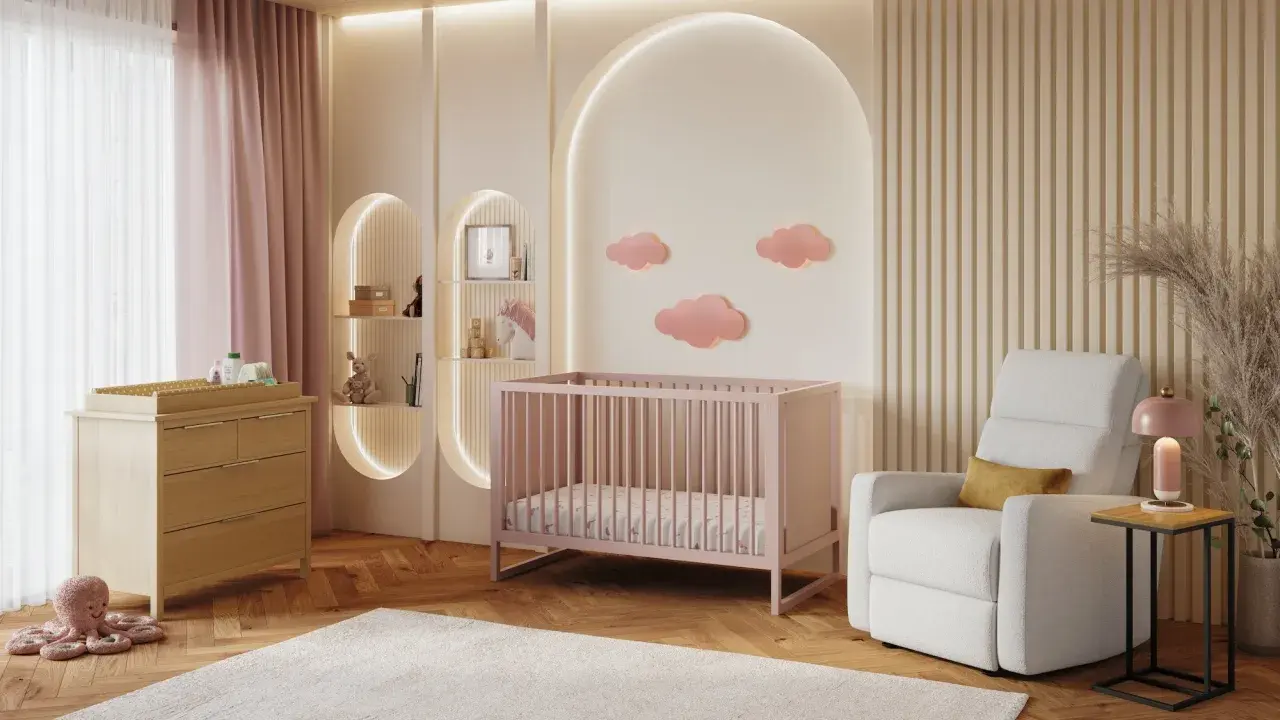
A nursery works best when it feels calm, personal, and easy to live with at 2 a.m. The best girl nursery themes are the ones that give the room a clear mood without locking you into a look that feels dated in a year. In 2026, I keep seeing parents move toward softer neutrals, warmer pinks, botanical prints, celestial accents, and textures that make the room feel more like a sanctuary than a showroom.
What matters most when choosing a nursery theme
- Pick one clear mood, then repeat it through color, wall treatment, textiles, and lighting.
- Warm neutrals, dusty pinks, sage, buttercream, and mauve feel current without looking trendy for the sake of it.
- Wallpaper, decals, rugs, and art usually carry the theme better than buying a fully matched set of furniture.
- Keep the sleep area simple first, then build the decorative layer around it.
- Small rooms usually do better with one strong accent and a few quiet supporting pieces.
- A flexible theme is easier to refresh when the nursery becomes a toddler room.
What parents actually want from the room in 2026
Most parents are not trying to build a perfect magazine room. They want a space that supports feeding, soothing, changing, and sleeping without feeling sterile. That is why nursery design keeps moving toward comfort, durability, and a little more personality than the old all-beige approach.
There is also a clear shift toward rooms that feel good to live in, not just to photograph. I see that show up in washable textiles, storage you can reach one-handed, and wall treatments that create mood without demanding a full renovation when the baby stage ends.
The simplest way to think about it is this: choose a theme that gives you a mood, not a script. Once you do that, the rest of the room becomes much easier to edit, and the theme choices below are easier to compare.

Nursery theme ideas that feel current and easy to live with
| Theme | Look and feel | Best palette | Why it works |
|---|---|---|---|
| Soft floral garden | Romantic, light, and feminine without being too sweet | Blush, cream, sage, and warm wood | It reads as classic if you keep the flowers loose and the palette restrained |
| Woodland meadow | Gentle, natural, and slightly storybook | Oat, moss, ivory, and walnut | It feels calm and grows well because the animal motif can stay subtle |
| Celestial night sky | Quiet, dreamy, and slightly modern | Dusty blue, mauve, ivory, and brass | It gives you a clear motif without pushing the room into a very baby-specific look |
| Modern neutral with blush accents | Clean, warm, and easy to update | Putty, cream, pale pink, and walnut | It is the most flexible choice if you want the room to survive several style changes |
| Vintage storybook | Nostalgic, collected, and personal | Faded rose, ivory, soft brown, and antique wood | It works well when you mix old and new pieces instead of buying everything at once |
| Coastal calm | Airy, relaxed, and bright | Sand, shell pink, mist blue, and linen white | It is especially useful for smaller nurseries because it keeps the room visually open |
| Boho organic | Textured, warm, and layered | Clay, blush, natural oak, and cream | It gives depth through material rather than relying on lots of decor objects |
| Ballet-inspired | Soft, graceful, and polished | Powder pink, ivory, and champagne | It works best when the pink stays quiet and the room leans on texture, not novelty |
If you want the safest bet, floral, celestial, and modern neutral are the easiest to live with over time. If you want more character, woodland and vintage storybook usually feel richer because they tell a clearer story without depending on novelty decor.
The real takeaway is simple: the right theme should still make sense when the nursery is full of laundry baskets, burp cloths, and half-finished routines. That is why the next step matters just as much as the theme itself.
How to choose one direction without overdesigning the room
I usually narrow a nursery theme by deciding on three anchors: a color base, a motif, and a material. For example, blush + wildflowers + natural oak gives a softer feel, while cream + stars + brass reads more polished and calm.
Read Also: Nursery Painting Ideas: Colors & Finishes That Grow With Baby
A simple formula that keeps the room flexible
- Start with 2 neutral colors and 1 accent color.
- Pick one repeatable motif, such as florals, stars, bows, butterflies, woodland animals, or clouds.
- Choose one dominant surface, like paint, removable wallpaper, or a rug, and let that carry most of the theme.
- Repeat the same tone in three places, then stop. That is usually enough.
The mistake I see most often is theme inflation, where every object has to match. A room gets stronger when a few pieces speak the same language and the rest are quieter.
| Wall treatment | Commitment | Best use | Typical downside |
|---|---|---|---|
| Paint | Low | A calm base that can last through the toddler years | It may feel too plain unless you layer in texture and art |
| Removable wallpaper | Medium | Floral, celestial, storybook, or animal themes | Pattern choice matters, because some prints can overwhelm a small room |
| Wall decals | Very low | Rentals or fast updates | They can look temporary if the rest of the room is too plain |
| Mural | High | One strong focal wall with a custom feel | It is harder to change once the baby stage is over |
If you are renting or planning to reuse the room, decals and removable wallpaper give you the most personality without a long-term commitment. Paint is still the quiet workhorse when you want the room to age well, and that becomes even more important once safety and layout enter the picture.
Make the room function before the theme takes over
This is the section I never skip. According to the AAP and CPSC, the sleep space should stay simple: a firm, flat surface, a fitted sheet, and no loose bedding, bumpers, pillows, or weighted items. If the nursery looks beautiful but the crib is overloaded with decor, the room is being styled backward.
- Keep the crib or bassinet in the cleanest, least cluttered part of the room.
- Use room sharing when possible for the first 6 months.
- Put the glider, lamp, and side table where you can reach them without crossing the room at night.
- Choose a washable rug and wipeable finishes if the room will also handle diaper changes or toddler play.
- Store extra blankets, stuffed animals, and decorative pillows outside the sleep zone.
Function does not kill the theme. It usually makes the theme look more intentional because the eye goes to the few pieces that matter. That practical base is what keeps smaller budgets and smaller rooms from feeling crowded.
Budget ranges and shopping order that keep the project sane
In the U.S., a nursery can be styled in a surprisingly wide range of budgets. A simple DIY refresh often lands around $150 to $500, a balanced mid-range room usually falls between $500 and $1,500, and a more layered look with custom finishes can move past $1,500 and keep climbing from there.
| Budget tier | Typical spend | What it usually covers | Best approach |
|---|---|---|---|
| DIY refresh | $150-$500 | Paint, decals, basic art, storage baskets, one rug | Lean on color and textiles, not lots of furniture |
| Balanced mid-range | $500-$1,500 | Wallpaper accent wall, crib, dresser, rug, lighting | Invest in one focal wall and one durable furniture upgrade |
| Full layered room | $1,500-$4,000+ | Higher-end crib, glider, window treatments, custom wallpaper or mural, coordinated storage | Choose one hero feature and let the rest stay simple |
If I had to prioritize the spend, I would do it in this order: mattress and sleep setup first, storage second, lighting and seating third, then wall treatment and decor. That order protects the parts of the room you use every day and keeps the prettier extras from swallowing the budget.
The budget conversation also helps avoid the biggest nursery mistake I see, which is buying too many matching pieces before the room has a real structure. Once the structure is set, the finishing layer becomes much easier.
The details that make the room feel finished without overdoing it
Good nursery styling is usually about restraint, not volume. One strong motif repeated in three places will do more for the room than ten small objects fighting for attention.
- Repeat the theme in a wall print, a textile, and one object, then leave the rest quieter.
- Mix texture on purpose, such as linen, boucle, rattan, wool, and smooth painted wood.
- Use one personal piece, like a family heirloom, a keepsake toy, or a framed photo, so the room does not feel mass-produced.
- Keep at least one blank or lightly styled wall so the space can grow with the child.
- Avoid relying on a single licensed character or a very literal motif that may age quickly.
Lighting matters here too. A dimmable lamp, soft curtain fabric, and one focused reading light do more for the mood than an extra shelf full of decor. The room should feel layered, not busy.
The version I would choose if I wanted the room to last
If I were building a nursery from scratch today, I would choose a warm neutral base, one soft accent color, a single botanical or celestial motif, and natural wood furniture. That formula gives you enough personality to feel specific, but it stays open enough for new bedding, new art, and a different age stage later on.
For me, that is the real test of strong nursery design: it should still work after the newborn blur, when the room becomes less about styling and more about daily life. Keep the sleep space bare, let the walls and textiles carry the theme, and use storage to hide the clutter, and the room will feel calm long after the initial decorating rush fades.
