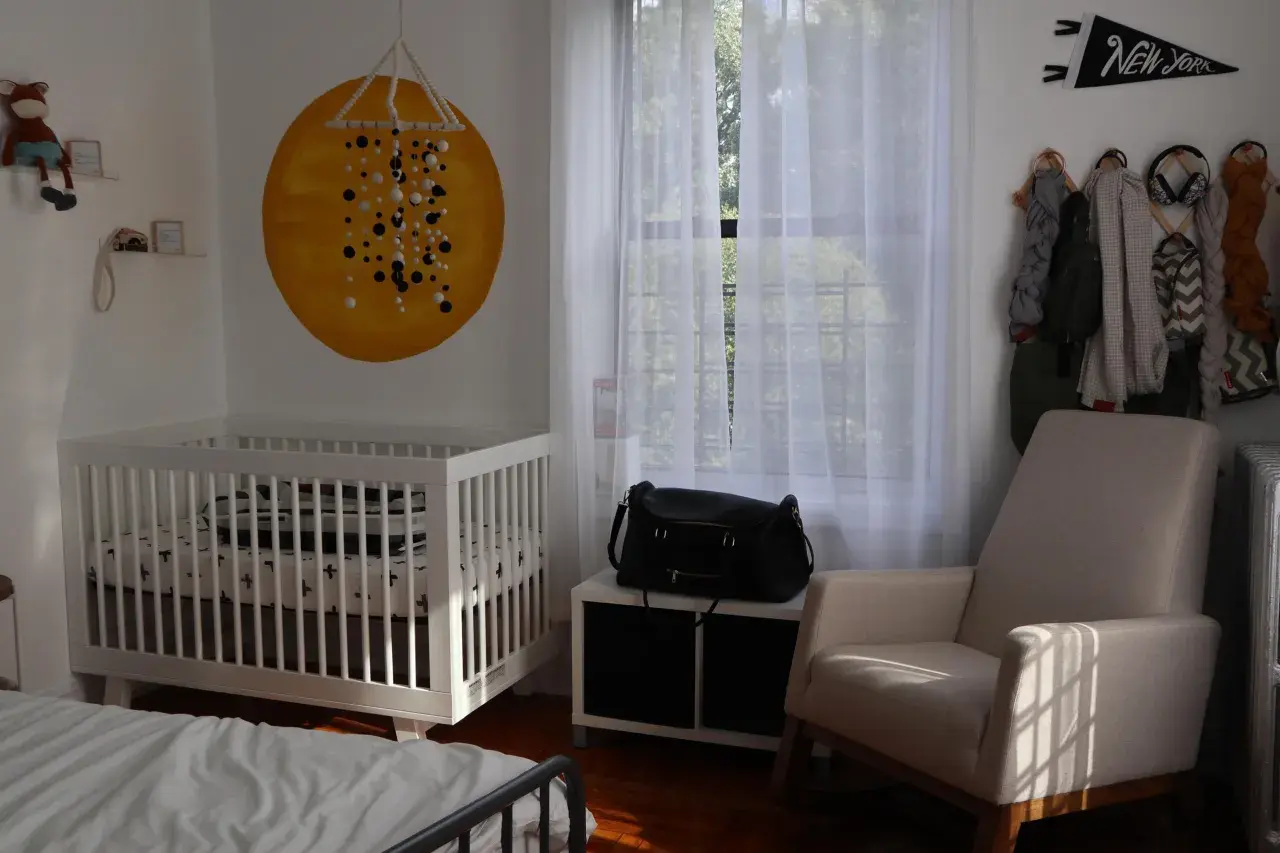
The best nursery nook ideas do one thing well: they turn a tight corner into a space that feels calm, useful, and easy to live with at 2 a.m. I like to start with function first, then layer in storage, lighting, and soft textures so the nook looks intentional instead of squeezed in. In a small nursery or nursery-and-playroom combo, that approach matters more than trying to fit every baby item at once.
The quickest way to get a nursery nook right
- Pick one primary job first: sleep, feeding, reading, changing, or play.
- Use a corner, wall, or alcove and let storage go vertical.
- Choose a warm palette, one good light source, and one soft anchor like a rug or curtain.
- Keep sleep areas bare and anchor tall furniture to the wall.
- Buy fewer pieces, but make each one earn its place.
Start with the job the nook has to do
When I design a compact nursery, I never begin with decor. I begin with the routine. A nook that mainly supports overnight feeding needs a very different setup from one that is mostly for reading, toy rotation, or diaper changes. If you name the job first, the room usually tells you what belongs there and what does not.
I find it easiest to think in terms of five jobs:
- Sleep for a bassinet, mini crib, or future crib zone.
- Feeding for a comfortable chair, side table, and dim light.
- Changing for a dresser-top setup and easy-access storage.
- Reading for books, a cushion, and softer lighting.
- Play for low shelves, floor space, and a rug that can take wear.
The mistake I see most often is trying to make one corner do all five jobs at full strength. In a small room, that usually creates clutter, not flexibility. A better result comes from choosing one primary function and letting one secondary function tag along. Once that decision is made, the layout gets much easier to solve.
That leads straight into the part most people skip: measuring the space before they buy a single piece of furniture.
Map the corner before you buy anything
Small nurseries are won or lost on layout. I measure the corner, check door swing, outlet placement, window glare, and any vent or radiator before I decide where the main pieces go. If the room is shared with adults, I also think about night access, because a gorgeous setup is annoying if it blocks a drawer or forces you to sidestep a chair half asleep.
A practical rule I use is to leave enough room to open drawers fully and still stand back with a diaper caddy or laundry basket in hand. In many small rooms, that means planning for roughly 24 to 30 inches of usable clearance where movement matters most. That is not a hard architectural standard; it is just the difference between a nook that feels nimble and one that feels crowded.
| Layout type | Best for | What I would use | Where it can fall short |
|---|---|---|---|
| Sleep-first corner | Newborn rooms and room-sharing | Mini crib or bassinet, blackout shade, small shelf, dimmable lamp | Less room for extras, and the sleep area has to stay very clean visually |
| Feeding corner | Night feeds and comfort | Glider or compact chair, side table, basket for burp cloths, warm light | Needs more floor space than people expect |
| Changing wall | Daily diaper routine | Dresser, topper or mat, drawer dividers, closed bins | Can look messy fast if the top becomes a catch-all |
| Reading and play pocket | Older babies and toddlers | Low book ledge, floor cushion, rug, one toy basket | Does not solve sleep or diapering on its own |
Once the footprint is clear, the fun part is choosing a concept that fits your home instead of forcing the room into one generic nursery formula.
Five nook concepts that feel realistic in real homes
A window reading nook
This is one of the easiest ways to make a nursery feel special without taking up much floor space. I like a low shelf, a padded seat or floor cushion, and a small basket for board books. It works especially well in nurseries that will later become toddler rooms, because the reading habit can grow right along with the child.
The limitation is sunlight. If the window gets strong morning light or direct afternoon heat, add a shade or curtain that softens the glare. The nook should feel inviting, not like a bright spot you avoid during nap time.
A bedside feeding nook
This is the most practical option when the baby is sleeping in the same room as the parents. I usually build it around a compact chair, a small table for water and snacks, and a lamp with a soft bulb or dimmer. It is not glamorous, but it is the kind of setup that makes night feeds less chaotic.
What makes this concept work is restraint. You do not need decorative extras here. You need a place to sit down, a place to set something down, and enough calm that your brain does not feel overstimulated at 3 a.m.
A dresser-and-changing nook
If I had to choose one hybrid solution for a small nursery, this would be near the top. A standard dresser usually gives you more long-term value than a dedicated changing table, because it can keep working after the diaper stage. A topper or cushioned mat turns it into a changing station without adding another bulky object to the room.
This setup is especially useful in American homes where nursery square footage is often at a premium. The key is to keep the top surface disciplined: diapers, wipes, and one caddy only. If you treat it like a landing zone for everything, the whole nook loses its calm.
A closet-to-nursery pocket
When the room is truly tight, a closet can become the cleanest solution. I am not talking about stuffing everything behind doors and hoping it works. I mean using the closet as a compact functional zone with shelves, a small light, and carefully chosen storage. It can be smart for clothes, diapers, and backup supplies if the main room needs to stay open.
This is the one concept I would avoid if the closet has poor ventilation, awkward depth, or bad access. A cute hidden nook is not worth creating a room that is hard to reach at the exact moment you need it most.
Read Also: White Nursery Ideas - Calm, Practical & Timeless Design
A floor-level Montessori-style play nook
For nurseries that also serve as playrooms, I like a low, simple setup: a rug, one open shelf, a few rotating toys, and maybe a soft canopy or wall decal for definition. The point is to encourage easy independent play without filling the area with too many objects. It feels calm, and babies can actually use it.
What makes this design useful is that it scales. A baby may start with a few soft toys and board books, then move into blocks, puzzles, and pretend-play baskets later. That kind of flexibility is worth more than a highly themed corner that outgrows itself in six months.
These concepts are most successful when the storage behind them is just as intentional as the furniture in front of them.
Storage that keeps the nook calm instead of crowded
In a small nursery, storage is not a side issue. It is the thing that decides whether the room feels restful or busy. I prefer a mix of closed storage and selective open storage. Closed storage hides the visual noise, while open shelves can hold the items you actually want to see and use every day.
My rule is simple: keep the daily essentials within arm’s reach, and let everything else move higher or farther away. Diapers, wipes, burp cloths, spare onesies, and a few sleep items belong in easy-access drawers or bins. Extra blankets, outgrown clothes, and backup toys can live elsewhere until they are needed.
For toy and book storage, I like a rotation system. Two or three favorite books on display are enough for a nook. Everything else can stay in a basket and cycle out later. That small editorial move makes the room feel curated instead of crowded, which matters more than people realize.
- Use baskets for soft items that need to be grabbed quickly.
- Use drawers for diapers, clothing, and backup supplies.
- Use shelves for books, a small lamp, or one decorative object.
- Use vertical space before you steal more floor space.
If the room still feels busy after that, the answer is usually subtraction, not another storage cube. Once the practical pieces are under control, the atmosphere becomes much easier to shape.
The color, light, and texture layer that does the heavy lifting
In 2026, I still lean toward warmer, grounded palettes for small nurseries. Cool gray can work, but it often makes a cozy nook feel flatter than it should. I get better results with warm ivory, oat, soft sage, dusty clay, muted sand, and natural wood tones. Those shades feel calm without looking sterile.
Texture matters just as much as color. A linen curtain, woven basket, boucle chair, wool-blend rug, or cane-front detail adds depth without adding clutter. That is useful because a nursery nook should feel soft from the start, not only after you have piled it with accessories.
If you want the fastest visual payoff, use this formula:
- One main neutral for the walls or the largest furniture piece.
- One warm wood tone to stop the room from feeling too flat.
- One muted accent such as sage, clay, or dusty blue.
- One soft material like linen, cotton, or boucle to add comfort.
Lighting deserves the same attention. A nursery nook rarely benefits from harsh overhead light alone. I prefer layered lighting: a main ceiling source, a dimmable lamp, and a nightlight or soft wall light for overnight use. If the nook sits near a window, blackout curtains or a shade can do more for naps than a dozen decorative touches ever will. The visual finish is important, but safety has to stay ahead of style.
Keep the cozy feeling, but do not compromise safety
If the nook includes a sleep space, I keep the safety rules simple and non-negotiable. The AAP recommends room-sharing for at least the first 6 months, and the sleep area itself should stay free of soft bedding, pillows, loose blankets, bumper pads, and stuffed toys. A firm, flat sleep surface with a fitted sheet is still the baseline that matters most.
I also treat tall furniture as a safety issue, not just a design issue. Dressers, bookshelves, and wall units should be anchored to the wall, especially in a nursery that will eventually become a toddler room. The CPSC’s Anchor It guidance exists for a reason: furniture tip-overs happen fast, and they are preventable when the right anchors are installed correctly.
A few other details are worth checking before the nook is finished:
- Keep cords from lamps, monitors, and shades out of reach.
- Store heavy objects low so shelves do not become top-heavy.
- Avoid draped fabric close to sleep surfaces.
- Choose stable furniture with rounded edges when possible.
Good nursery design should feel soft, but it should also feel boring in the right ways: predictable, secure, and easy to move through in the dark. Once those basics are handled, the last step is deciding where the budget should go first.
The pieces that earn their keep when space is tight
If I were building a small nursery from zero, I would prioritize only a few purchases at first. That keeps the room from becoming overfurnished before you have figured out how your family actually uses it. A practical starter version can often be built for roughly $250 to $700 if you shop smart and use off-the-shelf pieces. Custom built-ins, specialty nursery furniture, or premium seating can push the total well above $1,000 quickly.
- A safe sleep surface first, because that is the one piece you cannot fake.
- One comfortable seat if feeding or bedtime routines happen in the nook.
- One closed storage piece such as a dresser that can outlast the diaper phase.
- One dimmable light source so the room works at night without feeling harsh.
- One rug or curtain to define the space and soften the acoustics.
If a corner still feels unfinished after those five pieces are in place, I would resist the urge to keep adding decor. More often than not, the room needs a cleaner layout, not more objects. The best small nurseries I have seen are the ones where every item is there for a reason, and nothing has to apologize for taking up space.
